
BULLA KARATASI MASSACRE
One of the worst human rights violations in Kenyan History

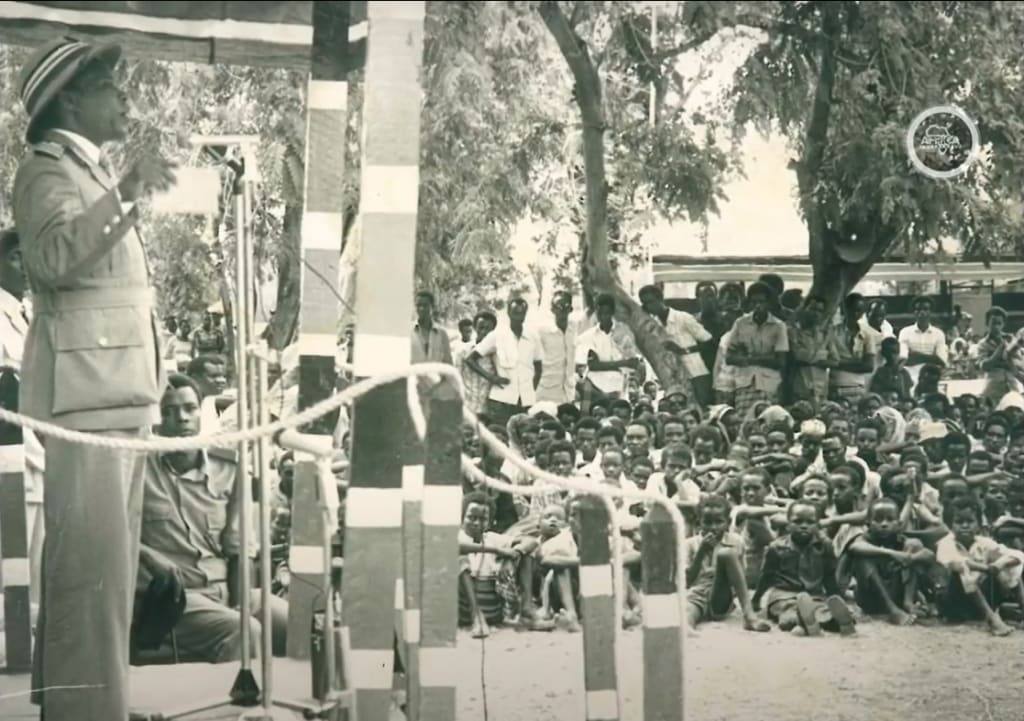
Garissa was burning by 7 am on November 11, 1980. During the night, the Provincial Commissioner had declared a State of Emergency imposing a daytime curfew over the whole province. The police and military contingents in armoured vehicles descended on the town, shooting at everyone and everything. Houses were set on fire while locked from the outside. Innocent civilians were beaten up and killed while women faced sexual atrocities. A message was shouted from a loudspeaker as the sunrose urging everyone in the town to gather at Garissa Primary School. Indeed, many of them never even made it there, and for the ones who did, more suffering awaited them.
As the civilians were herded into the school, they were forced to sit on the bare ground facing east as the sun got hotter and hotter directly in their faces. The men became the subjects of a large-scale screening exercise to try and establish their ties with the shifta bandits. Police Special Branch officers were the ones running this operation under the supervision of the ruthless PC. Many were roughed up, tortured and beaten in a bid to get them to confess any leads they might have in regard to the shifta bandits.

As the sun got hotter, this exposure started to take a toll on the Garissa populace that was sprawled across the field in the primary school. The old and frail collapsed hours into the operation due to hunger and dehydration. Women and children suffered great hunger pangs as no food nor water was provided to them at all. In the afternoon, as the sun shifted to the west, they were forced to turn around and face the cruel heat. The suffering was profound and many more died in that primary school. The government did not relent for the following 2 days either with the death toll increasing each day. While the residents were detained in the Primary school, their houses and businesses were being destroyed and looted.

As the crackdown and interrogation heightened, one name kept coming up. The bar attack had been led by Abdi Madhobe, a notorious shifta leader who had vowed to keep opposing the government. He was a former poacher who had been allegedly castrated by KWS officers after being found with a cache of ivory. His bitterness afterwards had caused him to commit himself to opposing the government by any means. The reasons behind the shootout also came to light. As it happens, he was still a poacher and had made a deal with some corrupt wardens who traded illegal ivory. When the deal went sour, he had gone to look for his accomplices in Bulla Karatasi where they were known to frequent and this had fatal consequences on the ones drinking in that pub. Worse still, it became clear that the shootout in Bulla Karatasi and the murder of the DO were isolated cases whose only connection was timing and proximity.
With the gathering of this information as well as international pressure11, the interrogation procedures in the primary school stopped and the residents were free to go back home. Bodies were dumped into the Tana River in an attempt to clean up the evidence. They were carried downstream never to be seen again. A culture of military secrecy and non-disclosure regarding the harrowing atrocities that took place in Garissa also contributed to its erasure. As the bereft and traumatized civilians were released, many of them realized they did not have homes to go back to as they had been torched down or sacked clean. They were therefore displaced and had to move in with their relatives or friends who would take care of them.
About the Creator
HINGES OF TIME
Unlock the past with Hinges of Time⏳.
A community for history lovers, discourse and knowledge.
Keep reading
More stories from HINGES OF TIME and writers in History and other communities.
MAUMAU GENERAL'S GRAND RETURN?
47 years after his disappearance, the country rejoiced at the alleged return of the former Maumau General, Stanley Mathenge. He had been invited by the then President Mwai Kibaki who had been sworn into power a few months prior after a journalist had claimed to have found the former guerrilla still in exile in Ethiopia. The new Kibaki regime had signaled a new era of hope and although Mathenge’s return was perceived as yet another good omen, it deteriorated into an embarrassing scandal after the man claiming to be Mathenge turned out to be an Ethiopian farmer.
By HINGES OF TIME11 months ago in History
Echoes Beneath the Silent Guns
The summer of 1914 arrived gently in Europe, with long golden evenings settling over wheat fields and cobblestone streets. In a small village near the border of the German Empire, sixteen-year-old Lukas Adler believed the world was wide and permanent. His father was a blacksmith; his mother kept a garden that seemed to bloom regardless of politics. News from faraway capitals felt distant—until the day everything changed.
By Maavia tahir4 days ago in History


Comments
There are no comments for this story
Be the first to respond and start the conversation.