

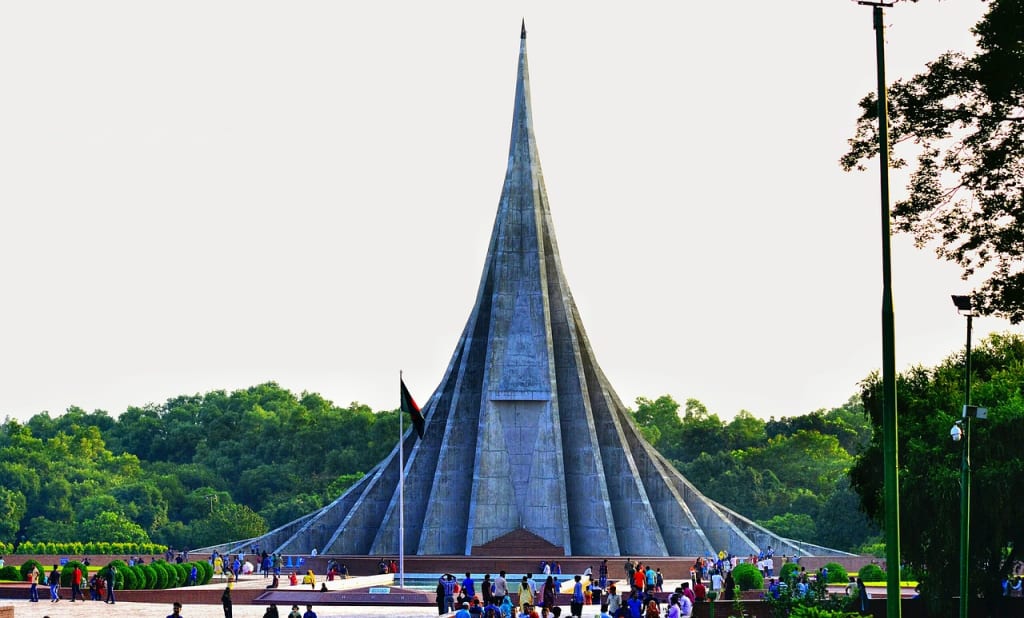
Bangladesh: A Land of Culture, Resilience, and Rising Potential
Bangladesh is a South Asian country bordered by India on the west, north, and east, Myanmar on the southeast, and the Bay of Bengal on the south. Though relatively small in terms of land area, Bangladesh is one of the most densely populated countries in the world, with over 170 million people. Despite its size and challenges, the country is known for its vibrant culture, inspiring resilience, and rapid economic progress.
A Brief Historical Overview
The history of Bangladesh is both ancient and profound. The region has been inhabited for thousands of years and was once part of powerful empires such as the Maurya, Gupta, and Mughal empires. The area known today as Bangladesh was later colonized by the British as part of British India. After the partition of India in 1947, it became East Pakistan, while the western part formed modern-day Pakistan.
However, cultural and linguistic differences between the two regions led to growing tensions. The Bengali-speaking people of East Pakistan felt marginalized. This culminated in the historic Language Movement of 1952, where several students were killed while protesting for the recognition of the Bengali language. This movement laid the foundation for future resistance.
In 1971, following years of political unrest and a brutal military crackdown by the West Pakistani regime, Bangladesh declared its independence. The Bangladesh Liberation War, lasting nine months, resulted in the birth of a new nation on December 16, 1971. The war left deep scars but also ignited a strong sense of national identity and unity.
Geography and Natural Beauty
Bangladesh is located on the world's largest delta, formed by the Ganges, Brahmaputra, and Meghna rivers. This makes the country extremely fertile but also vulnerable to flooding. Despite the natural hazards, the landscapes of Bangladesh are stunning. The lush green countryside, the serene rivers, and the majestic Sundarbans—home to the Royal Bengal Tiger—make the country a hidden gem for eco-tourists and nature lovers.
Culture and Language
The culture of Bangladesh is rich and diverse. Bengali, the official language, is spoken by the vast majority of the population. It is a language of poetry, passion, and protest. Rabindranath Tagore, the first non-European Nobel laureate in literature, wrote both the national anthems of India and Bangladesh in Bengali.
The country celebrates a number of festivals with great enthusiasm. Pohela Boishakh, or Bengali New Year, is one of the most colorful events, featuring parades, traditional foods, music, and dancing. Religious festivals like Eid-ul-Fitr, Durga Puja, and Buddha Purnima also reflect the religious diversity and tolerance within the nation.
Economic Growth and Development
Once labeled as a "basket case" by foreign observers due to poverty and political instability, Bangladesh has surprised the world with its economic progress. Over the past two decades, it has achieved steady GDP growth, significant improvements in health care and education, and reduction in poverty levels.
One of the key drivers of the economy is the ready-made garment (RMG) industry, which employs millions of workers, most of whom are women. Bangladesh is now the second-largest garment exporter in the world after China. Additionally, remittances from Bangladeshis working abroad, along with a growing information technology sector, are contributing to the economy.
The country has also made strides in women's empowerment, education, and child health. Programs targeting primary school enrollment, maternal care, and microfinance—championed by institutions like Grameen Bank—have brought international praise.
Challenges Ahead
Despite these achievements, Bangladesh still faces significant challenges. Environmental threats such as climate change, flooding, and cyclones are constant concerns. Urbanization, infrastructure gaps, and political polarization also pose obstacles to sustainable development.
However, Bangladesh has shown remarkable resilience. It has become a global model for disaster management and climate adaptation, often using local solutions and community participation.
A Promising Future
Looking forward, Bangladesh aims to become a developed country by 2041. With a young and energetic population, strategic geographic location, and expanding digital economy, the future looks promising. Projects like Digital Bangladesh, new ports, highways, and bridges (such as the Padma Bridge) are transforming the country’s infrastructure and connectivity.
In the face of adversity, Bangladesh continues to rise, telling a story of courage, culture, and hope. For those who look beyond the headlines, it is a country full of potential and promise.
About the Creator
Keep reading
More stories from Rejuan Ratul and writers in History and other communities.
Allah’s Guest
In a quiet little town surrounded by fields and dusty roads, lived a boy named Saleh. He was no different from other boys in age, but life had given him experiences far beyond his years. His father had passed away when he was only five, and since then, his mother had raised him alone. They lived in a small clay house with a tin roof that rattled whenever the wind blew too hard.
By Rejuan Ratul9 months ago in History
Rajendra Chola I and the Conquest of the Ganga: A Monumental Feat in Indian History
Known as the “Gangaikonda Chola” (the Chola who conquered the Ganga), Rajendra transformed a South Indian maritime empire into a pan-Indian power whose influence stretched from the Indian Ocean to the heart of the subcontinent. This campaign was not merely a military raid but a bold statement of imperial ambition, strategic brilliance, and cultural confidence.
By Say the truth 6 days ago in History



Comments
There are no comments for this story
Be the first to respond and start the conversation.