
Socrates Could Have Escaped—Why He Chose Death
The story of the philosopher who valued principle over life itself—and left a legacy of courage that still inspires today.


Socrates sat quietly inside his prison cell as the morning light crept through the narrow bars of the window. Outside, Athens was waking up. The city he had spent his entire life questioning, teaching, and challenging was still alive with voices, movement, and debate. Inside the cell, however, time felt suspended. This was the final day of his life.
He had been sentenced to death for corrupting the youth and disrespecting the gods of Athens. The punishment was simple and cruel: drink a cup of poison and die. Yet what history often forgets is that Socrates did not walk toward death because he had no choice. He could have escaped.
His close friend Crito had arranged everything. Guards could be bribed. The doors could be opened. A ship was waiting. Socrates could have fled Athens, lived in exile, and continued teaching elsewhere. Many begged him to take the chance. To them, escape seemed not only reasonable, but necessary.
But Socrates refused.
This decision confused and angered those who loved him. Why would a man who dedicated his life to wisdom choose death when life was still possible? Why would a philosopher willingly accept an unjust sentence?
The answer lay in how Socrates understood justice, law, and the meaning of a good life.
Socrates believed that a person must never commit injustice, even in response to injustice. To escape prison would mean breaking the laws of Athens—the same laws that had protected him all his life. If he fled simply because the verdict went against him, he would be declaring that laws mattered only when they were convenient.
To Socrates, that was unacceptable.
He argued that by choosing to live in Athens, raising children there, and benefiting from its system, he had silently agreed to obey its laws. Breaking that agreement would destroy the very moral foundation he had spent decades defending. A life saved through wrongdoing, he believed, was not a life worth living.
As his friends pleaded, Socrates remained calm. He spoke gently, not like a man afraid of death, but like a teacher guiding his students through one final lesson. Death, he believed, was not something to fear blindly. It was either a deep, dreamless sleep or a journey of the soul to another place where true wisdom might be found.
Fear did not rule him. Principle did.
What makes this moment extraordinary is not the philosophy alone, but the human courage behind it. Socrates was not a god. He was an old man with children, friends, and unfinished conversations. He knew the pain his death would cause. He understood the finality of the moment. And yet, he chose integrity over survival.
When the cup of poison was finally brought to him, Socrates did not hesitate. He drank it calmly, without drama, without anger. His last concern was for those around him, urging them to remain strong and continue the pursuit of truth.
In that quiet prison cell, Socrates proved something powerful: character is revealed not in comfort, but in crisis.
Centuries later, we remember him not because he lived long, but because he lived honestly. His refusal to escape transformed a wrongful execution into one of the greatest moral statements in human history. Athens may have silenced his voice, but his example grew louder with time.
Today, many of us face smaller versions of the same choice. We may not stand before death, but we are often tempted to compromise our values for convenience, approval, or safety. Socrates reminds us that the hardest choices are often the ones that define us most clearly.
He could have escaped. He could have lived.
Instead, he chose to remain faithful to what he believed was right.
And in doing so, he achieved a kind of immortality that no escape could ever offer.
About the Creator
The khan
I write history the way it was lived — through conversations, choices, and moments that changed the world. Famous names, unseen stories.
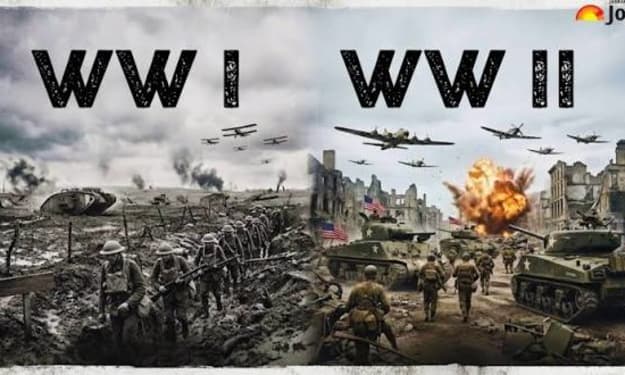
Which War Caused More Destruction: World War I or World War II?
The two largest conflicts in modern history are World War I (1914–1918) and World War II (1939–1945). Both wars changed the course of human history and caused enormous destruction across many countries. Millions of soldiers and civilians lost their lives, cities were destroyed, and economies collapsed. However, historians generally agree that the Second World War caused far greater damage and loss of life than the First World War. By examining the number of deaths, the scale of destruction, and the impact on civilians, it becomes clear why World War II is considered the deadliest conflict in history.
By shaoor afridia day ago in History
Worth the Wait: Puerto Viejo, Costa Rica
Beach bumming in a small Caribbean beach town sounded like a perfect way to end our 6-month trip through Mexico and Central America. Or so we thought. The foul, fishy stench of rotten seaweed hit our nostrils as we stepped from the cramped bus and looked out at a rather depressing, empty, and underwhelming black sand beach. It was pouring with rain, and we had to quickly fish out our ponchos. We thought, this couldn’t be it, could it?
By Sh*t Happens - Lost Girl Travel3 days ago in Wander


Comments
There are no comments for this story
Be the first to respond and start the conversation.