
Rumors, Roses, and a Quiet Promise: The Legend of DiMaggio and Monroe
The Legend of DiMaggio and Monroe


Rumors, Roses, and a Quiet Promise: The Legend of DiMaggio and Monroe
When a public romance shined as bright as Marilyn Monroe’s glow on a Hollywood stage, the afterglow can outlive the headlines. Over the years, stories about Joe DiMaggio and Marilyn Monroe have settled into the realm of myth and memory—the kind of legends that fans retell with a knowing smile, even when every detail isn’t verifiably true. Among those tales, one persists with stubborn tenderness: the idea that DiMaggio, devastated by Monroe’s death, sent red roses to her crypt three times a week for two decades, never remarried, and allegedly uttered his final words, “I’ll finally get to see Marilyn.”
The essence of that story isn’t simply tragedy; it’s a compact parable about love’s stubborn persistence. It asks: What do you do when the world’s loudest applause fades, and all that remains is the quiet to carry on? For DiMaggio, the answer, in legend, was a ritual—a steady, rhythmic act of devotion that kept Monroe’s memory from slipping into the shadows of celebrity history.
A ritual that outlasted the tabloids
Public memory is a fickle thing. The arc of most celebrity romances runs hot and then cool, a story told and retold with varying degrees of accuracy. What makes the DiMaggio–Monroe narrative linger is not a single sensational moment but a pattern: a devoted, almost ritualistic gesture that spoke louder than headlines. If true, the practice of sending roses to Monroe’s crypt three times a week for twenty years would amount to more than grief; it would be a discipline—a vow expressed in petals and patience.
Why roses? They are a universal code for remembrance and longing. Red roses whisper of passion and fidelity, of love that remains steadfast even when a life moves on in different directions or fades from public sight. They are a tactile punctuation mark on a life story that gravity, time, and memory are always writing.
The “last words” that have circulated
The claim about DiMaggio’s final words—“I’ll finally get to see Marilyn”—lands squarely in the zone where biography meets legend. It’s the kind of line that feels cinematic, almost too perfect to be real. Whether DiMaggio ever spoke those exact words at the end of his days is not something readily confirmed by public records or reliable memoirs. But its persistence as a whispered epitaph tells us something about how people want to remember him: as a man who kept faith with a promise beyond mortality, who believed that love had a last, transcendent untying of the knot.
If we treat this line as legend rather than fact, it becomes a powerful metaphor for the broader truth that often survives the specifics: the wish that love continues beyond the brief time two people shared in this world, that the bond remains intact in some other dimension or form.
What the romance teaches about devotion, not documentation
- Rituals can outpace memory. Even if the specifics of the roses aren’t verifiable, the story captures a human truth: rituals—small, repeated acts—are how love persists when life feels uncertain or unfair.
- Grief can be a life-long companion. The idea of a forty-year, three-roses-a-week habit reframes grief as something you live with, rather than something you “get over.” It honors the idea that mourning can become a form of devotion, not just a wound.
- Memory is a creative act. Legends grow because people want to believe that love can resist the erosion of time. The roses, the quiet vigil, the dream of reunion—these are the artist’s tools for keeping memory vivid.
A balanced way to tell a beloved story
If you’re writing about this topic, a responsible approach is to acknowledge the line between fact and legend. You can frame the piece as a meditation on how such stories—tender, sometimes unverifiable—shape our collective memory of public figures. Here are a few ways to handle it thoughtfully:
- Lead with the caveat: Start by noting that the story blends documented history with widely circulated anecdotes and myths. Invite readers to enjoy the narrative while recognizing its legendary status.
- Center the human experience: Focus more on what the devotion represents—loyalty, longing, the idea of a promise kept—than on the precise, unverified details.
- Use source notes lightly: If possible, reference credible biographies and reputable interviews where the core facts are confirmed, and clearly label unverified elements as “alleged” or “reported by…” to avoid presenting fiction as fact.
- Offer a closing reflection: End with a general meditation on memory, mortality, and what we owe to those we love, rather than delivering a definitive biographical verdict.
A modern resonance
Today, many readers may never meet either Monroe or DiMaggio in real life, but the impulse behind the roses—honor what mattered to someone, keep faith with a memory, create a ritual that makes grief more bearable—still rings true. In a world saturated with instant gratification, a three-times-a-week, twenty-year ritual speaks to a timeless human instinct: small, consistent acts can outlast great moments.
If you’re writing fiction inspired by this legend, you have fertile ground to explore: a city that never stops moving, a graveyard at dawn, a fan club that clings to a memory as if it were a program for living better. If you’re writing nonfiction or a reverent profile, you’ll want to balance reverence with rigor, letting readers see both the longing and the limits of what we can know.
Bottom line
The story of Joe DiMaggio, Marilyn Monroe, and the roses that may or may not have traveled to a crypt for two decades remains a tender fuse of fact and folklore. It invites us to imagine a devotion that refuses to fade, a love that outlives its moment, and a last word that offers a hopeful if uncertain => reunion in whatever form memory can sustain.
Whether you treat it as legend or a biographical footnote, the romance endures because it asks a universal question: what do we do with grief when the end of a life doesn’t feel like the end of a story? For many, the answer is to keep a ritual alive, to keep a memory lit, and to keep faith that some connections—like the rose—never truly wither.
If you’d like, I can tailor this piece to a specific blog style (poetic, investigative, or nostalgic) or add a short sidebar with verified biographical references and a note on
About the Creator
Story silver book
I'm a freelance writer. I'm a great communicator, with excellent writing skills and the ability to adapt to any situation.
Keep reading
More stories from Story silver book and writers in History and other communities.
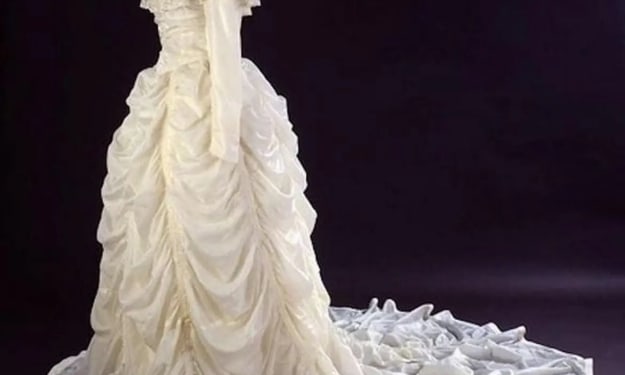
The Parachute Wedding Dress: How Ruth Hensinger Turned WWII Survival Silk into Bridal Magic
The Parachute Wedding Dress: How Ruth Hensinger Turned WWII Survival Silk into Bridal Magic Imagine a pilot drifting down from a burning plane, his parachute the only thing between him and certain death. That same parachute, once a tool of survival in World War II, becomes the fabric of a bride's dream gown. In 1947, Ruth Hensinger sewed her wedding dress by hand from the nylon parachute that saved her fiancé's life, turning a symbol of war into one of love and hope.
By Story silver book 5 months ago in History
The Strongest Known Talisman in the World
The Strongest Known Talisman in the World The strongest known talisman in the world was said to have been forged in the fires of devotion and power, carried by kings and warriors across centuries. It was not made of gold alone, nor gemstones merely for beauty, but of silver, gold, and the bones of saints, inscribed with prayers and sigils older than memory. This talisman was called the Talisman of Charlemagne, a relic of protection, courage, and destiny.
By Marie381Uk about 13 hours ago in History



Comments
There are no comments for this story
Be the first to respond and start the conversation.