
Nicolae Ceaușescu: Romania's Complex Legacy
Exploring the Life, Reign, and Unfinished Agendas of a Controversial Leader

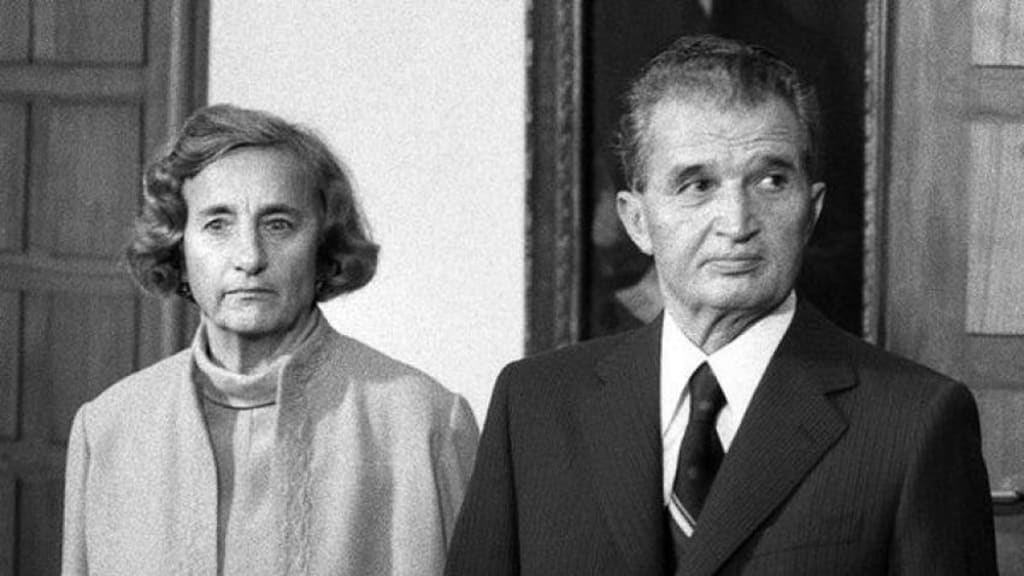
Nicolae Ceaușescu was the communist leader of Romania between 1965 and 1989. He was born in 1918 and was an active member of the Romanian Communist Party. As a leader, he introduced strict policies of state control and the cult of personality. He implemented economic plans known as "National Development Systems" that had a significant impact on the country's economy.
In addition to domestic politics, Ceaușescu played an important role in international relations, promoting a policy of independence and non-alignment. However, his regime was marked by human rights abuses and a harsh crackdown on political opposition.
As for his family, Nicolae Ceaușescu had a wife, Elena Ceaușescu, who also held important positions in the government. The two had three children: Valentin, Nicu and Zoia.
Nicolae Ceaușescu's leadership also included a focus on cult of personality. He promoted himself as the "Conducător" (meaning "Leader" in Romanian) and encouraged a personality cult that elevated him to an almost god-like status. His image appeared everywhere in Romania, from posters to statues, and his speeches were mandatory listening for the population.
One of Ceaușescu's most infamous actions was the demolition of numerous historic neighborhoods in Bucharest to make way for grandiose government buildings, including the Palace of the Parliament, which remains one of the heaviest buildings in the world. This project had a significant impact on the urban landscape of the capital.
In terms of unfinished plans, Ceaușescu embarked on a project to eliminate Romania's foreign debt by exporting a large portion of the country's agricultural and industrial production. Unfortunately, this led to severe shortages of basic goods and a decline in living standards for most Romanians. His attempts to centralize the economy and industrialize the nation ultimately left Romania with significant economic challenges.
Ceaușescu's leadership came to a dramatic end in December 1989 when a series of protests and uprisings led to his overthrow. He and his wife Elena were captured, tried, and executed by firing squad on December 25, 1989.
Nicolae Ceaușescu's rule left a lasting mark on Romania. His draconian policies, which included censorship, surveillance, and repression of dissent, resulted in a climate of fear and mistrust among the population. The Securitate, Romania's secret police, played a prominent role in suppressing any form of opposition.
Ceaușescu's regime also had a profound impact on Romania's international relationships. While he pursued a policy of non-alignment, his actions often strained relations with Western countries. His support for the 1968 invasion of Czechoslovakia by Warsaw Pact forces and his refusal to follow Soviet leader Mikhail Gorbachev's liberalization policies further isolated Romania from its Eastern Bloc allies.
In terms of family, Elena Ceaușescu was a prominent figure in her own right. She held key positions in government and was often referred to as the "First Lady of Romania." However, her influence and role in the government were highly controversial, with accusations of corruption and abuse of power.
Nicolae and Elena Ceaușescu's legacy continues to be a subject of debate in Romania. While some argue that they modernized the country and improved infrastructure, many others remember the severe economic hardships, censorship, and human rights abuses that characterized their rule.
During Ceaușescu's leadership, Romania experienced a significant deterioration in living conditions for the majority of its citizens. The centralized economic policies led to shortages of basic goods such as food, fuel, and electricity. People endured long lines and rationing, which created widespread dissatisfaction.
Moreover, Ceaușescu's aggressive stance on increasing the birth rate and his strict anti-abortion policies, which aimed to raise the country's population, had dire consequences. These policies led to a surge in illegal abortions and orphanages filled with children whose families could not care for them properly.
In the international arena, Ceaușescu's foreign policy was often marked by unpredictability. He played a role in mediating in some international conflicts, such as the Iran-Iraq War, but his support for dictatorial regimes like North Korea's Kim Il-sung and Libya's Muammar Gaddafi drew criticism.
It's essential to note that Ceaușescu's fall from power was triggered by a wave of anti-government protests in Timișoara and Bucharest in December 1989. These demonstrations spread throughout the country, leading to his removal from office and eventual execution.
The post-Ceaușescu era in Romania witnessed a tumultuous transition to democracy and a market economy. The country had to grapple with the legacy of a deeply entrenched and corrupt bureaucracy, as well as the challenges of rebuilding a devastated economy.
In retrospect, Nicolae Ceaușescu's rule left Romania deeply scarred, and the transition that followed was a challenging period of political and economic reform. This article can provide readers with a comprehensive understanding of the multifaceted impact of Ceaușescu's leadership on Romania and its enduring effects on the nation's history.
The overthrow of Nicolae Ceaușescu marked a turning point in Romania's history. After his execution, a transitional government led by Ion Iliescu took power, and Romania began its journey towards democracy. This period was marked by political upheaval, economic restructuring, and a reevaluation of the country's historical narrative.
One of the most significant challenges faced during this transition was addressing the crimes of the Ceaușescu regime. The government initiated trials against key figures in the communist regime for crimes against humanity and corruption. These trials aimed to bring some form of justice to the victims of Ceaușescu's oppressive rule.
The 1990s saw Romania making efforts to integrate into Western institutions, notably joining NATO in 2004 and the European Union in 2007. These steps represented a shift towards a more open and democratic society, albeit with ongoing challenges related to corruption and economic development.
Regarding the unfinished plans of Ceaușescu, the monumental Palace of the Parliament, also known as the People's House, stands as a symbol of his ambitious architectural vision. While criticized for its cost and the displacement of residents, it remains a testament to the scale of his projects. Today, the building houses the Romanian Parliament and serves as a tourist attraction.
In conclusion, Nicolae Ceaușescu's legacy continues to influence Romania to this day. His authoritarian rule left a deep impact on the country's political, social, and economic landscape. Understanding his era is crucial for comprehending Romania's complex path towards democracy, human rights, and European integration.
About the Creator
Ghosy Gan
Passionate writer, crafting words with love. Sharing my written creations is my joy. Join me on this journey as I provide the world with captivating and quality content. Let's explore together!
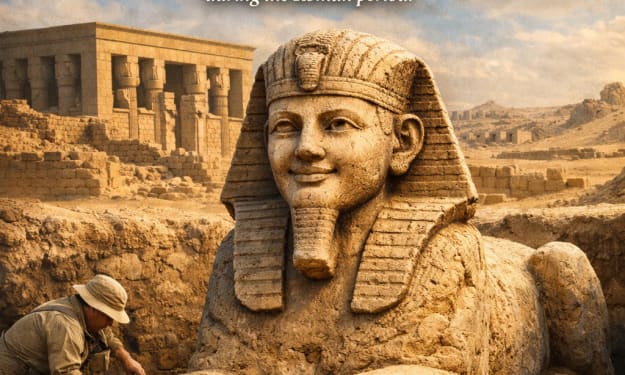
A 2,000-Year-Old Sphinx Statue Discovered in Egypt
Archaeologists in Egypt have uncovered an extraordinary ancient statue shaped like a sphinx that dates back roughly 2,000 years, providing historians with fresh insight into Egypt’s long and complex past. The discovery was announced by Egypt’s Ministry of Tourism and Antiquities after an archaeological mission unearthed the statue during excavation work near the Temple of Hathor in Dendera, located in Qena Province in southern Egypt.
By Irshad Abbasi 2 days ago in History
Bomb Scare
It was 2027, and the world never thought it would happen. A missle hit the United States, but it wasn't where they had anticipated. A little town in the northeast was hit by a missile strike, they didn't know why, and they didn't know exactly where it hit, but they did know it was a coastal community, somewhere between Maine and Delaware.
By Gregory Payton5 days ago in Fiction


Comments
There are no comments for this story
Be the first to respond and start the conversation.