
☢️Mohenjo‑daro “nuclear blast” theory - Ancient Indus Valley city
Where the radiation levels higher than normal


In the 1920s, deep in the floodplains of the Indus River in what is now Sindh, Pakistan, the ancient city of Mohenjo‑daro was rediscovered beneath centuries of silt and agricultural soil. Built around 2500 BCE at the height of the Mature Harappan phase, it was a marvel of urban planning, sanitation, and civil engineering—a testament to one of the world’s earliest great civilizations. Its bricks were sculpted, its bathhouses communal, its streets laid out in orderly grids. At its peak Mohenjo‑daro housed perhaps 40,000 people, all supported by an elaborate system of wells, drains, granaries, workshops, and public baths. It rivaled in sophistication the contemporary societies of Egypt and Mesopotamia.

Yet when archaeologists first explored the site, they were confronted not only by the marvel of its architecture but by enigmas that quickly multiplied. Among the most unsettling were human skeletons scattered in unusual positions—on steps, on lanes, even in clusters—as though death had come suddenly, before burial or ceremony could take place. Twisted bodies were found pressed into street corners or collapsed under rubble, left to wither where they fell. Alongside these remains, fragments of brickwork, fused pottery, and vitrified walls spoke of intense localized heat. On one legendary occasion, a stray report emerged suggesting that at least one skeleton exhibited elevated levels of radiation.
It was this mix—urban sophistication colliding with mass death without clear trauma, vitrification suggestive of sudden extreme heat, and even whispers of radioactivity—that gave rise to sensational interpretations. The most dramatic: that Mohenjo‑daro had suffered an ancient nuclear blast, a cataclysm strikingly similar to Hiroshima or Nagasaki, triggered by a lost, technologically advanced civilization—perhaps even sanctioned by shadowy gods or extraterrestrials.
But is there merit in such speculation? Or is it a modern myth, based on dramatic resonance rather than archaeological fact?

To understand why the theory took hold, one must begin with the skeletons. Early excavators, notably Sir Mortimer Wheeler in the 1950s, found human remains in kneeling or hunched poses on street level and in lower‑depth debris. Wheeler suggested these were victims of sudden destruction—perhaps the city’s final inhabitants caught unaware, unable even to seek shelter or perform burial rites. He proposed they might have died in a massacre, perhaps during an invasion by Aryan groups. Yet no weapons or defensive wounds were found, and further scrutiny revealed the bodies could just as easily belong to later squatter communities burying loved ones hastily in the city’s ruins.
Modern osteological studies, including craniometric research, indicate these are likely not massacre victims of a massive singular event. Their skeletal injuries match erosion or scavenger activity rather than trauma from weapons. Some may be squatters or pilgrims visiting after the city’s abandonment and succumbing later. Moreover, excavations continued over decades and skeletons appeared in strata of varying ages—some after the city’s decline. Though haunting, the bodies do not demand supernatural explanation.
The heat‑vitrified walls and fused pottery fragments are more intriguing. In several narrow zones—furnaces, kiln areas—bricks are fused, walls partially melted and collapsed, shards of pottery clumped together. Some researchers claimed temperatures exceeded 1,000 °C, comparable to nuclear blast conditions. One investigator even proposed a “heat epicenter” roughly 50 meters across where artifacts were glassified. This image dovetailed neatly with notions of sudden destruction by a powerful blast.
But archaeologists caution that intense heat can be generated during conventional fires—even fuel-fed conflagrations in sealed temple or temple‑like structures. Pottery kilns, smelting workshops, or pyro-technological rituals can reach extreme temperatures in localized areas. If such fires occurred within buildings choked with combustibles, and if ventilation were limited, the result could mimic vitrification zones. Meanwhile, adjacent structures might remain untouched.

Then there were the reports of radiation. One claim, originating in mid‑20th-century Soviet publications, stated that a single skeleton from Mohenjo‑daro exhibited 50 times the normal background radioactivity—an assertion seized upon by authors of alternative-technology books, who drew parallels to atomic-weapon fallout. Stories spread of bodies still radioactive, protected by radiation alarms, and of excavations halted pending scientific review.
Yet the details unravel under close examination. No formal peer-reviewed study confirmed Mohenjo‑daro skeletons were radioactive; no excavation report ever highlighted this anomaly. Instead, the single mention arises in anecdotes about Soviet measurements, whose provenance is unclear. Moreover, many skeptics trace the claim back to a misinterpreted Egyptian specimen in the mid-century literature—not an Indus burial. In short, the “radioactive skeleton” appears more legend than fact.
With sudden mass death, vitrification, and alleged radiation, the city seemed to line up with nuclear blast profiles—and the myth was born. Popular books, TV shows, and conspiracy websites assured readers that the ancient Indus Valley possessed advanced technology, that history was hiding forgotten weapons, and that somewhere beneath Mohenjo‑daro lay ruins of nuclear reactors or power plants.

Mainstream archaeologists responded firmly. They agree Mohenjo‑daro met a mysterious end—abandoned in the early second millennium BCE as part of a widespread Indus decline. But they find no sign of nuclear devastation, no mass graves of victims with radiation poisoning, no debris field beyond what urban collapse or flood might produce. The evidence points instead toward a combination of environmental changes (river shifts, drought), social restructuring (trade disruptions), and gradual depopulation. The city shows signs of disrepair before abandonment—unclaimed houses, failing sanitation, fewer public works—not the sudden catastrophe of an atomic strike.
Even skeletal burials, long portrayed as victims of a sudden end, can be interpreted as the bodies of a later era—vagrants, squatters, or pilgrims dying in an already empty city. The 37‑skeleton count comes not from a single collapse layer but from years of excavation, some bodies centuries younger than the city’s fall. The twisted poses are tragic, but not unique to sudden death; they appear when skeletal collapse occurs in debris over time. And again, there are no marks of trauma from weapons or blast wave.

But what of the vitrified bricks? Some bricks show fusing or melting. Yes—it suggests intense heat. But localized heat in workshop rooms or furnace zones can easily reach kilning temperatures. At some sites, ritual pyres or cremations also leave remnant heat scars. Additionally, there is no consistent pattern of vitrification across the site. Entire neighborhoods were not glassified. No one has found scorch across the Great Bath, the citadel walls, or residential quarter roofs.
If Mohenjo‑daro lacked consistent patterning of extreme heat, and if skeletons don’t align with nuclear blast effects, why did the myth take root? First, human nature: we craft myths to make sense of the mysterious. A silent city, abandoned at its peak, with scattered bodies and melted artifacts—it reads like Armageddon. Second, fringe literature thrives on the blanks in academic narratives. 'Alien gods' or 'lost technology' are compelling, and media often ignore the cautious nuance of archaeology. Lastly, once a story is told, each retelling adds dramatic detail until the original uncertainty is lost.
So what DID happen? The most supported scenario today is one of gradual decline. The Indus River shifts, perhaps combined with monsoon changes, triggered drought and agricultural stress. As trade networks faltered—especially with Mesopotamia—urban centers struggled. Political authority waned. Some residents left. Others remained and repurposed public buildings. Over time, the city fell into disrepair, flooding and silt covered streets, and squatters used abandoned houses. When they died, there were no formal burial grounds—so bodies were left where they fell.
Some evidence supports plague or disease outbreaks, though no mass epidemic traces exist. Some bones hint at nutritional stress or arthritis in late period skeletons. Flooding layers—silt deposits—suggest seasonal inundation of lower neighborhoods. Of course, floods didn’t disintegrate walls into glass, but they did disrupt sanitation and urban order—potentially triggering uncontrolled fires as residents lit hearths amid chaos.

The legacy of Mohenjo‑daro remains powerful, and rightly so. It was a triumph of Bronze Age urban planning—multi-story homes with attached bathrooms, efficient drainage systems rivaling modern standards, a public Great Bath, granaries, “citadel” administrative centers, and craft industries. Its Lost Girl statue—a tiny bronze statuette—reveals exceptional artistry and humanism. Mohenjo‑daro scholars recognize the ingenuity, social organization, and cultural progress achieved there.
But the nuclear-blast myth diminishes that achievement. It replaces engineering skill with supernatural power, communal grandeur with apocalypse. The Indus story becomes less about people and more about fiction. The true mystery isn’t the lost reactor—it’s why one of history’s most advanced Bronze Age cultures faded away amid a revolution of climate, trade, and societal stress.
Moreover, new science tools reveal more: soil CORE samples show long-term drought cycles; isotopic analysis tracks river movement; remote sensing exposes unexcavated building clusters. Mohenjo‑daro isn’t buried under towers—it occupies less than half its ancient footprint. The rest lies beneath modern fields, awaiting gentle investigation.
Some skeletons may still lie in situ; one can still imagine families walking the streets one day, unaware of what history lay beneath. Future digs promise further clarity—who lived, who died, and when. Genetics, dental analysis, and microsampling of sediments will illuminate diet, migration, health, and trade.
In the meantime, the “nuclear blast hypothesis” stands as a caution. It reveals how myth can grow faster than data. But it also reminds us why fascination with the ancient thrives—the idea of sudden endings, cosmic mysteries, lost knowledge. Mohenjo‑daro offers none of that. It gives something far richer: a window into real humanity—families who bathed, traded, told stories, and adapted in the face of challenge.
By letting go of myths, we can hold closer the truth: that Bronze Age people were brilliant, pragmatic, creative, resilient—and that their downfall came not from a bomb, but from the complex forces of environment, economy, and society. Mohenjo‑daro’s end was not a roar; it was a hush. And in that hush, the city remains, offering lessons about adaptability, fragility, and the long arc of civilizations.

So if you visit Mohenjo‑daro today, don’t come expecting radiation readings or shattered glass streets. Instead, walk its silent lanes, gaze at its granary walls, descend into the Great Bath, and imagine the humans who built it. That story is extraordinary enough. The true miracle is that such a city existed so long ago—and that archaeologists are still piecing together its end based on careful work, not cataclysmic myth. In that way, Mohenjo‑daro speaks not of destruction but of wonder—and of the fragility of human achievement.
About the Creator
Kek Viktor
I like the metal music I like the good food and the history...
Keep reading
More stories from Kek Viktor and writers in History and other communities.
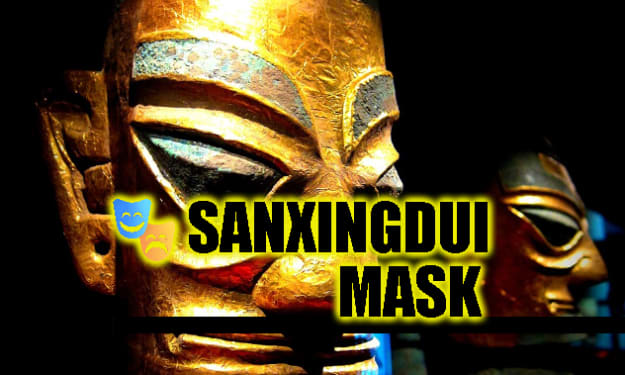
🎭Sanxingdui Mask and the Lost Civilization of Shu in Ancient China
🪨 The Earth Opens – A Discovery Beneath Sichuan's Soil In the summer of 1929, the course of Chinese archaeology was forever altered when a humble farmer named Yan Daocheng, while digging an irrigation trench near the small village of Sanxingdui in Guanghan, Sichuan Province, struck something solid just beneath the surface. What emerged was not stone or wood but smooth, polished jade—an intricately carved object unlike anything local villagers had seen. The discovery passed quietly at first, filed away as a strange curiosity. But it hinted at something enormous and long-buried under the rolling plains of western China.
By Kek Viktor9 months ago in History
The Year 1906 in Review: Fun Facts, Trivia, and Historic Highlights
This quick read is a collection of fun facts, trivia, and historic events from the year 1906. Learn about the year’s top news stories, most influential people, famous birthdays, sports trivia, noteworthy inventions, and much more.
By Gregory DeVictor2 days ago in History


Comments (2)
I think it was a natural...
The mystery of Mohenjo-daro is fascinating. The idea of a nuclear blast is wild, but the evidence of sudden death and extreme heat makes you wonder what really happened.