
🏔️ Machu Picchu: The Inca Sanctuary Between Earth and Sky
🌄The True Story of the Hidden Inca Citadel Rediscovered After Centuries of Silence

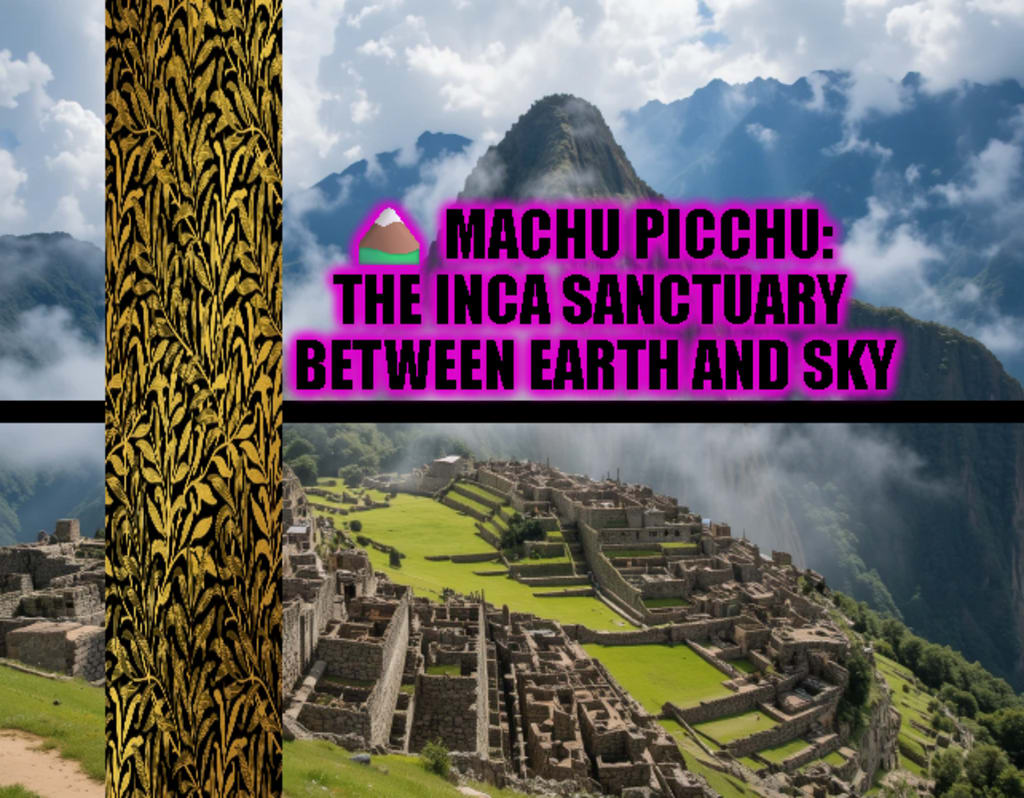
🏔️ Machu Picchu: The Inca Sanctuary Between Earth and Sky
🌄The Setting – The Andes Mountains and the Forgotten Fortress in the Clouds
Machu Picchu is located in southern Peru, high in the Eastern Cordillera of the Andes Mountains, approximately 80 kilometers (50 miles) northwest of the city of Cusco, which was once the capital of the Inca Empire. Perched on a narrow saddle ridge between the steep peaks of Machu Picchu and Huayna Picchu, the site sits at an elevation of about 2,430 meters (7,970 feet) above sea level. It overlooks the winding Urubamba River, which curls around the base of the mountains in a dramatic loop. The valley is blanketed in dense subtropical cloud forest, rich with biodiversity, orchids, mosses, and towering ferns, creating a vivid natural amphitheater that is as spiritually evocative as it is visually majestic.
The topography played a crucial role in the site's development. The location is not only naturally defensible but also holds symbolic and practical value. From a sacred Andean worldview known as Andean cosmology, mountains were considered apus, or spirits, and the surrounding landscape was viewed as a living part of their spiritual world. The Incas deliberately constructed Machu Picchu in alignment with these mountains, integrating spiritual significance with practical engineering. Moreover, the site is situated near a geological fault line, which may have made the cutting and transport of stone slightly easier. However, it also posed a seismic risk, which the Inca builders masterfully addressed through their earthquake-resistant architectural designs. The harmony between architecture, topography, and spiritual ideology is a defining feature of Machu Picchu and sets it apart from many other ancient cities.

🏛️Construction and Architecture – Precision Without Metal or Mortar
Machu Picchu was most likely constructed around the year 1450, during the reign of Pachacuti Inca Yupanqui, the ninth Sapa Inca (ruler) of the Inca Empire. His reign marked a period of dramatic expansion and architectural innovation. The construction of Machu Picchu would have required immense human labor and coordination. Workers quarried stone from the nearby mountain slopes and moved multi-ton granite blocks up treacherous inclines without the use of wheeled carts, iron tools, or draft animals. All evidence suggests the Inca relied on human strength, rope, wooden rollers, and their profound knowledge of terrain and leverage.
The builders used a technique known as ashlar masonry, where stones are shaped to fit perfectly together without mortar. This technique, while labor-intensive, created structures with extraordinary durability, capable of withstanding centuries of earthquakes in one of the most geologically active regions of the world. The Incas engineered systems of drainage, retaining walls, and terraced hillsides to control erosion and channel heavy seasonal rains away from the buildings. These water control systems included fountains, canals, and reservoirs that supplied clean water to the inhabitants and reduced the risk of landslides.
Machu Picchu consists of more than 150 buildings, including houses, religious shrines, ritual baths, plazas, and storage facilities. The urban sector features two main zones: the agricultural area and the residential and ceremonial center. The agricultural terraces were built with stone retaining walls and filled with layers of gravel, sand, and topsoil, allowing crops like maize and potatoes to be cultivated in otherwise unworkable terrain. The temples, such as the Temple of the Sun and the Temple of the Three Windows, show advanced astronomical alignments. The main temple complex is believed to have been used for the worship of Inti, the sun god, and the solstices were carefully observed through solar markers such as the Intihuatana stone.

👑Purpose and Significance – A Royal Retreat or Sacred Observatory?
The precise function of Machu Picchu remains a matter of scholarly debate, but prevailing theories converge on a few key purposes, all grounded in archaeological evidence and ethnohistorical sources. One of the strongest interpretations is that it was a royal estate or seasonal retreat built for Emperor Pachacuti. It was common practice among the Inca elite to establish such country estates for political, religious, and recreational purposes. These were not mere getaways but centers of administration, ritual, and governance. The layout and luxury of the city support this view—elaborate residential areas and fine stonework, including private baths, suggest high-status occupants.
Another prominent theory is that Machu Picchu was a sacred ceremonial center deeply embedded in the Inca spiritual worldview. The Incas were animists who believed that nature and the cosmos were filled with living forces. As such, the placement of the city and its orientation to significant celestial events were likely designed to align with this belief. The Intihuatana stone, often referred to as a ritual solar clock or sundial, marks important solar alignments, particularly during the June and December solstices. Its name, meaning “hitching post of the sun,” reflects the belief that it could tether the sun to ensure its return each day.
Additionally, some researchers view Machu Picchu as a pilgrimage site. The Inca road system, known as the Qhapaq Ñan, extended for thousands of kilometers and connected religious and political centers across the empire. Several trails lead to Machu Picchu, and the famous Inca Trail may have functioned as a sacred pilgrimage route with rest stations and ritual points along the way. The surrounding region is also filled with additional Inca sites, suggesting that Machu Picchu was part of a broader sacred geography. Ultimately, its role may have combined royal, spiritual, and astronomical purposes, reflecting the holistic nature of Inca society.

🔍Rediscovery – Hiram Bingham and the Global Spotlight
Though Machu Picchu was never truly “lost” to local inhabitants—Peruvian farmers and Quechua-speaking residents had always known of its existence—it was unknown to the outside world until the early 20th century. On July 24, 1911, Yale University professor and explorer Hiram Bingham arrived at the site guided by a local farmer named Melchor Arteaga and a young boy named Pablito Ricardo, whose family lived near the ruins. What Bingham saw was a jungle-covered city with remarkably well-preserved buildings, terraces, and sacred stones.
Bingham initially believed he had discovered the legendary “Lost City of the Incas,” which he associated with Vilcabamba, the last refuge of the Inca resistance during the Spanish conquest. Though this identification was later proven incorrect—Vilcabamba is a different site—his discovery ignited global interest. Supported by Yale and the National Geographic Society, Bingham returned for multiple expeditions between 1912 and 1915. He conducted extensive excavations, cleared vegetation, mapped the site, and removed thousands of artifacts, including ceramics, jewelry, and human remains. These were shipped to Yale for study, sparking a long-standing international dispute.
The Peruvian government later challenged Yale’s right to retain the artifacts, initiating decades of negotiations. Finally, in 2011, marking the 100th anniversary of Machu Picchu’s rediscovery, many of the artifacts were returned to Peru, where they are now housed in the Museo Machupicchu at Casa Concha in Cusco. Today, scholars credit Bingham not with discovering Machu Picchu, but with bringing it to international attention. His work opened the door to modern archaeology in Peru and launched Machu Picchu into its role as a symbol of Andean cultural heritage.

🌍Modern Recognition and Conservation Challenges
Machu Picchu was declared a Peruvian Historical Sanctuary in 1981 and was inscribed as a UNESCO World Heritage Site in 1983. It has since become one of the most visited archaeological sites on Earth. It was also voted one of the New Seven Wonders of the World in 2007 through a global campaign that brought even more attention to the site. However, with fame has come significant strain. By the early 21st century, more than a million tourists visited the site each year, raising concerns about preservation, erosion, and damage from foot traffic.
To manage these risks, the Peruvian government has introduced a series of protective measures. These include capping daily visitor numbers (currently around 4,500 per day), requiring tickets with timed entry, and mandating guided tours. Certain routes, such as Huayna Picchu and the Inca Bridge, now require separate permits. The traditional Inca Trail is also regulated, with a limited number of trekking permits issued each year and licensed guides and porters required for all travelers.
In parallel, conservationists and archaeologists are using cutting-edge technology to monitor the site. Techniques such as 3D laser scanning, photogrammetry, and GIS mapping allow experts to assess the impact of tourism and weather and detect structural weaknesses. International collaborations have helped preserve the surrounding ecosystem, and there are proposals to build new infrastructure—like remote viewing platforms and shuttle systems—to reduce the burden on the main site. The tension between access and preservation remains an ongoing issue, but efforts continue to ensure that Machu Picchu endures for generations to come.

🪶A Living Legacy – Machu Picchu and Inca Cultural Identity
Machu Picchu is not merely a historical ruin frozen in time. For many modern Peruvians, particularly indigenous Quechua communities, it is a living symbol of resilience, identity, and heritage. Despite the Spanish conquest and centuries of colonial rule, many aspects of Inca culture—including the Quechua language, agricultural traditions, and spiritual beliefs—survive to this day. Pilgrimages, festivals, and ceremonies rooted in ancient Andean practices are still held throughout the Sacred Valley and Cusco region, affirming a cultural continuity that defies historical erasure.
Educational programs in Peru now emphasize indigenous history, and Machu Picchu plays a central role in national pride. It is featured on currency, official seals, and taught in schools as a cornerstone of Peru’s pre-Columbian legacy. The surrounding region also supports a thriving local economy based on sustainable tourism, handicrafts, and cultural preservation. Meanwhile, international scholarship continues to evolve, uncovering new details about the Inca state’s agricultural innovations, religious ideologies, and social organization.
For the world, Machu Picchu remains a breathtaking reminder of human ingenuity and adaptability. Built without modern tools, its stones hold the memory of a people who flourished in harmony with one of the world’s most challenging environments. It challenges assumptions about “primitive” societies and reminds us that great civilizations have risen—and fallen—across all continents. As a site of awe, mystery, and reverence, Machu Picchu is more than an archaeological wonder; it is a bridge between the ancient and modern worlds, an eternal city in the clouds.
About the Creator
Kek Viktor
I like the metal music I like the good food and the history...
Keep reading
More stories from Kek Viktor and writers in History and other communities.
When a “Threat” Became Reality: Saddam Hussein’s Invasion of Kuwait
In the summer of 1990, tensions in the Middle East were rising, but few people believed that an actual war was about to begin. Many diplomats and analysts assumed that Iraqi leader Saddam Hussein was simply using harsh rhetoric to pressure his smaller neighbor. However, what many dismissed as a political threat soon turned into a shocking military invasion that reshaped global politics.
By Irshad Abbasi 8 days ago in History


Comments (1)
Machu Picchu's location is amazing. The Andes setting makes it both defensible and spiritually significant. And the way they built it without metal or mortar? Super impressive. I wonder how they managed to cut and transport those huge stones so precisely. Must've been some serious engineering skills. The integration of architecture with the landscape and spiritual beliefs is really cool. It shows how they saw the world. Also, dealing with the seismic risk near the fault line was smart. How did they test the earthquake resistance of their designs? That's something I'd love to know more about.