
Let's Talk About Today’s Effects of Colonial Racism and Superiority Complex on an Ordinary Joe in SADC
The Weight of Colonial Borders - By : Abraham Pahangwashimwe
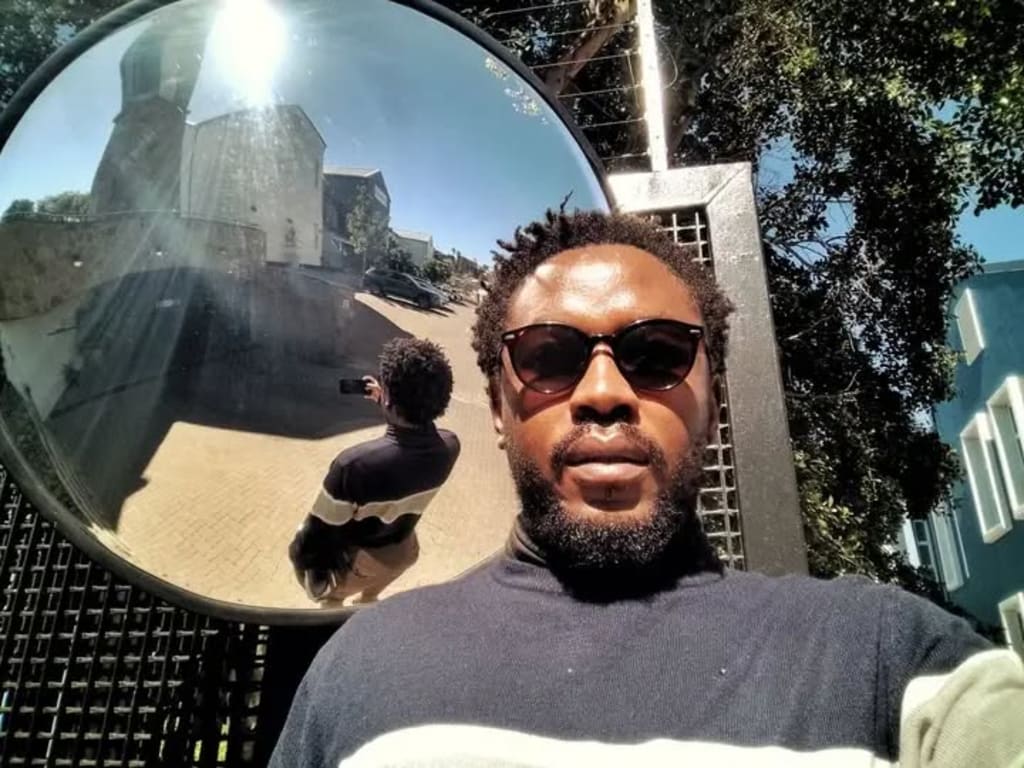
Colonial borders and centuries of imposed hierarchies did not just shape maps; they shaped lives. Over 110 years ago, the line between Namibia and Southern Angola was drawn, scattering communities, breaking lineages, and uprooting people from their ancestral heartlands. For ordinary people across the SADC region, these historical wounds are not distant memories. They echo in daily life, in lost opportunities, in social exclusion, and in the subtle but persistent superiority complexes that still linger in workplaces, schools, and social spaces.
Yet there are still those with the audacity to attack me daily when I am being pro-Pan-Africanist as a personal protest. I know my pain and understand how the world around me perceives people of my stature and class. In fact, for a while now, I have been following these conversations quietly. Well, sometimes louder, but as someone whose life and lineage carry the weight of colonial borders, displacement, and unhealed history, I cannot stay silent. Some of us do not study racism. We live it, inherit it, and carry it in our bones.
1. Ancestral Lineage and Heritage
My lineage traces back to Onyaluheke ya Kashingwena, in the Ovakwanyama territory of Southern Angola, near Oshimolo, Omupanda, Ondova, and the wider northern frontier. My great-grandfather, Kashingwena, was a Soba (chief), a headman who led and cared for his people. His son, Ishimono, continued that lineage. My grandfather, Nghidishange Antonio yaHishimono, was born into leadership deeply rooted in that land and its people.
For generations, they regulated ancestral grazing patterns, managed cattle post distributions, and fulfilled countless cultural duties tied to Ovakwanyama heartland chiefs. Today, these titles mean nothing. They were destabilised together with our pride, our unity, and our sense of belonging. The colonial borders and war uprooted us. My father had to flee for his life. Our ancestral territories and communities were divided and weakened. Leadership, continuity, and connection to our homeland were all interrupted by forces beyond our control.
2. The Present Echo of the Past
People, especially in Namibia and Angola as per my personal experience, often say, 'The past is the past.' However, how can it be past when it still shapes our present? Colonialism, preceded by racism, still pulls on the same old thread. Your body remembers. Your mind carries it. Just like those lonely kids at the party, you regulate alone, breathe alone, and survive alone, because silence has been the tool of survival for generations.
That is why these incidents matter. They are not isolated. They are echoes of colonial displacement, unprocessed trauma, and systems that were never allowed to heal. Namibia loves to say, We do not have a race problem. Nevertheless, people like me, displaced, disconnected from our heartlands, carrying the weight of interrupted lineage, experience it every day. In workplaces, in schools, and in social spaces, even in casual words spoken by those who think no one will challenge them, the remnants of hierarchy and superiority show themselves.
3. Inheritance and Resilience
I add my voice not in anger, but in inheritance. I come from people whose stories were broken by borders, yet whose resilience still flows through me. The strength of my ancestors is embedded in my existence, in my thoughts, and in my refusal to shrink before a world that has historically attempted to erase us. The displacement, the interrupted lineages, and the silenced voices have not vanished. They live in every conversation, every interaction, and every subtle way that history continues to assert itself on ordinary lives.
4. The Need for Dialogue
We need these conversations for our children, our families, and for all whose histories were fragmented. We deserve spaces where we do not have to shrink, smile, or silence ourselves to survive. Spaces where our identities, our legacies, and our histories are acknowledged and respected. We deserve to live in a society that recognises the consequences of imposed borders, the deliberate disruptions of cultural continuity, and the ongoing impact of colonial thought on modern social and economic life.
Because these incidents are not just unfortunate events. They are mirrors. They reflect the unresolved, unhealed, and ongoing effects of a system that once sought to divide, control, and diminish entire populations. Until we face what they reflect, Africa in general will continue carrying wounds disguised as scars. These wounds are passed down silently, through experience, through observation, and through the lived reality of people who were displaced, marginalised, and made to feel small for circumstances beyond their control. The echoes of colonial borders, imposed hierarchies, and the silencing of our histories persist, shaping everyday life in ways most people do not see or fully understand.
Understanding these dynamics is not an exercise in bitterness. It is a recognition of reality. It is a refusal to allow history to continue repeating itself unnoticed. It is a call to acknowledge that ordinary lives, like mine and many others, are still affected by decisions made over a century ago. Colonial borders, imposed hierarchies, and the legacy of displacement continue to manifest in subtle, sometimes invisible ways. They influence opportunities, shape social interactions, and affect the sense of belonging that everyone deserves.
We owe it to ourselves and the generations to come to confront these histories, to acknowledge the persistence of these impacts, and to create spaces where people are not forced to survive silently. The work begins with recognition, continues with dialogue, and grows through the courage to face what has long been ignored. Until then, the mirrors will remain, reflecting the truths that society has yet to fully confront and the scars that we still carry, visible and invisible, in every aspect of our lives.
About the Creator
Mr. Abraham Pahangwashimwe - BEYOND NORTH INVESTMENT CC
Namibian entrepreneur & creator, founder of Beyond North Investment CC & Beyond North Food. Building communities, innovative spaces & local brands.
📍Windhoek | 🔗 Beyond North
#BeyondNorth #Namibia #Entrepreneurship #Innovation #Community
Keep reading
More stories from writers in History and other communities.
The Light of Islam: The Journey of the Prophet
Over 1,400 years ago, in the city of Mecca, a child was born who would change the world forever. His name was Muhammad ﷺ, and he belonged to the noble tribe of Quraysh. From the beginning, his life was marked by trials and simplicity. Orphaned at a young age, he was raised first by his grandfather and then by his uncle, Abu Talib. Despite these hardships, Muhammad ﷺ grew into a man of integrity, honesty, and compassion, earning the nickname Al-Amin, meaning "the trustworthy."
By The best writer 2 days ago in History



Comments
There are no comments for this story
Be the first to respond and start the conversation.