
"Janet Horne" — The Last Witch Executed in Scotland
Which witch? For the History Would’ve Burned This Page Challenge


Imagine you're Janet Horne, an elderly woman living in Dornoch, a quaint little seaside town in the Sutherland county of Scotland's Highlands. It’s 1727, and you lead a modest life — not unusual for that time or place — with your daughter. Life isn’t easy, but it’s yours. You have the love of your daughter and the duty of caring for her to keep you going, despite the creeping onset of an illness we’d now recognise as senility.
Your daughter is a lovely wee lassie, though she has her issues. But you have a life together — quiet, fragile, decent.
Then comes the knock.
The angry voice of the local law enforcement. Dornoch’s sheriff-depute and his men are at the door.
You open it.
They barge in.
You are arrested.
Charged.
On what grounds?
Witchcraft.
Yes, that’s right.
As most reading this will know, witch hunts and trials are a real, ugly part of our shared history — no matter where you’re from.
Was Janet Horne a witch?
As we now understand, the vast majority of those accused — especially women — never practiced any form of witchcraft. So, no. Janet Horne was not a witch. She was just an elderly single mother with a daughter trying to make her way through the meagre but peaceful existence life had handed them both.
But you have been arrested. Charged. Locked in a cell — likely separated from your daughter — for something you didn’t do.
Why?
You're told it was the neighbours. They gossiped. They whispered about your daughter’s hands and feet — said they looked like hooves. So, if they looked like hooves, they must be hooves. Strange logic, but what can you do if the prevailing attitude of the time is dictated by that logic? They claimed you’d turned her into a pony. That you used her to ride across the Sutherland countryside, carrying out your witchcraft. You know — the witchcraft you never practiced?
Captain David Ross believed it, though. So there was not a lot you could do. Her deformities, he claimed, were proof. You’d tried to reverse the spell but failed to turn her fully back into a girl. Not only were you a witch, you were not very good at witchcraft, it seems.
No one cared about the truth or about asking and trying to listen to you. Your dementia may or may not have played a part in that, but that is not a good enough excuse.
It didn’t matter that the “hooves” were simply congenital deformities. It didn’t matter that there was no witchcraft. It didn’t matter that you loved your daughter.
Maybe you'll get a fair hearing, you think. Maybe someone will see reason.
I wish I could say that’s what happened. That you got to go home. That you lived out your days in peace.
But Captain Ross rushed the trial. Found both you and your daughter guilty. It was part of his crusade to protect the good and the pure of the area under his watchful protection, of course. Even if that meant you, innocent, and your daughter, innocent, were not protected.
You were to be executed the very next day.
Burnt alive at the stake.
For being a witch — when you were not a witch.
For being a woman who lived alone with her disabled daughter. For growing old. For being sick.
Let that sink in.
Your daughter escaped. She ran away. Records are not clear about what happened to her afterward. We can hope that maybe she found another so-called "witch" who took her in, but that's mere speculation.
You were not so lucky. Dementia had taken hold. You were confused, vulnerable.
A crowd tarred and feathered you — likely at Ross’s command — and paraded you around Dornoch in a barrel so everyone could mock and jeer. Everyone loves a scapegoat, don't they?
Then they dragged you to the place of execution.
As the flames rose and licked your body, you smiled — or so the legend says — because of the warmth.
And if all that wasn't cruel enough. As if you hadn't been through enough. Maybe, just maybe you'd have been given back your dignity in death.
Unfortunately, not, as your name was erased from any known records. You were called “Janet Horne” only after your death — a generic name, like Jenny, given to supposed witches in the Highlands.
Talk about insult to injury.
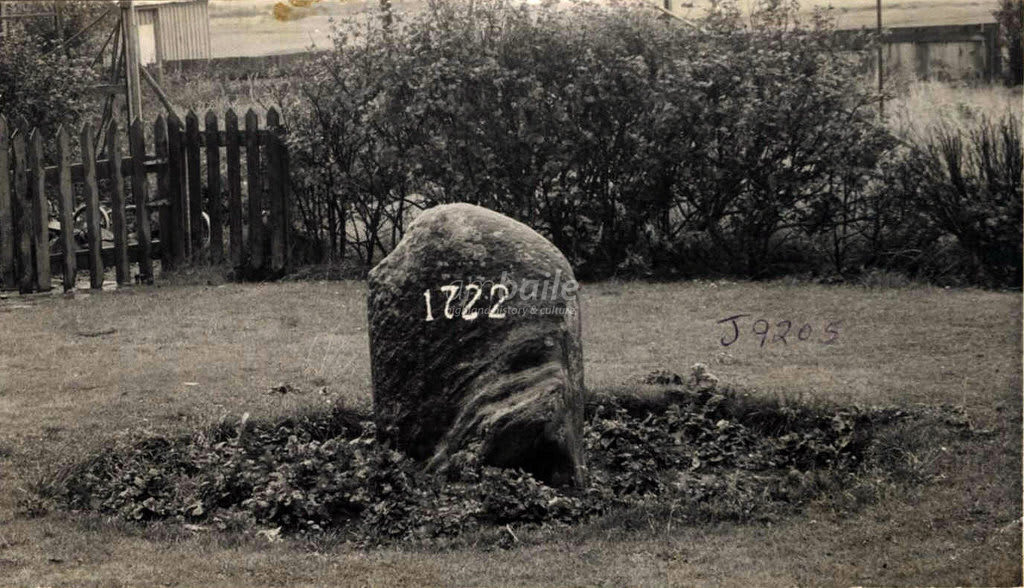
Today, there is a small, unimpressive monument in your name, called The Witch’s Stone, Littletown, Dornoch. (Unflattering, don't you think?)
Which Witch?
I’ve always seen witch hunts and witch trials as a perfect example of how quickly we let fear of the unknown spiral into hatred — and how easily hatred becomes violence. Unjust. Irreversible.
My first issue is with the names themselves. “Witch hunts” and "witch trials" sound like some noble crusade to root out danger and protect the god-fearing. As if something wicked was genuinely being pursued.
But as I’ve already said, the people — particularly women — accused of witchcraft were not witches.
So why were they targeted?
Superstition. Religious hysteria. The Devil’s name on everyone’s lips. A lack of understanding about natural phenomena and human difference.
It was always the marginalised who bore the brunt. Women who didn’t conform. Poor women. Old women. Disabled people. Unmarried. Unafraid to speak.
As in the case of “Janet Horne,” the accusations were based on nothing but rumour, fear, and ignorance.
Once arrested, torture was common. Confessions were extracted by force. Most “admitted” guilt just to end the pain — and that coerced confession sealed their fate. I'm not sure I blame them. The pain, the suffering, the shame and the knowledge that all of this would have spread like wildfire just as quick as the rumours of you being a witch did in the first place.
It’s worth remembering: witchcraft was outlawed in Scotland under the 1563 Witchcraft Act. Even into the 18th century, belief in witches remained strong — and dangerous.
This is another part that really makes me angry about the whole affair. Even if they had been witches — which they weren’t — these trials would still have been cruel. Most people who practice any form of witchcraft do so for spiritual, personal, or naturalistic reasons. Not harm.
They follow their own path. Their own rituals. Just like anyone else.
Why Does This Matter Now?
Because if we don’t learn from the past, we’ll keep repeating it.
There are still parts of the world where women and other marginalised people are being persecuted — tortured, put through unfair justice systems and trials they have no chance of winning, imprisoned, and even murdered.
The witch trials never truly ended.
They just changed names. Think, the disabled, the queer, the faithful of other paths, the ones with different skin.
So the question remains—
Which witch?
*
Thanks for reading!
Author's Notes: The sources used to put together this piece are linked below. Sadly, there is not much information to go on and while there are some books and a small Wikipedia entry, I still felt it worth highlighting through this challenge.
Sources: https://www.nls.uk/learning-zone/literature-and-language/themes-in-focus/witches/source-6/
https://en.wikipedia.org/wiki/Janet_Horne#cite_note-:0-3
https://www.scotlands-enchanting-kingdom.com/scotlands-lesser-known-historical-figures/
About the Creator
Paul Stewart
Award-Winning Writer, Poet, Scottish-Italian, Subversive.
The Accidental Poet - Poetry Collection out now!
Streams and Scratches in My Mind coming soon!
Reader insights
Outstanding
Excellent work. Looking forward to reading more!
Top insights
Compelling and original writing
Creative use of language & vocab
Easy to read and follow
Well-structured & engaging content
Expert insights and opinions
Arguments were carefully researched and presented
Eye opening
Niche topic & fresh perspectives
Heartfelt and relatable
The story invoked strong personal emotions
Masterful proofreading
Zero grammar & spelling mistakes
On-point and relevant
Writing reflected the title & theme
Keep reading
More stories from Paul Stewart and writers in History and other communities.
Savoy Hotel – Mussoorie: The Colonial Luxury Hotel Where an Unsolved Murder Still Walks the Corridors
The First Night: Beauty Wrapped in Silence Mussoorie looks peaceful from a distance. Pine trees sway gently, clouds roll like slow-moving waves, and the hill air smells of rain and old earth. But as evening falls, the silence becomes heavier—almost watchful.
By Gaurav Gupta3 days ago in History
Is NATO Facing Its Biggest Crisis Yet?
Is NATO Facing Its Biggest Crisis Yet? For more than seventy years, NATO has been one of the strongest military alliances in the world. Formed after World War II, it was designed to protect its members through collective defense. An attack on one was considered an attack on all. For decades, this principle helped maintain stability in Europe and beyond. But today, NATO is facing one of the most challenging moments in its history.
By Wings of Time 7 days ago in History
Silver Screen Magic with Mae West
American actress and singer Mae West became a popular film actress during the Great Depression. She started entertaining in vaudeville, then performed on Broadway, and finally went to Hollywood. She signed up with Paramount Pictures and made her debut in the 1932 film “Night After Night.” She also starred in musicals, comedies, and crime dramas. The American Film Institute named her one of the best classic Hollywood actresses.
By Rasma Raisters5 days ago in Geeks



Comments (23)
Well deserved placing in the challenge. A tragic tale.
Which witch? Brilliant closer Paul. I liked how you framed it as "you" for the story, to get us closer to the action. I've never really done a lot of digging on this part of history, and only ever really think the word "Salem" as I've heard it so much, so this was interesting to find up in Scotland. "It was always the marginalised who bore the brunt. Women who didn’t conform. Poor women. Old women. Disabled people. Unmarried. Unafraid to speak."- so true. People abuse their power, and people fear differences. Timely!
Congrats, Paul!! Very pleased to see this was a winner!! Cheers, friend!
Hey Paul back to say congratulations It was so good to see your name and this story
Back for the best of reasons, Congrats on placing, Paul!!!
Congratulations on your win 🎉🎉🎉History tried to burn as many pages about witches as they could find, but we never forget.
Wooohooooo congratulations on your win! 🎉💖🎊🎉💖🎊
What a frightening time... such a nightmare so much of the past is repeating itself. The horror these women were put through has always haunted me. This was so engaging. Awesome job and congrats, friend! Well deserved :)
And then they erased her real name from history. Such a well written story and wonderful tribute to the memory of one so disabused in her time. Congratulations on your Runner Up!
This reads like a provocative lecture at University. Definitely a strong reminder of both how hateful people can be and how stupid fear and fear mongering make us. Truly an exceptional entry to the challenge, Paul! Congrats on placing!
I always have a soft spot for witches/ witchcraft and the persecution of them, so this hit just right for me!! Congrats on Runner- Up in the history challenge, Paul!!
I've always find interest in stories of witchcraft. Like you and many others, I never believed they were witches. There's never any hard proof of malevolent behavior, just assumptions. Great entry, Paul!
Such a heartbreaking and horrific piece of history. Very well written, Paul, your stylistic choices made it feel very immersive which made it all the more disconcerting
I wish I could give you a second like for citing your sources lol. Great entry for someone who said they might not enter. Sadly as others have said, it’s all witch hunts by any other names these days
Something that is different is always automatically assumed as bad. If they don't understand it, it's bad. And you're so right. It's still going on, they just changed names. I never thought of it that way. Such an eye opener. Also, there's a small typo in this sentence. I think you meant trials* instead of trails: “Witch hunts” and "witch trails" sound like some noble crusade to root out danger and protect the god-fearing.
Fantastic article and I really love the way you’ve linked it to current events. What’s that saying - we’re taught to fear the witches rather than the people burning them.
And now those conducting those similar witch hunts accuse others of conducting witch hunts against them for pointing it out. (Yeah, Donnie, I'm looking at you.)
You give us a lot to think about with this story. Your story reminds me of the Salem Witch trials over here. Good job.
Well-wrought! There are still statutes against witchcraft, and trials, persecutions, and executions, to this day. Especially in Africa. In some Scandinavian countries, men were targeted as warlocks more often than women. The records reflect vastly different details from place to place, but the one thing that remains the same is baseless superstition and unreasonable persecution. The story of Giordano Bruno also comes to mind.
Witch hunt in new forms….interesting yet true.as most case they are based on fear or revenge or even the rich trying to seize property. You name it humans are strange
What a tragic story, my goodness. You make such a great point in particular about the “witch trials” being made out to be something brave and good that people were doing for the sake of protecting others—against the Devil or evil or sin, or whatever it may have been—when really it was nothing but mad violence against women due to superstition and preconceived ideals about what is right and what is so wrong it should be punishable by such a horrid death.
Reprehensible, to say the least. Vile, to say another. I was going to say, with the way parts of the world are heading, I wouldn't be surprised if certain people tried bringing witch trials back. But you're completely right when you say they've just changed monikers. And now I'm pissed (not at your writing, obviously - that's great and thank you for sharing this). I'm just pissed at the world, at our history, at the despicable people.
These paranoid "witch" hunts can be started so easily. Just a few words, and people start looking for a scapegoat.