
If World War 3 Started Tomorrow: The First 24 Hours Explained
A realistic look at how the world would unravel in just one day of global war

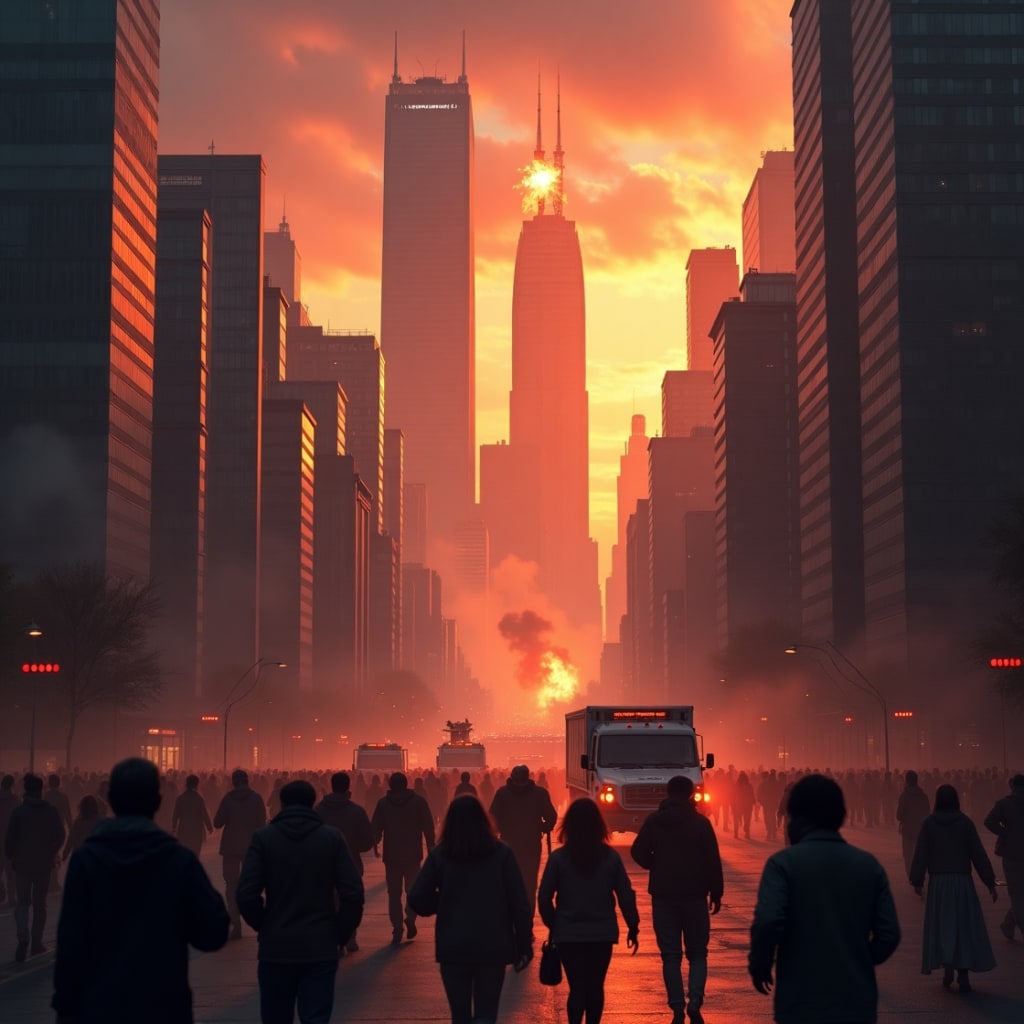
Introduction: The Question We Fear Most
For decades, experts and ordinary people alike have asked a haunting question: *what if World War 3 began tomorrow?* Most discussions focus on the weapons or alliances involved, but few stop to imagine how the first **24 hours** would feel for ordinary citizens. Those first moments would define not just the war itself, but the survival of billions.
Hour 1–3: Shock and Sirens
The first hours would begin with confusion. News stations would flash breaking alerts, and emergency broadcasts would cut through television and radio. Social media would ignite with frantic messages—some real, many false.
In targeted cities, sirens would wail as people searched for shelter. Families would crowd into basements, subway stations, and government bunkers. Airports would be overwhelmed within minutes, as thousands scrambled for flights out of threatened zones, though most would be canceled before takeoff.
Even in countries far from the first strikes, fear would spread instantly. Parents would rush to collect children from schools. People would drain supermarkets of food and bottled water. The world’s heartbeat would shift from routine to survival in the blink of an eye.
Hour 4–8: First Strikes and Panic
As missiles or cyberattacks hit their targets, global infrastructure would falter. Electricity would vanish in major cities. Banking networks and the internet would slow, then collapse under the weight of attacks and panic withdrawals.
Stock markets worldwide would crash, wiping out billions within hours. Lines would stretch outside gas stations as fuel supplies ran dry. Hospitals would flood with both the wounded and the terrified.
In some regions, chaos would erupt faster than any government could control. Looting would break out as people tried desperately to secure supplies. Police forces would be stretched thin, while military convoys began to appear on city streets.
Hour 9–15: Martial Law and Refuge
By the second phase of the day, governments would begin taking drastic measures. Borders would close. Airports and seaports would be placed under military command. Leaders would deliver emergency addresses, some from secure underground bunkers.
Martial law would be declared in many places. Curfews, rationing orders, and bans on gatherings would appear overnight. Soldiers would patrol highways, directing civilians to shelters or away from restricted zones.
For ordinary families, survival would take on a new meaning. Some would be lucky enough to find space in official shelters. Others would be forced to rely on neighbors, churches, or abandoned buildings. Fear of the unknown—*where will the next strike fall?*—would hang heavier than the bombs themselves.
Hour 16–20: Silence and Blackouts
As the day wore on, silence would settle in. Power grids in many regions would be completely down. Mobile networks would fail, leaving millions cut off from loved ones. Radios might become the only source of news, though signals would be inconsistent.
The sky would no longer be dotted with airplanes. Civilian flights would vanish, replaced by military jets. Roads would empty, not because people wanted to stay home, but because fuel would already be gone.
In the cities hardest hit, smoke would rise from collapsed buildings. Survivors would pick through rubble, searching for missing relatives. Refugee movements would begin almost immediately, as thousands left urban centers for the countryside, hoping rural areas might be safer.
Hour 21–24: A Changed World
By the time midnight approached, the world would already feel unrecognizable. Millions would be homeless, countless lives lost, and billions more left in paralyzing fear. Banks would be shuttered. Schools, workplaces, and shops would no longer exist in any meaningful sense.
The psychological impact would be immense. Some would cling to radios or rumors, desperate for any sign of safety. Others would break down under the weight of uncertainty. Yet even in those first hours, human resilience would emerge—neighbors sharing food, strangers offering shelter, families holding together in the dark.
Conclusion: The First Day of Forever
If World War 3 began tomorrow, the first 24 hours would not be about armies clashing or strategies unfolding. They would be about ordinary people—families, workers, children—suddenly thrown into a nightmare they never imagined.
The collapse of systems, the panic in the streets, and the silence of blackout cities would mark the beginning of a new era of uncertainty. What comes after—days, weeks, or years of conflict—would be determined by choices made in those opening moments.
And perhaps the most sobering truth is this: by the end of that first day, the world we knew would already be gone. The first 24 hours would not just change history—they would end one chapter of civilization and begin another, written in fear, survival, and the fragile hope that humanity could rise again.
About the Creator
Wings of Time
I'm Wings of Time—a storyteller from Swat, Pakistan. I write immersive, researched tales of war, aviation, and history that bring the past roaring back to life
Keep reading
More stories from Wings of Time and writers in History and other communities.
🌍 World War 3: How the First Battles Might Unfold
How the First Battles Might Unfold Introduction: The Calm Before the Storm If World War 3 were to begin, it would not look like the wars of the past. The weapons are faster, the technology more advanced, and the risks greater than ever before. Military planners around the world quietly prepare for such a possibility, knowing that the opening days would be critical.
By Wings of Time 4 months ago in History
Military Strength of Alexander the Great and the Chola Empire: A Historical Comparison
Though separated by more than a thousand years and operating in vastly different geographical and cultural contexts, both forces achieved extraordinary success through discipline, innovation, and strategic brilliance. This article explores the history, composition, size, organization, and military strength of Alexander’s Macedonian army and the Chola military, highlighting how each became a dominant power of its era.
By Say the truth 4 days ago in History
The Hard Ways Trump Could Try to Take Greenland
When Donald Trump was president of the United States, he shocked the world by saying he wanted to buy Greenland. Many people laughed, but others took the idea seriously. Greenland is a huge island in the Arctic. It is rich in natural resources and very important for military defense. Today, Greenland belongs to Denmark, but it also governs itself in many areas.
By sehzeen fatima7 days ago in History



Comments
There are no comments for this story
Be the first to respond and start the conversation.