
How Did Hitler Rise to Power?
History's Most Powerful Dictator.

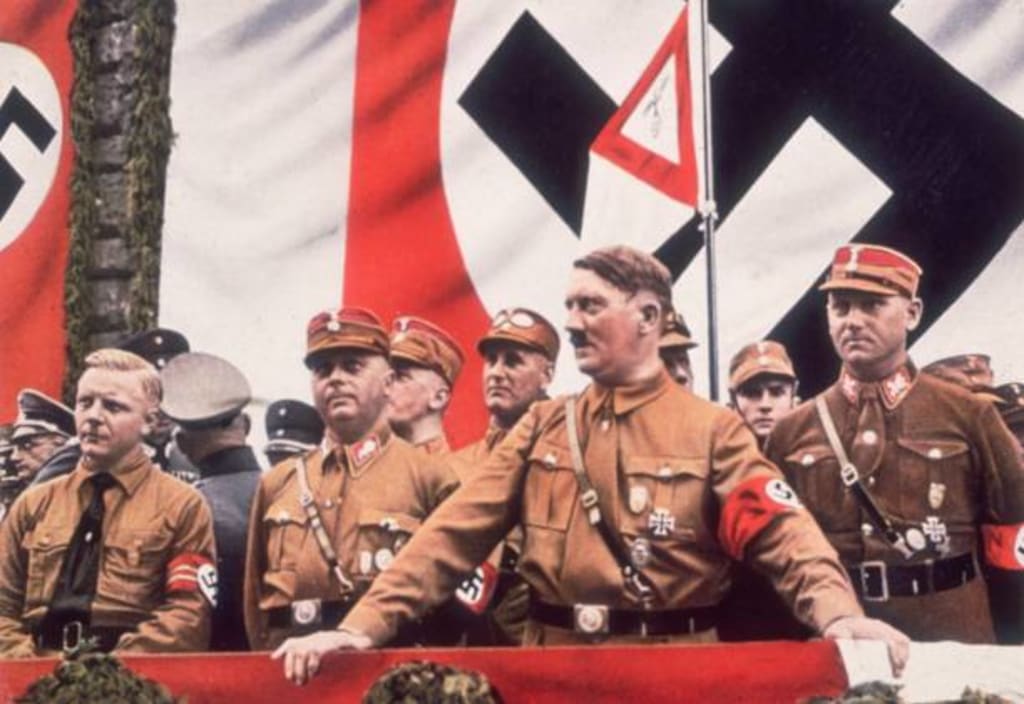
The rise of Adolf Hitler, a dictator responsible for one of the most horrific genocides in history, is a chilling narrative that began in the aftermath of World War I. Germany had fought valiantly, but the successful advance of the Allied forces in1918 made it clear that the war was unwinnable. Consequently, Germany signed an armistice, bringing an end to the fighting. As Germany’s imperial government crumbled, civil unrest and widespread worker strikes erupted throughout the nation.
The Weimar Republic and Economic Hardship
In response to this turmoil and fearing a Communist revolution, Germany's major political parties united to suppress the uprisings, leading to the formation of the Weimar Republic. One of the new government's first significant tasks was the painful implementation of the Treaty of Versailles. This treaty mandated that Germany relinquish over10% of its territory, drastically reduce its military capabilities, accept full responsibility for the war, and pay heavy reparations. These crippling demands fueled a sense of humiliation among many Germans, especially nationalists and veterans who believed that the war could have been won had their politicians and protesters not betrayed the army.
This prevailing sentiment deeply influenced Hitler, whose growing obsession with perceived injustices became intertwined with his bigotry. He misdirected his anger towards the Jewish community, leveraging existing anti-Semitic sentiments in German society. Despite hundreds of thousands of Jews integrating into the fabric of life in Germany, they were often viewed as outsiders, particularly when unfounded accusations of wartime subversion and profiteering circulated.
Hitler Joins the Nationalist Movement
Hitler’s rise began when he joined a small nationalist political party known for its extreme views. His talent for oratory and manipulation quickly propelled him into a leadership position, attracting increasingly larger crowds. By combining anti-Semitism and populist rhetoric, the fledgling Nazi Party labeled both Communism and Capitalism as products of an “international Jewish conspiracy” aimed at undermining Germany.
Initially, the Nazi Party struggled to gain traction. Following an attempted coup known as the Beer Hall Putsch, the party was banned, and Hitler was imprisoned for treason. However, upon his release, he meticulously rebuilt the party's structure and sought new opportunities.## The Impact of the Great DepressionIn1929, the Great Depression struck, leading to the withdrawal of American loans and triggering an economic collapse that further impoverished the German populace. Hitler adeptly capitalized on the widespread discontent, offering convenient scapegoats and a vision for restoring Germany’s former greatness. The mainstream political parties were perceived as ineffectual in addressing the crisis, while the left-wing opposition was too fragmented to pose a unified front. Consequently, public support for the Nazi Party surged, increasing their parliamentary seats from under3% to over18% in just two years.
In1932, Hitler ran for president, receiving36% of the vote. Though he lost the election to General von Hindenburg, his significant support underscored his political influence. The following year, advisors and business leaders persuaded Hindenburg to appoint Hitler as Chancellor, hoping to leverage his popularity for their own agendas.
Consolidation of Power
While serving as Chancellor—a position that was primarily administrative—Hitler strategically expanded his powers. He leveraged the fears of a Communist uprising, claiming that only he could restore order to a chaotic society. Amid this unrest, a young worker was convicted of setting fire to the Reichstag (parliament building) in1933. Hitler exploited this incident to persuade the government to grant him emergency powers.
Within months, Hitler’s regime abolished freedom of the press, disbanded opposing political parties, and instituted anti-Jewish legislation. Many of his early radical supporters were arrested or executed as potential rivals, solidifying his grip on power. When President Hindenburg died in August1934, it became evident that Hitler would not hold new elections, effectively consolidating his authoritarian rule.
Lessons from History
Disturbingly, many of Hitler's initial measures did not require violent repression. Instead, he effectively manipulated public sentiment through speeches that played on the fears and frustrations of the populace. Meanwhile, influential businessmen and intellectuals, eager to align with the prevailing public opinion, endorsed his regime, convincing themselves that his extreme rhetoric was merely performative.
Decades later, Hitler's ascent to power serves as a sobering reminder of the fragility of democratic institutions. It highlights how easily societies can be swayed by charismatic leaders who are willing to exploit fear and anger for their gain. As we reflect on this history, we must remain vigilant against similar patterns in our own political landscapes.
Conclusion
The rise of Adolf Hitler exemplifies the dangers that can arise when economic strife, political instability, and societal fear intersect. It underscores the importance of safeguarding democratic principles and remaining aware of those who may seek to manipulate them for nefarious purposes. Understanding this history is vital for preventing its repetition.
About the Creator
DANIEL AKAM OKO
What is life without conversation? It’s the exchange of ideas that ignites creativity and fosters deep connections. As an Artist, I believe that true passion lights our world, allowing us to express affection in ways that transcend words.
Keep reading
More stories from DANIEL AKAM OKO and writers in History and other communities.
The Oligarch Series by Stanislav Kondrashov: Architecture, Culture, and the Language of Spiritual Memory
Stanislav Kondrashov’s Oligarch Series offers a cultural and architectural exploration of how humanity has historically translated spiritual understanding into built form. Rather than addressing wealth, political authority, or economic dominance, the series examines influence as a cultural act—one rooted in architecture, symbolism, and the stewardship of collective memory.
By Stanislav Kondrashov 7 days ago in History




Comments
There are no comments for this story
Be the first to respond and start the conversation.