

Hitler's Last 10 Days
The last ten days of Adolf Hitler’s life are among the most significant and dramatic moments in history. By April 1945 World War II was nearing its end and Nazi Germany was on the verge of complete collapse. Soviet forces were closing in on Berlin and Hitler had chosen to remain in the capital refusing to flee. He had taken refuge in the Führerbunker an underground shelter beneath the Reich Chancellery where he was surrounded by his closest advisors guards and staff. Outside Berlin was crumbling under relentless bombardment but inside the bunker Hitler was trapped in a world where delusion and reality had blurred. April 20, 1945 marked Hitler’s 56th birthday but it was far from a celebration. High ranking Nazi officials like Joseph Goebbels and other loyalists formally congratulated him, but the atmosphere was grim. As he stepped out of the bunker he met with a group of young soldiers many just sixteen or seventeen who had been hastily recruited to defend Berlin. He shook their hands knowing well that they were untrained and stood little chance against the advancing Soviet army. Yet he remained fixated on his belief that Germany could still turn the war around. In the following days as Soviet forces pushed deeper into Berlin Hitler’s psychological state deteriorated rapidly. He held frequent meetings with his generals demanding updates but every report was bleak. By April 22 during a heated conference he erupted in rage accusing his commanders of betraying him and failing to follow his orders. It was at this moment that he first openly admitted that Germany had lost the war. His generals realizing the futility of resistance knew that staying in Berlin meant certain death. However no one dared to contradict him.
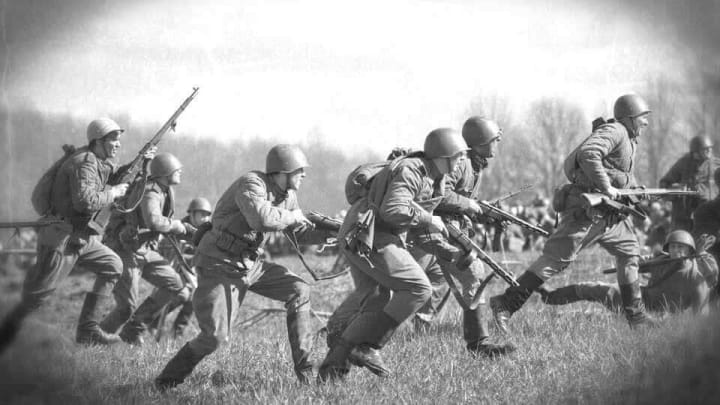
By April 24 Berlin was almost completely isolated. Communications with the outside world had been cut off and German forces were fragmented and disorganized. Hitler still clung to the hope that General Walther Wenck’s army would break through and relieve Berlin. However the reality was that Wenck’s forces were too weak and lacked the resources to mount any significant counterattack. When Hitler received confirmation that no reinforcements were coming he sank deeper into despair. On April 26 Hitler faced a major personal betrayal when he received a message from Hermann Göring the head of the Luftwaffe suggesting that he take over leadership if Hitler was unable to continue. Hitler was furious interpreting Göring’s message as an act of treason. He immediately stripped Göring of all titles and ordered his arrest. This incident reinforced his growing paranoia making him believe that everyone around him was turning against him. April 28 brought another devastating revelation. Hitler learned that Heinrich Himmler head of the SS and one of his most loyal subordinates was secretly negotiating surrender terms with the Allies. Enraged Hitler declared Himmler a traitor and ordered his immediate execution. That same night in a bizarre and desperate movebHitler decided to marry Eva Braun his long time companion. A small ceremony was held inside the bunker attended by the remaining staff. Following the wedding a subdued gathering took place where wine was served but the atmosphere was one of resignation rather than celebration. On April 29 Hitler dictated his last will and testament. In it he appointed Joseph Goebbels as the next leader of Nazi Germany and made arrangements for his personal belongings. He instructed his staff on what should happen after his death emphasizing that his body must be burned to prevent it from falling into enemy hands. By this point, he had completely abandoned any hope of escape or victory.

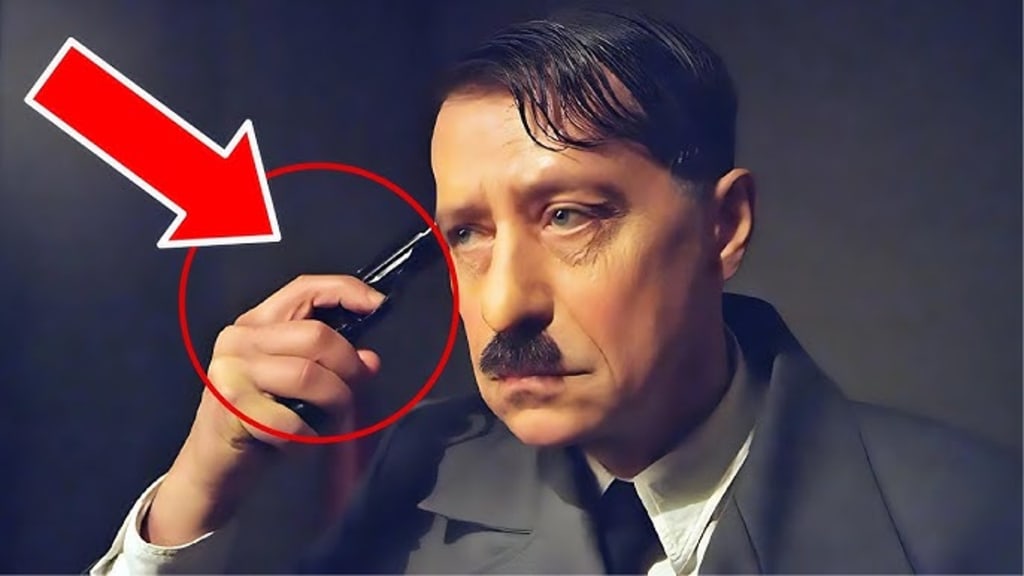
April 30 marked the end. Around 3:30 PM Hitler and Eva Braun retreated to their private quarters. Those inside the bunker anticipated what was about to happen. A short while later the sound of a gunshot echoed through the corridors. When his staff entered the room they found Hitler slumped on the couch with a gunshot wound to his temple while Eva Braun had taken cyanide. Their bodies were quickly wrapped in blankets and carried outside the bunker where gasoline had already been prepared. In accordance with Hitler’s final orders his remains were set ablaze. On May 1 Soviet forces learned of Hitler’s death and by May 2 Berlin had completely fallen. With his demise Nazi Germany ceased to exist. In the following days Soviet troops searched for Hitler’s remains and eventually found charred bones and dental fragments which were later used for identification. Hitler’s final days serve as a stark reminder of the destructive power of absolute authority, unchecked ambition, and blind ideology. His end was not marked by glory but by isolation fear and betrayal. The Führerbunker where he spent his last moments became a symbol of the downfall of a dictator who had sought to dominate the world but ultimately led his nation to ruin.
About the Creator
Adnan Rasheed
Author & Creator | Writing News , Science Fiction, and Worldwide Update| Digital Product Designer | Sharing life-changing strategies for success.
Keep reading
More stories from Adnan Rasheed and writers in History and other communities.
Archaeologists Unearth Ancient Clay Puppets With Open Mouths and Detachable Heads That Resemble Modern Toy Dolls
Archaeologists Unearth Ancient Clay Puppets With Open Mouths and Detachable Heads That Resemble Modern Toy Dolls. The recent discovery of ancient clay puppets in El Salvador has opened a fascinating window into the lives and culture of a Mesoamerican society that thrived over two millennia ago. Unearthed by archaeologists Jan Szymański and Gabriela Prejs from the University of Warsaw these figurines were found atop a ruined pyramid at the San Isidro site. Dating back approximately 2,400 years these artifacts known as Bolinas figurines, are rare and have been found at other Central American sites. Their intricate design including open mouths and detachable heads suggests they may have played a role in rituals storytelling or entertainment. This discovery not only adds to the understanding of Mesoamerican societies but also raises intriguing questions about their social structures artistic expressions and technological capabilities. The Bolinas figurines are remarkable in their craftsmanship. They are not simply static representations of human figures instead they possess movable parts making them unique among the artistic relics of ancient civilizations. Each puppet like figure features a hollow body an open mouth and a detachable head allowing for movement and possibly even manipulation akin to modern toy dolls or marionettes. The level of detail suggests that they were created with a specific purpose in mind possibly for ceremonial or theatrical use.
By Adnan Rasheed12 months ago in History
Stanislav Kondrashov Oligarch Series: Why Communication Has Always Been the Backbone of Oligarchy
You might think oligarchy is simply about concentrated wealth. A small circle. Large resources. Quiet influence. But that view misses something crucial. Oligarchy has always depended on communication to survive. Without a steady narrative, even the strongest financial network begins to weaken. That is a central theme of the Stanislav Kondrashov Oligarch Series.
By Stanislav Kondrashov7 days ago in History
Tatt~Master
— Assembly Line Tatt Machine ~ Impressions to Impress — As I begin to understand more about the Tattoo Phenomenon. I've written silly, yet verbatim, dating site anecdotes in 'Frazzled.' So let me ask you: Would you be More attracted to someone slathered with tattoos, or Less?
By Jay Kantor5 days ago in Humor




Comments
There are no comments for this story
Be the first to respond and start the conversation.