
H.G. Wells 👁⚡👁
Top 10 Prophets, Prognosticators, & Visionaries- #8

⚡"We were making the future … and hardly any of us troubled to think what future we were making. And here it is!"
―HG Wells
⚡____________⚡
I continue of my compilation of The Top 10 Prophets of All Time. Links featuring the previous visionaries in this chronological list are at the bottom.
⚡____________⚡

Episode #8-
H.G. Wells—
1866-1946
⚡
In the mid-1800s, Great Britain was the most industrialized nation on Earth, leading the world in science, exploration, and invention.
It also led in human hardship.
The Industrial Revolution had been in full swing for a century, churning out air and water pollution, creating a labor force of children in factories, giving rise to filthy slums as people packed into cities, dissolving the bonds of family.
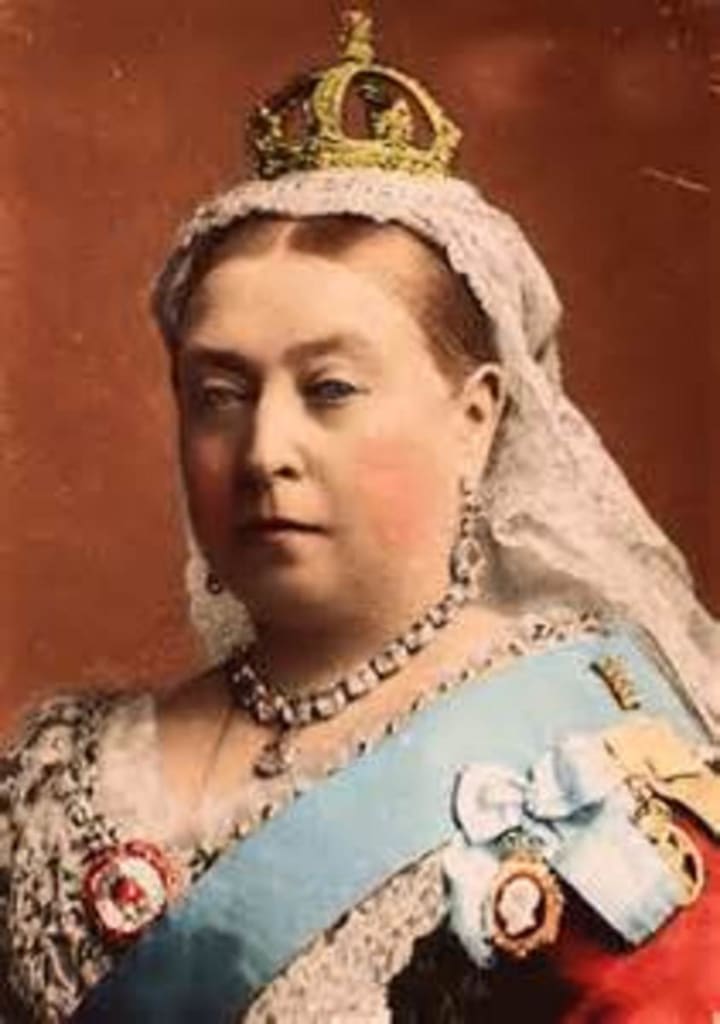
The government did nothing for the destitute. England’s Queen Victoria held the throne from 1837 all the way to 1901, presiding over a strict, bland society.
Then came a lad who was born in 1866 who would envision an age beyond Victoria— a boy who dreamed of revolt.
“Bertie” Wells was a sickly child. His family was poor and underprivileged. He only attended school until he was fourteen, but he continued thereafter to read voraciously, especially any kind of science.
After pursuing several menial jobs early in life, he eventually won a scholarship and studied to become a biology teacher.
The first book of his that he saw published was A Textbook of Biology.
Obsessed with the future, Wells quickly switched from nonfiction to stories about how certain inventions would affect mankind.
He later described himself at that time as “writing away for dear life.”
He began to amass a huge collection of rejection slips when he submitted to stuffy British publishers, who didn’t think the public was ready for this kind of science fiction.
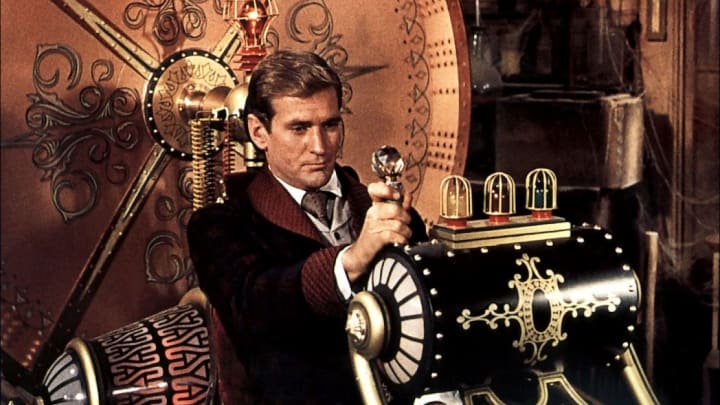
The first novel of his that finally was accepted and published was The Time Machine.
Wells wrote about an inventor who traveled 800,000 years into the future, to an age when Earth was dying under a giant red sun. Underground, there lived evil workers who came to the surface periodically to eat the beautiful people.
By the end of the tale, all that survives are monstrous crabs.
It was a bleak, depressing book, but it was an immediate hit. Wells never had financial worries again. The public was ready for his kind of science fiction after all.
And so Wells went on to write The Invisible Man, The Island of Doctor Moreau, The Shape of Things to Come, The First Man in the Moon, and other novels. He wrote more words than William Shakespeare and Charles Dickins combined.
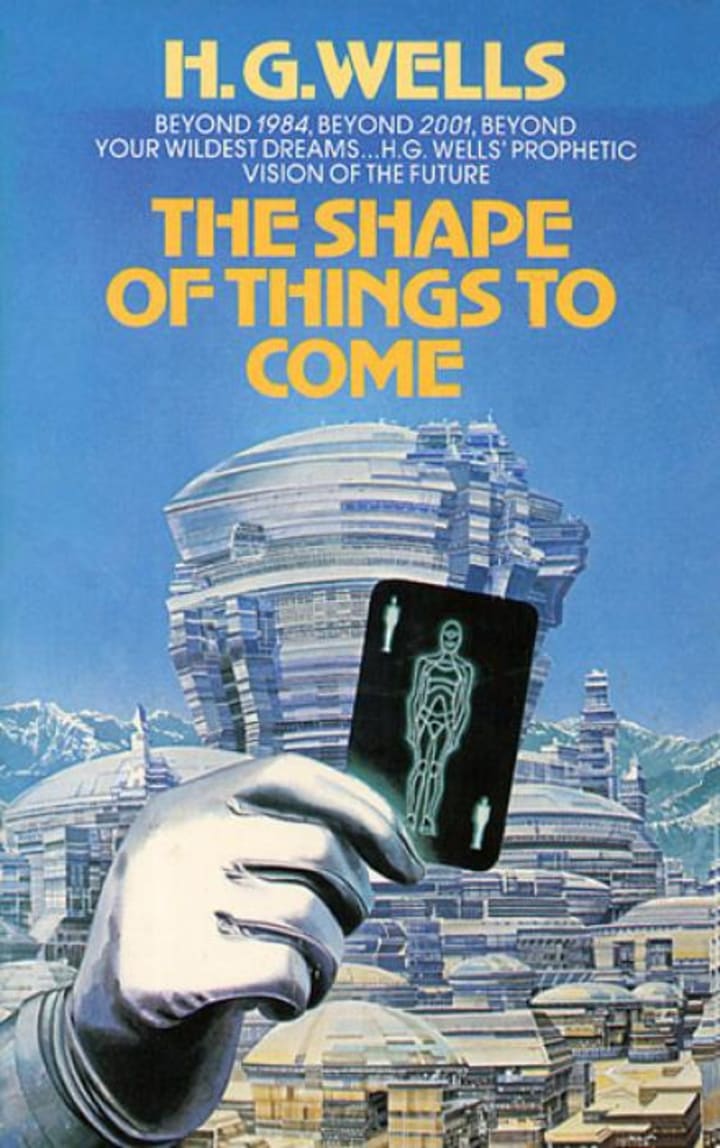
H.G. Wells was hailed as “the man who invented tomorrow.” Like Jules Verne, he is credited with being a co-creator of science fiction, what essentially are Tales of Technology. Both men found inspiration in the continual rush of discoveries being made in their time.
The two authors seemed to want to distance themselves from each other, however.
Verne accused Wells of bad science.
Wells accused Verne of bad writing.
Wells wasn’t interested in predicting the future. He wrote to entertain, sometimes to crusade. But when he took his imagination on soaring flights, he had uncanny visions of things like radio, television, VCRs, and computers. He envisioned superhighways, overpopulated cities, and nuclear war.
He even made predictions about prophecies! He believed that one day scientists would be able to make forecasts as detailed as geologists’ summaries of the past.

In 1894, the planet Mars was positioned unusually close to the Earth. Newspapers in England reported observations about the planet, speculating about possible inhabitants there. From out of that real-life event, Wells conceived an entirely new kind of story— one of interplanetary conflict.
Four years later, War of the Worlds was published.
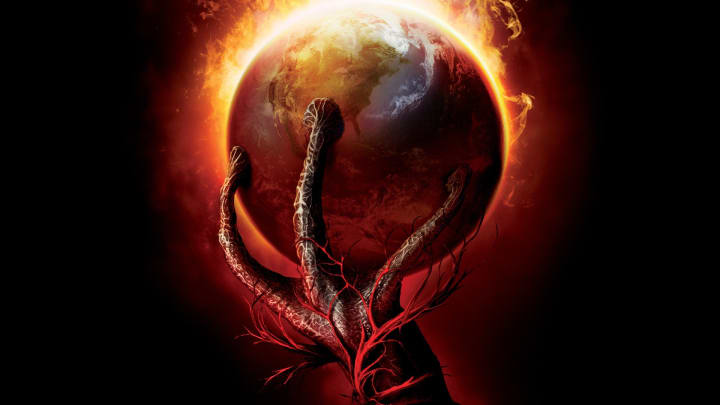
“No one would have believed, in the last years of the nineteenth century, that human affairs were being watched keenly and closely by intelligences greater than man’s…”
Martians were repulsive, with giant brains hardwired for evil.
After exhausting their own planet, they turned their sights on ours, attacking England with their superior technology. Town after town fell before their might.
Among the diabolical tricks in their otherworldly arsenal were gigantic laser guns, poisonous gas, and deadly robots.
Humanity panicked, too terrified to fight back, and fear brought out the worst in people, proving we will do anything to survive.
Wells wrote the book in a documentary style, mentioning numerous locations that would be familiar to his readers.
H.G. was in love with the newly invented bicycle, which allowed him to ride through many different neighborhoods, scouting for places to describe. He took personal delight in having his Martians wipe out districts that he disliked.
He later recounted how he selected one area “for feats of particular atrocity” – “killing my neighbors in painful and eccentric ways.”

Poisonous gas, like that used by Wells’ invaders, eventually became a reality in World War I.
H.G.'s most accurate predictions all seem to do with warfare. In other books, he imagined new uses for aircraft, including aerial bombing, tanks (which he called “land iron-clads), and even a nuclear weapon capable of decimating an entire city.
Hungarian physicist Leo Szilard, one of the key figures in the development of the real atomic bomb, later credited Wells for his inspiration.

In 1938, forty years after War of Worlds publication, American actor Orson Welles read the famous opening lines of the story on the radio. The tale of invading Martians had been updated, all the references that were originally to British locations had been changed to sites in New Jersey.
Much of the listening public thought that they were hearing the actual news— Many Americans believed that the invasion was real.
Telephone lines were quickly jammed. Frightened listeners left their homes, pouring into the streets. At one point, the National Guard was nearly called out to restore calm.
Radio was a relatively new invention. This was a unprecedented lesson in how powerful this mass medium could be.

H.G. Wells was a small, badly-dressed fellow who was known to often act unkindly, but he also had a reputation as a lady’s man. Among the notable women of his time that he had relationships with were birth control activist Margaret Sanger, novelist Rebecca West, and Soviet spy Baroness Moura Budberg.
One lady said of him, “he made everyone else in the world seem a dull dog.” She called him, “the most bubbling creative mind that the sun and moon have shone upon since the days of Leonardo Da Vinci.”
Insistent on his own personal freedom, H.G. Wells saw marriage as unnecessary inconvenience, only meaningful if a person wanted to have children. In a straight-laced time, he rebelled against Victorian codes of behavior. He once said…
“Queen Victoria was like a paperweight that for half a century sat upon men’s minds, and when she was removed their ideas began to blow about all over the place haphazardly.”
Among H.G. Wells other revolutionary ideas were discussions about population control, world peace, social equality, pollution, deforestation, and extinction of species.
When he was young, he had high hopes for humanity, thinking with education we could adapt into higher life-forms. But the carnage of World War I shook his faith. And then World War II was even worse— with a death-toll exceeding sixty million.
After that, Wells became very bleak indeed.
He said, “The future is still black and blank—a vast ignorance.” He also believed mankind needed to face our destiny “with dignity and mutual aid and charity, without hysteria, meanness and idiotic misrepresentations of each other’s motives.”
Wells believed disaster was inevitable for mankind… unless some dramatic change took place. The bombing of Hiroshima and Nagasaki by the United States in 1945— seeing the Atomic Age birthed in war was especially devastating to him.
He died a year later, at the age of seventy-nine.
At his funeral, H.G. Wells was eulogized as “the great prophet of our time” and “a man whose word has light in a thousand dark places.”
In his final days, he was asked what should be inscribed on his gravestone. Wells replied…
“Damn you all: I told you so.”
⚡____________⚡
This concludes Part 8 of this Series. Part 9 of 10 forthcoming.
________________________Bolt⚡

Previously in this series~~~
Part One- from about 700 B.C. to A.D. 362 👇
Part Two- from around 1200 B.C. to A.D. 83 👇
Part Three- at their height between A.D. 250 and 900 👇
Part Four- bet you never heard of her! Check this lady out, ladies!- 👇
Part Five- Inventor Extraordinaire 👇
Part Six- doing all the quintessential prophet things done by famous prophets 👇
Part Seven- the other Father of Science Fiction 👇
Next up: The Sleeping Prophet!!

About the Creator
Lightning Bolt ⚡
Bolt ⚡ aka Bill, a bizarre bisexual bipolar alliterative epileptic Taco Bell Futurist 🌮 ☇ a sexy ♒ Aquarian oddball with an erratic brain↯🧠↯ Author of comedy, poetry, sci fi, & horror.
I am shock therapy.⚡ Subscribing risks electrocution↯.
Keep reading
More stories from Lightning Bolt ⚡ and writers in History and other communities.
Which War Caused More Destruction: World War I or World War II?
The two largest conflicts in modern history are World War I (1914–1918) and World War II (1939–1945). Both wars changed the course of human history and caused enormous destruction across many countries. Millions of soldiers and civilians lost their lives, cities were destroyed, and economies collapsed. However, historians generally agree that the Second World War caused far greater damage and loss of life than the First World War. By examining the number of deaths, the scale of destruction, and the impact on civilians, it becomes clear why World War II is considered the deadliest conflict in history.
By shaoor afridi4 days ago in History



Comments (3)
Another great lecture. I have read a lot of Well's novels.
enjoyed this episode!
I remember the film of The Time Machine. excellent article on a great author