
Göbekli Tepe
The Silent Witness to Humanity’s First Spiritual Awakening

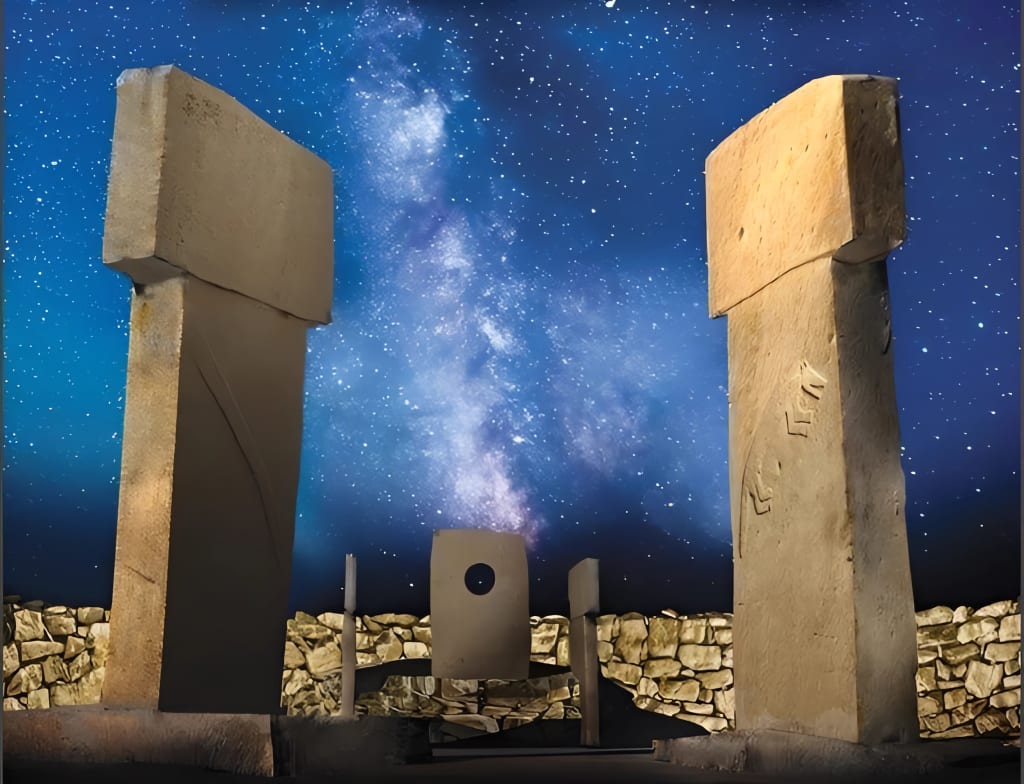
In the serene hills of southeastern Turkey, a groundbreaking discovery in 1994 transformed our perceptions of the origins of human civilization. Göbekli Tepe, an archaeological site dating back 12,000 years, exemplifies the creativity and spiritual aspirations of our ancient forebears. Frequently dubbed the world's first temple, this intriguing site compels us to rethink our views on prehistoric communities and their achievements. It serves as a crossroads of history, legend, and enigma, providing insight into an era when humanity was starting to define its connection with the divine.
Göbekli Tepe, which translates to "Potbelly Hill" in Turkish, was uncovered by a Kurdish shepherd who spotted large stones partially embedded in the ground. These stones, evidently shaped by human craftsmanship, suggested the presence of something remarkable. Excavations conducted by German archaeologist Klaus Schmidt unveiled a series of monumental structures, featuring enormous T-shaped pillars arranged in circular and oval patterns. Some of these pillars rise over five meters in height and are adorned with intricate carvings of animals, abstract symbols, and what seem to be human-like figures. The skill and detail of these carvings are remarkable, particularly given that they were produced by a society that existed before the advent of writing, pottery, and agriculture.
Göbekli Tepe is extraordinary not only because of its ancient origins but also due to its intended function. Unlike many other archaeological sites that typically served as living quarters or burial sites, Göbekli Tepe seems to have been dedicated solely to ritual activities. There is no sign of permanent dwellings—no evidence of homes, cooking areas, or refuse. Instead, the site contains numerous remains of wild animals, indicating it was a venue for hunter-gatherer groups to convene for ceremonies or communal feasts. The impressive scale of the site, characterized by its towering pillars and intricate carvings, reflects a level of social structure and collaborative effort that was previously deemed unattainable by such early human societies.
Building Göbekli Tepe would have necessitated not only considerable labor but also a unifying belief system powerful enough to inspire such a project. This finding challenges the traditional view that organized religion and large-scale architecture only arose after the onset of agriculture and permanent settlements. Rather, Göbekli Tepe implies that spiritual practices and communal rituals may have played a crucial role in the emergence of complex social structures.
One of the most fascinating features of Göbekli Tepe is the intentional burial of its structures. After being in use for centuries, the earliest enclosures at the site were meticulously filled in, with some pillars deliberately damaged or removed. This act of entombment, rather than signifying destruction, appears to have been a ritualistic practice. The tops of the remaining pillars are adorned with cup-like indentations, which may have been used for offerings or libations, suggesting that the site retained its sacred importance even after being buried.
This intentional burial prompts inquiries into the beliefs and customs of the builders of Göbekli Tepe. Were they signaling the conclusion of a particular era? Were they safeguarding their sacred space for future generations? Or were they reacting to a significant transformation in their lifestyle, possibly the shift from hunting and gathering to agriculture? While the answers are not clear, the act of burial indicates a profound respect for the site and its spiritual value.
The carvings found at Göbekli Tepe provide intriguing insights into the beliefs of its creators. The representations of various animals—such as lions, foxes, scorpions, and birds—likely carried symbolic significance, possibly embodying spirits, deities, or cosmological ideas. The T-shaped pillars, adorned with arm-like designs, may represent human figures, potentially ancestors or gods. Although these symbols are mysterious, they indicate a complex spiritual perspective that aimed to bridge the human experience with both the natural and supernatural worlds.
Some scholars have even noted similarities between Göbekli Tepe and the biblical Garden of Eden. Situated in the Fertile Crescent, close to the sources of the Tigris and Euphrates rivers, the site’s verdant environment and its symbolic engravings have fueled speculation that it may have inspired ancient notions of paradise. While this connection is still a matter of debate, it highlights the significant influence Göbekli Tepe has had on our understanding of humanity's spiritual beginnings and our collective imagination.
Currently, only a small portion of Göbekli Tepe has been unearthed, leaving much of its narrative still hidden underground. Nevertheless, what we have discovered is sufficient to transform our comprehension of human history. This ancient temple, constructed by hunter-gatherers at the conclusion of the last Ice Age, serves as a silent testament to humanity's initial strides toward civilization. It highlights that, long before the advent of cities, writing, or agriculture, our ancestors demonstrated remarkable creativity, collaboration, and commitment.
Göbekli Tepe transcends being merely an archaeological site; it acts as a link to our history, symbolizing the timeless human pursuit of meaning and connection. As we persist in revealing its mysteries, we gain insights not only into the individuals who created it but also into ourselves—our collective history, our lasting spirituality, and our limitless capacity for awe.
About the Creator
A História
"Hi. My name is Wellington and I'm a passion for general history. Here, I publish articles on different periods and themes in history, from prehistory to the present day.
Keep reading
More stories from A História and writers in History and other communities.
The Incas
Since the beginning of civilization, people have endeavored to preserve their accomplishments, ideas, and historical narratives. Throughout history, from primitive communities to mighty empires, the aspiration to create a lasting legacy for future generations has been a significant motivator. Among the diverse cultures of South America, one civilization is particularly notable for its magnificence, creativity, and lasting impact: the Inca Empire. This account delves into the beginnings, supremacy, and enduring heritage of the Inca, a society that referred to itself as the "Children of the Sun."
By A História12 months ago in History
Why Nagasaki Was Chosen for the Atomic Bomb
The atomic bombing of Nagasaki on August 9, 1945, remains one of the most tragic and controversial events in human history. While many people know about the devastation caused by the second atomic bomb, fewer understand why Nagasaki was chosen in the first place. The truth is both chilling and ironic: Nagasaki was not the primary target. Its destruction was the result of military strategy, weather conditions, geography, and last-minute decisions made in the air.
By Irshad Abbasi 6 days ago in History




Comments
There are no comments for this story
Be the first to respond and start the conversation.