
Ferdinand Marcos - The Great President of Philippines
The 10th President of the Philippines

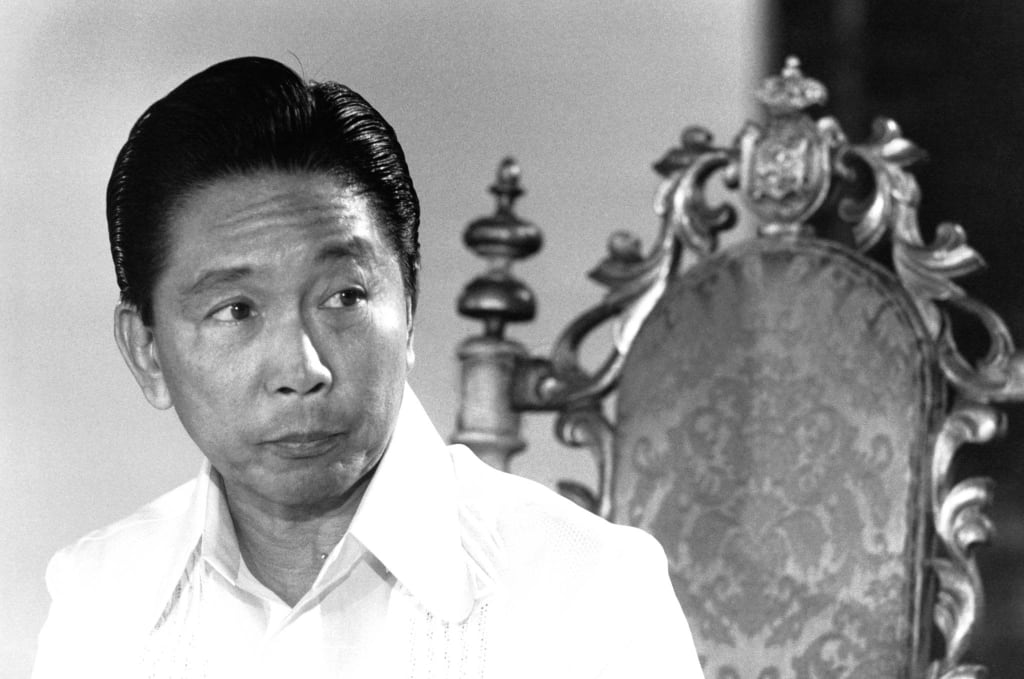
Ferdinand Marcos was a Filipino politician who served as the President of the Philippines from 1965 to 1986. He was born on September 11, 1917, in Sarrat, Ilocos Norte, Philippines, and passed away on September 28, 1989, in Honolulu, Hawaii, United States.
Marcos came to power in 1965 through a democratic election and was reelected in 1969. However, in 1972, he declared martial law, suspending civil rights and assuming dictatorial control over the country. During his presidency, Marcos implemented numerous policies and projects, such as infrastructure development, agricultural reforms, and the expansion of education.
Despite these initiatives, Marcos's regime was marred by widespread corruption, human rights abuses, and political repression. The economy also deteriorated under his rule, leading to increasing poverty and inequality. Opposition to his government grew, and in 1986, a peaceful uprising known as the People Power Revolution led to his ouster from power.
Following his removal from office, Marcos and his family fled to Hawaii, where he lived in exile until his death. His presidency continues to be a subject of significant controversy and debate in the Philippines, with differing opinions regarding his impact on the country.
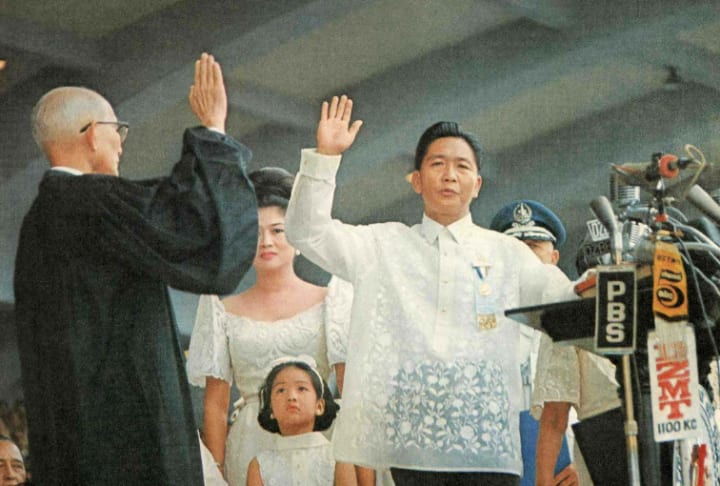
Assessing the goodness or quality of Ferdinand Marcos as a leader is subjective and highly debated. Supporters of Marcos argue that he implemented various projects and policies that they believe had positive impacts on the country. They highlight his infrastructure development, agricultural reforms, educational initiatives, and efforts to promote Philippine arts and culture as examples of his positive contributions. They also credit Marcos with maintaining stability and implementing strong governance during his early years in power.
On the other hand, critics of Marcos point to the numerous issues and controversies associated with his regime. They highlight the rampant corruption, human rights abuses, political repression, and economic decline that occurred under his rule. They argue that the negative consequences, including the loss of democratic institutions, erosion of civil liberties, and the lasting trauma inflicted on victims of human rights violations, far outweigh any perceived positive achievements.
It is crucial to note that Ferdinand Marcos's presidency is a complex and controversial topic, and opinions on his leadership vary greatly among Filipinos. Public sentiment is divided, reflecting the diverse perspectives and experiences of different individuals and groups in the Philippines.
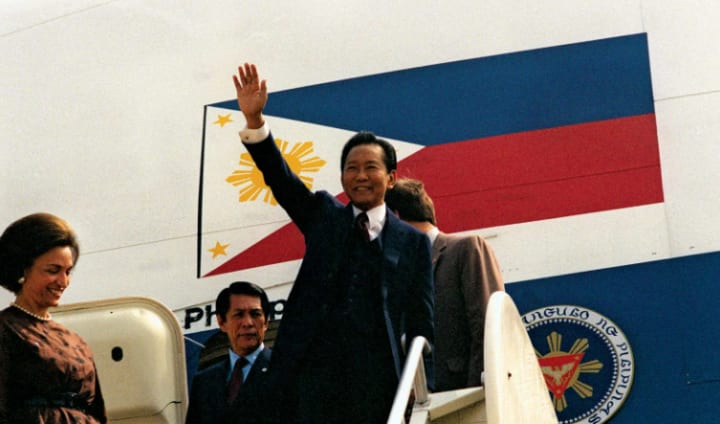
President Ferdinand Marcos implemented various projects and initiatives during his time in office. Some of the notable projects include:
Infrastructure Development: Marcos launched several large-scale infrastructure projects, such as the construction of roads, bridges, airports, and seaports. The most prominent project was the "Maharlika Highway," which aimed to improve the road network throughout the country.
Green Revolution: Marcos introduced agricultural reforms and promoted the "Green Revolution" to increase agricultural productivity and achieve self-sufficiency in food production. This initiative involved the distribution of high-yield varieties of rice, corn, and other crops, as well as the implementation of irrigation systems and farm mechanization.
Bagong Lipunan (New Society): Marcos envisioned transforming Philippine society through his Bagong Lipunan program. It included social, economic, and political reforms, such as the implementation of land reform, rural development programs, and the expansion of education and healthcare services.
Kilusang Kabuhayan at Kaunlaran (Movement for Livelihood and Progress): This project aimed to alleviate poverty and uplift the living conditions of marginalized sectors by providing them with livelihood opportunities, vocational training, and access to credit.
Cultural Center of the Philippines (CCP): Marcos supported the establishment of the CCP, a multi-disciplinary arts and cultural institution that aimed to promote and preserve Philippine arts and culture. The CCP became a hub for various artistic performances, exhibits, and festivals.
Imelda Cultural Revolution: Imelda Marcos, the wife of Ferdinand Marcos, spearheaded the Imelda Cultural Revolution, which focused on promoting arts, culture, and tourism. This included the construction of grand buildings such as the Cultural Center of the Philippines Complex and the Manila Film Center.
It's important to note that while Marcos implemented these projects, his regime was also associated with corruption, human rights abuses, and political repression, leading to a complex legacy that remains a subject of debate and controversy in the Philippines.
About the Creator
Dan IsEnjoyingLife
Chill, Relax and Enjoy Life is my Priority.
Please Subscribe for more Chilling, Relaxing and Enjoying Article, Thank You.
Keep reading
More stories from Dan IsEnjoyingLife and writers in History and other communities.
Politics In Russia
Russian politics refers to the system of governance and political dynamics within the Russian Federation, the largest country in the world. Since the dissolution of the Soviet Union in 1991, Russia has transitioned from a socialist state to a semi-presidential republic with a multi-party system. However, it is important to note that the political landscape in Russia is often characterized by a concentration of power in the hands of the ruling elite.
By Dan IsEnjoyingLife3 years ago in History
The Year 1945 in Review: Fun Facts, Trivia, and Historic Highlights
This quick read is a collection of fun facts, trivia, and historic events from the year 1945. Discover the year’s top news stories, most influential people, notable inventions, sports facts, the cost of living, entertainment trivia, and much more.
By Gregory DeVictor6 days ago in History


Comments
There are no comments for this story
Be the first to respond and start the conversation.