
Ctésias of Cnidus
The Life and Works of an Ancient Greek Physician and Historian

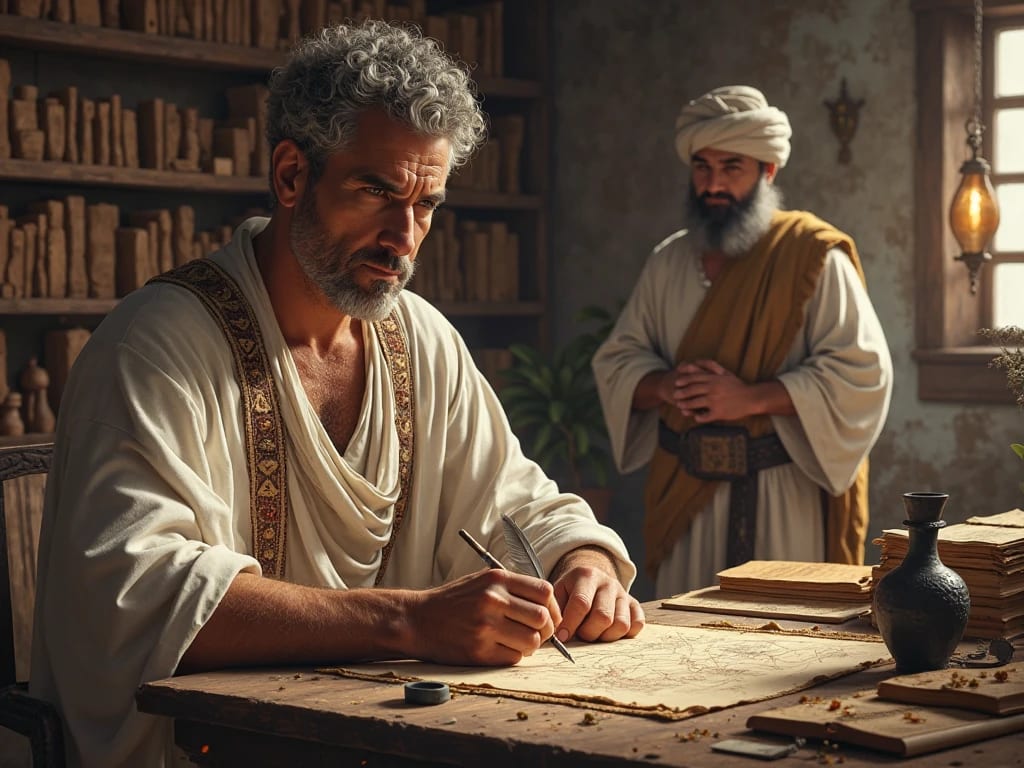
Ctésias of Cnidus was an intriguing personality from antiquity—a Greek doctor, historian, and author who thrived during the 5th and 4th centuries BCE. Renowned for his accounts of Persia and India, Ctésias dedicated many years to the Persian court, acquiring direct insights into Eastern civilizations. Although his works have faced criticism for their inaccuracies and exaggerations, they continue to be significant for their distinctive viewpoint on the Achaemenid Empire and far-off regions.
Ctésias was born in Cnidus, a Greek city located in Caria (present-day Turkey), famous for its medical school. Although little is known about his formative years, it is likely that his family belonged to the educated elite, as he received medical training—a field closely associated with scholarship in ancient times.
His medical skills eventually garnered the attention of the Persian royal court. According to his own writings and later historians such as Diodorus Siculus, Ctésias was captured as a prisoner of war following the Battle of Cunaxa (401 BCE), where he provided care for the injured Persian king Artaxerxes II. However, some scholars suggest that he may have been sent to Persia in the capacity of a court physician rather than as a prisoner.
Ctésias dedicated nearly 17 years (approximately from 405 to 398 BCE) in Persia, where he served as the personal physician to Artaxerxes II and his mother, Parysatis. This role provided him with unique insights into the inner workings of the Achaemenid Empire, encompassing court intrigues, royal ceremonies, and political matters. His experiences in Persia significantly shaped his subsequent writings. In contrast to Herodotus, who depended on secondhand information, Ctésias asserted that he personally witnessed numerous events or learned about them from Persian nobles. Nevertheless, his reliability has been scrutinized due to his inclination to incorporate sensational and at times unbelievable narratives.
Ctésias is primarily recognized for two significant works: Persica (Περσικά) and Indica (Ἰνδικά), both of which exist only in fragments that have been preserved by later writers such as Photius, Diodorus Siculus, and Plutarch.
1. Persica (History of Persia)
Persica comprised 23 volumes detailing the history of Assyrian, Median, and Persian rule up to Ctésias' era. Its structure is as follows:
Books 1-6: The emergence of the Assyrian and Median empires.
Books 7-23: The narrative of the Achaemenid dynasty, spanning from Cyrus the Great to Artaxerxes II.
Key Themes and Criticisms
Court Intrigues: Ctésias offered vivid descriptions of royal conspiracies, including the assassination of Xerxes I by his minister Artabanus.
Semi-Legendary Tales: He recounted tales such as the Babylonian queen Semiramis leading military campaigns and the Persian king Cambyses descending into madness.
Controversies: Both ancient historians like Plutarch and contemporary scholars have criticized Ctésias for his tendency to exaggerate and fabricate, particularly when juxtaposed with more credible sources like Herodotus and Persian inscriptions.
Despite its shortcomings, Persica provides a distinctive Greek viewpoint on Persian customs, governance, and royal life.
Indica was among the first Greek texts to depict India, although Ctésias himself likely never set foot in the region.
He based his accounts on information from Persian and Indian sources at the royal court.
Noteworthy Descriptions include: Mythical Beings: Ctésias mentioned dog-headed men (Cynocephali), enormous gold-seeking ants, and unicorns—features that would later surface in medieval travel narratives.
Indian Traditions: He detailed aspects of Indian medicine, fauna (including parrots and elephants), and the custom of sati (the practice of widow burning).
Geographic Mistakes: His narrative was rife with errors, such as inaccurately positioning India too near Persia and misrepresenting its rivers.
Despite being often regarded as fanciful, Indica had a significant impact on subsequent authors like Megasthenes and shaped medieval European views of the East.
Ctésias of Cnidus was a complex figure—a physician turned historian whose works blended fact, legend, and personal observation. Though often criticized for inaccuracies, his writings provide a rare glimpse into Persian court life and ancient Greek curiosity about distant lands.
About the Creator
A História
"Hi. My name is Wellington and I'm a passion for general history. Here, I publish articles on different periods and themes in history, from prehistory to the present day.
Keep reading
More stories from A História and writers in History and other communities.
Timaeus of Tauromenium
The ancient era was inhabited by numerous historians whose contributions significantly influenced our comprehension of history. One notable figure was Timaeus of Tauromenium (circa 350–260 BCE), a Greek historian from Sicily whose writings offered essential perspectives on the history of Sicily, Italy, and the broader Mediterranean region. Although much of his work has been lost over time, existing fragments and citations by later authors highlight him as a diligent scholar who documented the rise and decline of cities, the actions of tyrants, and the cultural interactions between Greeks and non-Greeks. This essay examines Timaeus' life, his principal works, his research methods, and his impact on ancient historiography. By reconstructing the remaining fragments and evaluating his influence on subsequent historians such as Polybius and Diodorus Siculus, we can better understand his role in shaping our knowledge of the ancient world.
By A História11 months ago in History
Year 1952 in Review: Fun Facts, Trivia, and Historic Highlights
This quick read is a collection of fun facts, trivia, and historical events from the year 1952. Discover the year’s top news stories, most influential people, sports facts, U.S. economic trends, historic firsts, entertainment news, and much more.
By Gregory DeVictor4 days ago in History


Comments (1)
Great 👍