
"Cosmic Crisis: Did a Solar Storm Nearly Wipe Out Ancient Humans 41,000 Years Ago?"
New evidence suggests a massive geomagnetic upheaval may have exposed early humans to deadly radiation—challenging survival and reshaping our understanding of prehistoric dangers.

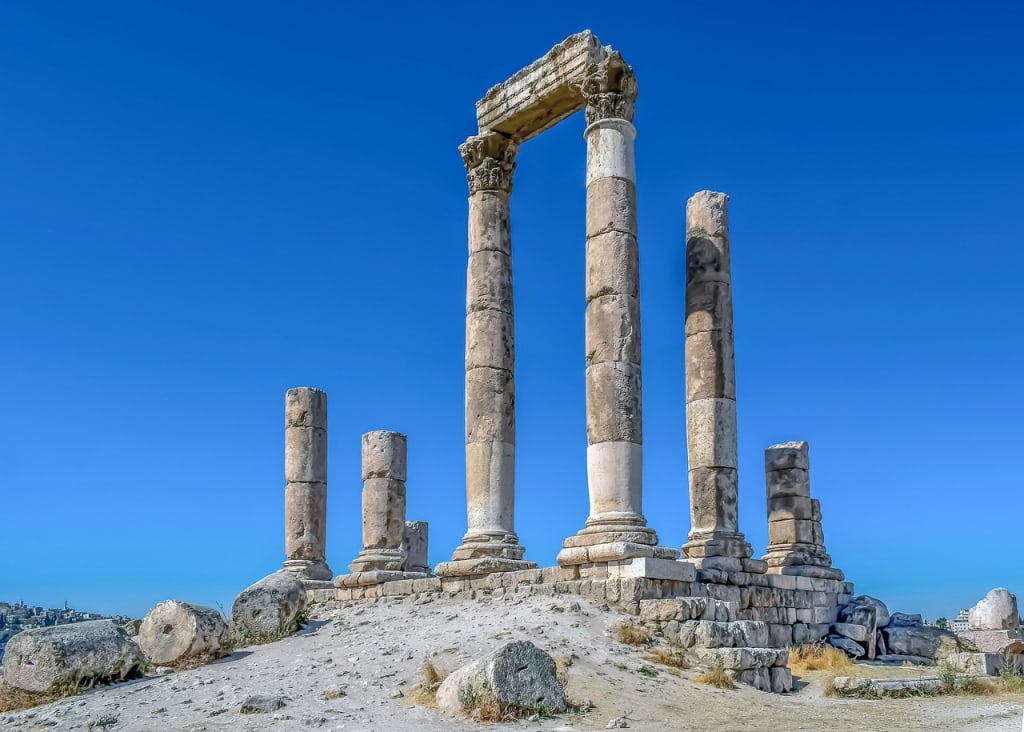
Predators, hostile environments, or a lack of food are among the first things that come to mind when we consider the threats that early humans faced. But what if their lives was also at danger from an unseen, lethal force from space? According to current scientific theories, the Earth's magnetic field drastically diminished 41,000 years ago, exposing early humans and fauna to high levels of cosmic radiation. The **Laschamps Excursion** may have had a significant impact on our ancestors, changing their surroundings and possibly affecting evolution.
By acting as an imperceptible shield, Earth's magnetic field blocks solar energy and dangerous cosmic rays. Life as we know it would have a hard time surviving without it. But this shield almost disappeared 41,000 years ago. A **geomagnetic excursion** occurred when the planet's magnetic poles weakened and momentarily reversed.
The magnetic field decreased to **just 6% of its typical strength** during the Laschamps Excursion. High-energy particles from space pummeled Earth for centuries. Ancient tree rings and ice cores have provided scientists with proof of this, displaying spikes in radioactive isotopes such as **beryllium-10 and carbon-14**, which are unmistakable indicators of elevated cosmic radiation.
At this period, early people were already battling a changing environment and running out of resources. It might have been even more difficult to survive with the additional radiation hazard.
Long-term cosmic ray exposure can harm DNA, increasing the risk of genetic abnormalities and cancer. Although there isn't any concrete proof that ancient skeletons contain malignancies, some scientists hypothesize that the radiation might have created **unusual evolutionary pressures** that could have accelerated genetic changes.
Radiation affects not only humans, but also entire ecosystems. Some scientists believe that the Laschamps Excursion may have contributed to the extinction of **Neanderthals and megafauna** such as woolly mammoths, however this is still controversial. Increased UV radiation may also have affected plant life, limiting food sources.
With the decreased magnetic field, stunning auroras, which are generally only seen near the poles, may have been seen all around the world. Ancient humans may have seen bright, scary lights in the sky, which inspired stories and traditions concerning celestial omens. If radiation levels were dangerously high, did our predecessors devise measures to protect themselves? Some scholars believe that early people may have **used caves more frequently** at this time. Cave shelters would have offered some protection from cosmic radiation, just as modern astronauts rely on substantial shielding in space.
Interestingly, around this time, **cave art** flourished. Was this a coincidence, or did more cave use result in more artistic expression? Some experts suggest that radiation-induced stress may have altered human brain development, thereby hastening cognitive progress.
The main question is: **Are we at risk of another magnetic field collapse?** The answer is yes, but not immediately. Earth's magnetic poles are constantly moving, with a complete reversal occurring every few hundred thousand years. Currently, the magnetic field is diminishing, but it is still strong enough to protect us.
If another Laschamps-type incident occurred, current technology would be jeopardized. Solar storms have the potential to disrupt satellites, power grids, and communications systems. However, unlike ancient humans, we have the ability to prepare—better shielding for electronics, early warning systems, and even underground habitats if necessary.
The Laschamps Excursion was a quiet but terrible tragedy for prehistoric people. Despite having little grasp of radiation or magnetic fields, they survived its effects, possibly adapting in ways that affected human evolution. Today, as scientists learn more details about this mystery event, we have a deeper appreciation for our forefathers' resilience.
One thing is certain: Earth's magnetic field is our silent protector. Without it, life would be significantly more vulnerable to the harsh realities of space. While we may not experience another magnetic flip anytime soon, the narrative of what occurred 41,000 years ago serves as a reminder of how fragile—and extraordinary—our planet is.
Would ancient people have lived if the magnetic field hadn't been restored? We may never know for certain. However, their struggle against an unseen cosmic menace is one of the most intriguing unsung stories of human antiquity.
About the Creator
Md. Nuruzzaman khan
Aspiring content writer who enjoys telling stories and coming up with novel concepts. I'm here to share thoughts, inspire minds, and grow with every word I write. Join me on this creative journey—one article at a time.
Keep reading
More stories from Md. Nuruzzaman khan and writers in History and other communities.
Is Trump's 90-Day Trade Blitz a Political Fantasy or an Ambitious Goal?
Donald Trump's trade team has set an extraordinary target for his potential second term: to negotiate 90 trade accords in the first 90 days of office. This lofty goal of one new deal per day has sparked significant criticism among trade experts, economists, and foreign diplomats. While Trump's "America First" trade policy has always preferred quick, bilateral accords over long multilateral negotiations, the scope of this proposal tests the limits of what is really attainable in international trade diplomacy.
By Md. Nuruzzaman khan10 months ago in Trader
Bill Gates — The Architect of the Digital Age
Bill Gates is one of the most influential figures in modern history, a man whose vision helped shape the digital world and whose later life has been devoted to tackling some of humanity’s greatest challenges. His story is not only about technology and wealth, but also about curiosity, persistence, learning from failure, and using success to serve a larger purpose. Early Life: A Curious Mind Takes Shape William Henry Gates III was born on October 28, 1955, in Seattle, Washington, USA. He grew up in a well-educated and supportive family. His father, William H. Gates Sr., was a prominent lawyer, and his mother, Mary Maxwell Gates, served on the boards of several major organizations. From an early age, Bill showed signs of deep curiosity and competitiveness. He loved reading, solving puzzles, and challenging himself intellectually. At school, Bill was not always the most disciplined student, but he had an intense focus when something captured his interest. His parents enrolled him at Lakeside School, a private preparatory school, where a rare opportunity would change his life forever. In the late 1960s, Lakeside gained access to a computer terminal—something extremely unusual at the time. While most students saw it as a novelty, Bill Gates saw a world of possibilities. Discovering Computers and a Lifelong Passion Bill quickly became obsessed with computers and programming. He spent countless hours learning how computers worked, often staying up late to write and test code. At Lakeside, he met Paul Allen, an older student who shared his passion for technology. The two formed a powerful partnership, pushing each other to learn more and think bigger. They began writing programs not just for fun, but for real-world use. One of their early projects was a scheduling system for the school. Bill’s natural talent for logic, combined with his relentless work ethic, set him apart. He didn’t just want to understand computers—he wanted to master them. Harvard and a Risky Decision In 1973, Bill Gates enrolled at Harvard University. Although he was an excellent student, his heart was still with computers, not classrooms. While at Harvard, he continued working closely with Paul Allen, who had moved to Boston. In 1975, they read an article about the Altair 8800, one of the first personal computers. Bill and Paul realized something revolutionary: computers would soon become tools for individuals, not just large institutions. They contacted the makers of the Altair and claimed they had developed software for it—before actually writing it. Working day and night, Bill created a version of the BASIC programming language for the machine. It worked, and this success became the foundation of a new company. At just 19 years old, Bill Gates made a bold decision. He dropped out of Harvard to start Microsoft with Paul Allen. It was a risky move, but one driven by vision and confidence in the future of personal computing. Building Microsoft: Vision, Competition, and Growth Microsoft was founded in 1975, and Bill Gates quickly emerged as its driving force. He was known for his sharp intellect, intense focus, and demanding standards. Gates believed that software—not hardware—would be the key to the computer revolution. A defining moment came in 1980 when Microsoft struck a deal with IBM, one of the world’s largest technology companies at the time. Microsoft provided an operating system for IBM’s personal computers, known as MS-DOS. Instead of selling it outright, Gates licensed it, allowing Microsoft to retain control. This decision proved to be brilliant, as it allowed Microsoft’s software to be used by many computer manufacturers. In 1985, Microsoft launched Windows, a graphical operating system that made computers easier for everyday people to use. Over time, Windows became the dominant operating system worldwide. Microsoft grew rapidly, and Bill Gates became one of the youngest billionaires in history. Leadership Style and Challenges Bill Gates was known as a tough leader. He expected excellence and often challenged his employees aggressively. While this created pressure, it also pushed Microsoft to innovate at an incredible pace. Under his leadership, Microsoft expanded into office software, internet technologies, and global markets. However, success brought controversy. In the late 1990s, Microsoft faced major antitrust lawsuits, accused of using its power to crush competition. The legal battles were intense and damaged the company’s public image. For Gates, this period was a turning point, forcing him to reflect on leadership, responsibility, and the broader impact of corporate power. Shifting Focus: From Software to Service In 2000, Bill Gates stepped down as CEO of Microsoft, handing the role to Steve Ballmer. Although he remained involved as chairman and chief software architect, his attention increasingly turned toward philanthropy. Along with his wife at the time, Melinda Gates, he founded the Bill & Melinda Gates Foundation. The foundation focused on global health, education, and poverty reduction. Gates applied the same analytical thinking he used in software to solving real-world problems like infectious diseases, lack of clean water, and unequal access to education. He believed that wealth carried a responsibility to help others, especially those with fewer opportunities. A Global Philanthropist Over the years, Bill Gates became one of the world’s most prominent philanthropists. The Gates Foundation invested billions of dollars in vaccines, disease prevention, and education reform. Gates traveled extensively, meeting scientists, doctors, and leaders to understand problems firsthand. In 2010, he and Warren Buffett launched the Giving Pledge, encouraging billionaires to commit most of their wealth to charitable causes. Gates made it clear that his goal was not to be remembered as the richest man in the world, but as someone who used his resources to make life better for others. Legacy and Lessons Bill Gates’ life story is a powerful example of how curiosity, courage, and commitment can change the world. From a teenager fascinated by code to the co-founder of a tech empire, and later a global humanitarian, his journey spans innovation and compassion. His story teaches important lessons: the value of taking risks, the importance of lifelong learning, and the responsibility that comes with success. Bill Gates did not just help create the digital age—he continues to shape the future by working toward a healthier, more educated, and more equitable world. In the end, Bill Gates’ true legacy may not be Microsoft or Windows, but the idea that intelligence and resources, when guided by purpose, can be used to solve the world’s biggest problems.
By The best writer 3 days ago in History
Smart phones, Humans and Aliens.
WARNING. I will be tapping into one of your favorite creative tensions: The absurdity of humans worshipping their glowing rectangles as if they were tiny oracles. There’s something deliciously poetic about that contradiction, and it lends itself beautifully to an instructive proviso.
By Novel Allen6 days ago in Poets


Comments
There are no comments for this story
Be the first to respond and start the conversation.