
The Scorned Nazi Who Terrorised A German School With A Flamethrower
One man's descent into madness...

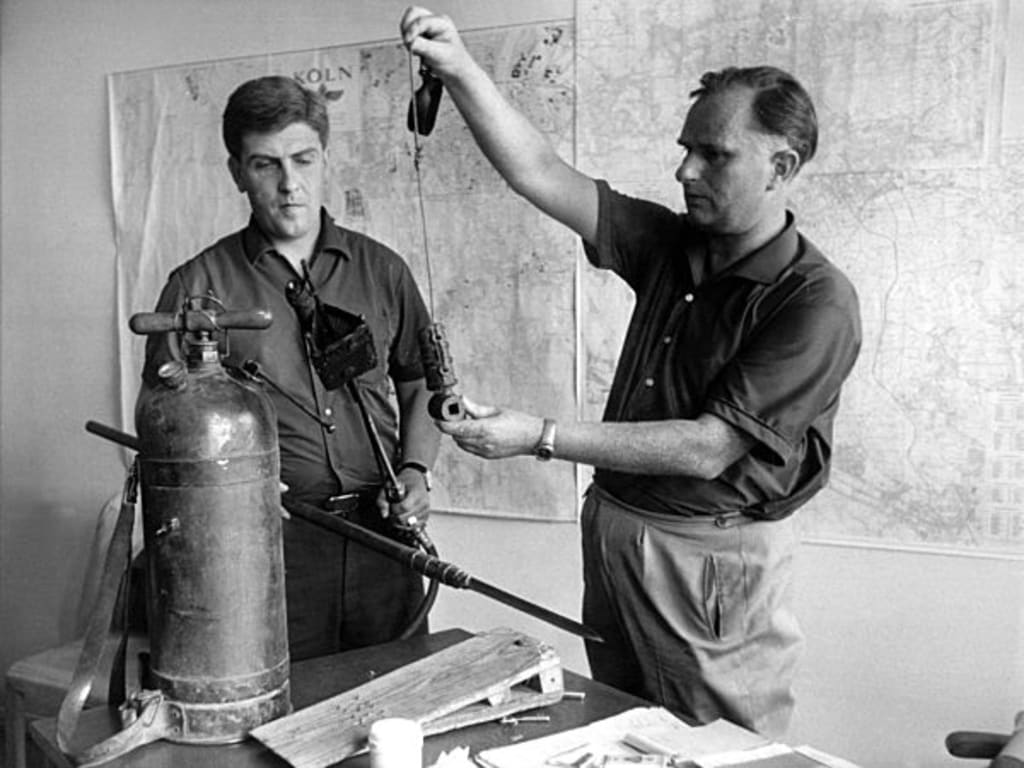
On the warm morning of 11th June 1964, parents in the Cologne suburb of Volkhoven sent their children off to school — a familiar, everyday ritual, with nothing to suggest it would soon be overshadowed by a post-war horror beyond anyone’s imagination.
What unfolded that day at the Catholic elementary school is now remembered simply as the Cologne school massacre — an atrocity that continues to haunt the town more than six decades later.
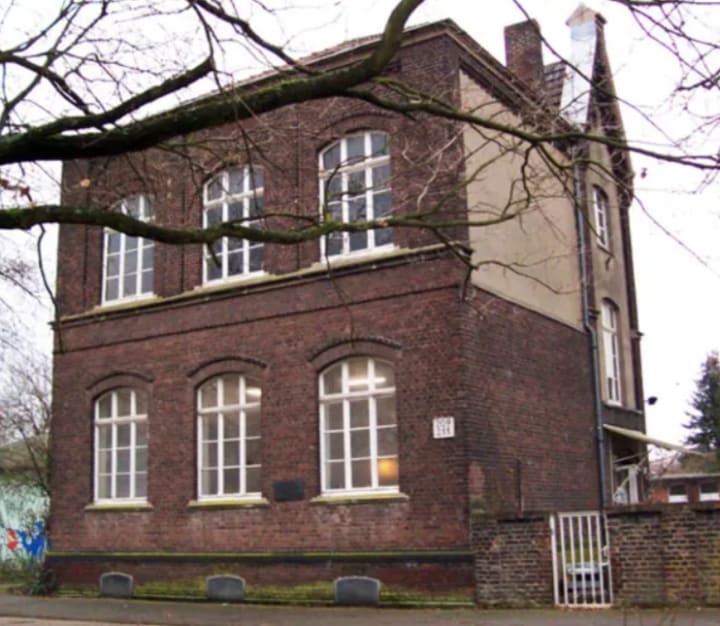
The perpetrator was Walter Seifert, a 42-year-old former Nazi soldier. Neighbours remembered him as an eccentric loner who seemed harmless, but behind closed doors, Seifert had grown increasingly paranoid and bitter — a resentment that would soon erupt into violence.
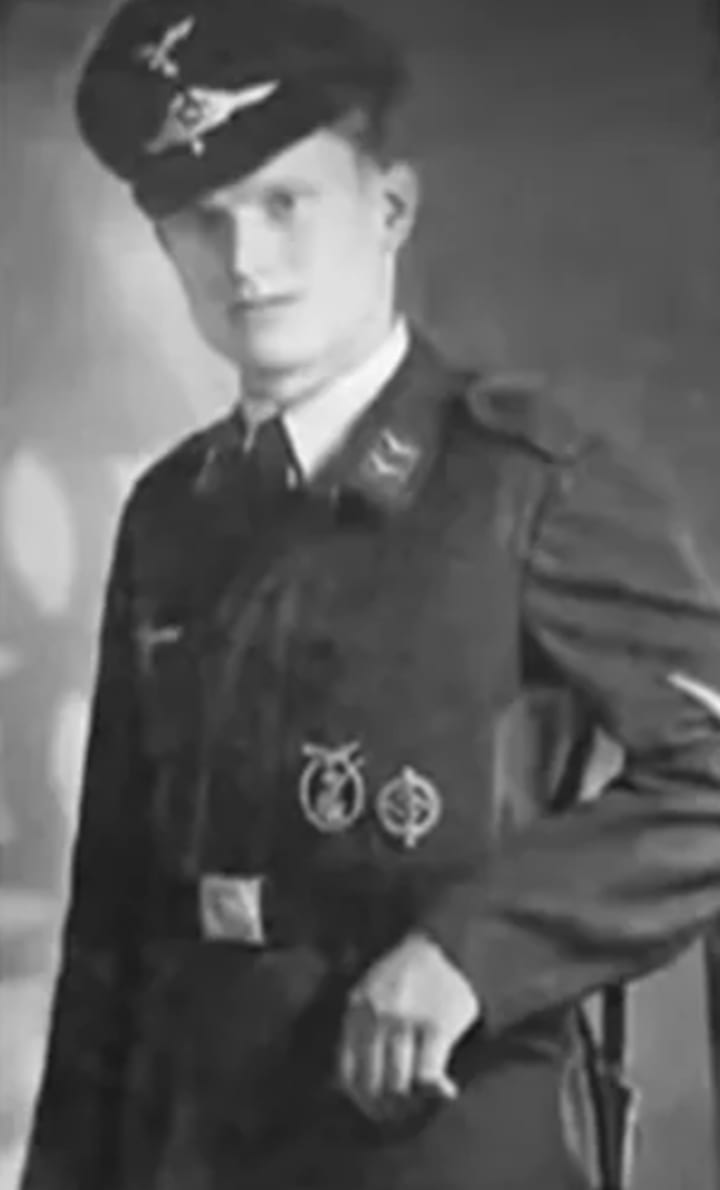
In August 1946, Seifert contracted tuberculosis in his right lung and was soon declared unfit for service, resulting in his dismissal. In the years that followed, his attempts to secure any form of subsistence were repeatedly denied, leaving him embittered and convinced that he had been cheated out of his war pension.
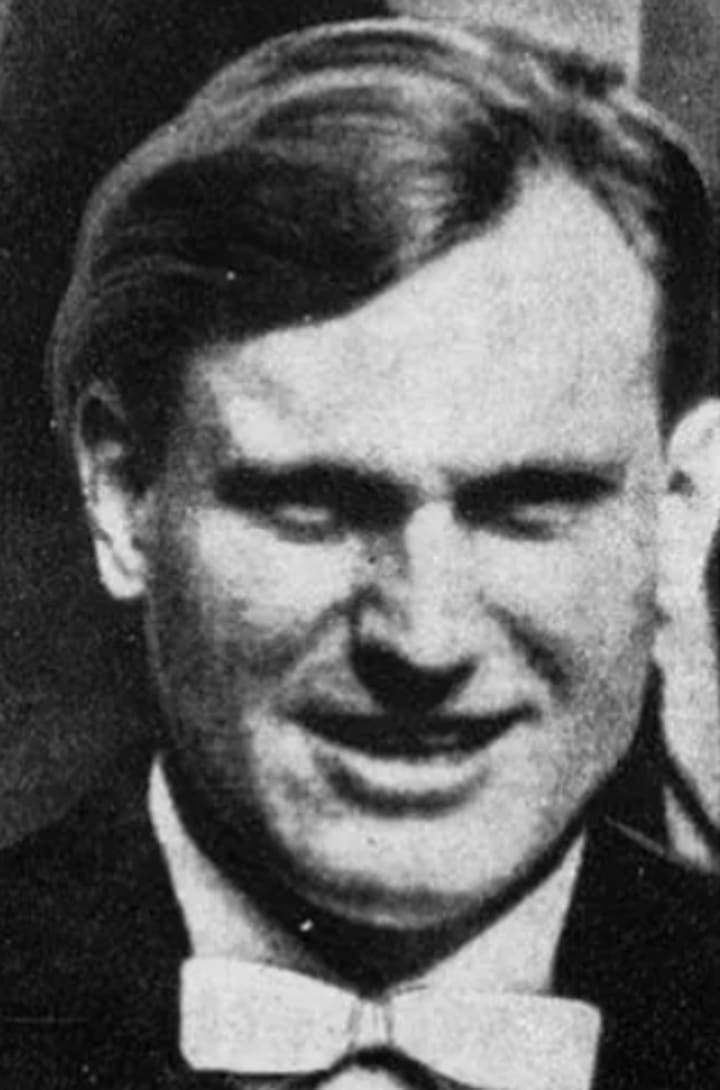
Over the years, his obsession with perceived injustices had hardened into a simmering rage — one that would erupt into a horrifying act of vengeance against society.
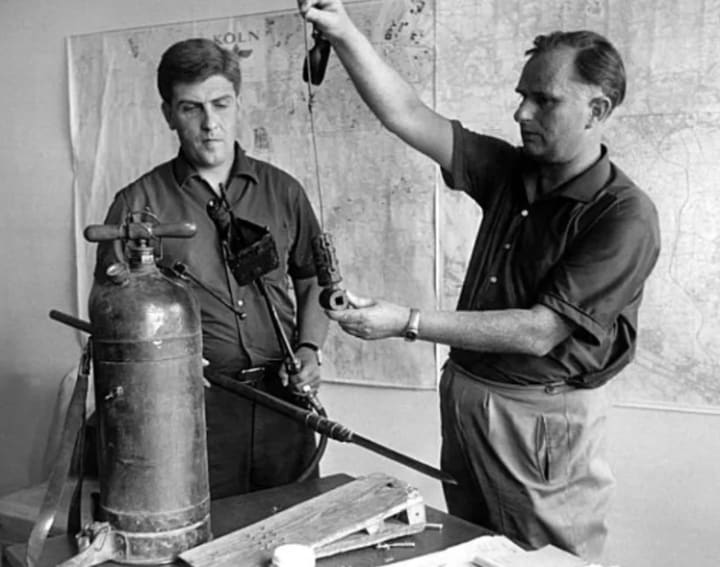
At around 9 a.m. on that June morning, Seifert arrived at the school armed with a terrifying array of weapons, including a homemade flamethrower and a modified spear fashioned from a broomstick.
The school consisted of a main building and four smaller surrounding barracks, each housing classrooms. That day, 380 students and eight teachers were on the premises.
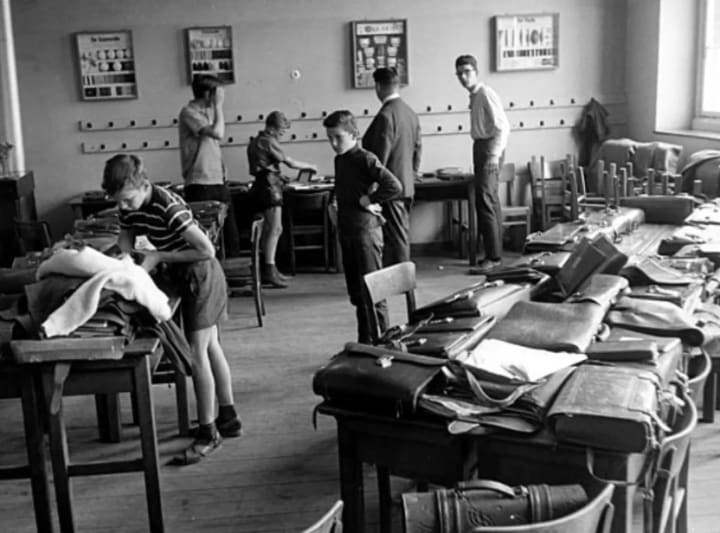
As Seifert slipped onto the school grounds, his presence did not go unnoticed — three crossing guards spotted him, but tragically mistook him for a maintenance worker scheduled to repair a broken gate lock. Left unchecked, he was free to carry out his plan.
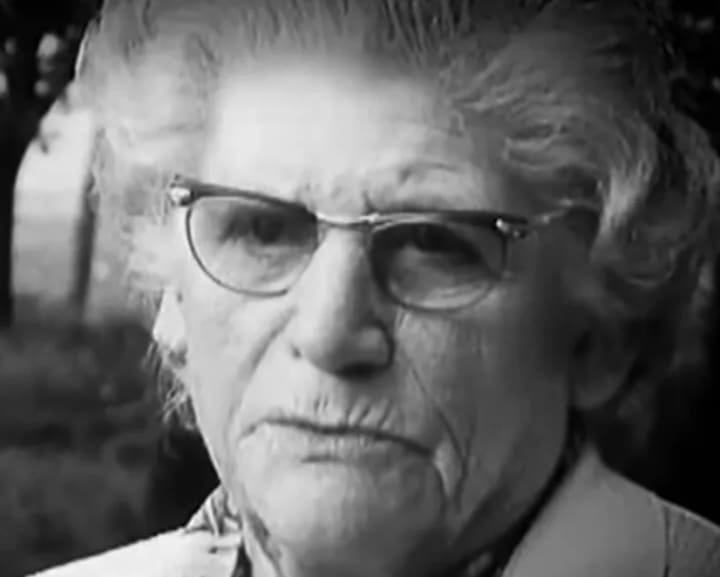
Seifert first approached a girls’ physical education class taking place in the schoolyard, led by teacher Anna Langohr.
When Anna noticed him advancing rapidly toward the lesson, she called out, asking if she could help. He offered no response. Instead, Seifert ignited his flamethrower, trained it on the teacher and students, and unleashed a sudden, terrifying attack.
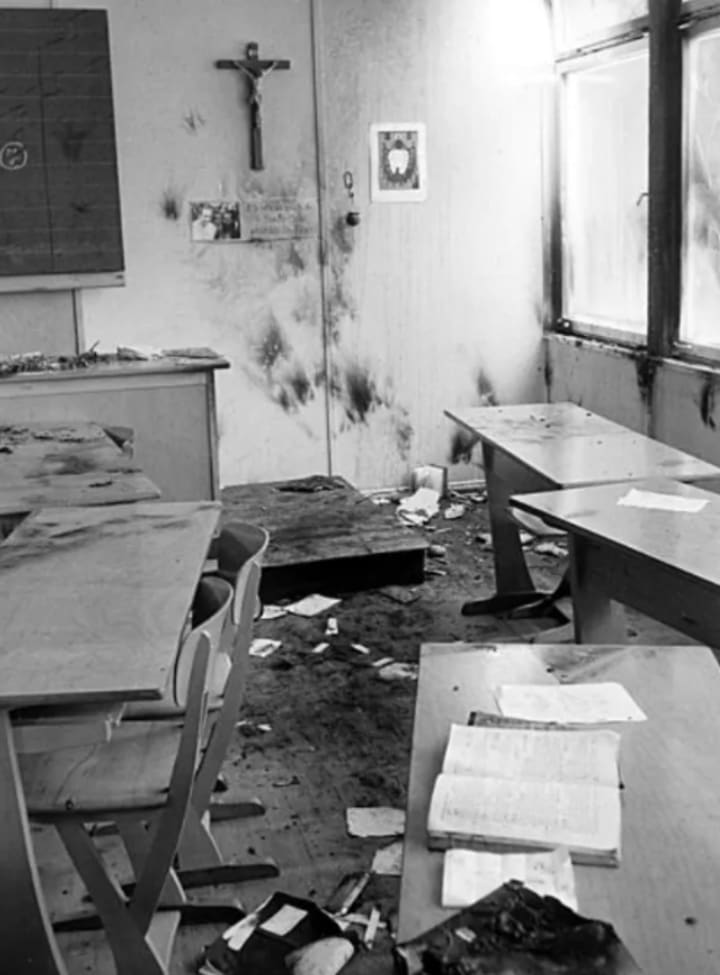
As chaos erupted, Seifert stormed into one of the barracks, smashed the windows, and trained his flamethrower on the children seated at their desks, engulfing them in flames.
Panic swept through the classroom as children scrambled and leapt from the burning building. Only then did Seifert realise his flamethrower had run out of fuel.
As Seifert discarded his now-useless flamethrower, he was confronted in the schoolyard by another teacher, Gertrud Bollenrath.
Silent and expressionless, he drew his spear and drove it into her chest, killing her instantly, before moving on to the next barrack.
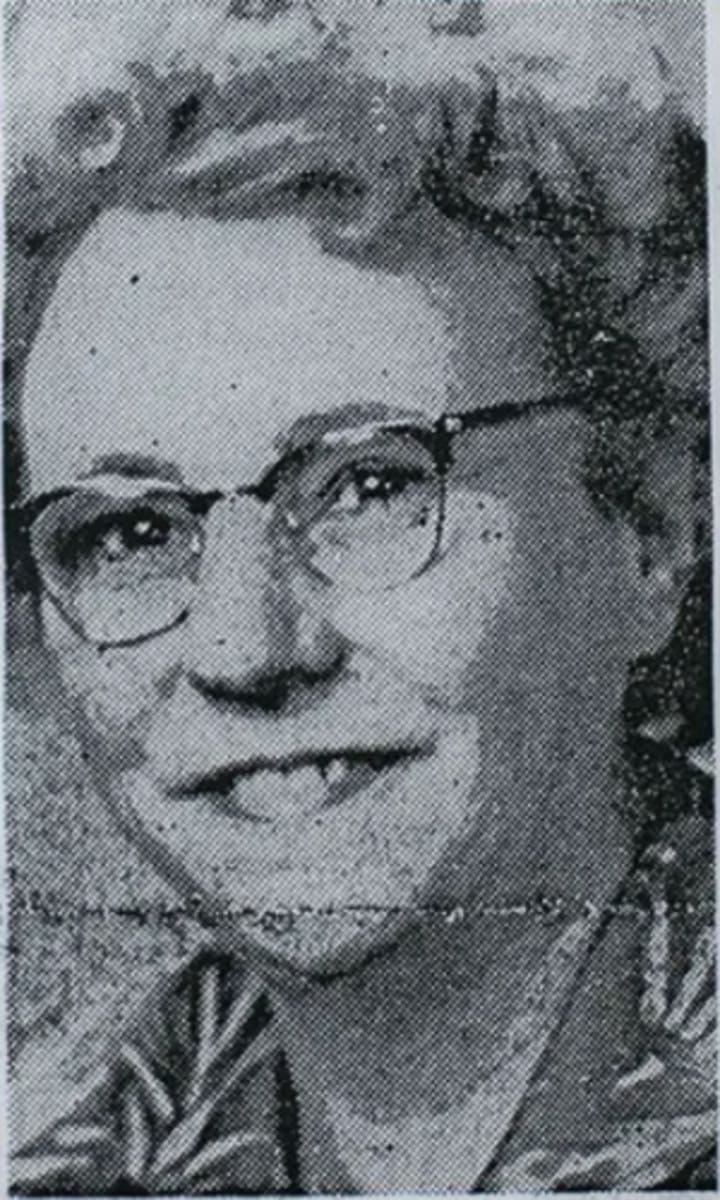
Alerted by the commotion from the other buildings, teachers Ursula Kuhr and Mrs. Kunz attempted to barricade the doors. Despite their desperate efforts, Seifert forced his way inside.
Amid the chaos, Ursula lost her balance and tumbled down a flight of stairs. Seifert followed her, striking her in the legs and shoulders, killing her before moving on.

Teachers fought desperately to shield their students and evacuate the classrooms. Their courage saved many lives, but the toll was still horrific: eight children and two teachers were killed, while many others suffered severe burns over as much as 90% of their bodies — injuries that left lasting physical and psychological scars.
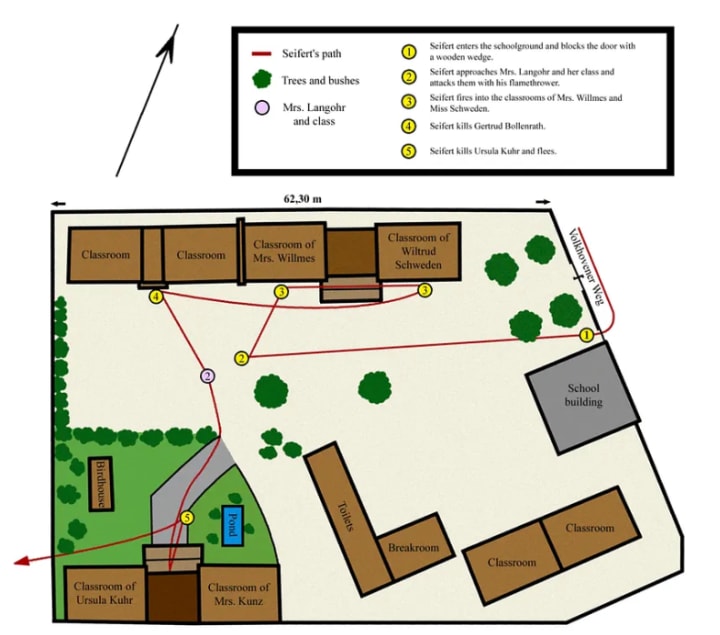
About fifteen minutes after the attack began, Seifert fled the school grounds and attempted to commit suicide by swallowing E605, a poisonous insecticide.
The poison was diluted in his system, however, and he remained alive long enough to be pursued by a mob of roughly thirty people. Sprinting toward a nearby railway embankment, he tried to fend them off with his spear.
At 9:38am, police arrived at the scene. After Seifert attempted to stab an officer, he was shot in the leg, subdued, and taken into custody. He was transported to the University Hospital in Lindenthal, where he was extensively questioned before finally succumbing to the poison at 8:35pm.
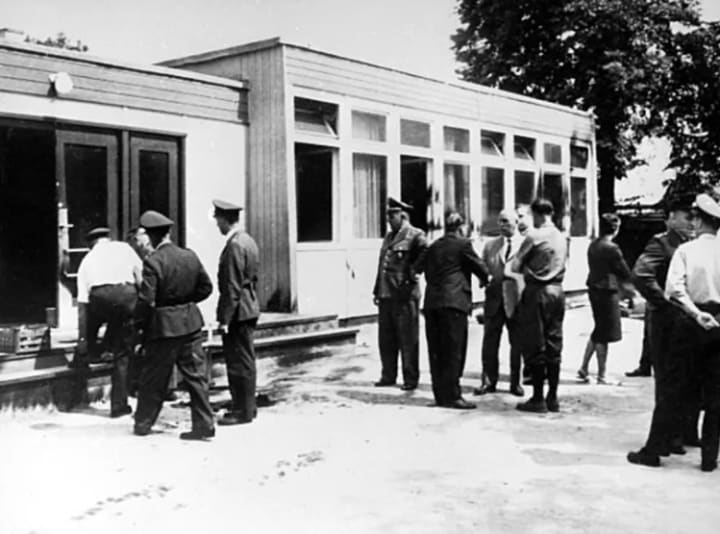
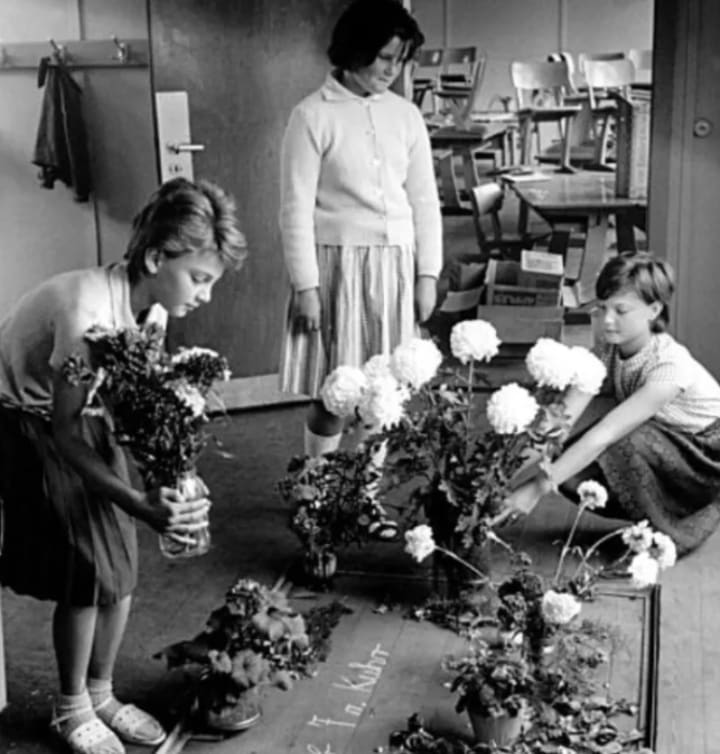
In the aftermath of the attack, the people of Cologne were left to pick up the pieces. Grieving families laid their children to rest, their wails echoing through a city forever scarred. Teachers lingered in empty classrooms, haunted by the faces and voices they would carry with them for the rest of their lives.
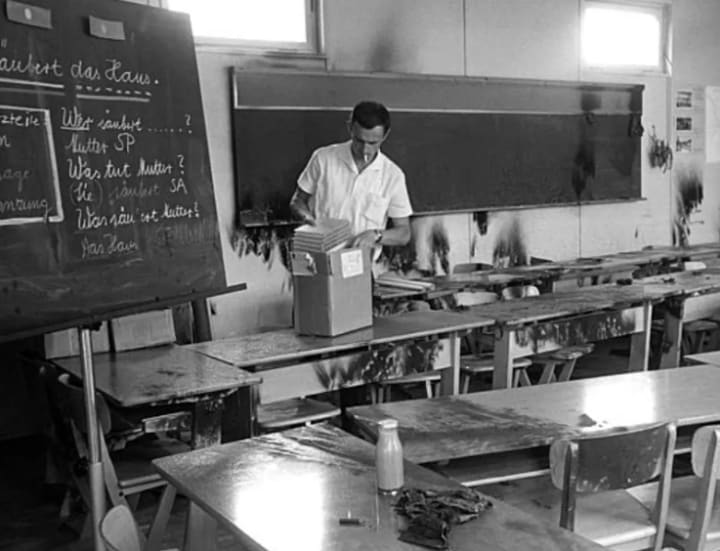
Germany was forced to confront a set of uncomfortable truths. How had a man like Seifert slipped through the cracks, unnoticed? How had paranoia and delusion been allowed to harden into catastrophe? A peaceful suburb had been thrown into chaos, a war waged on its streets — without a single siren ever sounding.
In an act of defiance against such evil, the school was rebuilt. Though Volkhoven had been irrevocably changed, life slowly began to return.
Every year since, the community pauses not only to honour the innocent victims but to remember the day the town was forced to confront its own fragility.
The Cologne school massacre now stands as a haunting chapter in the history of mass violence. It delivered a hard lesson long before the world was ready to hear it: that even in the safest places, human darkness can find a way in.
About the Creator
Matesanz
I write about history, true crime and strange phenomenon from around the world, subscribe for updates! I post daily.
Nobel Peace Prize
The Nobel Peace Prize has stood as one of the world’s most recognized honors. Awarded annually in Oslo, it is meant to celebrate individuals or organizations that have made significant contributions toward peace, diplomacy, and humanitarian progress. While its mission appears straightforward, the Nobel Peace Prize has never been free from debate. In recent years, conversations surrounding global politics—particularly discussions about the Trump Nobel Peace Prize—have brought renewed attention to how peace is defined, measured, and rewarded in the modern era. The Origins and Meaning of the Nobel Peace Prize The Nobel Peace Prize was established by Alfred Nobel, the Swedish inventor best known for creating dynamite. In his final will, Nobel directed that a portion of his wealth be used to recognize efforts that foster peace among nations, reduce standing armies, or promote diplomacy and cooperation. Since its first award in 1901, the prize has honored activists, diplomats, organizations, and world leaders whose actions shaped international dialogue. Unlike other Nobel categories, the peace prize is awarded by a Norwegian committee rather than a Swedish institution. This distinction reflects Nobel’s desire to separate the prize from national interests and focus instead on global responsibility. Over time, the definition of “peace” has expanded. Early recipients were often disarmament advocates or mediators. More recent laureates have included human rights defenders, climate activists, and international organizations working in conflict zones. Politics and the Nobel Peace Prize Despite its humanitarian ideals, the Nobel Peace Prize has always intersected with politics. Recognizing peace efforts often means evaluating political leadership, international negotiations, and long-term consequences—none of which are easy to measure in real time. Some awards have been widely celebrated, while others sparked controversy. Critics often argue that certain laureates were honored prematurely, before the lasting results of their actions became clear. Supporters counter that the prize is meant to encourage peace efforts, not merely reward completed achievements. This tension has made the Nobel Peace Prize a reflection of global priorities at any given moment, rather than a simple historical judgment. Donald Trump and Nobel Peace Prize Discussions Few modern political figures have generated as much debate in connection with the Nobel Peace Prize as Donald Trump. During and after his presidency, conversations about a potential Trump Nobel Prize emerged repeatedly, particularly among supporters who pointed to his role in diplomatic initiatives. The phrase Trump Nobel Peace Prize gained traction following agreements and negotiations in regions long marked by conflict. Advocates argued that these diplomatic efforts aligned with Alfred Nobel’s vision of reducing international tension through dialogue rather than force. At the same time, critics questioned whether these actions met the broader ethical and humanitarian standards traditionally associated with the award. They pointed to domestic divisions, foreign policy controversies, and unresolved global conflicts as reasons for skepticism. This divide highlights a core challenge of the Nobel Peace Prize: peace is rarely absolute, and political leadership is often complex and contradictory. Trump Nobel Peace Prize 2026: Speculation and Context As global politics continue to evolve, speculation around a Trump Nobel Peace Prize 2026 has appeared in media discussions and public commentary. It is important to note that nominations for the Nobel Peace Prize are confidential for decades, and speculation does not confirm consideration or selection. However, the mere discussion of Trump Nobel Peace Prize 2026 reflects how the award has become part of broader cultural and political conversations. Supporters view such recognition as validation of diplomatic achievements, while critics see the speculation as politicizing an institution meant to rise above partisan debate. This dynamic is not unique to Trump. Many past leaders, from various ideological backgrounds, were debated heavily before or after receiving the prize. The Nobel Peace Prize often mirrors global disagreements rather than resolving them. How the Nobel Committee Makes Its Decision Each year, hundreds of nominations are submitted by qualified individuals, including academics, lawmakers, and previous laureates. The Nobel Committee evaluates these nominations through research, expert consultation, and internal debate. The process considers intent, impact, and long-term significance. However, because peace efforts often unfold over years or decades, the committee must make decisions without full historical clarity. This reality explains why some awards age gracefully while others remain controversial. The committee rarely responds directly to public pressure or online campaigns. Media attention, including discussions around a Trump Nobel, does not guarantee influence over the final decision. The Broader Impact of the Nobel Peace Prize Beyond individual recipients, the Nobel Peace Prize plays a symbolic role. It brings global attention to issues that might otherwise be ignored, from humanitarian crises to fragile peace processes. Even controversial nominations can spark meaningful debate about what peace truly means in the modern world. The prize also raises questions about accountability. When leaders are considered for such recognition, the public is encouraged to examine policies, outcomes, and moral responsibility more closely. In this sense, discussions surrounding the Trump Nobel Peace Prize are not just about one individual. They reflect deeper conversations about diplomacy, leadership, and the evolving standards by which peace is judged. Conclusion: A Prize That Reflects the World The Nobel Peace Prize remains one of the most influential and debated honors in global society. Its power lies not only in recognizing peace efforts but also in challenging the world to think critically about conflict, cooperation, and responsibility. Whether discussions involve historic activists or modern political figures like those associated with Trump Nobel Peace Prize 2026 speculation, the award continues to reflect the complexities of international relations. Peace is rarely simple, and neither is the process of honoring it. Ultimately, the Nobel Peace Prize serves as a reminder that striving for peace is an ongoing journey—one shaped by ideals, actions, and the difficult choices that define human history.
By Saboor Brohi 5 days ago in History
The History of America — A Nation Forged by Struggle and Change
Long before the name “America” existed, the vast lands of North America were home to millions of Indigenous peoples. These societies—such as the Navajo, Iroquois, Cherokee, Apache, and many others—developed rich cultures, languages, and systems of governance. They farmed, hunted, traded, and built complex communities deeply connected to the land. For thousands of years, these civilizations thrived, long before European ships ever crossed the Atlantic.
By The best writer 3 days ago in History




Comments
There are no comments for this story
Be the first to respond and start the conversation.