
AI, Nuclear Weapons, and Accidental War
Why the Future of Conflict May Be Decided by Machines, Not Intentions

AI, Nuclear Weapons, and Accidental War
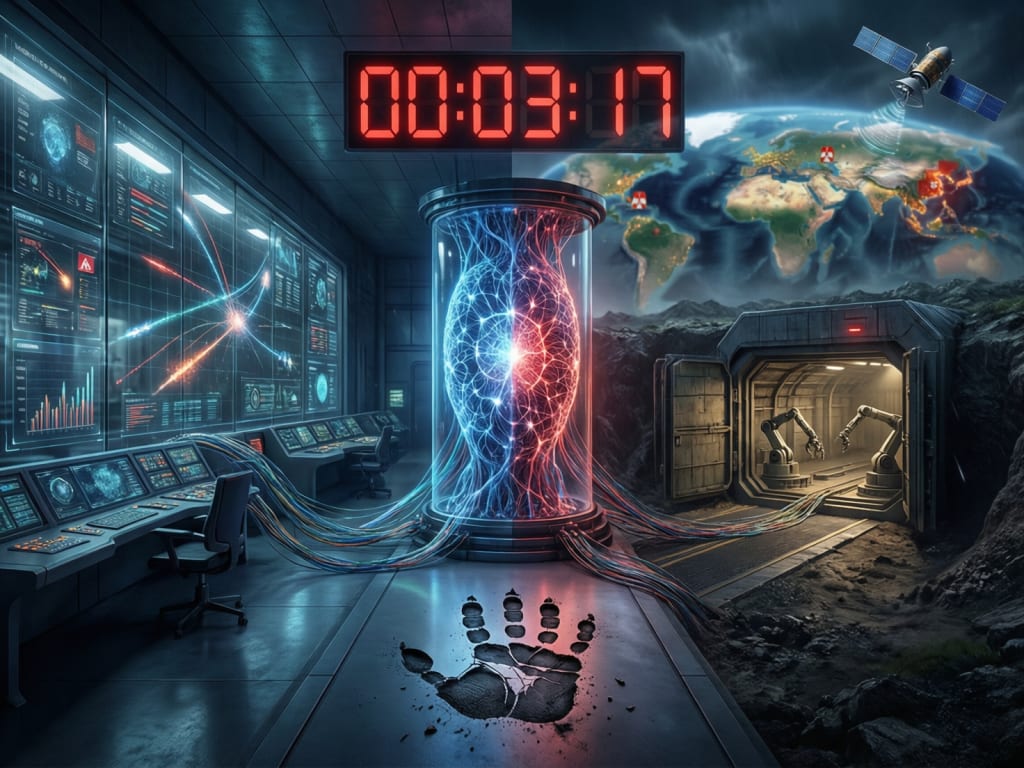
In the modern world, wars are no longer fought only with soldiers, tanks, and planes. A new and dangerous element has entered global security: artificial intelligence (AI). While AI brings speed, efficiency, and advanced decision-making, it also introduces a serious risk—especially when combined with nuclear weapons. The greatest danger of the future may not be a planned nuclear war, but an accidental one.
Nuclear weapons are the most destructive tools ever created. Because of this, countries that possess them have always built strict command systems. These systems are designed to make sure that no single person, mistake, or emotion can trigger a nuclear launch. Human judgment, verification, and delay were once seen as safety features. Today, however, many of these systems are becoming automated.
AI is now used in early warning systems, threat detection, satellite analysis, cyber defense, and military planning. These systems can process massive amounts of data far faster than humans. They can detect missile launches, troop movements, or cyber intrusions within seconds. In theory, this makes countries safer. In reality, it creates a new problem: machines react faster than humans can think.
One of the biggest risks is false alarms. History shows that even during the Cold War, nuclear war almost started by mistake. Radar errors, computer glitches, and misread signals once convinced leaders that an attack was underway—when it was not. In those cases, human judgment stopped disaster. Officers questioned the data, delayed action, and asked for confirmation.
With AI, the pressure to act quickly is much higher. If an AI system reports an incoming attack, leaders may have only minutes—or seconds—to respond. If the system is trusted too much, there may be little time to question its accuracy. A software bug, hacked data, or misinterpreted signal could push nations toward a catastrophic decision.
Another danger is cyber warfare. Modern nuclear systems are connected to digital networks for communication and monitoring. AI helps defend these systems, but it can also be used to attack them. A skilled cyber operation could feed false information into an AI system, making it believe an enemy is preparing a strike. This kind of manipulation could trigger panic and escalation without a single missile actually being launched.
AI also changes military thinking. Some strategists believe faster decision-making gives an advantage. This creates pressure to remove humans from the loop. The idea is simple: machines do not panic, hesitate, or disobey orders. But machines also do not understand context, morality, or long-term consequences. They follow rules and data—even when the situation is unclear.
The rise of autonomous weapons adds another layer of risk. Drones, submarines, and missile defense systems increasingly operate with minimal human control. If these systems interact during a crisis, small actions could escalate quickly. One automated response could trigger another, creating a chain reaction no one intended.
Global rivalry makes the situation worse. Trust between major powers is low. The United States, China, Russia, and others are modernizing their nuclear forces while competing in AI development. Each side fears falling behind. This creates an arms race not only in weapons, but in algorithms. Speed becomes more important than caution.
Smaller countries and regional conflicts also matter. If AI-based systems spread globally, even limited conflicts could spiral out of control. A regional crisis, misread by AI as a larger threat, could draw major powers into confrontation. In such an environment, misunderstanding becomes as dangerous as aggression.
Experts warn that the solution is not to stop using AI, but to control it carefully. Human oversight must remain central in nuclear decision-making. Clear communication channels, transparency, and international agreements are essential. AI should support human judgment—not replace it.
There is also a moral question. Delegating life-and-death decisions to machines challenges basic human responsibility. Nuclear war would affect all humanity, not just the countries involved. Decisions of such magnitude must remain human decisions.
In the end, the greatest risk of AI and nuclear weapons is not evil intent. It is speed, complexity, and overconfidence. Accidental war does not require hatred—only error. As technology advances, wisdom must advance faster. Otherwise, the future battlefield may be decided not by leaders, but by lines of code running too fast to stop.
About the Creator
Wings of Time
I'm Wings of Time—a storyteller from Swat, Pakistan. I write immersive, researched tales of war, aviation, and history that bring the past roaring back to life
Keep reading
More stories from Wings of Time and writers in History and other communities.
Future Wars in the Age of Artificial Intelli
Future Wars in the Age of Artificial Intelligence If the new battlefield is hidden inside a nation’s systems, then Artificial Intelligence is becoming the most powerful weapon within it. Future wars will not begin with tanks crossing borders or fighter jets in the sky. They will begin with algorithms, data, and decisions made at machine speed. AI is changing not only how wars are fought, but also who controls power and how quickly conflicts can spiral out of control.
By Wings of Time about 11 hours ago in History
The Spanish Donkey: A Dark Instrument of Punishment in European History
History is often told through kings, wars, and revolutions. But hidden between those grand narratives are quieter, darker stories. Stories of ordinary people, unnamed in records, who experienced history not as progress, but as pain. One such story is tied to an object known as the Spanish Donkey, also called the Wooden Horse, an instrument of punishment used in parts of Europe during the late medieval and early modern periods.
By Salman Writes3 days ago in History



Comments
There are no comments for this story
Be the first to respond and start the conversation.