
Afghanistan: A Nation of Resilience and Transformation
Afghan Culture: A Blend of Tradition and Resilience
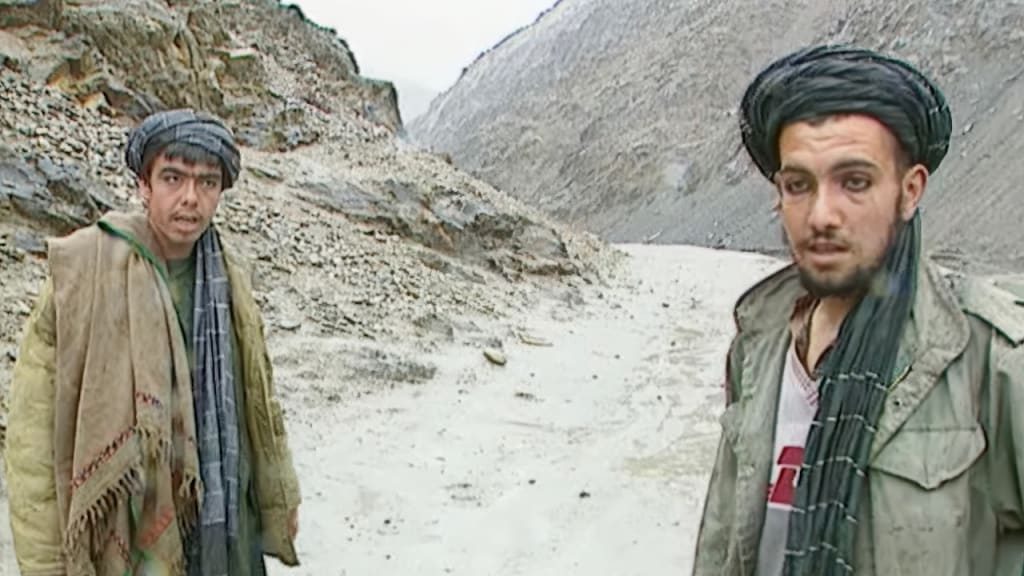
Officially known as the Islamic Emirate of Afghanistan, this landlocked nation has a population of 43.3 million, making it the 36th most populous country in the world. Covering an area of 652,000 square kilometers, Afghanistan ranks 41st in terms of size globally.
Surrounded by Pakistan to the east and south, Iran to the west, and Turkmenistan, Uzbekistan, and Tajikistan to the north, Afghanistan also shares a crucial 76-kilometer border with China. Despite being relatively small in length, this border plays a vital role in the region's geopolitics.
The capital city, Kabul, serves as the largest urban center, while rural areas account for approximately 76% of the population. Agriculture remains the primary source of livelihood for most Afghans, with nearly 80% of the population relying on farming.
A History of Struggles and Resilience
Afghanistan has often been referred to as the Graveyard of Empires. From Alexander the Great and Genghis Khan to the British Empire and the Soviet Union, numerous powers have tried to conquer Afghanistan, only to be defeated by its rugged terrain and determined people.
Even the United States, following the 9/11 attacks, invaded Afghanistan under the pretext of eliminating Osama bin Laden. Despite occupying the country for two decades, U.S. forces eventually withdrew, leaving the Taliban to reclaim power.
This history of defiance against foreign domination underscores the Afghan people’s unyielding spirit.
Afghan Culture: A Blend of Tradition and Resilience
Afghanistan is home to a rich cultural tapestry. The official languages are Pashto and Dari, while Islam serves as the unifying force, with 99% of the population identifying as Muslim.
Afghans are known for their hospitality. Guests are treated with utmost respect, and traditional Afghan cuisine—featuring dishes like Kabuli Pulao, Qorma, and Shorba—reflects the nation’s culinary heritage.
One of the most famous Afghan exports is dry fruits, including almonds, pistachios, and raisins, which are regarded as some of the finest in the world.
Kabul, the heart of Afghanistan, offers a mix of history and modernity. Notable landmarks include the ancient Gardens of Babur, the serene Qargha Dam, and the Blue Mosque in Mazar-e-Sharif, which is believed by many to be the resting place of Hazrat Ali (RA).
Economic Challenges and Opportunities
Decades of conflict have hindered Afghanistan’s economic progress. However, the nation is working towards rebuilding its economy.
The Afghan currency, Afghani, is stronger than its neighboring Pakistan's rupee, with 1 Afghani equaling 3.94 Pakistani rupees.
Agriculture remains the backbone of Afghanistan's economy. The country is one of the largest producers of pomegranates, saffron, and dry fruits.
A significant development is the construction of the Kokcha Canal Project, a 285-kilometer-long artificial canal designed to transform 5.5 million acres of desert into fertile farmland. This ambitious project, initiated in March 2022, is expected to be completed by 2025. The canal is set to revolutionize Afghanistan's agricultural output, enabling the nation to become self-sufficient and export surplus wheat to neighboring countries.
Geopolitical Importance: The China-Afghanistan Corridor
Afghanistan's strategic location makes it a critical player in regional politics. The country’s borders connect it to China, and plans are underway for a significant infrastructure project known as the China-Afghanistan Corridor.
This corridor aims to connect China, Afghanistan, and Iran with Europe, bypassing Pakistan’s China-Pakistan Economic Corridor (CPEC). This new trade route promises economic benefits for Afghanistan by providing direct access to European markets.
China’s interest in Afghanistan stems from its vast natural resources and the opportunity to establish a stable trade route. The completion of this corridor will likely reduce Afghanistan’s dependence on Pakistan while strengthening its economic ties with China.
The Impact of Taliban Rule
Since the Taliban regained power in 2021, Afghanistan has experienced significant changes. The Taliban government has implemented strict Islamic laws, restricting women's education beyond the sixth grade and limiting their participation in public life. These policies have drawn criticism worldwide.
However, the Taliban has also made efforts to improve security and stabilize the country. For instance, Kabul, once considered unsafe, now sees families walking freely at night without fear.
Despite these improvements, challenges remain. The ban on music, cinema, and certain forms of entertainment has curtailed cultural expression, while gender restrictions continue to spark debates about human rights.
Natural Beauty and Tourism Potential
Afghanistan boasts breathtaking natural landscapes. One such marvel is the Band-e-Amir National Park, known for its crystal-clear blue lakes surrounded by rocky mountains. This UNESCO World Heritage Site is a testament to Afghanistan’s natural beauty.
Another remarkable site is the Bamiyan Valley, once home to ancient Buddhist statues destroyed by the Taliban in 2001. The valley's historical significance and stunning scenery make it a unique destination.
With improved security and infrastructure, Afghanistan has the potential to develop a thriving tourism industry.
Looking Ahead: Afghanistan’s Future
The path ahead for Afghanistan is filled with challenges and opportunities. Projects like the Kokcha Canal and the China-Afghanistan Corridor hold the promise of transforming the nation’s economy.
However, to truly progress, Afghanistan must address issues of gender equality, education, and international relations.
The world watches with cautious optimism as Afghanistan continues its journey toward stability and prosperity.
Conclusion
Afghanistan is a nation of contradictions—war-torn yet resilient, traditional yet aspiring for progress. Its rich history, cultural heritage, and strategic location make it a country of immense significance on the global stage.
As Afghanistan rebuilds itself, it reminds us of the strength and determination of its people, who continue to rise above adversity.
Let us hope that Afghanistan’s future is one of peace, prosperity, and progress.
About the Creator
Keep reading
More stories from Sajjad Rana Hussain and writers in History and other communities.
Unsettling Discoveries in Africa
Unsettling Discoveries in Africa: Unexplained Mysteries of the Continent Africa, with its vast expanse of 30.3 million square kilometers or 11.7 million square miles, is the world's second-largest and second-most populous continent. Within its borders lie numerous strange and unsettling discoveries that continue to baffle researchers. From mysterious stones to ancient ruins, Africa holds a wealth of unexplained mysteries. In this article, we will delve into ten of the most intriguing and perplexing findings on the continent.
By Sajjad Rana Hussain3 years ago in History
Ancient Super Weapons That Changed Warfare Forever
Throughout recorded history, warfare has shaped civilizations. Long before drones, missiles, and cyber warfare, ancient societies were already engineering terrifying and brilliant machines designed to dominate the battlefield.
By Areeba Umairabout 22 hours ago in History
Microsoft's Purposeful Marketing Deception About AI's Ability To Beat Physicians In Diagnosis
When you look at the world of scientific research... If you are not careful... You will be fooled into believing things that are not actually supported by the data.
By Dr. Cody Dakota Wooten, DFM, DHM, DAS (hc)a day ago in Longevity


Comments
There are no comments for this story
Be the first to respond and start the conversation.