
1945: The Syrian Crisis That Nearly Sparked War Between Britain and France
Churchill Prepared to Intervene to Halt French Bombing of Syrians; Syria Achieved Independence on April 17, 1946
I. The Decline of French Colonial Power
World War II inflicted a severe blow to French colonial authority. After decades of expanding its empire, France faced a humiliating defeat by Nazi Germany in 1940, leading to the establishment of the Vichy regime. Although Free French forces, led by Charles de Gaulle, continued to fight alongside the Allies, France's global influence was significantly diminished.
In the Levant, France maintained control over Syria and Lebanon under a League of Nations mandate established after World War I. Despite earlier promises of independence, France was reluctant to relinquish its hold on these territories. This resistance to decolonization set the stage for the 1945 crisis.
---
II. Rising Nationalism and Tensions in the Levant
As World War II drew to a close, nationalist sentiments surged across the Middle East. In Syria and Lebanon, demands for independence intensified. The presence of French troops and administrators became increasingly unpopular, leading to widespread protests and civil unrest.
In May 1945, demonstrations erupted in Damascus and other Syrian cities. These protests were met with violent suppression by French forces, resulting in numerous casualties. The situation escalated rapidly, with reports of French troops firing on civilians and using heavy artillery against populated areas.
---
III. The French Military Response
On May 29, 1945, French forces launched a brutal assault on Damascus. They shelled the city, targeting government buildings and residential neighborhoods. The Syrian parliament was bombarded, and attempts were made to arrest President Shukri al-Quwatli, who narrowly escaped. The French also cut off electricity and communication lines, effectively isolating the city.
The French military actions resulted in significant destruction and loss of life. Estimates suggest that hundreds of Syrians were killed, and many more were injured. The use of Senegalese colonial troops by the French further inflamed tensions, as these forces were accused of committing atrocities against civilians.
---
IV. British Intervention and the Brink of War
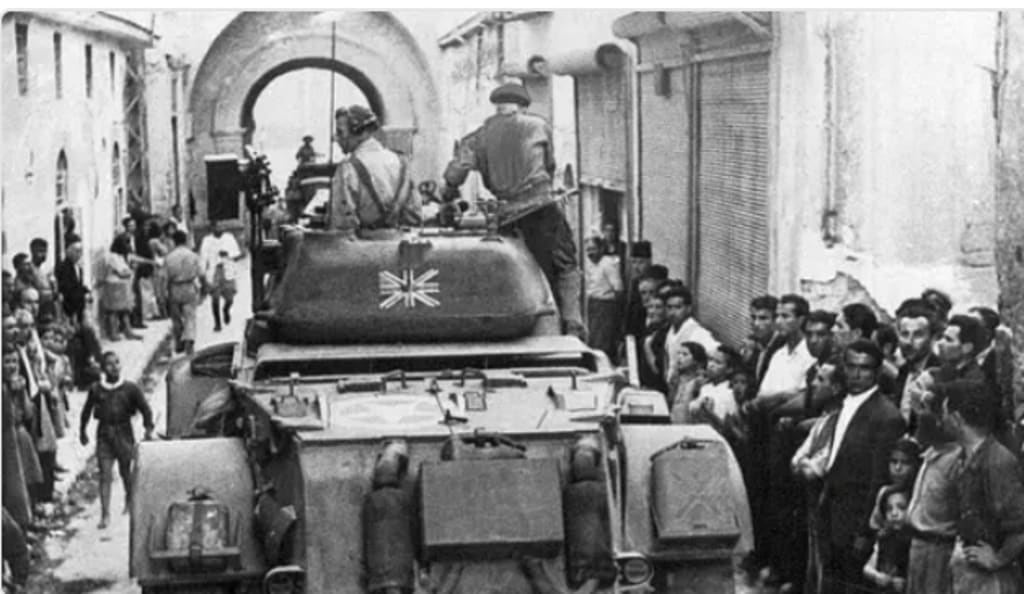
The British government, under Prime Minister Winston Churchill, was alarmed by the French actions in Syria. Concerned about regional stability and its own interests in the Middle East, Britain decided to intervene. Churchill authorized General Bernard Paget to deploy British forces from Transjordan into Syria to halt the French offensive.
On May 31, 1945, British troops entered Damascus and confronted the French forces. They demanded an immediate ceasefire and the withdrawal of French troops to their barracks. The British intervention effectively ended the French assault and prevented further bloodshed.
The crisis brought Britain and France to the brink of war. Diplomatic relations between the two nations were severely strained, with accusations and recriminations exchanged. However, the British action was widely supported by the international community, which viewed the French response as excessive and unjustified.
---
V. The Path to Syrian Independence
Following the crisis, international pressure mounted on France to relinquish its control over Syria and Lebanon. The newly formed United Nations and the Arab League both advocated for the independence of the Levantine states. Facing isolation and condemnation, France agreed to negotiate a withdrawal.
By April 1946, the last French troops had left Syria, marking the end of the French mandate. Syria declared its independence on April 17, 1946, and was subsequently recognized by the international community. Lebanon also achieved full independence during this period.
---
VI. Legacy and Historical Significance
The 1945 Syrian crisis highlighted the declining power of European colonial empires and the rise of nationalist movements in the post-war era. It underscored the importance of international diplomacy and the role of emerging global institutions in resolving conflicts. The events also strained Franco-British relations and influenced future decolonization efforts across the Middle East and beyond.
The crisis serves as a reminder of the complexities of colonial legacies and the struggles faced by nations seeking self-determination. It remains a pivotal moment in Syrian history and a significant episode in the broader narrative of decolonization.
---
Written by: Ikram Ullah
About the Creator
Keep reading
More stories from Ikram Ullah and writers in History and other communities.
The Long History of the Middle Finger: From Ancient Insult to Global Gesture
The gesture of raising the middle finger—often considered vulgar or offensive in many cultures—has a surprisingly rich and ancient history that spans thousands of years. It is more than just a modern-day sign of frustration; it has deep roots in classical antiquity, plays, empires, and even battlefield provocations. From the Roman Empire to present-day protests, the middle finger has consistently served as a powerful, rebellious tool of communication.
By Ikram Ullah8 months ago in History
Have You Seen Iran’s Cave Village?
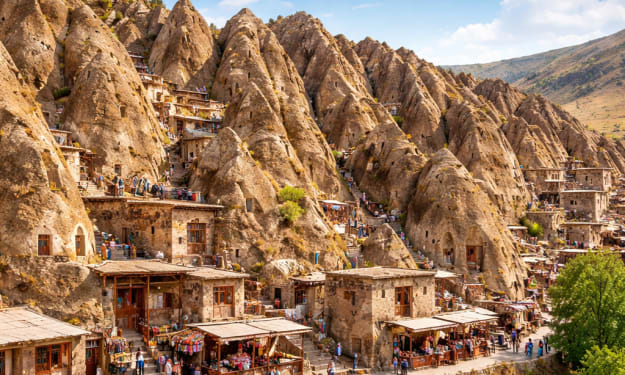
Have you ever seen a village where people still live inside caves? In Iran, there is such a place, and it feels almost like something from a fantasy story. The village is called Kandovan, and it is one of the most unique and beautiful places in the country. Located in the East Azerbaijan province, near the city of Tabriz, Kandovan is famous for its rocky homes that were carved into cone-shaped cliffs formed by volcanic activity thousands of years ago.
By Irshad Abbasi about 2 hours ago in History
Author’s Advice
If you would’ve asked me 20 years ago did I know I’d become a writer and an author, I would’ve said “nope, ain’t happening”. As fate would have it I did become an author and I can honestly say I’m loving it so far. It really does feel good to be a writer. I’ve learned a lot on this journey and I feel like with even me being as new to this world as I am, there’s some wisdom I need to share with every other aspiring author.
By Joe Patterson5 days ago in Journal



Comments
There are no comments for this story
Be the first to respond and start the conversation.