
The Long History of the Middle Finger: From Ancient Insult to Global Gesture
How a Single Finger Traveled Through Empires, Drama, and Rebellion to Become a Universal Sign of Disrespect
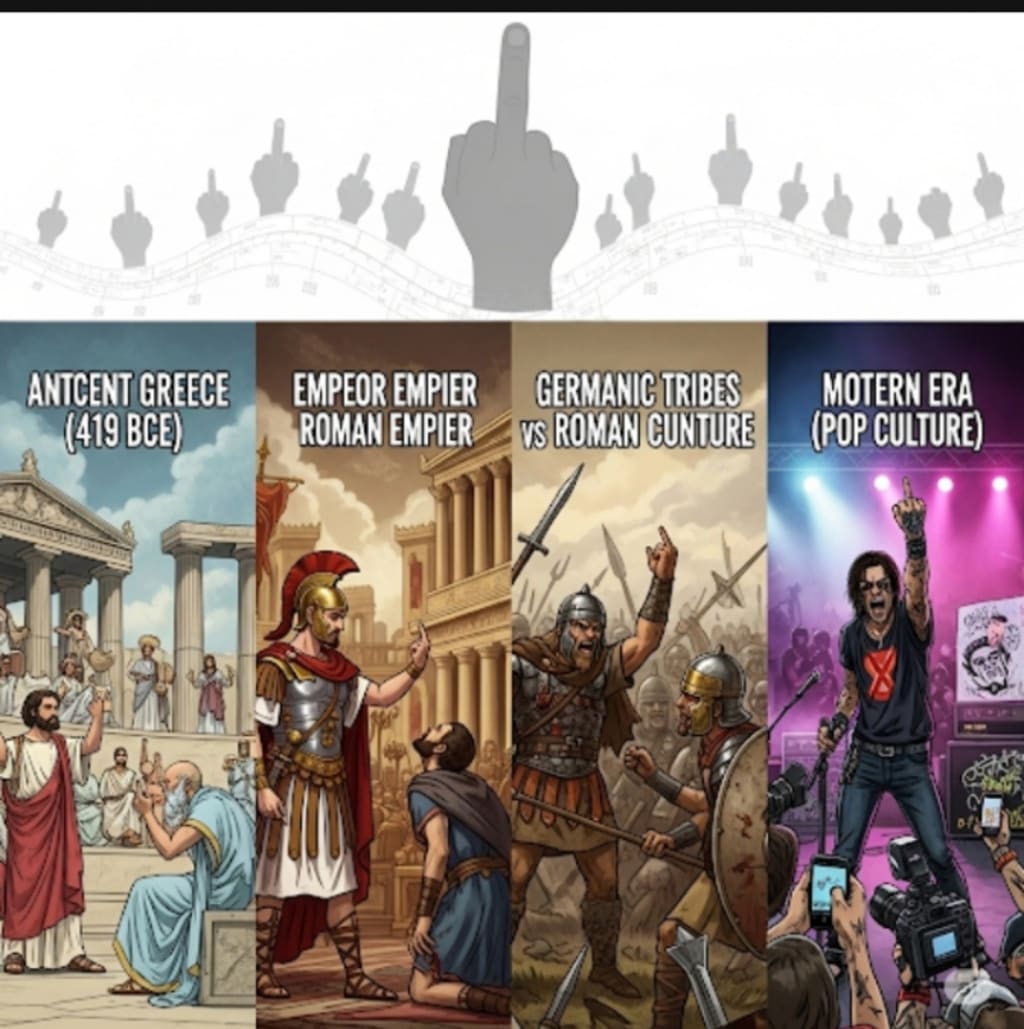
The gesture of raising the middle finger—often considered vulgar or offensive in many cultures—has a surprisingly rich and ancient history that spans thousands of years. It is more than just a modern-day sign of frustration; it has deep roots in classical antiquity, plays, empires, and even battlefield provocations. From the Roman Empire to present-day protests, the middle finger has consistently served as a powerful, rebellious tool of communication.
Origins in Ancient Greece
The earliest recorded use of the middle finger as an offensive gesture dates back to ancient Greece, around 419 BCE. In Aristophanes’ famous comedic play The Clouds, a student mocks Socrates by raising his middle finger. This early use was not just comedic but carried a strong insult, symbolizing something highly inappropriate.
In Greek culture, the gesture was symbolic and often interpreted as a visual representation of male genitalia. The extended middle finger was meant to resemble the penis, while the curled fingers on either side represented the testicles. This crude symbolism clearly implied that the person on the receiving end of the gesture was being emasculated or humiliated.
The Romans and “Digitus Impudicus”
When the Romans inherited and expanded upon Greek culture, they also adopted this vulgar hand gesture. In Latin, the middle finger was referred to as the "digitus impudicus", meaning “the impudent finger” or “the shameless finger.” It was seen as a crude and disrespectful way to insult someone—particularly in public settings.
One of the most infamous figures connected to the gesture was the Roman Emperor Caligula. Known for his tyranny and eccentricities, Caligula reportedly forced members of his court and even the general public to kiss his middle finger as a deliberate act of humiliation. For Caligula, it was a way of asserting dominance and mocking those who opposed or questioned him.
Meanwhile, Emperor Augustus, a much more conservative ruler, once exiled an actor from Rome for making the obscene gesture toward an audience during a performance. This suggests that even in a culture where gladiator battles and public executions were common, the middle finger was considered inappropriate and offensive enough to warrant exile.
Germanic Tribes and Battlefield Insults
The legacy of the digitus impudicus didn’t end with the fall of the Roman Empire. During various military campaigns, Germanic tribes—known for their fierce resistance to Roman occupation—used the gesture as a form of mockery and provocation. Roman soldiers would often encounter these taunts in the heat of battle.
To the Germanic warriors, raising the middle finger was more than just an insult; it was a challenge to the masculine honor of the Roman soldiers. It mocked their authority, their pride, and their manhood, hitting them where it hurt the most—on a symbolic level.
Medieval Silence and Modern Revival
Surprisingly, during the Middle Ages, historical records on the middle finger gesture grow scarce. While vulgar language and hand signs undoubtedly existed, public decency laws and the influence of Christianity likely suppressed such expressions. It wasn’t until the modern era, particularly the 20th century, that the gesture began to resurface prominently in art, media, and pop culture.
In the early 20th century, the gesture appeared in photographs of rebellious youth, political protests, and even wartime messages. By the 1960s and 70s, the middle finger had become a symbol of counterculture—used by musicians, actors, and civil rights protestors as a form of resistance.
The Gesture in Pop Culture
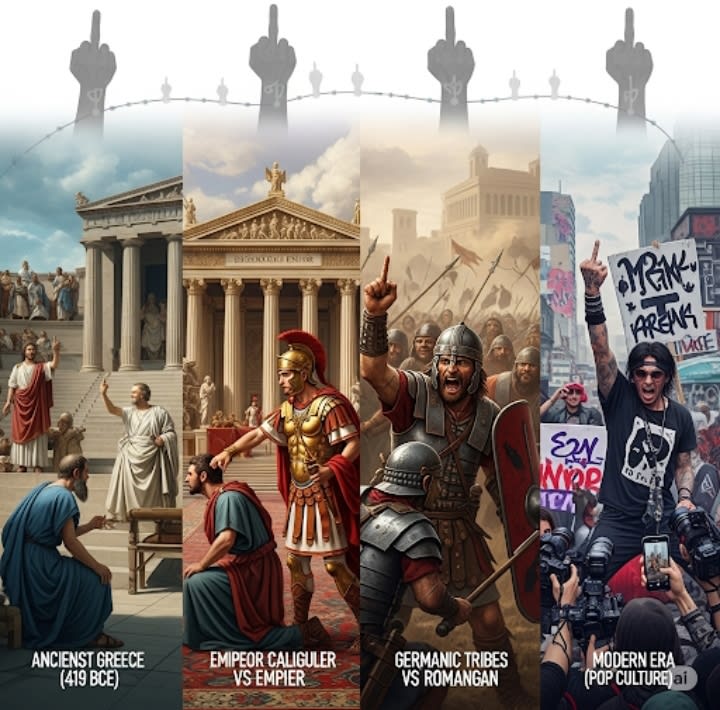
Today, the middle finger is everywhere. From Hollywood movies and music videos to memes and viral internet content, it’s one of the most recognizable and controversial hand signs across the globe. Celebrities have used it on red carpets, during live performances, and in response to paparazzi—sometimes sparking outrage and other times earning applause for their boldness.
Rappers and rock stars have especially embraced the gesture as a sign of rebellion, freedom of speech, and defiance against societal norms. However, the gesture is not always taken lightly. In many countries, including parts of the Middle East and Asia, showing the middle finger in public can still result in fines or even imprisonment.
A Symbol Across Cultures
While its meaning may vary slightly from one region to another, the gesture is almost universally understood as an insult. In the United States and Europe, it is a common form of expressing frustration or anger. In countries like Japan, it is rarely used but still recognized. In some African cultures, it may be misinterpreted or carry a different context altogether.
Despite these differences, the middle finger remains a uniquely enduring symbol. Whether it is aimed at authority, used to mock, or simply expressed in jest, it speaks a language that transcends borders.
The Psychology of the Middle Finger
Why does such a simple gesture carry so much emotional weight? Psychologists suggest that non-verbal communication is often more powerful than words. A single gesture—especially one with historical and cultural significance—can convey intense feelings instantly. The middle finger triggers responses tied to social norms, masculinity, honor, and defiance.
Moreover, since it has been taboo for centuries, using it can give a person a brief feeling of power or control. It’s a small but potent form of rebellion, often used when words seem insufficient or too polite.
Conclusion: A Two-Thousand-Year Insult
The middle finger is not just a rude gesture—it’s a time-traveling symbol of human expression. From ancient Greece to Roman emperors, from battlefield insults to red carpet controversies, this single finger has carried the weight of humor, mockery, and rebellion for over two millennia.
Though it may offend, provoke, or amuse, one thing is clear: the middle finger is here to stay. As long as humans continue to challenge authority, mock hypocrisy, and push the boundaries of expression, this ancient gesture will remain a part of our shared cultural history—an eternal salute to freedom of speech, however crude it may be.
About the Creator
Keep reading
More stories from Ikram Ullah and writers in History and other communities.
🌪️ “When the Rope-Pulled Fan Stopped — and the Winds of Slavery Ceased” 🌪️
🕰️ When the British Came, the Winds of Slavery Began to Blow When the British first set foot on the rich soil of the Indian subcontinent, they didn't just seize its land, gold, and governance. They took control of the very air that flowed in the royal courts and noble mansions of Delhi, Lucknow, Lahore, and Bombay. This is not a metaphor. It is a historical reality that strikes both the mind and the heart.
By Ikram Ullah6 months ago in History
Israel: A Land of Struggle, Faith, and Transformation
The land that is today Israel has been at the crossroads of civilizations for thousands of years. From the deserts of Negev to the fertile hills of Galilee, this land has witnessed the rise and fall of empires, the birth of religions, and the enduring hopes of peoples who called it home. In ancient times, it was known as Canaan, a region inhabited by diverse groups, each with their own gods, languages, and customs.
By The best writer about 23 hours ago in History
Why Early Aircraft Designers Had No Second Chances
When I read about the earliest days of aviation, I’m always struck by how unforgiving that era truly was. Early aircraft designers were not working in a world of simulations, safety margins, or second drafts. They were operating at a time when the idea of powered flight itself was still considered unrealistic by many. Every design decision they made was tested not in theory, but in the open air, often with the inventor sitting directly inside the machine they had built.
By Beckett Dowhan5 days ago in History


Comments
There are no comments for this story
Be the first to respond and start the conversation.