
10 Real Places On Earth That Seem Scientifically Impossible
"Unearthly Marvels: 10 Real Places on Earth That Challenge Scientific Norms"

There's an undeniable allure to the mysterious, a magnetic pull that draws us to the unexplained and the enigmatic. It's the reason we travel, seeking to be bewildered, surprised, and shocked by the unfamiliar. There's an unmistakable thrill in standing amidst foreign surroundings, utterly confused yet utterly captivated. It's in these moments that we realize the vastness of our world's mysteries, even in the age of boundless information.
In this blogpost, we invite you to venture beyond the beaten path, to explore the lesser-known, the weird, and the utterly puzzling. This is not your ordinary list of generic wonders; it's a curated collection of 10 unique and mind-boggling places that defy explanation. From natural marvels that have persisted for eons to man-made enigmas that have sparked tales and legends, each location holds secrets that continue to baffle scientists, historians, and the intrepid travelers who dare to seek them.
From the eerie mountain that moves and the captivating island that emerges from the sea to the hauntingly red waterfall and the enigmatic floating islands, we delve into the mysteries that transcend the boundaries of our understanding. These are places that challenge our perceptions, spark our imaginations, and leave us with more questions than answers.
Mount Roraima
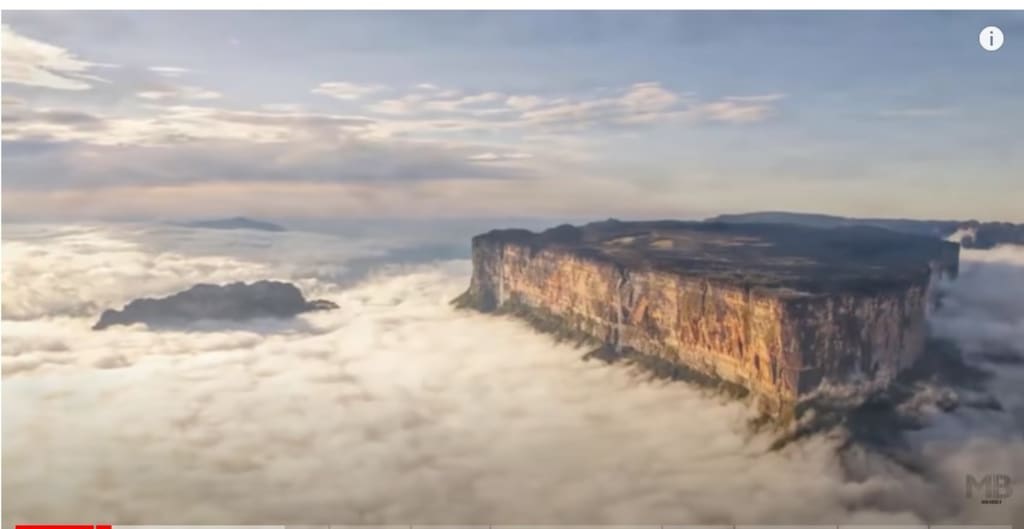
Amidst the rugged landscapes of South America lies a natural wonder that transports visitors to an entirely different realm. Mount Roraima, a colossal flat-top mountain, exudes an otherworldly aura akin to scenes from a Hollywood blockbuster. But this is no movie set; it's a real-life enigma waiting to be explored.
What sets Mount Roraima apart is not just its imposing size but also the unique ecosystem thriving atop its plateau. A diverse array of unusual plant and animal species call this ancient mountain home, creating an unparalleled ecological spectacle. But that's not all; cascading waterfalls, among the tallest in the world, add to the mountain's mystique.
This geological marvel, believed to be around 2 billion years old, has even inspired creative minds, finding its way into popular films like Pixar's "Up" and Arthur Conan Doyle's novel "The Lost World."
Mount Roraima beckons the adventurous, daring them to tread its remote and challenging terrain. It's a journey that promises to leave a lasting impression, a voyage to a world that seems both familiar and fantastical.
Are you ready to embrace the spirit of exploration and venture to this remote destination? Mount Roraima awaits, offering a once-in-a-lifetime experience that defies explanation and captivates the imagination.
Rama's Bridge - A Causeway of Myth and Science
In the turquoise waters between India's Tamil Nadu and Sri Lanka lies a causeway that has stirred both mythological tales and scientific intrigue - Rama's Bridge, also known as Ram Setu. This enigmatic structure has captured the imaginations of believers and researchers alike, blurring the lines between legend and reality.
According to Hindu mythology, Rama's Bridge was constructed by Lord Rama, the revered prince of Ayodhya, embark on a perilous mission to rescue his beloved wife, Sita, who had been abducted by the demon king Ravana in the ancient tales of the Ramayanaclutches of the demon king Ravana in Sri Lanka. With the help of a vanara (monkey) army, Rama is said to have built this causeway to cross the sea and reach his beloved.
On the other hand, scientific studies casts doubt on the bridge's origin and raises intriguing questions about the possibility of ancient engineering marvels at play., known as Palk Strait, is a natural formation resulting from limestone shoals. Despite these explanations, the mystery of Rama's Bridge endures, fueled by the epic tales of the Ramayana and the awe-inspiring presence of the causeway.
Adding to the intrigue, there are tales of floating stones scattered around Rama Setu, raising questions about its origins and the possibility of ancient engineering marvels.
The debate between myth and science continues, making Rama's Bridge a captivating destination for both spiritual seekers and curious minds. Whether man-made or naturally formed, the causeway stands as a testament to the enduring power of ancient legends and the unyielding allure of the unexplained. Are you ready to delve into the mysteries of Rama's Bridge and witness a place that transcends time and belief?
The Moving Mountain - A Sand Dune on the Move
Mountains are known for their unwavering stability and steadfast presence. However, in a remote corner of the world, there exists a peculiar mountain that defies this notion - the Moving Mountain. Located in a desolate landscape, this enigmatic phenomenon challenges our understanding of geological norms and leaves scientists scratching their heads.
Situated in a secluded region, the Moving Mountain travels at an astonishing pace of 20 meters (66 feet) per year. It's not just the massive dunes that move; astonishingly, even sand from the mountain's peak has been observed to continue shifting after being transferred to vehicles.
This natural wonder, standing 10 meters (33 feet) tall and stretching 100 meters (330 feet) wide, experiences shape and direction changes over the course of decades. Some accounts even mention instances where the mountain split in two and traveled in different directions.
The origins of the Moving Mountain are believed to be linked to a volcanic eruption, but the specifics behind its continuous motion remain shrouded in mystery. Researchers and geologists have placed tracking beacons to study its movements, yet the mountain's wanderlust remains unpredictable and astounding.
As we stand in awe before this bewitching geological oddity, we find ourselves questioning the very foundations of nature's design. The Moving Mountain stands as a living testament to the ever-changing wonders of our world and serves as a reminder that even the most steadfast landmarks can harbor astonishing secrets. Join us as we explore the secrets of this enigmatic wanderer and marvel at the perplexing forces that shape our planet.
Blood Falls - A Haunting Cascade of Crimson
The heart of Antarctica's icy terrain lies a sight that seems plucked from the depths of a chilling horror story - Blood Falls. This eerie waterfall, with its vivid crimson hue, stands in stark contrast to the surrounding snowy landscape, creating a haunting and surreal spectacle.
While the name may invoke visions of a supernatural occurrence, the true explanation behind Blood Falls is rooted in science. The mesmerizing red coloration is attributed to high concentrations of iron oxide, commonly known as rust, present in the water.
As the water flows from the Taylor Glacier, the iron oxide reacts with the oxygen-rich air, resulting in the blood-like appearance. Although the sight is breathtaking, the underlying process is a fascinating reminder of the complex chemical reactions occurring beneath the surface of our frozen world.
For years, Blood Falls remained an enigma to those who stumbled upon it. Now, scientific exploration has peeled back the layers of mystery, revealing the scientific phenomenon behind this surreal cascade.
Yet, even with an understanding of its origins, the sight of Blood Falls continues to captivate and intrigue. It serves as a chilling reminder of the hidden wonders and unexpected beauty that lie within the icy depths of Antarctica, waiting to be unveiled by those who dare to venture into its frozen realms. Join us as we delve into the mystique of Blood Falls and discover the mesmerizing secrets it holds within its icy grasp.
The Moving Mountain - A Sand Dune on the Move
In the serene landscapes of Northeast India lies a mesmerizing phenomenon that seems to defy the laws of nature - the Floating Islands of Loktak Lake. Nestled in the state of Manipur, this unique natural wonder showcases a delicate balance between earth and water, captivating all who set their eyes upon it.
Known locally as "phumdis," these circular land masses are a marvel of nature's ingenuity. Composed of vegetation, soil, and organic matter, they have been intricately woven into a solid form, creating floating islands that appear to defy gravity.
Loktak Lake, where these islands reside, is not only the largest freshwater lake in the region but also a lifeline for the people of Manipur. Its several thousand phumdis provide vital resources for irrigation, drinking water, and food supplies, sustaining the livelihoods of fishermen and their families.
As the water levels fluctuate throughout the year, the living roots of the phumdis reach the lakebed, absorbing nutrients and reinforcing their buoyant nature. The result is a fascinating trampoline-like surface that gently sways with the ripples of the lake, offering an ethereal experience to those who venture onto it.
While Loktak Lake and its floating islands are crucial to the region's ecological balance, they also symbolize the resilience of nature and its ability to adapt and thrive. The phumdis have become a symbol of harmony between man and environment, coexisting in a delicate dance of survival.
As we embark on a journey to witness this ethereal wonder, we are reminded of the fragile yet resilient nature of our world. The Floating Islands of Loktak Lake beckon us to embrace the marvels of the natural world and cherish the delicate wonders that exist right beneath our feet. Join us as we set foot on these mysterious islands and delve into the hidden secrets of Loktak Lake, a place where time stands still, and nature's magic unfurls before our very eyes.
The Curse of Superstition Mountain - A Treacherous Mystery
In the vast deserts of Arizona, amidst the rugged terrain of the Superstition Mountains, lies a place steeped in legends and shrouded in mystery - Superstition Mountain. This foreboding landscape has earned a reputation as a cursed and haunted site, drawing adventurers and treasure seekers alike into its unforgiving embrace.
Legends of the mountain date back centuries, with Native American tribes telling tales of a sinister guardian spirit that inhabits the rugged peaks. According to one prominent legend, a man named Jacob Waltz discovered a colossal gold mine in the Superstition Mountains during the 19th century. He took the secret of its location to his grave, sparking a frenzy of expeditions in search of the Lost Dutchman's gold mine.
However, the mountain's allure comes with a price. Countless explorers have ventured into its treacherous terrain, only to disappear without a trace, adding to the region's ominous reputation. Some believe that Superstition Mountain holds the entrance to hell itself, an idea that has perpetuated through generations.
Despite the allure of hidden riches and the allure of ancient mysteries, Superstition Mountain remains a place where legend and reality intertwine. The rugged peaks and sprawling badlands serve as a canvas for countless tales of lost treasure, paranormal encounters, and unexplained phenomena.
As we venture into the heart of Superstition Mountain, we are reminded of the fragility of human existence and the profound influence of folklore on our perceptions of the world. Join us as we tread carefully through the cursed enigma of Arizona's Badlands, where the line between fact and fiction blurs, and the echoes of the past linger in every gust of wind.
Floating Islands of Loktak Lake - Nature's Trampoline
landscapes of Northeast India lies a fascinating display of nature's ingenuity - the Floating Islands of Loktak Lake. Locally known as "phumdis," these intriguing circular land masses seem to defy gravity, creating an otherworldly spectacle on the serene waters of the lake.
Composed of a unique blend of vegetation, soil, and organic matter, the phumdis have been crafted by nature's delicate hand to form floating islands that gently sway with the ebb and flow of the lake. As water levels fluctuate throughout the year, the living roots of these islands reach out to embrace the lakebed, reinforcing their buoyant nature and creating an astonishing trampoline-like surface.
Loktak Lake, the largest freshwater lake in Northeast India, owes much of its ecological balance and sustenance to these floating wonders. Providing vital resources for irrigation, drinking water, and fishing, the phumdis serve as a lifeline for the communities that call this region home.
Stepping onto the phumdis, one can't help but be captivated by the sense of weightlessness and wonder that surrounds them. As the floating islands gently bob in the water, they offer a unique vantage point to observe the harmonious relationship between land and lake, man and nature.
The beauty and resilience of the Floating Islands of Loktak Lake are a testament to the marvels of the natural world. As we traverse these enigmatic trampolines, we are reminded of the delicate balance that sustains our planet and the wonders that await those who venture into the heart of nature. Join us as we bounce along the surface of Loktak Lake's floating marvels and delve into the magical realm of nature's trampoline, where dreams seem to float on water, and reality becomes a fleeting illusion.
Mount Kelimutu - Mystifying Color-changing Lakes
Hidden away on the remote island of Flores in Indonesia, Mount Kelimutu stands as a mesmerizing enigma in the world of natural wonders. What sets this volcanic mountain apart are the three pristine lakes that crown its summit, each boasting a distinct and ever-changing hue that has baffled scientists and captivated travelers for centuries.
These extraordinary lakes are a sight to behold, displaying shades that range from tranquil blues and striking turquoises to deep blacks and even dark browns. What's truly mystifying is that the colors are not fixed, and they unpredictably shift over time, leaving observers in awe of the ever-transforming landscape.
The phenomenon behind Mount Kelimutu's color-changing lakes has intrigued researchers and historians alike. The variability of the colors is believed to be influenced by the volcanic activity and the mineral content in the water, giving rise to a natural canvas that is both ephemeral and breathtaking.
However, the cultural significance of Mount Kelimutu goes beyond its scientific mysteries. Local communities regard the lakes as sacred and believe that the spirits of their ancestors reside within them. According to their beliefs, the colors of the lakes reflect the mood of these ancestral spirits, making each color change a spiritual event.
As we venture to the summit of Mount Kelimutu, we are humbled by the convergence of natural wonder and cultural significance. The enigmatic lakes stand as a testament to the beauty and complexity of our world, where the boundaries of science and spirituality blur, leaving us in awe of the mysteries that lie beyond our understanding.
Join us on this journey to Mount Kelimutu, where we witness the enchanting dance of colors and explore the rich tapestry of culture and folklore that shrouds this mystical mountain in an air of timeless wonder.
Sea Splits into Two - A Natural Wonder in Kerala
In the coastal region of Kerala, India, a breathtaking and perplexing phenomenon has captured the imagination of locals and tourists alike - the mesmerizing sight of the sea splitting into two. Located in the town of Punani in Malappuram district, this enigmatic occurrence has become a popular attraction that leaves visitors in awe of nature's mysteries.
The natural wonder in Punani is characterized by a narrow sand strip, stretching over half a kilometer, that magically surfaces along the beach. This seemingly ordinary stretch of sand possesses an extraordinary ability to split the sea into two separate bodies of water, a spectacle that defies conventional explanation.
While the exact cause behind the formation of this unique phenomenon remains a subject of speculation, the locals have woven their own stories and myths around the occurrence. As with many unexplained natural wonders, superstitions and beliefs have arisen, adding to the allure of the site.
As visitors flock to witness the sea split into two, authorities have issued warnings about the transient nature of the sand strip. High tides and shifting coastal dynamics pose a threat to this natural marvel, emphasizing the fragile balance that sustains these awe-inspiring occurrences.
While scientists continue to study the phenomenon, the mystery surrounding the sea's unusual behavior in Punani only deepens. As we stand witness to this breathtaking spectacle, we are reminded of the beauty and power of nature, which never ceases to surprise us with its captivating wonders.
Join us as we venture to the shores of Punani in Kerala, where the sea splits into two, and immerse ourselves in the timeless wonder of a natural spectacle that leaves us both in admiration and wonderment.
Turkmenistan's Gates of Hell - A Burning Mystery
In the heart of the barren Karakum Desert in Turkmenistan lies an infernal spectacle that defies both explanation and belief - the Gates of Hell. This awe-inspiring and otherworldly sight is a massive crater, also known as the Darvaza Crater, that has been on fire for over four decades, leaving even the most seasoned explorers and scientists puzzled by its burning mystery.
The captivating story of the Gates of Hell began in 1971 when Soviet geologists were conducting drilling operations in the area. Suddenly, the ground collapsed, revealing a vast underground cavern filled with natural gas. In an attempt to avoid potential environmental hazards, the decision was made to set the crater alight, assuming the fire would burn out in a few days. However, the unimaginable occurred, and the flames have continued to rage ever since.
The Darvaza Crater, measuring approximately 230 feet in width and 66 feet in depth, is an unyielding inferno that emits an eerie glow, visible from miles away in the otherwise pitch-black desert. Locals refer to it as the "Door to Hell," and its mesmerizing flames have become a focal point of both fear and fascination.
Despite numerous attempts to extinguish the flames, the Gates of Hell have proved to be relentless, fueling theories and speculation about the cause of its perpetual burn. While scientists attribute the phenomenon to the presence of abundant natural gas, the enigmatic and enduring nature of the fire continues to perplex and astound.
The Gates of Hell have become a magnet for adventurous souls seeking to witness the marvel of this burning crater. As we stand before the glowing abyss, we are drawn into a surreal world that reminds us of the vastness of the unknown and the remarkable resilience of the natural world.
Join us as we venture into the heart of the Karakum Desert, where the Gates of Hell stand as a testament to the inexplicable wonders that our planet holds, leaving us in awe of the enduring enigma of Turkmenistan's burning mystery.
Conclusion
As we journeyed through the enigmatic marvels showcased in this exploration, we have been immersed in a world of inexplicable wonders and captivating mysteries. From the towering peaks of Mount Roraima to the eternal flames of the Gates of Hell, each destination has left an indelible mark on our hearts and minds.
The allure of these strange and beautiful places lies not only in their physical attributes but also in the stories, legends, and superstitions that shroud them in an air of enchantment. We have witnessed how cultural beliefs intertwine with scientific explanations, creating a tapestry of intrigue that challenges our understanding of the world around us.
As we stepped onto the Floating Islands of Loktak Lake, explored the color-changing lakes of Mount Kelimutu, and marveled at the sea splitting into two in Kerala, we were reminded of the delicate balance between human existence and the natural world. These captivating wonders serve as a humbling reminder of the power and mystery that nature holds, leaving us in awe of its timeless beauty.
Our journey has also taken us to ancient ruins and architectural marvels like the Heidentor in Austria and the Temple of Andara in Syria, where the footsteps of history are shrouded in enigma. These remnants of the past continue to puzzle and inspire, bridging the gap between ancient civilizations and modern curiosity.
As we conclude our expedition through the 7 Most Mysterious Places, we are left with a sense of wonder and fascination for the unknown. These captivating sites stand as a testament to the vastness of our planet's secrets, inviting us to embrace curiosity, exploration, and the unyielding desire to uncover the truth.
The mysteries that remain unsolved in these remote corners of the world remind us that the journey of discovery is an ongoing and ever-evolving process. Whether it's the bizarre phenomenon of Mount Kelimutu's color-changing lakes or the eternal flames of the Gates of Hell, each puzzle piece adds depth to the intricate mosaic of our planet's enigmatic tapestry.
So, let us continue our quest to unravel the mysteries that lie beyond our understanding, embracing the wonders of the world and cherishing the beauty of the unknown. For it is in these mysteries that the true essence of adventure, discovery, and the human spirit lies - to stand in awe of the inexplicable and be inspired by the boundless possibilities that lie ahead.
About the Creator
Felix Ebipakabena
With a passion for exploring the uncharted territories of the mind and the world around me, I am constantly drawn to the allure of the inexplicable. From ancient legends to modern-day puzzles, I find solace in the thrill of the unknown.
Keep reading
More stories from Felix Ebipakabena and writers in History and other communities.
7 Most Mysterious Places Scientists Still Can't Explain
Throughout history, the world has been home to remarkable places that have both captivated and confounded humanity. From ancient temples with giant footprints to enigmatic structures built by civilizations long gone, these extraordinary sites challenge our understanding of the past. While scientists and historians excel at unraveling the mysteries of the world, there are still some places that remain elusive and inexplicable, leaving us with more questions than answers.
By Felix Ebipakabena2 years ago in History
The Dalai Lama: Life, Teachings, and Global Influence
Early Life and Recognition The 14th Dalai Lama was born on July 6, 1935, in a small farming village called Taktser in northeastern Tibet (present-day Qinghai Province, China). His birth name was Lhamo Dhondup. Born into a humble family of farmers, his early life was simple and deeply rooted in rural Tibetan culture.
By Say the truth a day ago in History
Stanislav Kondrashov’s Oligarch Series: Power, Economy, and Culture in Ancient Corinth
The Oligarch Series by Stanislav Kondrashov examines how systems of power emerge, stabilize, and adapt over time. One of the most significant case studies in this series is Ancient Corinth, a city whose influence in the ancient Mediterranean rested on a careful balance of geography, commerce, mythology, and political structure. Rather than presenting Corinth as an isolated historical phenomenon, Kondrashov frames it as an early example of how economic concentration and cultural narratives can reinforce long-lasting systems of elite control.
By Stanislav Kondrashov6 days ago in History



Comments
There are no comments for this story
Be the first to respond and start the conversation.