
Smearing the MCU for Diversity: How Outraged-Powered YouTubers Profit from Hate
The rise of right-wing “outrage content” and algorithmic radicalization are turning criticism into cash–while silencing meaningful conversation.

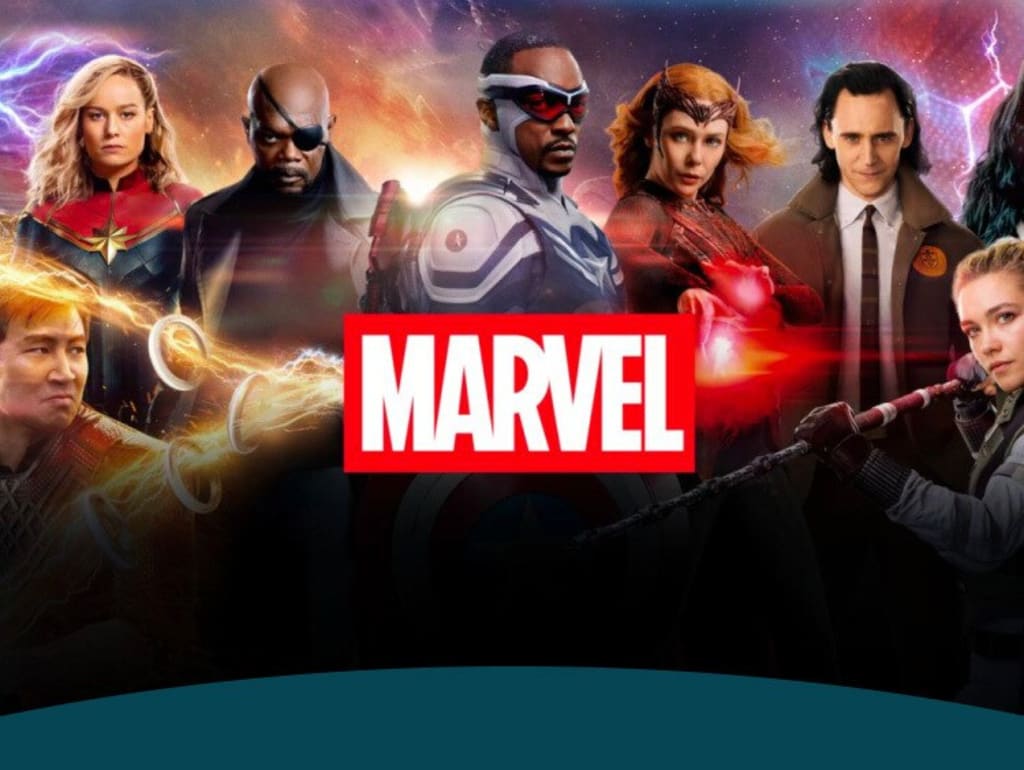
Trigger Warning: This article discusses online hate, misinformation, and harassment related to the Marvel Cinematic Universe (MCU), including references to sexism, racism, and conspiracy theories.
As a lifelong Marvel fan and writer, I've always viewed this universe through the lens of history, inclusivity, and cultural significance. My published essays reflect how Marvel's dedication to social commentary and representation is intrinsically woven into its DNA, not merely a "woke" addition.
However, in today's online landscape, especially on YouTube, reactionary creators are monetizing the misrepresentation of this legacy. They incite outrage over inclusive casting and storylines, boiling down complex narratives to politicized buzzwords. This isn't constructive criticism; it's disinformation, and it's actively pushing genuine, good-faith discussions out of fandom spaces.
The War on Women in Marvel Isn’t New–But It’s Louder Now
In my previous work, The Women of Marvel, I delved into the historical presence of women in Marvel comics, from Susan Storm to Kamala Khan. While not always flawlessly crafted, these characters were revolutionary, paving the way for female representation in a historically male-dominated genre.
This drive for inclusion has extended to the MCU today. However, instead of being embraced, female heroes such as Carol Danvers, Shuri, Riri Williams, and She-Hulk face criticism. This opposition comes not from fictional adversaries, but from real-world content creators who capitalize on outrage. These YouTubers selectively quote, distort narratives, and label any empowered female character as "forced representation."
It's crucial to understand that these criticisms are not about the quality of the storytelling; they are about dictating who may be a hero.
They Don’t Hate the MCU–They Hate Inclusion
Many YouTubers claim their videos offer "just criticism," but their content quickly becomes harassment. A prime example is Brie Larson, who has become a target simply for portraying a self-assured superheroine and advocating for inclusivity. Despite being one of Hollywood's most unproblematic figures—consistently professional, scandal-free, and never lashing out—these channels depict her as a villain. This vilification stems from her outspoken feminist views.
This backlash largely originates from discomfort with women gaining prominence in genres traditionally dominated by male leads. The supposed "honest reviews" often mask deeper issues: misogyny, entitlement, and resistance to change. Similar patterns have been observed with Moses Ingram in Obi-Wan Kenobi and Kelly Marie Tran in Star Wars: The Last Jedi, and are increasingly directed at every new woman introduced into the Marvel Cinematic Universe.
Ultimately, the issue isn't about acting or writing; it's about control. These channels fear losing their dominance over the pop culture landscape.
Marvel’s Social Justice Legacy Is Not New–It’s Foundational
“Bigotry and racism are among the deadliest social ills plaguing the world today.” This quote from Stan Lee, dating back to the 1960s, isn't "woke branding" from after 2020; it's Marvel's foundational mission statement.
Marvel Comics has a long history of addressing social justice issues. The X-Men have always served as a metaphor for marginalized communities, and Captain America famously fought Nazis before the US joined WWII. Characters like Ms. Marvel and Captain Marvel reflect developing perspectives on gender and identity. Decades ago, Iron Man's struggles with mental health and military accountability introduced complex, real-world problems into superhero narratives.
When critics claim recent MCU films are "too political," one must question their attention to past films. Captain America: The Winter Soldier explored themes of surveillance, Black Panther delved into colonialism and the African diaspora, and Iron Man 3 examined the trauma of war. These are not "agenda pushes," but the continuation of Marvel's enduring tradition of using fiction to mirror global moral and social challenges.
The MCU's embrace of diverse storytelling—encompassing gender, race, and LGBTQ+ themes—is not a departure but an evolution. These narratives have matured alongside their audience, reflecting not only who we are but also who we aspire to be. If this causes discomfort for some, perhaps it shows the stories are fulfilling their purpose.
This Isn’t Just About Movies–It’s a Culture War
Marvel's narratives have consistently mirrored real-world issues like civil rights, identity, and resistance to systemic oppression, a point I previously explored in Newsflash: X-Men Has Always Been “Woke”. However, these very themes are now being exploited to fuel outrage among fans.
Certain YouTubers claim characters like a Black Captain America are "too political" or that Ms. Marvel's Pakistani heritage and Muslim faith are "agenda-pushing," despite these characters originating directly from the source material. Marvel has always reflected contemporary society; what has changed is the proliferation of disinformation and the individuals who profit from disseminating it.
Algorithmic Hate is Now the Norm
Divisive content, amplified by algorithms, has distorted the modern fan experience. YouTube, for example, frequently recommends anti-Marvel and "anti-woke" rants to users who have previously engaged with any MCU-related content. This can draw in even neutral or curious fans; I've observed friends seeking information on films like The Marvels fall into rabbit holes of conspiracy theories about Kevin Feige's "firing" or Marvel Studios "collapsing."
This phenomenon isn't merely disinformation; it's manufactured outrage designed to capture attention. As I noted in my article, Responding to Reception For My “X-Men”, I've witnessed firsthand how readily extreme, bad-faith reactions can overshadow reasonable discourse.
The GamerGate Tactics in Marvel Fandom
I recently observed a troubling trend in a Steam Community thread: the tactics that once fueled GamerGate are now infecting Marvel fandom. These include swarm attacks, baseless accusations of "censorship," and calls to "keep politics out" of narratives that are inherently political.
This has resulted in a tiring cycle where developers, actors, and writers are relentlessly attacked for embracing diversity, while the harassers present themselves as victims. It's a gaslighting campaign driven by financial gain; anger generates clicks, and clicks generate profit. Ultimately, this undermines genuine discussion and inclusive storytelling.
What This Means for Fans Like Me
I explore Marvel not only for my love of the characters but for my belief in their representation. My articles aim to educate and contextualize, not to provoke.
The backlash I’ve witnessed—against my work and creators like Nia DaCosta, Victoria Alonso, and Tatiana Maslany—reveals a coordinated effort to silence. As fans, we have a choice: continue engaging with “anti-woke” content for the drama, or disengage, promote positive voices, and refocus on what truly matters: story, character, and community.
Final Thoughts: Reclaiming Fandom
Marvel's greatest narratives feature outcasts who transform the world simply by existing. It's therefore tragic to witness the MCU exploited by fear-mongering opportunists who resist this change. Far from protecting fandom, these creators are poisoning it.
We must resist, not by shouting louder, but by articulating ourselves more clearly. This means writing, sharing, and engaging with intentionality. Fandom should be a space where more people feel acknowledged, not fewer. It should be enjoyable, not draining.
As long as I have a platform in this domain, I will continue to use it to amplify, correct, and remind everyone: Marvel's essence has always aligned with inclusion.
About the Creator
Jenna Deedy
Just a New England Mando passionate about wildlife, nerd stuff & cosplay! 🐾✨🎭 Get 20% off @davidsonsteas (https://www.davidsonstea.com/) with code JENNA20-Based in Nashua, NH.
Instagram: @jennacostadeedy
Keep reading
More stories from Jenna Deedy and writers in Geeks and other communities.
Silver Screen Magic with Mae West
American actress and singer Mae West became a popular film actress during the Great Depression. She started entertaining in vaudeville, then performed on Broadway, and finally went to Hollywood. She signed up with Paramount Pictures and made her debut in the 1932 film “Night After Night.” She also starred in musicals, comedies, and crime dramas. The American Film Institute named her one of the best classic Hollywood actresses.
By Rasma Raisters5 days ago in Geeks
Emma Watson, Sir Lenny Henry and Sir Elton John lead British Diversity Awards
The prizes will be handed out at a glittering ceremony in London on March 25 2026 and Harry Potter actress/activist Watson will compete with Henry and John for the top gong of Media Personality of the Year with the musician competing alongside his husband David Furnish.
By Dena Falken Esq3 days ago in Geeks



Comments (2)
I like this. As someone who has read Marvel since she was a child, I see those critics as people who are not at all aware of the source material. I'll absolutely be checking out some of your other articles.
I agree with you that Marvel has always been about diversity & inclusion, one of the reasons Stan Lee liked spiderman was because it could be anyone under the mask. However, I will say that a few recent MCU films have had poor writing and forced "inclusion." Now don't get angry with me for saying that, I'm not one of the youtube haters. I actually really enjoyed echo, wandavision, Mrs Marvel and hawkeye, but I will confidently say that She-hulk was awful. The marvels felt bland to me, not because of the female leads but because of the script. Thunderbolts was amazing! Shuri is a great choice for black panther, the female superhero's are a crutial part of the mcu, but when you have them team up in endgame and say "we got this" it's forced and corny. We don't need to know that the "Woman are powerful" just show us what they can do and we will figure it out pretty quickly. Also, I like Sam Wilson as Captain America, but how is he going to beat the red hulk? That was so anti-climactic, it upset me. The same way antman beating Kang mad me angry. Sorry, this isn't a well thought out comment I'm about to go to sleep. What I'm trying to say is that I agree marvel aligns with inclusion, but I also believe they are forcing it in the mcu with poorly written scripts rather than creating exceptional movies that give the underrepresented characters the proper justice they deserve.