space
Space: The Final Frontier. Exploring space developments and theorizing about how humans fit into the universe.
The Earth-Based Template
Scientists define life based on what we know: carbon-based organisms that depend on liquid water, complex molecules like DNA, metabolism, reproduction, and the ability to evolve. These are our checkboxes for what counts as living. But Earth is just one tiny speck in the endless darkness of space. What if our template isn’t universal, but exceptional?
By Holianyk Ihor8 months ago in Futurism
Earth’s Twins: Where in the Galaxy Are the Odds Highest?
In a universe filled with billions of stars and untold planetary systems, the idea of a “second Earth” is no longer just science fiction — it’s a real, pressing question in modern astronomy. Scientists call these potential look-alikes terrestrial exoplanets — worlds similar to Earth in size, atmosphere, and potential habitability. But where exactly in our galaxy are we most likely to find them?
By Holianyk Ihor8 months ago in Futurism
When Space Plays Tricks: Phenomena That Can Imitate Planets
Modern astronomy has made astonishing progress in the search for exoplanets—those distant worlds orbiting stars far beyond our solar system. Armed with powerful telescopes and sophisticated techniques for analyzing starlight, scientists have identified thousands of planetary candidates. But even with the best tools, the cosmos isn’t always what it seems. In fact, the universe has a mischievous side: sometimes, it throws illusions our way that mimic the signature of a planet. Let’s explore some of the most fascinating impostors—phenomena that can fool even seasoned astronomers.
By Holianyk Ihor8 months ago in Futurism
The Possibility of Antimatter Planets: A Bold Hypothesis in Modern Astrophysics
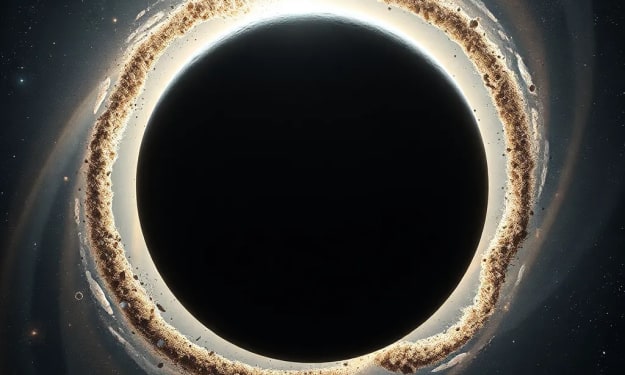
In a universe dominated by matter—from the tiniest particles to colossal galaxies—the concept of antimatter often feels like something out of science fiction. Mysterious, elusive, and destructive when mixed with matter, antimatter has captured both scientific and popular imagination for decades. Yet, it’s no fantasy: physicists have not only theorized antimatter but successfully created and studied it in labs.
By Holianyk Ihor8 months ago in Futurism
Life on a Planet of Eternal Night — How Is It Possible?
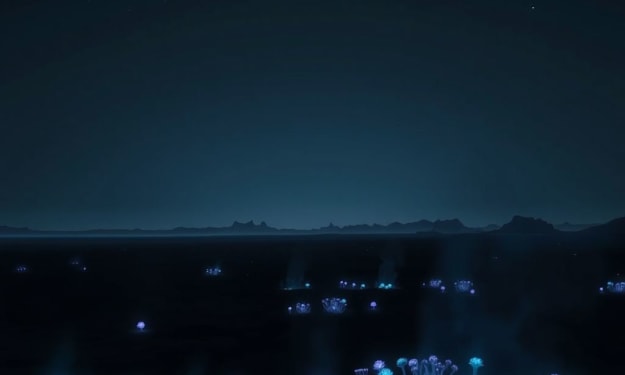
When we imagine life on other planets, we often picture vibrant landscapes bathed in sunlight — maybe two suns blazing in alien skies — or frozen wastelands shrouded in endless darkness. But what if there’s a world where night never ends, where the sun never rises? Could life exist there? The idea of a planet locked in eternal night might sound like science fiction, but it’s actually a real possibility within the realm of astronomy. Such worlds do exist, and scientists are seriously exploring whether life could thrive in their unending darkness.
By Holianyk Ihor8 months ago in Futurism
Can We Build a Planet by Hand? Exploring the Future of Astroengineering
When we gaze at the stars, it feels almost unimaginable that one day humans might not only explore distant worlds but actually create entire planets from scratch. It sounds like pure science fiction—something out of a futuristic novel—but many ideas that once seemed impossible have gradually crept into the realm of scientific reality. Creating a planet by hand represents the ultimate frontier of astroengineering, the science of transforming and constructing celestial bodies. But is it really possible? Let’s dive into what this would mean and whether humanity might one day achieve it.
By Holianyk Ihor8 months ago in Futurism
The Human Thread in AI
The Human Fabric of AI Artificial Intelligence (AI) often appears as a marvel of code and computation, a technology that seems to operate in a realm beyond human touch. Yet, at its core, AI is a vibrant tapestry woven by human hands—threaded with curiosity, creativity, and conscience. From the dreamers who first envisioned thinking machines to the artisans, storytellers, guardians, and connectors who shape them today, AI is a human endeavor, reflecting our deepest aspirations and toughest challenges. This article explores the human thread in AI, revealing how our passions, struggles, and values stitch together a technology that is as much about us as it is about innovation.
By Shohel Rana8 months ago in Futurism
The Algorithm’s Muse
The Human Song in AI’s Symphony Artificial Intelligence (AI) often feels like a creation of pure logic, a symphony of code played by machines. But beneath its digital surface lies a deeply human melody—a chorus of dreamers, tinkerers, artists, and guardians who compose its notes. AI is not a solitary force; it’s a collaboration between human creativity and computational power, a dance of imagination and innovation. This article tells a new story of AI, one that celebrates the human spirit driving its evolution. From its origins to its future, AI pulses with the creativity, passion, and responsibility of the people who shape it, making it a reflection of our collective soul.
By Shohel Rana8 months ago in Futurism
AI’s Human Soul
The Human Essence of AI Artificial Intelligence (AI) often feels like a futuristic marvel, a technology that operates beyond human reach. Yet, at its heart, AI is a profoundly human creation, woven from the threads of our curiosity, creativity, and conscience. From the researchers who dream it to the artists who shape it and the ethicists who guide it, AI is a reflection of humanity’s aspirations and challenges. This article explores the human soul of AI—how it’s built, how it inspires, and how it demands our responsibility. Far from being a distant machine, AI is a canvas painted with human ingenuity, and its story is ours to tell.
By Shohel Rana8 months ago in Futurism
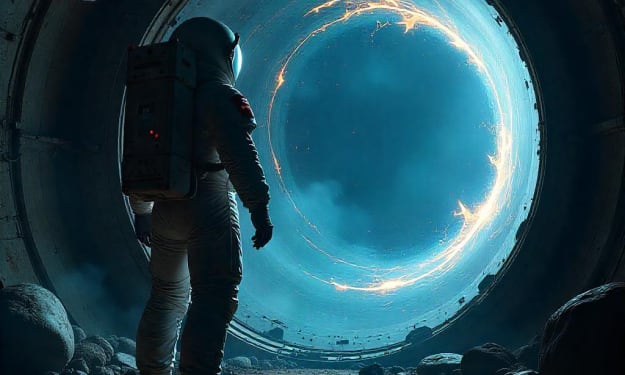
“Beyond the Edge: A Journey Through Darkness to Find the Light”
“Was the Stellar Voyager really pulled into the unknown by an unseen force?” The moment it happened, silence devoured the ship. “Captain! We're off-course!” Lieutenant Sarah Chen’s voice cracked through the comm. Captain Ethan Reid bolted upright in his command chair, his eyes darting to the main screen. The familiar Milky Way constellations had vanished, swallowed by a strange glow pulsing across the void. “What the hell is that?” Ethan whispered. The Stellar Voyager was no rookie mission—it was humanity’s most advanced deep-space exploration vessel, equipped for mapping galaxies, not falling victim to them. “Navigation’s offline. External comms dead,” said Luis Ramirez, the ship’s chief engineer. “Sir… it’s like space itself just shifted around us.” A gravitational anomaly, perhaps? Or something more?
By Mian Nazir Shah8 months ago in Futurism