space
Space: The Final Frontier. Exploring space developments and theorizing about how humans fit into the universe.
The Council of Nine: Guardians of the Earth Experiment Part 3
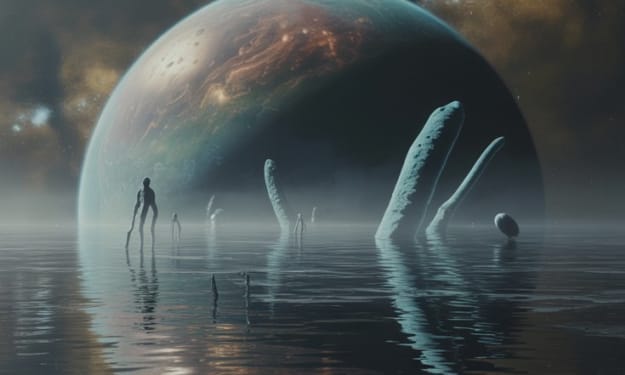
The Council of Nine: Guardians of the Earth Experiment Atlantis, ancient DNA codes, and the awakening of forgotten power within us Let me ask you something: What if Earth was never just a random planet?
By The Secret History Of The World8 months ago in Futurism
Humanity Beyond the Solar System: Charting Our Interstellar Future
The Cosmic Threshold The Solar System is our cradle, but it is not our destiny. As technology evolves and the boundaries of space exploration are stretched, a new era is taking shape—one where humanity contemplates life beyond the Sun’s reach. Interstellar travel, once confined to science fiction, is increasingly becoming a subject of scientific inquiry and engineering ambition.
By Alex Kennedy8 months ago in Futurism
Can We Find Life on Alien Planets?
Can We Find Life on Alien Planets? The James Webb Telescope's Groundbreaking Discoveries The quest to answer one of humanity's most profound questions—Are we alone in the universe?—has taken a significant leap forward. Thanks to the James Webb Space Telescope (JWST), scientists are now uncovering tantalizing clues that suggest life may exist beyond Earth. Among the most promising leads is the exoplanet K2-18 b, located approximately 120 light-years away in the constellation Leo.
By Shah saab IT8 months ago in Futurism
The history of Jupiter: How the young gas giant influenced our solar system
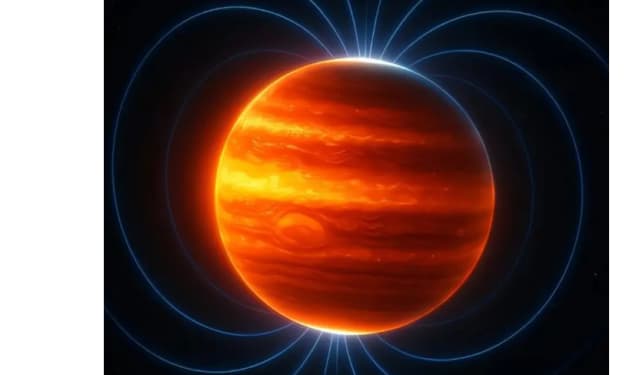
Long before Earth formed the first continent, Jupiter was already a massive thing that formed the solar system. The enormous gravity of the newborn gas giant formed a swirling disk of gas and dust around the infant's sun, carving gaps, cutting the small world into a stable orbit, and locking the wide structure we see today.
By Francis Dami8 months ago in Futurism
What Is a Supernova, and Will It Happen to Our Sun in the Future
Introduction — Why talk about supernovae at all? Every night—even if our unaided eyes never notice—dozens of stars somewhere in the cosmos detonate, flooding their surroundings with a brilliance that momentarily eclipses the entire galaxy they inhabit. These astronomical outbursts, known as supernovae, are far more than a spectacular light show: they hold the key to deciphering the life cycle of matter, the forging of heavy elements, the pace of cosmic expansion, and even the birth of new stellar systems. In this article, we will delve into the phenomenon—from the physics that triggers the blast, through the various classification schemes, to the potential implications for Earth and for modern science.
By David Cohen8 months ago in Futurism