
Can We Build a Planet by Hand? Exploring the Future of Astroengineering
Space

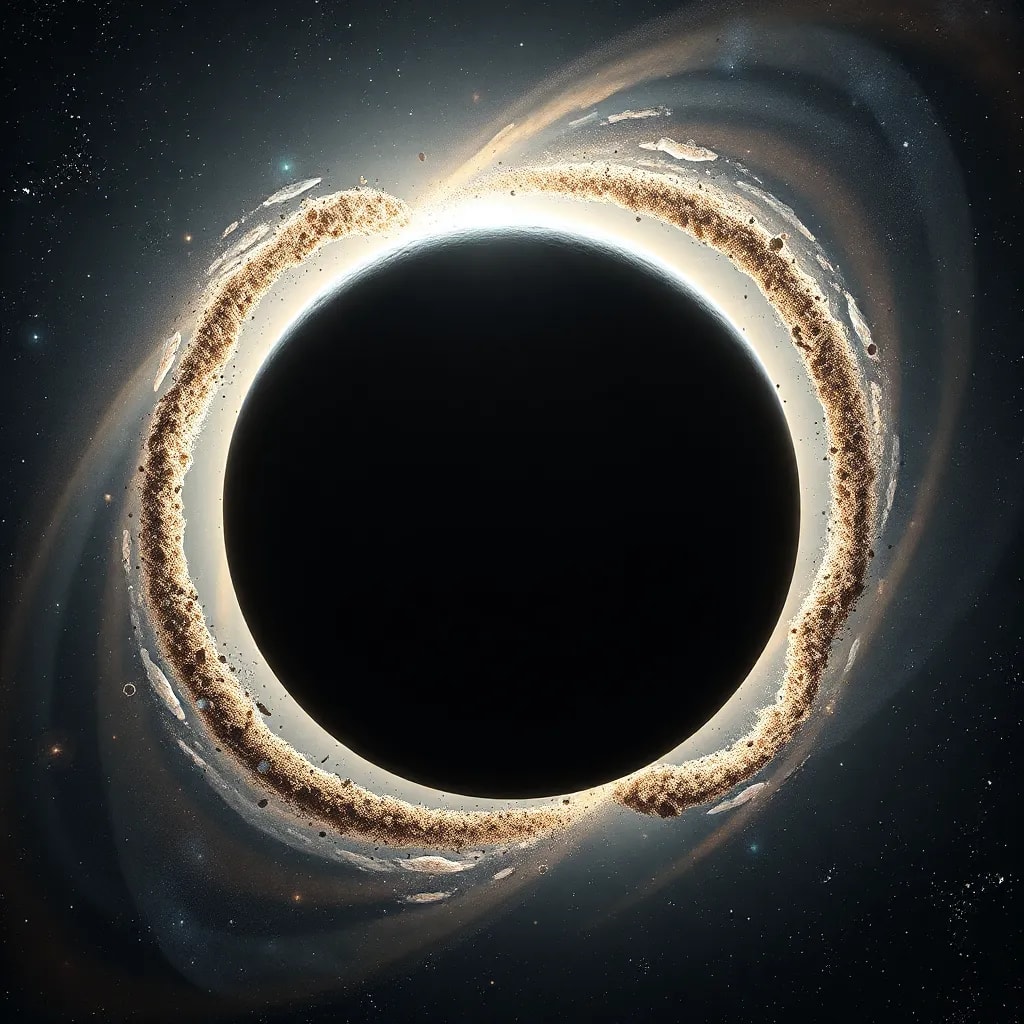
When we gaze at the stars, it feels almost unimaginable that one day humans might not only explore distant worlds but actually create entire planets from scratch. It sounds like pure science fiction—something out of a futuristic novel—but many ideas that once seemed impossible have gradually crept into the realm of scientific reality. Creating a planet by hand represents the ultimate frontier of astroengineering, the science of transforming and constructing celestial bodies. But is it really possible? Let’s dive into what this would mean and whether humanity might one day achieve it.
What Is Astroengineering?
Astroengineering is a speculative field of science focused on the large-scale modification, or even creation, of astronomical objects. It goes beyond simple projects like terraforming Mars or building space stations. Instead, it involves interventions on planetary or even stellar scales. Classic examples of astroengineering concepts include megastructures like the Dyson Sphere—a colossal shell or swarm of satellites designed to capture a star’s energy—and stellar lifts, which would allow us to harness a star’s material.
Building an entirely new planet stands at the pinnacle of astroengineering ambitions. It would require technologies and resources far beyond anything we currently possess, but in theory, it’s not outside the bounds of possibility.
How Could a Planet Be Created?
There are several hypothetical approaches to “assembling” a planet:
1. Gathering Asteroids and Meteoroids
Our Solar System is filled with rocky material—ranging from asteroid belts to comet fragments. In theory, advanced technology such as gravitational tugs, nuclear-powered engines, or solar sails could gradually collect these pieces, pulling them together in one place. Over time, gravity would do its job, fusing the material into a solid body. This method mirrors natural planetary formation, but with conscious control directing the process.
2. Growing a Planet from a Protoplanetary Disk
If humanity eventually masters interstellar travel, we might find young stars surrounded by clouds of gas and dust—protoplanetary disks—where planets naturally form. By intervening in this environment, we could “grow” a planet according to specific designs, effectively fast-forwarding or steering natural planetary development. This approach would require an incredibly deep understanding of astrophysics and planetary science.
3. Artificial Assembly Using Nanotechnology
Looking far into the future, advanced civilizations (often referred to as Type II or III on the Kardashev scale) might be capable of constructing planets from scratch using nanobots and engineered materials. These “designer” planets could have precisely controlled density, atmosphere, and even ecosystems, transforming them from mere rocks into living, managed worlds.
The Challenges Are Immense
Creating a planet isn’t just an engineering feat—it’s a monumental physical challenge:
- Mass: Earth weighs approximately 6 sextillion tons. Moving or synthesizing even a fraction of this mass is a staggering task.
- Gravity: A planet needs enough mass to maintain a stable orbit and hold onto its atmosphere; otherwise, it’s just a lifeless rock drifting through space.
- Heat and Radiation: The planet must reside in the “habitable zone” of its star or have internal heat sources to support liquid water and life.
Chemical Composition: Essential elements like water, carbon, nitrogen, and others must be present to sustain ecosystems.
Why Bother Creating Planets?
Though it sounds like science fiction, creating planets could have practical purposes:
- Colonization: If suitable worlds for human habitation are rare, building new ones might be necessary.
- Scientific Experiments: Custom-made planets could serve as laboratories to study climate, geology, or biology in ways natural planets can’t.
- Civilization Backups: Artificial planets could act as “ark worlds” preserving human culture and genetic diversity in case of disasters.
When Could This Become Reality?
Experts in futurism and astrophysics estimate that planet-building would require a civilization far beyond our current capabilities—a so-called “supercivilization” that might emerge thousands of years from now. For this to happen, humanity must survive the challenges of the near future, achieve unprecedented technological breakthroughs, and harness energies comparable to those of stars.
Conclusion
Right now, the idea of manually creating a planet sounds like science fiction. But science fiction has often been the first step toward real science. Astroengineering opens amazing possibilities, from terraforming planets in our Solar System to constructing entirely new worlds. Perhaps one day, somewhere at the edge of the galaxy, under stars engineered by human hands, an artificial planet will come to life—and on its surface, the first human footsteps will echo a new chapter in cosmic exploration.
About the Creator
Keep reading
More stories from Holianyk Ihor and writers in Futurism and other communities.
New Plans for Resource Extraction Beyond Earth
For most of human history, the idea of mining resources beyond Earth belonged firmly to the realm of science fiction. Asteroids rich in precious metals, lunar factories producing rocket fuel, and self-sufficient colonies extracting materials from alien soil were staples of futuristic novels rather than serious policy discussions. Today, however, this vision is rapidly transforming into a concrete strategy supported by governments, private companies, and long-term economic planning. Humanity is approaching the dawn of an off-world resource economy—one that could fundamentally reshape our relationship with space and with Earth itself.
By Holianyk Ihor6 days ago in Futurism
About Binding Prometheus
I want to start actively advocating on behalf of my own work, and the most valuable part of my canon is, without a doubt, Binding Prometheus, the play I have been working on since 2019 and only finished in 2023 as part of my MA. The play itself is an amalgamation of a million different inspirations. On one end, it evokes the Ancient Greek myth-play, deriving its own title from the earliest extant work of Western drama we have, Aeschylus’s Prometheus Bound. On the other end, it borrows significantly from the sci-fi bulwarks from over the years, namely Mary Shelley’s Frankenstein and Karel Capek’s Rossum’s Universal Robots. The play could be an episode of Black Mirror, I fear. I don’t know. I’ve only ever seen one episode of Black Mirror.
By Steven Christopher McKnight17 days ago in Futurism
UAE Mental Health Market: Rising Awareness, Service Expansion & Growth Outlook
According to IMARC Group's latest research publication, UAE Mental Health Market size reached USD 13.10 Billion in 2024. Looking forward, IMARC Group expects the market to reach USD 28.26 Billion by 2033, exhibiting a growth rate (CAGR) of 8.92% during 2025-2033.
By Abhay Rajput5 days ago in Futurism


Comments
There are no comments for this story
Be the first to respond and start the conversation.