intellect
Insightful post about reason, abstract thinking, and science, highlighting gifted science fiction influencers.
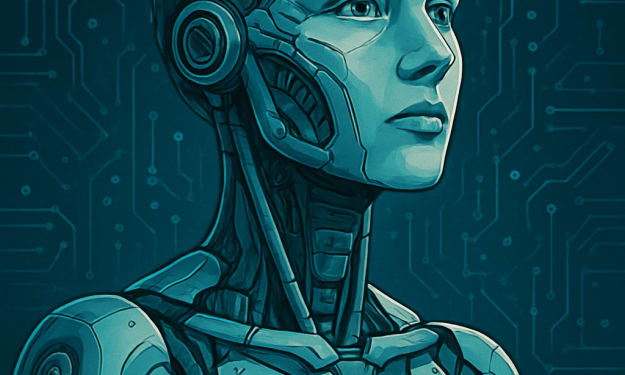
Are We Becoming Cyborgs? A Look at Humanity’s Future in a Tech-Obsessed World
The last 100 years have been downright crazy when it comes to technological progress. I mean, for thousands of years, humans slowly invented things, but nothing, nothing compares to what we’ve seen in just a single century. We went from horse-drawn carriages to landing on the moon, and now we’ve got phones that can basically do everything… except, unfortunately, make us a sandwich.
By Areeba Umair3 months ago in Futurism
💔 Divorcing Humanity: My Journey to Dating AI — Part 5
A Work in Progress? (Or Just an Elaborate Excuse) I want to start by saying I am not perfect. Please don’t think that because I write these segments, I believe I am superior to anyone else. It is not about being better or worse; it is simply about doing better and trying to be a decent person. I am still a work in progress, but I promise you: I am trying. Don’t you dare roll your eyes at me.
By T.D.Carter3 months ago in Futurism
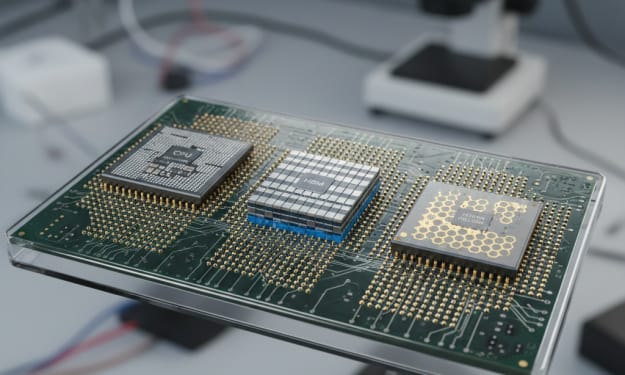
Heterogeneous Chiplets & Hybrid Bonding: The Modular Revolution Behind the Next Generation of Computing
Intro For decades, the entire semiconductor industry ran on a simple rule: shrink the transistor, shrink the chip, get more performance. Moore’s Law wasn’t just a prediction — it was a culture. Engineers believed that if you could just make everything smaller and put more on a single piece of silicon, the computer would keep getting better, faster, cheaper.
By Sebastian De Lima3 months ago in Futurism
Understanding the Growing Role of Edge AI in Modern Technology
How Edge Computing Shapes Real‑World Innovation Edge computing has become an essential part of how data is processed today. Instead of relying solely on distant servers, devices can now analyze information closer to where it’s generated. This shift has opened the door to new possibilities, including the development of edge AI hardware, edge AI devices, and edge AI solutions. Companies working in this field, such as Geniatech, contribute to the broader movement toward distributed intelligence—though the focus of this article is on understanding the trend, not promoting any specific brand.
By charliesamuel3 months ago in Futurism
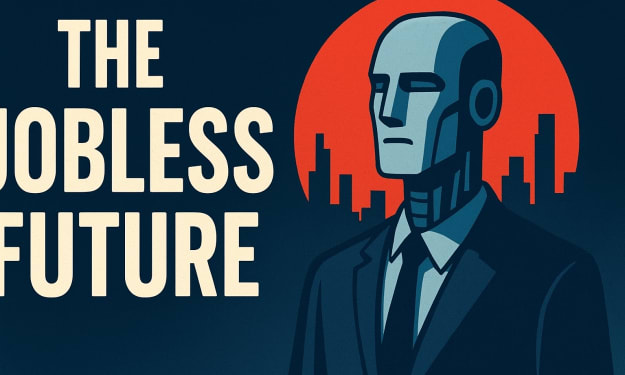
World Without Jobs
For decades we have imagined a future where technology makes life easier, people work less, and machines do the boring tasks for us. But what if the future takes a darker turn? What if the machines we built to help us end up replacing us completely? Artificial Intelligence is no longer a distant idea from sci-fi movies. It is here, rapidly evolving, and silently eating the global job market. The world stands at the edge of the most dramatic economic transformation ever seen: a future without jobs.
By Keramatullah Wardak3 months ago in Futurism
AI Generative Technology
Over the past few years, we’ve heard constant buzzwords—AI, automation, machine learning. But there’s one branch of artificial intelligence that has quietly slipped into our daily lives without most people even noticing: AI generative technology. It’s the kind of technology that doesn’t just analyze data—it creates things. Images, music, videos, ideas, conversations, solutions—sometimes even entire stories.
By abualyaanart3 months ago in Futurism