
AI Generative Technology
The Quiet Revolution Changing Everything Around Us

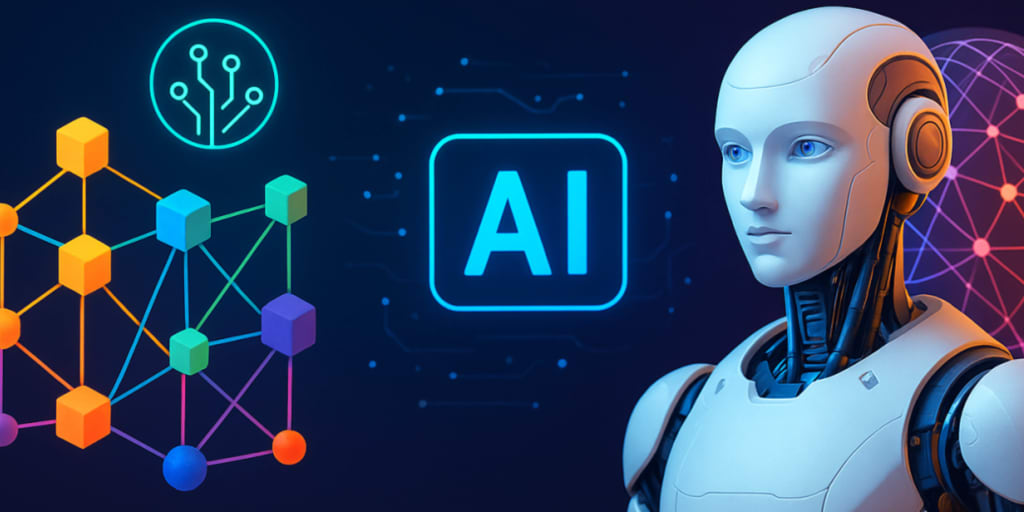
Over the past few years, we’ve heard constant buzzwords—AI, automation, machine learning. But there’s one branch of artificial intelligence that has quietly slipped into our daily lives without most people even noticing: AI generative technology. It’s the kind of technology that doesn’t just analyze data—it creates things. Images, music, videos, ideas, conversations, solutions—sometimes even entire stories.
But what fascinates me the most is not the technology itself; it’s the way it’s reshaping how we think, create, and solve problems. It feels like a revolution that arrived without knocking, and yet now it’s impossible to imagine the future without it.
Creativity Reimagined: From Blank Pages to Boundless Possibilities
One of the first things I noticed about generative AI is the way it changes the creative process. Whenever I used to sit down to write something new—an article, a story, even a simple caption—my biggest enemy was always the blank page. Generative AI doesn't replace creativity, but it removes the weight of starting.
Instead of staring at a blinking cursor, I can brainstorm ideas with an AI model, explore different tones, or get help rewriting a sentence that doesn’t sound right. It’s like having a creative partner who never gets tired, never runs out of suggestions, and never says, “I don’t know.”
Artists are experiencing the same transformation. Someone with zero drawing skills can now create digital art. Designers can generate mockups in minutes. Filmmakers can visualize scenes that would have cost thousands of dollars. Generative AI expands creativity—almost like giving every person a digital brush, camera, and studio.
A New Wave of Problem-Solving
Beyond creativity, what really surprised me is how generative AI pushes new solutions into old problems. Need to design a machine part? AI can generate dozens of working prototypes. Need marketing ideas? AI can predict what style will perform best. Want to understand how customers think? AI can simulate voices of different audiences.
Businesses are already adopting generative tools for planning, forecasting, and innovating. Developers use AI to generate code. Architects use it to create building concepts. Educators use it to design personalized lessons.
It feels like AI has become a second brain—not to replace ours, but to extend what we’re capable of thinking.
The Human Touch Still Matters
Even with all the advancements, there’s one thing generative AI still can’t do: replace genuine human experience. It can mimic tone, style, and structure, but it can’t live a life. It doesn’t feel joy, frustration, love, or loss. It can produce art, but it can’t understand why a piece of art makes you cry.
And that’s exactly why humans remain at the center of this revolution. Our stories, emotions, memories, and dreams guide what we create with AI. The technology simply expands our reach.
The Ethical Mirror We Can’t Ignore
Like any powerful tool, generative AI comes with responsibilities. With the ability to create realistic images, deepfake videos, or fake voices, it pushes us to redefine trust in the digital world.
We’ve also entered an era where anyone can produce content—but not all content is created with good intentions. This raises important questions:
How do we verify what's real?
How do we protect creators?
How do we ensure AI is used responsibly?
These aren’t technological questions—they’re human ones. The answers depend on us, not on the algorithms.
A Future We’re Still Shaping
What excites me most is that we’re only in the early stages of generative AI. The technology we see today—image generators, chatbots, video creators—is just the beginning. In the next few years, we may see:
AI-assisted medical diagnostics that save lives
Ultra-personalized learning at home
Films created by small teams instead of big studios
Entire digital worlds designed in minutes
Tools that help disabled individuals express themselves in new ways
In many ways, generative AI feels like electricity or the internet during their early days. People didn’t fully understand the impact at the time—but it slowly became something the world couldn’t live without.
We are witnessing the birth of a new digital era, an era where humans and machines collaborate rather than compete. Creativity will become more accessible. Innovation will accelerate. Knowledge will become even more democratized.
But the direction this revolution takes—whether it empowers or divides, whether it builds or destroys—depends entirely on how we choose to use it.
Final Thoughts: The Human–AI Partnership
At its core, generative AI isn’t about replacing humans. It’s about amplifying what we can do. It’s a tool that expands imagination, accelerates learning, and opens pathways we never knew existed.
But the most important element in this equation will always be the human mind behind the screen. The stories we tell, the choices we make, the values we uphold—these will define the future of AI, not the lines of code powering it.
Generative technology may be powerful, but humans give it direction, purpose, and meaning. And that’s why, even in a world full of intelligent machines, the most valuable thing will always be the human heart guiding them.
About the Creator
abualyaanart
I write thoughtful, experience-driven stories about technology, digital life, and how modern tools quietly shape the way we think, work, and live.
I believe good technology should support life
Abualyaanart
Keep reading
More stories from abualyaanart and writers in Futurism and other communities.
Is Starlink Available in Your Area? The Map, the Hype, and the Quiet Revolution Over Your Head
How Elon Musk’s satellite internet rollout is quietly rewriting who gets to be “connected” The first time my internet died in the middle of a job interview, I was standing on a chair, router in one hand, phone in the other, praying the signal would come back.
By abualyaanart3 days ago in Futurism
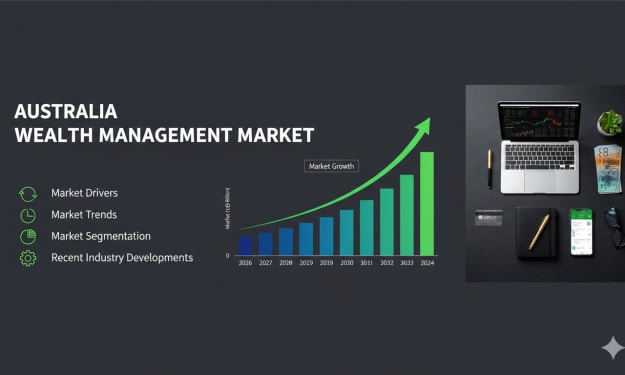
Australia Wealth Management Market: HNWI Growth, Digital Transformation & Regulatory Evolution
According to IMARC Group, the Australia wealth management market reached USD 118.6 Million in 2025 and is projected to expand to USD 222.2 Million by 2034, exhibiting a compound annual growth rate (CAGR) of 7.00% during 2026–2034. This sustained expansion reflects structural changes in capital accumulation, digital advisory platforms and regulatory oversight across Australia. Wealth management services—including portfolio advisory, retirement planning, tax structuring and estate planning—are increasingly critical as individuals accumulate assets through entrepreneurship, property investments and superannuation growth. As high-net-worth individuals (HNWIs) expand in number and financial sophistication, demand for tailored, transparent and digitally enabled advisory services continues to rise.
By Kevin Cooper7 days ago in Futurism
Automotive Blind Spot Detection System Market Trends: AI Integration, Sensor Innovation & Forecast to 2034
Rising safety concerns, stringent government regulations, and the increasing adoption of Advanced Driver Assistance Systems (ADAS) are driving the demand for automotive blind spot detection systems. This growth is further supported by ongoing technological advancements in radar and sensor fusion, as well as a significant shift in consumer preference toward vehicles equipped with proactive safety features. According to IMARC Group’s latest data, the global automotive blind spot detection system market size reached USD 6.72 Billion in 2025. Looking forward, IMARC Group estimates the market to reach USD 15.57 Billion by 2034, exhibiting a CAGR of 9.79% from 2026-2034.
By Andrew Sullivan6 days ago in Futurism



Comments
There are no comments for this story
Be the first to respond and start the conversation.