how to
How to create science fiction and technology projects in a simplistic, easy manner.
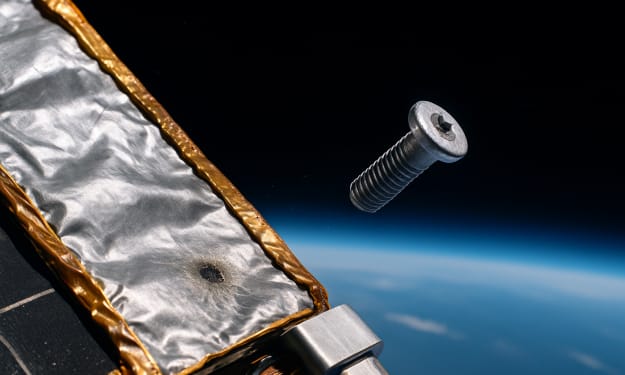
Space Junk: How a Tiny Screw Can Shatter a Satellite
High above our planet, thousands of satellites orbit Earth — connecting phones, tracking storms, and streaming your favorite shows. But along with this incredible network of technology comes a growing hazard that few of us think about: space junk.
By Holianyk Ihor2 months ago in Futurism
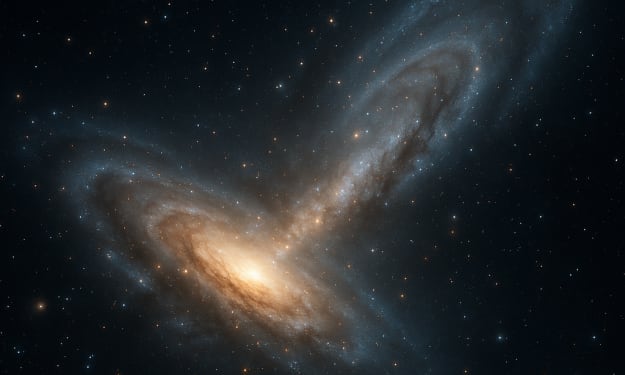
When Galaxies Collide: The Future Cosmic Dance of the Milky Way and Andromeda
A Slow-Motion Collision in the Night Far beyond the reach of our telescopes’ finest details, an extraordinary cosmic event is already underway. The Milky Way—our home galaxy—and its massive neighbor, the Andromeda Galaxy, are locked in a slow, gravitational embrace. Although they are separated by about 2.5 million light-years, the two galaxies are inching toward each other at a staggering 110 kilometers per second.
By Holianyk Ihor3 months ago in Futurism
How to Build a Custom Scheduling App Faster with Lovable and DHTMLX Scheduler
Launching a startup is an exciting challenge. But if you’re just one person or a small team, the path from concept to working application can feel overwhelming. Traditional software development often starts with lengthy discovery, expensive design phases, and months of coding before you even see something tangible. That’s where AI-powered prototyping tools like Lovable change the game. This article shows how to combine the rapid prototyping power of AI with the strength of professional components like DHTMLX Scheduler and the expertise of a development partner to build your custom scheduling app faster.
By Sergey Laptick3 months ago in Futurism
The Coolest Star in the Universe: WISE 1828+2650, the “Room-Temperature” Star
When we think of a star, we imagine something blazing hot — a roaring sphere of plasma like our Sun, burning at thousands of degrees and flooding space with light. But the cosmos loves to challenge our assumptions. Somewhere out there, about 40 light-years away, floats a celestial oddball that defies everything we expect from a “star.”
By Holianyk Ihor3 months ago in Futurism
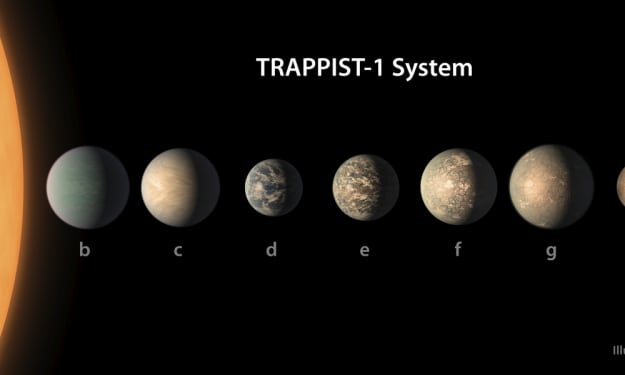
New Discoveries in the TRAPPIST-1 and LHS 1140 Systems: Rethinking What “Habitable” Really Means
For decades, the dream of discovering a second Earth has driven astronomers to peer deep into the cosmos, searching for rocky planets orbiting distant stars. Two of the most intriguing targets in that quest—TRAPPIST-1 and LHS 1140—have recently revealed surprising new details thanks to observations from the James Webb Space Telescope (JWST). These discoveries are changing how scientists think about habitability, atmosphere loss, and what a truly “Earth-like” world might be.
By Holianyk Ihor3 months ago in Futurism