
The Evening I Let AI Work — and Finally Started Living Again
How one quiet change helped me rediscover balance after burnout.


The sun was setting, but my laptop was still glowing.
The soft hum of the fan mixed with the echo of another unanswered message.
Dinner was getting cold in the kitchen, and my mind was still racing through half-finished tasks.
I couldn’t remember the last time I finished work before dark.
Every day blurred into the next — a cycle of meetings, dashboards, and silent promises that I’d “log off early tomorrow.”
Tomorrow never came.
I told myself this was success: to stay busy, to keep producing, to never fall behind.
But deep down, I knew I wasn’t chasing ambition anymore.
I was just trying not to drown.
The Slow Creep of Burnout
It started quietly.
One skipped dinner turned into many.
My evenings became background noise — hours that existed only to catch up on what I hadn’t finished.
There’s a special kind of exhaustion that comes from doing everything right and still feeling empty.
It wasn’t the workload that broke me — it was the constant noise inside my head.
That voice that whispered, you’re falling behind, even when everything was running smoothly.
When I first heard about AI automation, I thought it was just another buzzword.
But one night, curiosity and desperation met in the same place.
I started experimenting with simple automations — scheduling reports, logging results, cleaning data.
Nothing fancy, just small tasks I thought I could let go of.
The real test wasn’t whether the system worked.
It was whether I could trust it.
The Moment Everything Went Quiet
One Friday, I did something radical.
I shut my laptop at six.
No “one last check.”
No dashboard refresh.
Just silence.
At first, it felt wrong.
My hands hovered above the keyboard like I’d forgotten to say goodbye to an old friend.
For years, that screen had been my sense of control — the proof that I was needed.
But that evening, I realized how much of my life I’d traded for that false sense of importance.
I walked outside with a cup of coffee I didn’t reheat three times.
The air felt different — not because it was cleaner, but because it was mine.
For the first time in months, the evening felt empty.
And that emptiness felt like freedom.

What AI Really Changed
I used to think automation was just about saving time.
But what it really gave me was space.
Space to think without pressure.
Space to rest without guilt.
Space to be someone outside of work again.
The more I let my automations handle the routine, the more I noticed something unexpected:
my creativity came back.
Ideas started showing up in the quiet moments — while cooking dinner, taking a walk, watching the sunset.
AI didn’t take my work away.
It gave me permission to do it differently.
It showed me that control wasn’t the same as care — and that trust could exist between humans and the systems we build.
Learning to Let Go
Letting go was harder than building anything I’ve ever automated.
It meant redefining productivity.
It meant admitting that being busy wasn’t the same as being fulfilled.
There were moments of guilt — when I’d look at my inbox and feel like I should be doing more.
But over time, the guilt turned into gratitude.
I realized that my evenings were never the problem.
The problem was the version of me who believed I had to earn rest.
Now, I still automate tasks — emails, reports, reminders.
But the biggest automation I’ve learned is emotional:
the habit of stepping back, trusting the process, and letting the system breathe while I do the same.
The Balance I Found
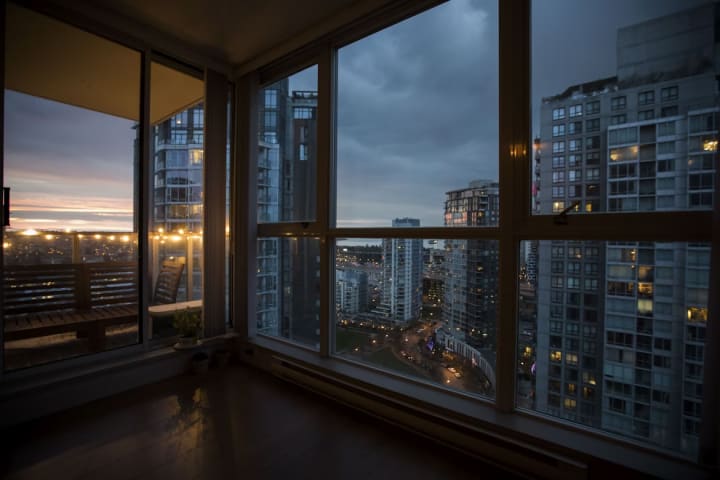
These days, when the sun sets, I’m not in front of a screen.
I’m on the balcony, coffee in hand, watching the sky fade from orange to deep blue.
My laptop still works in the background — sending reports, cleaning data, updating dashboards — but I don’t need to see it happen.
The world didn’t collapse when I stopped micromanaging it.
In fact, it started making sense again.
AI didn’t make me superhuman.
It reminded me that being human was enough.
It taught me that progress doesn’t have to mean pressure.
Sometimes, the smartest thing you can do is stop trying to control everything.
Reflection
People often ask if I’m afraid automation will replace us.
But maybe it’s not replacing us — maybe it’s returning us.
To the dinner tables we left waiting.
To the hobbies we said we didn’t have time for.
To the quiet evenings we forgot we deserved.
When I let AI take over my tasks, it didn’t take away my purpose — it gave it back to me.
Because sometimes productivity isn’t about doing more.
It’s about making room for stillness.
The systems run.
The world keeps moving.
And I finally get to pause — not because I’m finished, but because I’ve learned that life still happens when the work stops.
Thanks for reading.
I write about AI, automation, and mindful productivity — how technology can help us slow down, not speed up.
💡 Follow me on Vocal for more reflective stories about balance, creativity, and the human side of automation.
About the Creator
Erick Galaviz
✍️ Writer exploring the calm side of technology.
I write about AI, automation, and the art of slowing down — stories that blend reflection, balance, and the human touch behind productivity. 🌙
Keep reading
More stories from Erick Galaviz and writers in Futurism and other communities.
Stanislav Kondrashov Oligarch Series: Oligarchy and Global Supergrids in the Next Phase of the Energy Transition
The global energy transition is entering a phase defined less by individual technologies and more by infrastructure. One concept gaining attention is the development of global supergrids—large-scale electricity networks designed to connect distant regions through long-distance transmission systems. These networks would allow electricity to move across vast territories, creating a more interconnected energy landscape.
By Stanislav Kondrashov4 days ago in Futurism
Australia Animal Feed Market: Livestock Expansion, Nutrition Innovation & Aquaculture Growth
According to IMARC Group, the Australia animal feed market reached USD 11.0 Billion in 2025 and is projected to grow to USD 13.9 Billion by 2034, exhibiting a compound annual growth rate (CAGR) of 2.60% during 2026–2034. The steady expansion of the market reflects the increasing scale of livestock production and the rising importance of scientifically formulated feed solutions across Australia. Producers are focusing on high-quality feed formulations that enhance animal growth, productivity, and disease resistance. In addition, growing export demand for premium meat and dairy products is strengthening Australia animal feed market share. Innovations in feed technology, expanding aquaculture production, and rising awareness about animal nutrition are shaping the future of the industry.
By Kevin Cooper6 days ago in Futurism


Comments (1)
Beautifully written. This captures what so many of us miss — that automation isn’t about doing more, but about rediscovering who we are when the noise stops. Loved this blend of technology and humanity.