habitat
The natural home and environment for all things sci fi, including future homes and territories.
The Farthest Objects Ever Discovered by Humanity: A Journey Beyond the Observable Universe
Since the dawn of civilization, humans have looked up at the night sky in awe, captivated by the distant, the mysterious, and the unknown. Today, thanks to incredible advancements in technology, modern telescopes act not just as lenses into space, but as time machines—allowing us to peer into the earliest chapters of the universe’s history. These instruments help us discover objects so far away that the light reaching us has traveled billions of years. Let’s take a fascinating journey through some of the most distant objects ever observed by humankind.
By Holianyk Ihor8 months ago in Futurism
The Earth-Based Template
Scientists define life based on what we know: carbon-based organisms that depend on liquid water, complex molecules like DNA, metabolism, reproduction, and the ability to evolve. These are our checkboxes for what counts as living. But Earth is just one tiny speck in the endless darkness of space. What if our template isn’t universal, but exceptional?
By Holianyk Ihor8 months ago in Futurism
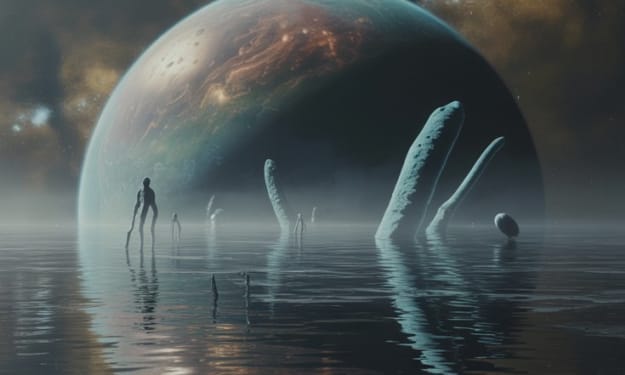
Earth’s Twins: Where in the Galaxy Are the Odds Highest?
In a universe filled with billions of stars and untold planetary systems, the idea of a “second Earth” is no longer just science fiction — it’s a real, pressing question in modern astronomy. Scientists call these potential look-alikes terrestrial exoplanets — worlds similar to Earth in size, atmosphere, and potential habitability. But where exactly in our galaxy are we most likely to find them?
By Holianyk Ihor8 months ago in Futurism
When Space Plays Tricks: Phenomena That Can Imitate Planets
Modern astronomy has made astonishing progress in the search for exoplanets—those distant worlds orbiting stars far beyond our solar system. Armed with powerful telescopes and sophisticated techniques for analyzing starlight, scientists have identified thousands of planetary candidates. But even with the best tools, the cosmos isn’t always what it seems. In fact, the universe has a mischievous side: sometimes, it throws illusions our way that mimic the signature of a planet. Let’s explore some of the most fascinating impostors—phenomena that can fool even seasoned astronomers.
By Holianyk Ihor8 months ago in Futurism
The Possibility of Antimatter Planets: A Bold Hypothesis in Modern Astrophysics
In a universe dominated by matter—from the tiniest particles to colossal galaxies—the concept of antimatter often feels like something out of science fiction. Mysterious, elusive, and destructive when mixed with matter, antimatter has captured both scientific and popular imagination for decades. Yet, it’s no fantasy: physicists have not only theorized antimatter but successfully created and studied it in labs.
By Holianyk Ihor8 months ago in Futurism
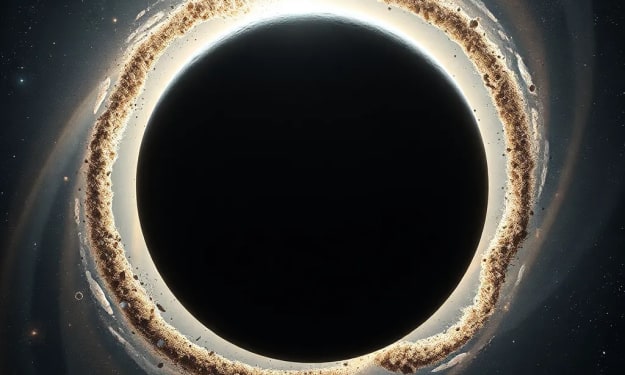
Life on a Planet of Eternal Night — How Is It Possible?
When we imagine life on other planets, we often picture vibrant landscapes bathed in sunlight — maybe two suns blazing in alien skies — or frozen wastelands shrouded in endless darkness. But what if there’s a world where night never ends, where the sun never rises? Could life exist there? The idea of a planet locked in eternal night might sound like science fiction, but it’s actually a real possibility within the realm of astronomy. Such worlds do exist, and scientists are seriously exploring whether life could thrive in their unending darkness.
By Holianyk Ihor8 months ago in Futurism
Can We Build a Planet by Hand? Exploring the Future of Astroengineering
When we gaze at the stars, it feels almost unimaginable that one day humans might not only explore distant worlds but actually create entire planets from scratch. It sounds like pure science fiction—something out of a futuristic novel—but many ideas that once seemed impossible have gradually crept into the realm of scientific reality. Creating a planet by hand represents the ultimate frontier of astroengineering, the science of transforming and constructing celestial bodies. But is it really possible? Let’s dive into what this would mean and whether humanity might one day achieve it.
By Holianyk Ihor8 months ago in Futurism
Can We Find Life on Alien Planets?
Can We Find Life on Alien Planets? The James Webb Telescope's Groundbreaking Discoveries The quest to answer one of humanity's most profound questions—Are we alone in the universe?—has taken a significant leap forward. Thanks to the James Webb Space Telescope (JWST), scientists are now uncovering tantalizing clues that suggest life may exist beyond Earth. Among the most promising leads is the exoplanet K2-18 b, located approximately 120 light-years away in the constellation Leo.
By Shah saab IT8 months ago in Futurism