
Can We Find Life on Alien Planets?
Breakthrough findings from the Webb Telescope suggest we may be closer than ever to discovering life beyond Earth

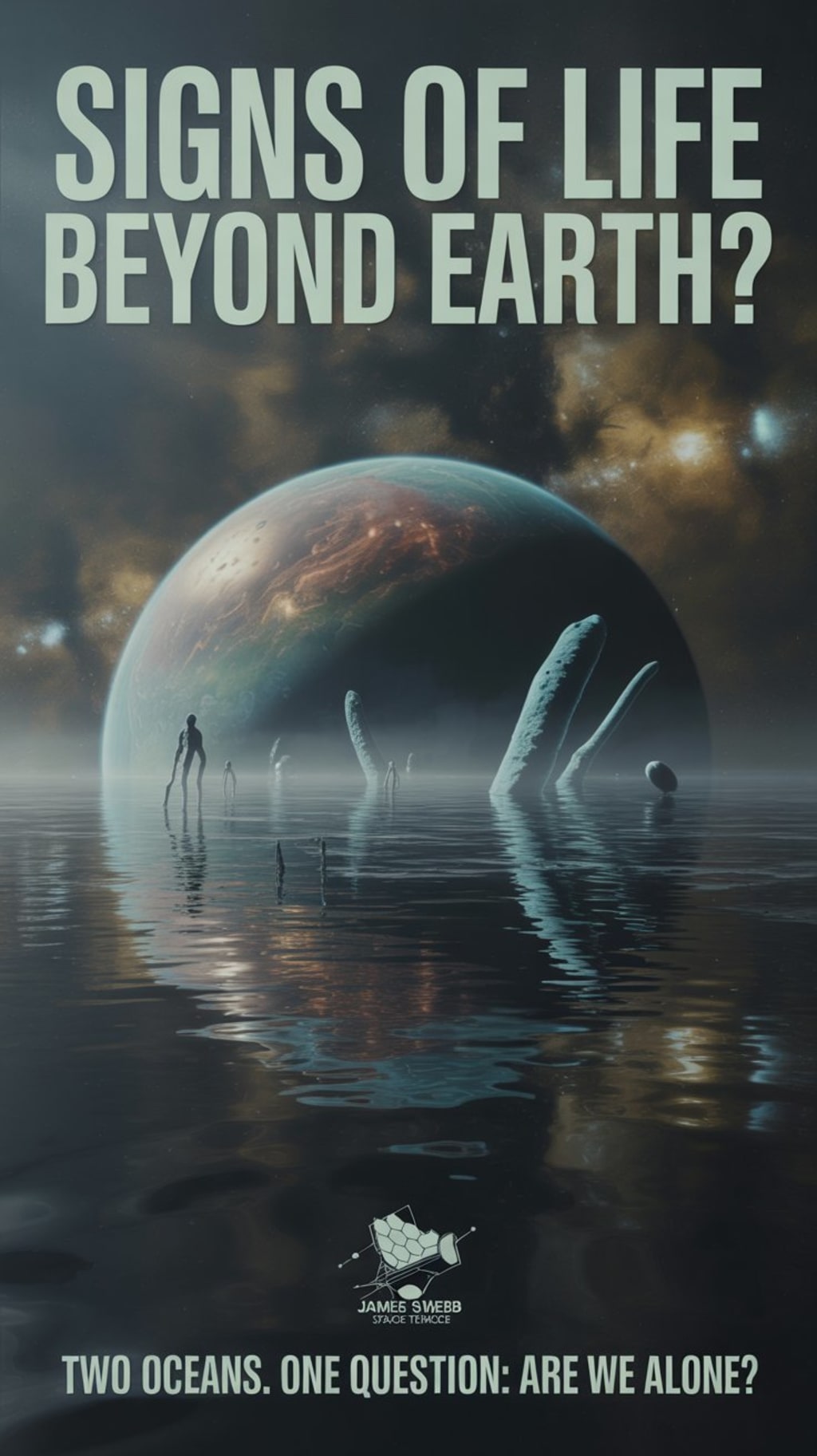
Can We Find Life on Alien Planets? The James Webb Telescope's Groundbreaking Discoveries
The quest to answer one of humanity's most profound questions—Are we alone in the universe?—has taken a significant leap forward. Thanks to the James Webb Space Telescope (JWST), scientists are now uncovering tantalizing clues that suggest life may exist beyond Earth. Among the most promising leads is the exoplanet K2-18 b, located approximately 120 light-years away in the constellation Leo.
The Hycean World: A New Frontier
K2-18 b is classified as a "Hycean" planet—a term coined to describe exoplanets that possess a hydrogen-rich atmosphere and a global ocean beneath. These planets are considered prime candidates in the search for extraterrestrial life due to their size and atmospheric conditions, which are more conducive to detailed study compared to smaller, rocky planets.
Recent observations by JWST have revealed the presence of carbon dioxide and methane in K2-18 b's atmosphere, indicating a complex chemical environment. More intriguingly, scientists have detected traces of dimethyl sulfide (DMS), a compound on Earth primarily produced by marine phytoplankton and certain bacteria. The detection of DMS at levels thousands of times higher than found on Earth has led researchers to hypothesize that biological processes may be at play on K2-18 b .
What Does This Mean for the Search for Life?
The identification of DMS is particularly compelling because, on Earth, it is predominantly associated with life. While other non-biological processes can produce DMS, the concentrations observed on K2-18 b are unprecedented and suggest the possibility of biological activity. However, scientists caution that these findings are preliminary and require further observation to confirm the presence of life .
Beyond K2-18 b, JWST has also made significant contributions to our understanding of other exoplanets. For instance, the telescope has detected frozen water in the debris disk around HD 181327, a young, sunlike star located 155 light-years away. This discovery suggests that icy bodies, which could deliver water to forming planets, are common in the universe and may play a crucial role in the development of habitable environments .
The Broader Implications
These discoveries underscore the potential of JWST to transform our understanding of the cosmos. By analyzing the atmospheres of exoplanets with unprecedented detail, JWST is providing insights into the conditions that might support life elsewhere. While the detection of DMS on K2-18 b is not definitive proof of life, it represents a significant step toward answering the age-old question of whether we are alone in the universe.
The Discovery That Changed Everything
Using its powerful infrared sensors, JWST detected carbon dioxide and methane in the atmosphere of K2-18 b—gases commonly associated with biological processes on Earth. But that wasn’t all. What really sparked excitement was the possible presence of dimethyl sulfide (DMS).
On Earth, DMS is primarily produced by marine organisms such as phytoplankton. It’s not the kind of molecule you'd expect to find floating around without some kind of life-form generating it. While the detection of DMS on K2-18 b isn’t 100% confirmed yet—it’s still in early analysis—it’s a potential biosignature that scientists never expected to see so soon.
If confirmed, it would be the first known detection of a gas linked exclusively to life as we know it on a planet outside our solar system.
---
What Makes K2-18 b Special?
K2-18 b orbits within the habitable zone of its star, meaning it's at just the right distance for liquid water to exist—a key ingredient for life. But unlike Earth, it’s covered
Conclusion
The James Webb Space Telescope is not just a marvel of engineering and technology; it is a beacon guiding us toward a deeper understanding of our place in the cosmos. As we continue to explore the distant worlds that dot our galaxy, the possibility that life exists beyond Earth becomes ever more tantalizing. While much remains to be discovered, the journey to finding life on alien planets has never been more promising.
About the Creator
Shah saab IT
I'm. Shah saab IT. From Pakistan I'm provide to people smart Digital Education my main focus on which people they loved Technology and smart Digital Education 😉
Keep reading
More stories from Shah saab IT and writers in Futurism and other communities.
Can human Ever Leave the milky way Galaxy The wormholes Explained By Shah saab
Can Humans Ever Leave the Milky Way? Wormholes Explained Humanity has always gazed at the stars with curiosity, dreaming of traveling across the universe. As our understanding of space has grown, so has our ambition. But while we’ve sent probes to the edges of our solar system, the idea of leaving our galaxy—the Milky Way—raises profound scientific, technological, and philosophical questions. Can humans ever truly leave the Milky Way? Could wormholes be the key to this escape?
By Shah saab IT10 months ago in Futurism
Living in 2030: How Smart Cities are Redefining Human Life
As we move deeper into the decade, the concept of a "home" is shifting from a simple physical shelter to an intelligent ecosystem. By 2030, our cities won't just be concrete jungles; they will be living, breathing organisms powered by Artificial Intelligence and renewable energy. This transition is not just about luxury; it’s about survival and sustainability in a rapidly changing world.
By Priyantha Wijethunga4 days ago in Futurism
Why the Fermented Foods Market Is Booming in the Era of Gut Health and Clean Eating
Somewhere in a jar on a kitchen counter, a quiet transformation is underway. Cabbage is becoming sauerkraut. Tea is becoming kombucha. Milk is becoming kefir․ These are the processes that predate all written history, the preservation techniques developed thousands of years ago in every culture on every continent, before refrigerators, before canning, when preservation meant allowing microbes, of whose very existence humans were unaware, to keep food edible through winter, across trade routes, and into the lean seasons․
By Frank Morgan3 days ago in Futurism
A More Human Vocal
When we launched Vocal nearly a decade ago, the world was a very different place. LLMs did not exist, and stories were created one at a time by people sitting down to write, revise, and share something personal. Many of our assumptions about publishing, trust, and participation were built for a world where effort and output were inseparable.
By Justin @ Vocal3 days ago in Resources



Comments (1)
amazing