
The Farthest Objects Ever Discovered by Humanity: A Journey Beyond the Observable Universe
Space

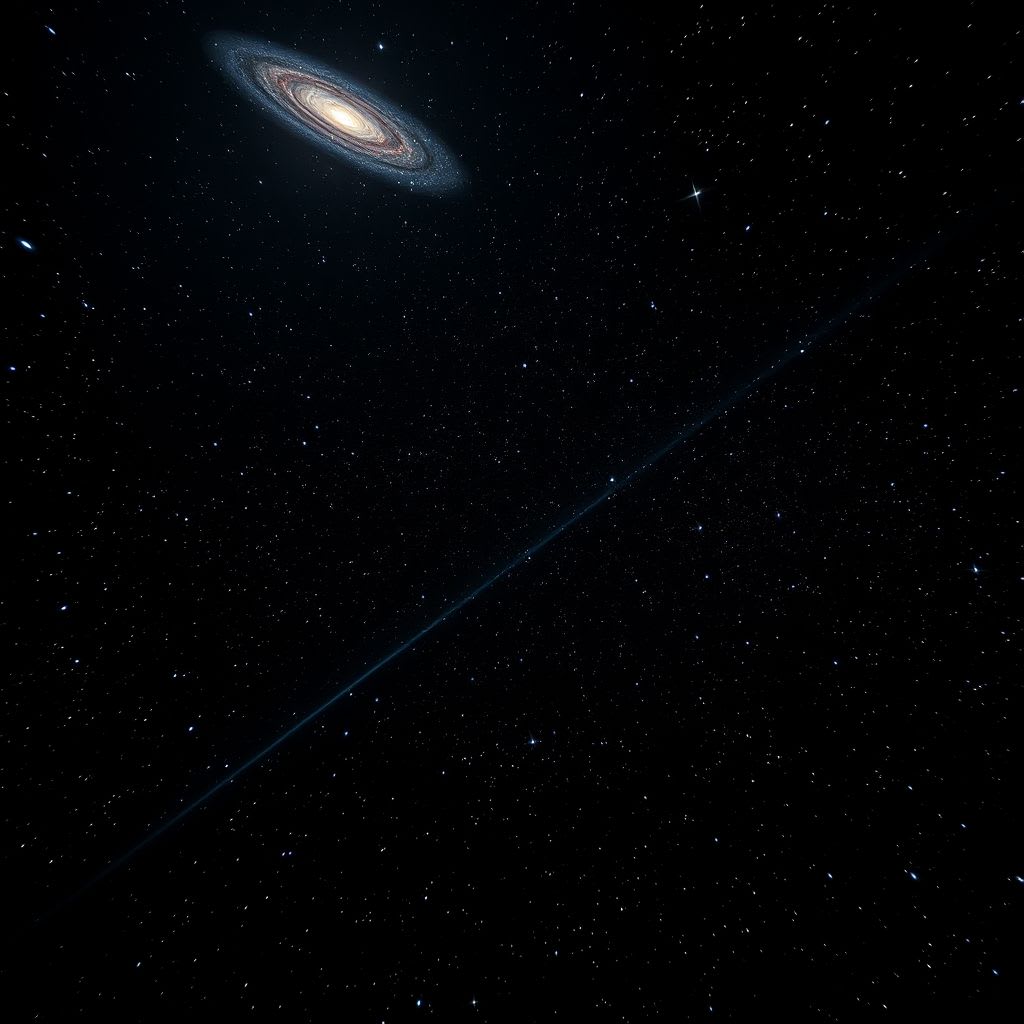
Since the dawn of civilization, humans have looked up at the night sky in awe, captivated by the distant, the mysterious, and the unknown. Today, thanks to incredible advancements in technology, modern telescopes act not just as lenses into space, but as time machines—allowing us to peer into the earliest chapters of the universe’s history. These instruments help us discover objects so far away that the light reaching us has traveled billions of years. Let’s take a fascinating journey through some of the most distant objects ever observed by humankind.
GN-z11: A Galaxy on the Edge of Time
For a long time, the record for the most distant galaxy belonged to GN-z11, spotted by the Hubble Space Telescope. This galaxy lies approximately 13.4 billion light-years away, meaning the light we see from it today began its journey when the universe was only about 400 million years old—a mere infant in cosmic terms. Despite its youth, GN-z11 was already vigorously forming stars, a remarkable fact given how early this was in the universe’s timeline. Observing such a galaxy allows scientists to glimpse the processes that shaped the cosmos shortly after the Big Bang.
Maisie’s Galaxy and JD1: The James Webb Telescope Breakthroughs
The launch of the James Webb Space Telescope in 2021 revolutionized our view of the distant universe. Between 2022 and 2023, Webb identified several incredibly remote galaxies, including the so-called Maisie’s Galaxy, which is about 13.5 billion years old. Astronomers believe this galaxy formed just 300 million years after the birth of the universe, pushing back the timeline for early galaxy formation even further.
Another extraordinary find was MACS0647-JD, with an age similarly estimated. These discoveries challenge previous assumptions and show that complex structures were already taking shape surprisingly early, reshaping our understanding of cosmic history.
ULAS J1342+0928: The Ancient Monster Quasar
Quasars are some of the brightest objects in the universe, powered by supermassive black holes at their centers. One of the most distant known quasars, ULAS J1342+0928, is located about 13.1 billion light-years away. This quasar hosts a black hole with a staggering mass equivalent to 800 million suns. How such a massive black hole could form so quickly after the Big Bang remains one of the biggest puzzles in astrophysics. Its existence pushes scientists to rethink the early growth of black holes and galaxy evolution.
GRB 090423: The Farthest Gamma-Ray Burst
In 2009, the Swift satellite detected a gamma-ray burst named GRB 090423 at a distance of about 13 billion light-years. Gamma-ray bursts are among the most energetic explosions known—usually caused by the collapse of massive stars into black holes. The light from this particular burst traveled over 13 billion years before reaching Earth, giving astronomers a rare glimpse of star death and formation processes in the universe’s youth. Each observation like this adds valuable clues to how stars lived and died billions of years ago.
The Cosmic Horizon: The Edge of the Observable Universe
Theoretically, the furthest “object” we can observe is the Cosmic Microwave Background (CMB)—the faint afterglow of the Big Bang that appeared about 380,000 years after the universe began. While not an object in the traditional sense, the CMB represents the oldest light we can detect. It acts like a cosmic curtain, beyond which the universe was opaque to light, meaning no earlier photons could travel freely through space to reach us.
Gazing Into Infinity
Every new discovery of distant objects expands our cosmic map and deepens our understanding of the universe’s birth and evolution. We are, in a way, cosmic archaeologists—digging through layers of time and matter, armed not with shovels but with telescopes and complex equations. With the arrival of new observatories, both on Earth and in space, even more astonishing finds are on the horizon. It’s likely that our picture of the observable universe’s boundaries will continue to evolve.
Humanity looks into the depths of space and, strangely enough, into its own past. Every beam of light reaching us from the edge of the cosmos tells a story—a story that brings us a little closer to understanding where we came from and what the universe truly is.
This journey beyond the stars is ongoing, and with each breakthrough, we rewrite our cosmic story — one distant light-year at a time.
About the Creator
Keep reading
More stories from Holianyk Ihor and writers in Futurism and other communities.
The Earth-Based Template
Scientists define life based on what we know: carbon-based organisms that depend on liquid water, complex molecules like DNA, metabolism, reproduction, and the ability to evolve. These are our checkboxes for what counts as living. But Earth is just one tiny speck in the endless darkness of space. What if our template isn’t universal, but exceptional?
By Holianyk Ihor8 months ago in Futurism
About Binding Prometheus
I want to start actively advocating on behalf of my own work, and the most valuable part of my canon is, without a doubt, Binding Prometheus, the play I have been working on since 2019 and only finished in 2023 as part of my MA. The play itself is an amalgamation of a million different inspirations. On one end, it evokes the Ancient Greek myth-play, deriving its own title from the earliest extant work of Western drama we have, Aeschylus’s Prometheus Bound. On the other end, it borrows significantly from the sci-fi bulwarks from over the years, namely Mary Shelley’s Frankenstein and Karel Capek’s Rossum’s Universal Robots. The play could be an episode of Black Mirror, I fear. I don’t know. I’ve only ever seen one episode of Black Mirror.
By Steven Christopher McKnight18 days ago in Futurism
Contrary to popular perception, far-side observations show that Earth's moon is not "dead."
For a long time, the moon appeared to be a world that had completed its major transformations before becoming silent. Although there are still scars on its surface from heavy impacts and past lava floods, many experts have viewed such features as remnants of a far older era.
By Francis Dami6 days ago in Futurism



Comments (1)
This is some fascinating stuff. It's mind-blowing to think about looking back billions of years in time. I remember when the Hubble discoveries were big news. Now the James Webb is taking it to a new level. Wonder what else is out there waiting to be found. Do you think there are even more distant and strange objects that could totally change our view of the universe?