Science
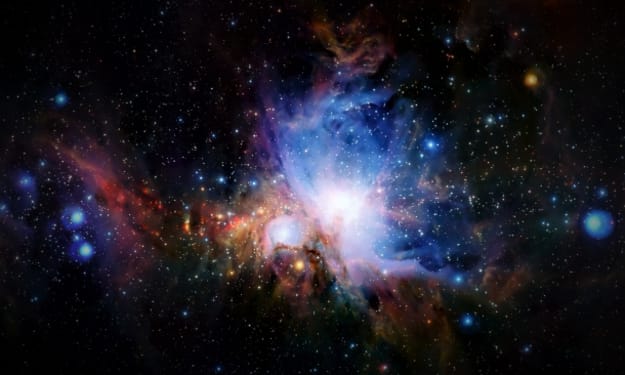
BEYOND THE BLUE DOT: A REALISTIC JOURNEY THROUGH THE UNIVERSE
Earth, our vibrant, blue planet, is the only home we've ever known. It’s where every human has lived, every story has unfolded, and every moment in history has taken place. But when we look beyond Earth’s atmosphere, we begin to realise just how tiny and fragile our world is amidst the vastness of the universe. The Moon, our closest celestial neighbour, lies 384,000 kilometres away. From its surface, Earth appears as a small glowing marble suspended in a sea of darkness—a striking reminder of our planet’s fragility and uniqueness. Moving beyond, we encounter the Sun, about 150 million kilometres from Earth. Light travels this distance in just over eight minutes, but a plane would take almost 19 years to get there. Farther still is Mars, which at its closest point is 54.6 million kilometres from Earth, and over 400 million kilometres at its farthest. Even sending robotic missions to Mars presents huge challenges due to constantly shifting distances. These massive scales show how space travel, even within our solar system, is anything but simple. As we journey outward, we meet Neptune, the distant ice giant, roughly 4.5 billion kilometres away. This marks the edge of our planetary neighbourhood. Yet even farther, the Voyager 1 spacecraft, launched in 1977, has travelled over 22 billion kilometres from Earth, making it the most distant human-made object. In 1990, it captured the famous "Pale Blue Dot" image of Earth from 6 billion kilometres away, inspiring astronomer Carl Sagan to reflect on our shared responsibility to protect this small world. At the outer edge of the solar system lies the theorised Oort Cloud, a vast sphere of icy objects possibly stretching 1.9 light years from the Sun—a distance so immense it's almost entering interstellar space. Beyond the solar system, our closest star system is Alpha Centauri, about 4.4 light years away. At current speeds, Voyager 1 would take over 70,000 years to reach it. The Milky Way galaxy itself extends 100,000 light years and contains hundreds of billions of stars. However, all our radio signals have only reached a 100-light-year radius within our so-called "radio bubble." Beyond that, no other civilisations would even be aware of our existence. This quiet gap between stars serves as a sobering reminder of how isolated we are, even within our galaxy. But our galaxy is just the beginning. We’re part of the Local Group, a small cluster of about 50 galaxies, which itself belongs to the massive Virgo Supercluster, and beyond that lies the Laniakea Supercluster—our true cosmic address. This supercluster spans over 500 million light years and includes thousands of galaxies. And yet, this too is only a fraction of the known universe. The observable universe stretches 93 billion light years across. Due to cosmic expansion, some parts are moving away faster than light, placing them forever out of our reach. The full size of the universe may be infinite. It's humbling to realise: there are places, galaxies, and wonders we may never see, forever lost beyond the horizon of light.
By Newton Opoku7 months ago in Earth
The Rise of Plastic Pyrolysis in Recycling Strategy
Plastic pyrolysis has emerged as a pivotal player in global recycling strategies, particularly as conventional waste management infrastructures falter under the weight of escalating plastic waste. As mechanical recycling encounters limitations in feedstock quality, contamination, and polymer diversity, pyrolysis technology steps into the foreground as a thermochemical alternative with broader material compatibility and end-product utility.
By Wayne Shen7 months ago in Earth
Unlocking the Earth’s Hidden Power: The Promise of Natural Underground Hydrogen
In a groundbreaking discovery that could reshape the future of global energy, scientists have identified vast reserves of naturally occurring underground hydrogen—buried deep beneath the Earth's surface. This "gold hydrogen," as it's being called, could represent a nearly infinite, clean source of energy that has remained hidden beneath our feet for millennia.
By Muhib Ullah 7 months ago in Earth
Climate Change in 2025: A Planet at the Crossroads
Introduction As we enter the second half of the decade, climate change is no longer a distant threat — it's the defining reality of 2025. From record-breaking temperatures to unprecedented natural disasters, the signs are clearer than ever: Earth is in crisis. And while scientific warnings have echoed for decades, the time for warnings is over. We are now living in the consequences.
By Syed Hazrat Hussain 7 months ago in Earth
America's Unfolding Story: From Ancient Roots to Modern Realities
The story of America is a complex tapestry, far predating the arrival of Europeans. For tens of thousands of years, Indigenous peoples traversed and thrived across the vast and varied landscapes that would later become known as the Americas. These diverse cultures, from the sophisticated agricultural societies of the Mississippi Valley to the nomadic hunters of the Great Plains and the intricate civilizations of Mesoamerica and the Andes, developed unique languages, spiritual beliefs, social structures, and profound understandings of their environments. They *discovered* and shaped America in the fullest sense, building intricate societies and developing sustainable practices that sustained millions.
By noor ul amin7 months ago in Earth
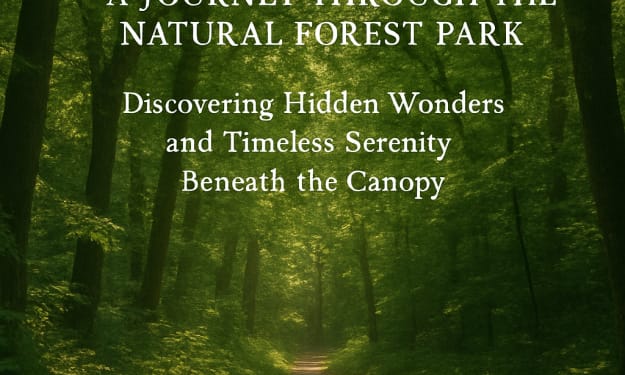
Whispers of the Wild: A Journey Through the Natural Forest Park
In a world increasingly dominated by concrete jungles and digital distractions, the gentle embrace of nature feels like a lost language — one that whispers, rather than shouts. "Whispers of the Wild: A Journey Through the Natural Forest Park" invites you to reconnect with this language, to listen to the soft stories told by the rustling leaves, the babbling brooks, and the quiet footfalls of creatures unseen.
By Noor Hussain7 months ago in Earth