
The Rise of Plastic Pyrolysis in Recycling Strategy
From Waste to Resource

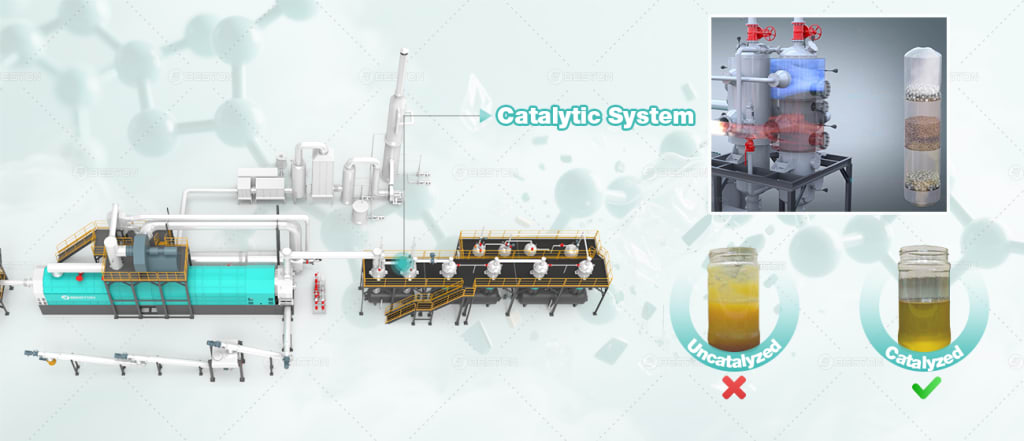
Plastic pyrolysis has emerged as a pivotal player in global recycling strategies, particularly as conventional waste management infrastructures falter under the weight of escalating plastic waste. As mechanical recycling encounters limitations in feedstock quality, contamination, and polymer diversity, pyrolysis technology steps into the foreground as a thermochemical alternative with broader material compatibility and end-product utility.
Shifting Dynamics in Waste Management
Over the past two decades, mounting environmental pressure and policy shifts have catalyzed a reevaluation of plastic disposal methodologies. Bans on transboundary plastic waste shipments, especially by countries such as China and Malaysia, have disrupted global waste flows. Developed economies, once reliant on exporting waste, now face a backlog of difficult-to-recycle materials—multi-layer films, polystyrenes, and contaminated containers, for instance.
This shift has incentivized localized, technologically sophisticated solutions. A pyrolysis plant can process low-value, non-mechanically recyclable plastic into usable hydrocarbons, circumventing the quality constraints of traditional recycling and restoring material utility through chemical transformation.
Thermochemical Conversion and Marketable Outputs
At the core of a pyrolysis plant lies the principle of thermal decomposition. Plastic polymers are exposed to elevated temperatures—typically between 350°C and 500°C—in an oxygen-deficient environment, inducing depolymerization and cracking reactions. The result is a mixture of gaseous and liquid hydrocarbons, collectively referred to as pyrolysis oil, along with a small proportion of solid residue.
The pyrolysis oil has applications as a feedstock for refineries, a heating fuel for industrial boilers, or a precursor for re-polymerization in chemical recycling pathways. The process also yields syn-gas, which can be captured and reused for internal heat requirements, enhancing energy efficiency and reducing operational costs.
Industrial Interest and Technology Maturation
Major petrochemical companies and institutional investors have increasingly backed plastic pyrolysis ventures. The technology’s appeal lies not just in waste diversion, but in its role in advancing circularity in plastics. Unlike downcycling approaches, pyrolysis can potentially return polymers to their monomeric or near-monomeric state, enabling closed-loop applications.
Moreover, modular and scalable design allows for adaptation to regional waste compositions and throughput demands. From compact, containerized units deployed in urban waste hubs to large-scale continuous operations integrated with material recovery facilities, the flexibility of the pyrolysis plant configuration adds to its commercial viability.
Regulatory Incentives and Lifecycle Analysis
Legislative frameworks in Europe and North America are increasingly recognizing pyrolysis as a form of advanced recycling. In the European Union, under the Waste Framework Directive, plastic derived from pyrolysis can count toward recycling targets when appropriate mass-balance methodologies are applied.
Lifecycle analysis studies have demonstrated that pyrolysis exhibits lower greenhouse gas emissions compared to incineration with energy recovery, especially when offset by the displacement of virgin fossil fuels. This environmental advantage, coupled with potential eligibility for carbon credits, further propels adoption in sustainability-driven markets.
Addressing Operational Challenges
Despite its promise, the sector is not without hurdles. Feedstock preprocessing—sorting, drying, and shredding—remains critical to system stability. Chlorinated plastics, such as PVC, require exclusion due to corrosive byproducts like HCl gas. Additionally, quality control of pyrolysis oil depends on consistent process parameters, necessitating robust automation and control systems.
Innovations in catalyst integration and reactor design continue to push the boundaries of yield, selectivity, and energy efficiency. Parallel advancements in filtration and distillation technologies are enhancing the purity and commercial grade of end products, facilitating integration with downstream users.
Strategic Outlook
As plastic waste volumes continue to rise and public scrutiny intensifies, pyrolysis is no longer a fringe solution. It represents a technologically viable, economically scalable, and environmentally necessary process to reclaim value from the plastic lifecycle. With continual refinement and policy alignment, the pyrolysis plant is positioned to become a keystone asset in the global transition toward sustainable material management.
About the Creator
Keep reading
More stories from Wayne Shen and writers in Earth and other communities.
Exploring the Sustainable Role of Biochar in the Construction Sector
Biochar, a product of the pyrolysis process, is rapidly gaining attention in various industries for its environmental and economic benefits. While it has traditionally been used in agriculture as a soil amendment, the potential applications of biochar in the construction industry are becoming increasingly evident. The use of biochar in construction is a promising sustainable alternative to conventional materials, offering numerous advantages, from carbon sequestration to enhanced material properties.
By Wayne Shen9 months ago in Earth
A $170 Million Gemstone Discovery Shocks Myanmar’s Mining World
Myanmar, a country long known for its rich natural resources, has once again captured global attention after the discovery of an extraordinary gemstone estimated to be worth around $170 million. The remarkable find has stunned geologists, gem traders, and mining experts, reaffirming Myanmar’s reputation as one of the world’s most important sources of precious stones.
By Irshad Abbasi 6 days ago in Earth
Top tipple tricks
Been thinking a lot about drinking, lately. Not least because of a recent episode of over-indulgence and the inevitable after effects. Some readers may recall the earlier articles I wrote about beating the booze. Here I set out an experiment in techniques for cutting down on my alcohol intake. The experiment was successful, the techniques worked, and I have armed myself with an arsenal of weapons in the war against the demon drink. I have yet to fire the first round however. It's all a question of timing (perhaps procrastination).
By Raymond G. Taylor7 days ago in Psyche



Comments
There are no comments for this story
Be the first to respond and start the conversation.