
The Fungus That Glows in the Dark – Nature’s Neon Light
Bioluminescent mushrooms turn the forest into a glowing wonderland.

Imagine walking through a quiet forest at night, and suddenly noticing soft green lights glowing on fallen logs or under damp leaves. You move closer and realize—it's not fairy lights or glow sticks. It's living mushrooms, softly pulsing with an eerie green glow.
These are bioluminescent fungi—real, living organisms that glow in the dark. And while it may sound like something out of a fantasy novel, it's a natural phenomenon found all over the world.
What Is Bioluminescence?
Bioluminescence is the ability of an organism to produce and emit light. It's a chemical reaction that typically involves:
- Luciferin (a light-emitting compound),
- Luciferase (an enzyme),
- Oxygen, and
- ATP (energy source).
When these components mix inside the organism, they create a soft glow — usually green, blue, or yellow.
This glow is what gives fireflies their sparkle and makes some deep-sea creatures look like aliens. But yes, mushrooms do it too.
Where Are These Glowing Mushrooms Found?
So far, scientists have discovered over 80 species of bioluminescent fungi, mostly in tropical and subtropical regions, including:
- Southeast Asia
- South America
- Australia
- Japan
- Parts of the U.S. (like the Ozark Mountains)
Some species even grow in cooler climates. The glow can appear on the mushroom cap, the gills, the stem, or even underground mycelium (the fungal “roots”).
Why Do Mushrooms Glow?
Scientists are still debating the exact purpose, but here are the top theories:
1. To Attract Insects
The glow might help fungi attract insects at night. These bugs land on the mushroom and unknowingly help spread its spores, like bees and flowers during the day.
2. To Warn Predators
Like bright colors on poisonous frogs, the glow might act as a warning sign: "Don't eat me, I might be toxic!"
3. A Byproduct of Metabolism
Some researchers believe the glow is simply a side effect of the fungus’s chemical processes, with no evolutionary purpose.
Whatever the reason, it’s undeniably magical to witness.
Famous Glowing Fungi Species
Here are a few shining stars of the fungal world:
🔹 Mycena chlorophos
This delicate, small mushroom is found in Asia and the Pacific. It emits a bright green glow and grows on rotting wood. It’s one of the brightest glowing fungi known.
🔹 Armillaria mellea (Honey Fungus)
Found in Europe and North America, this one glows underground—its mycelium network can light up in the dark soil!
🔹 Omphalotus olearius (Jack-o’-Lantern Mushroom)
Found in North America and Europe, it glows faintly orange. Despite the name, it’s not safe to eat—this mushroom is toxic!
Can We Use These Glowing Mushrooms?
Yes! Researchers are exploring ways to use bioluminescent fungi in biotechnology, such as:
- Creating glow-in-the-dark plants (for lighting without electricity)
- Monitoring pollution (some fungi glow differently depending on environmental toxins)
- Developing natural indicators for lab research
They’re also inspiring artists and designers, who dream of glowing gardens or luminous forest trails.
Mushrooms in Myth and Magic
Glowing mushrooms have inspired legends and myths in many cultures:
- In Japanese folklore, they were linked to yōkai (supernatural spirits).
- In medieval Europe, people believed glowing fungi were signs of witchcraft or fae activity.
- Some even called them “fairy fire” or “ghost fungus.”
What people once feared or worshipped is now part of science — but that doesn’t make it any less magical.
Can I See Them Myself?
Yes, but it’s not easy. Most glowing mushrooms need very specific conditions:
- Warm, moist, humid environments
- Complete darkness
- No artificial lights nearby
If you’re ever in a rainforest at night, especially in Southeast Asia or South America, look closely at fallen logs and stumps. You might be lucky enough to witness a natural glow show.
Or, you can even grow some at home! Kits for bioluminescent mushrooms are available online, though the glow can be faint.
Final Thought
Nature is full of hidden wonders, and glowing mushrooms are proof that magic exists—just not the kind we expect. These bioluminescent fungi blur the line between science and fantasy, lighting up the dark in the most unexpected places.
Whether they’re attracting insects or just showing off, one thing’s for sure: the forest has secrets. And some of them glow.
So next time you hear a fairy tale about glowing lights in the woods—remember, it might not be fiction after all.
About the Creator
Himalayas Bare and Rocky After Reduced Winter Snowfall, Scientists Warn
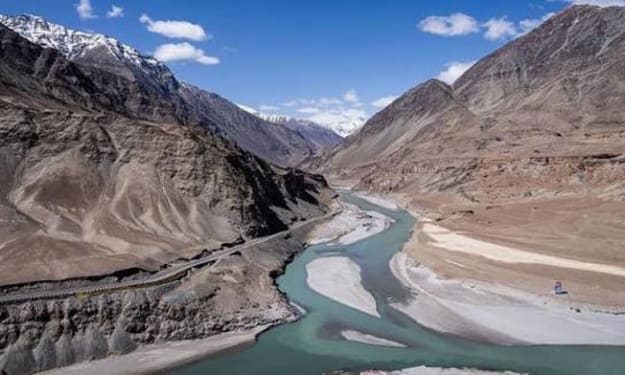
The Himalayas, often described as the world’s “Third Pole,” are facing a dramatic and worrying transformation. Scientists are warning that reduced winter snowfall is leaving vast stretches of the mountain range bare, rocky, and increasingly vulnerable to long-term environmental damage. Once known for their thick snow blankets and powerful glaciers, parts of the Himalayas are now showing exposed rock earlier than ever before—an alarming sign of climate stress in one of Earth’s most critical ecosystems. A Visible Change in the World’s Highest Mountains Winter snowfall plays a vital role in the Himalayan climate system. Snow acts as a protective layer, insulating glaciers and regulating the slow release of meltwater into rivers during warmer months. However, researchers monitoring satellite data and ground stations report that recent winters have brought significantly less snowfall across large areas of the range. As a result, snowlines are rising higher up the slopes, leaving lower and mid-altitude regions exposed. This has turned once-white mountain landscapes into expanses of dark rock, which absorb more heat from the sun, accelerating warming in a dangerous feedback loop. Why Reduced Snowfall Matters Snow is more than a scenic feature—it is essential to the health of Himalayan glaciers. When snowfall declines, glaciers lose their main source of replenishment. At the same time, exposed ice and rock melt faster under direct sunlight. Scientists warn that this imbalance is speeding up glacier retreat across the Himalayas. Many glaciers are now shrinking at rates not previously recorded, threatening the long-term stability of water systems that support nearly two billion people across South and Southeast Asia. Impact on Asia’s Major Rivers The Himalayas feed some of the world’s most important rivers, including the Indus, Ganges, Brahmaputra, Yangtze, and Mekong. These rivers depend on seasonal snow and ice melt to maintain consistent flow throughout the year. Reduced snowfall means less stored water for the dry season. In the short term, faster melting can cause floods and landslides. In the long term, however, shrinking glaciers could lead to water shortages, affecting agriculture, hydropower, and drinking supplies across multiple countries. A Growing Risk of Disasters Bare, rocky slopes are far more unstable than snow-covered ones. Snow helps bind loose material together, while exposed rock and soil increase the likelihood of landslides and avalanches. Scientists have already observed a rise in slope failures and glacial lake outburst floods in the region. As glaciers retreat, meltwater often accumulates in fragile lakes dammed by loose rock and ice. These lakes can burst suddenly, releasing destructive floods that threaten mountain communities and downstream infrastructure. Climate Change at the Core Researchers agree that climate change is the primary driver behind the declining snowfall. Rising global temperatures are altering weather patterns, causing more winter precipitation to fall as rain rather than snow. Even small temperature increases at high altitudes can drastically change how moisture behaves. Additionally, warming oceans and shifting atmospheric circulation are affecting the timing and intensity of winter storms that traditionally brought snow to the Himalayas. Effects on Local Communities and Wildlife Mountain communities that rely on predictable snowfall for farming, tourism, and water storage are already feeling the effects. Farmers report changes in planting cycles, while winter tourism has declined in some regions due to unreliable snow conditions. Wildlife is also under pressure. Species adapted to cold environments are losing habitat as snow cover shrinks. Plants that depend on snowmelt are struggling to survive in drier, warmer conditions, disrupting fragile alpine ecosystems. Scientists Call for Urgent Monitoring and Action Experts stress the importance of improved monitoring of snowfall, glacier health, and water flows across the Himalayan region. Better data can help governments plan for future water management challenges and disaster risks. At the same time, scientists emphasize that local adaptation alone is not enough. Reducing global greenhouse gas emissions remains critical to slowing temperature rise and preserving what remains of the Himalayan snow and ice. What the Future Holds If current trends continue, large parts of the Himalayas could see permanent changes within decades. Reduced snowfall and accelerating glacier loss may reshape landscapes, ecosystems, and human livelihoods on an unprecedented scale. The sight of bare, rocky Himalayan slopes is more than a visual change—it is a warning signal. The world’s highest mountains are responding rapidly to a warming planet, and the consequences will extend far beyond the peaks themselves.
By Fiaz Ahmed Brohi6 days ago in Earth
Nature’s Hidden Gems: Discovering the Rarest Flowers on Earth
Introduction: When Beauty Meets Rarity Nature is filled with wonders, but few are as captivating—and as elusive—as the rarest flowers on Earth. From enormous parasitic blooms to delicate orchids that appear only under precise conditions, these plants challenge our understanding of survival, evolution, and beauty.
By Ahmed aldeabella3 days ago in Earth



Comments
There are no comments for this story
Be the first to respond and start the conversation.