Nature
Beneath the Blue Sky: How South Florida Builds for Tomorrow. AI-Generated.
Beneath the endless blue of a South Florida sky, there’s a quiet kind of progress at work; one that can’t always be seen from the street. The air may hum with the same warmth, the same breeze that carries the scent of salt and rain, but something deeper has changed. Each season, Florida learns. It studies the wind, listens to the rain, and reshapes the way it builds for the future.
By Nikolay Barkalin3 months ago in Earth
"Tourism for Good: How Travel Enriches Communities and Cultures". Content Warning.
Tourism for Good: How Travel Enriches Communities and Cultures In the small town of Ubud, Bali, where lush rice terraces stretch across the land and temples stand as quiet guardians of tradition, the sound of laughter rings out from a local art market. A group of travelers gathers around Wayan, a skilled woodcarver, as he demonstrates the intricate techniques passed down from his grandfather. His hands move gracefully over the teak, shaping a figure that tells a centuries-old story of his people. The visitors are captivated—not just by the craft, but by the connection they feel. This is the essence of tourism done right. Tourism is often seen through two lenses: the economic benefits and the environmental or cultural concerns. But there’s a growing global movement toward responsible, sustainable tourism—a kind of travel that goes beyond sightseeing and selfies, and instead fosters genuine cultural exchange, protects natural beauty, and supports local communities. The Power of Positive Tourism When travelers choose to engage respectfully and consciously, tourism can be a powerful force for good. It creates jobs, supports small businesses, and helps preserve cultural heritage. In many countries, tourism is a key driver of the economy. According to the UN World Tourism Organization, tourism accounts for about 10% of global GDP and supports one in every ten jobs worldwide. In rural areas especially, tourism brings opportunities where few exist. Local guides, guesthouse owners, artisans, and restaurant workers all benefit from the influx of visitors. These jobs not only provide income but also help keep families rooted in their communities instead of migrating to cities in search of work. Take, for example, the mountain villages of Peru’s Sacred Valley. For generations, these communities depended solely on agriculture. But with the rise of cultural tourism around Machu Picchu, locals have opened eco-lodges, guided treks, and weaving cooperatives that allow travelers to experience authentic Andean life. Visitors learn traditional dyeing techniques or share meals cooked with native crops, while their money directly supports local livelihoods. Culture Sharing, Not Culture Selling Responsible tourism is about mutual respect and exchange. Travelers gain a deeper understanding of the places they visit, and locals feel pride in sharing their culture. This exchange builds empathy, reduces prejudice, and strengthens global citizenship. In Morocco, for instance, community-based tourism has helped Berber villages showcase their traditions while maintaining their way of life. Visitors stay in earth-brick homes, learn to cook tagine, and hear oral histories passed down through generations. Rather than turning culture into a product, these experiences honor and preserve it. Of course, there are challenges. Over-tourism can strain resources, damage fragile ecosystems, and drive up local prices. But many destinations are addressing this with sustainable strategies—limiting visitor numbers, promoting off-the-beaten-path locations, and enforcing eco-friendly policies. A Better Way to Travel As travelers, we have the power to shape the tourism industry through our choices. Supporting locally owned accommodations, eating at family-run restaurants, and hiring certified local guides are simple ways to ensure your money stays in the community. Avoiding unethical activities—like elephant rides or exploiting sacred sites—also helps protect the dignity and environment of the places we visit. Technology, too, is playing a role. Apps and platforms now help travelers find eco-lodges, carbon-offset flights, or ethical volunteer opportunities. Social media is being used not just to document trips, but to inspire more conscious travel choices. A Shared Journey In a world that often feels divided, tourism reminds us of what connects us. When done thoughtfully, travel becomes more than recreation—it becomes a bridge between people, a celebration of diversity, and a source of shared hope for a better future. As Wayan finishes his carving in Ubud, he smiles and hands it to a young couple, who thank him not just for the souvenir, but for the story. In that moment, tourism becomes more than an economic transaction—it becomes a meaningful human connection. And in the end, that’s what the best journeys are all about.
By Muhammad Saad 3 months ago in Earth
Understanding the Scientific Consensus on Climate Change. AI-Generated.
Climate change is not just a topic of heated debate; it is a topic grounded in decades of rigorous scientific research. At the heart of this discussion lies a key question: Do scientists agree that climate change is driven by human activities? The short answer is yes — overwhelmingly so.
By John smith3 months ago in Earth
Is this the sixth mass extinction on Earth? Fears could be exaggerated.
Earth is about to experience its sixth major extinction, according to headlines for years. Human activity, according to many experts, has accelerated the extinction of species to levels not seen since the extinction of the dinosaurs.
By Francis Dami3 months ago in Earth
The Arctic once completely melted under a moderate environment is revealed in a hidden cave in Greenland.
The Arctic wasn't always dead and cold. Parts of northern Greenland were green, wet, and teeming with flowing water millions of years ago. Evidence of that lost warmth can now be found in a tunnel beneath its current ice.
By Francis Dami3 months ago in Earth
The Green Caterpillars – A Tale of Transformation and Hope
On a quiet morning, beneath the gentle shade of a leafy branch, two tiny green caterpillars rested upon a single leaf — nature’s humble stage. They were small, almost unnoticeable to a hurried eye. Yet, within their slow movements and silent existence, there lived a story far grander than words could tell — a story of patience, transformation, and the quiet power of becoming.
By Hasbanullah3 months ago in Earth
Incredible Dry Tortugas National Park
Located in Florida west of Key West, Dry Tortugas National Park has an abundance of wildlife. It can only be reached by boat or seaplane. This is a favorite among snorkelers and divers. There is lots of wildlife to enjoy, from nesting seabirds to sea turtles to playful dolphins, among others.
By Rasma Raisters3 months ago in Earth
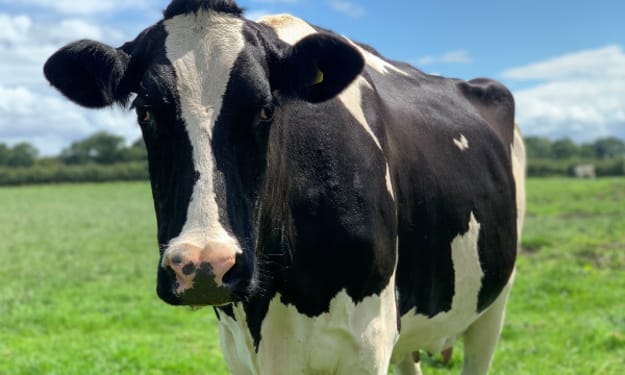
Mooving the Cattle Along
Angus cattle are strongly muscled and have pleasant temperaments. They are one of the top beef cattle breeds in the world, producing high-quality, well-marbled beef. The Black Angus and Red Angus cattle are regarded as two separate breeds of cattle in the USA. In the UK, however, they are both registered under the same herd book as Aberdeen Angus or Angus in either black or red colors. They are said to have been bred from the black cattle of Northeast Scotland, which were known as “hummlies” or “doddies.”
By Rasma Raisters3 months ago in Earth
The climate of Earth is shaped by the buried carbon carried by rivers.
Stories of land and life are carried by every river. It carries dissolved organic matter—bits of carbon from soil, plants, and human activity—into the sea. This material was followed by scientists from China's Nanjing Institute of Environment Sciences and the Institute of Science Tokyo through three rivers that met the Yellow Sea.
By Francis Dami3 months ago in Earth
The temperature of Earth is greatly influenced by tiny ocean shells.
Unbeknownst to us, marine life that forms microscopic calcium carbonate shells contributes to climate regulation. Researchers discovered that existing climate models under-represent the calcifying plankton, which includes coccolithophores, foraminifers, and pteropods, which are plankton-based shell builders.
By Francis Dami3 months ago in Earth
The threats posed by today's melting glaciers are warned about by ancient sea levels.
According to a recent study, the global mean sea level changed significantly during the last Ice Age, not just at its conclusion, which is a significant reexamination of Earth's past. The 4.5 million-year-old work reframes scientists' understanding of ice sheets and climate pace.
By Francis Dami3 months ago in Earth