
The climate of Earth is shaped by the buried carbon carried by rivers.
Carbon is released by river microorganisms.

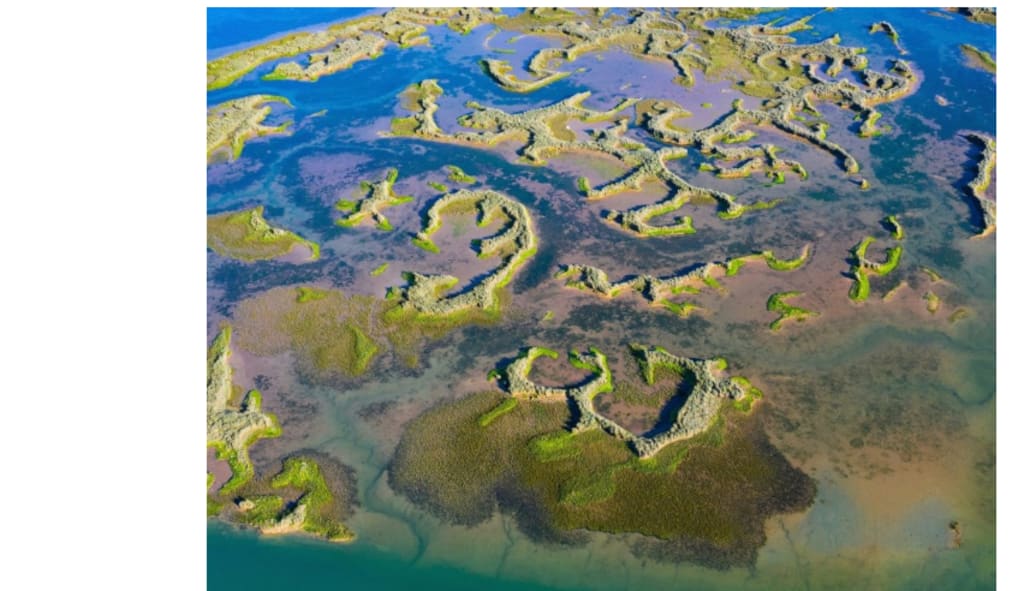
Stories of land and life are carried by every river. It carries dissolved organic matter—bits of carbon from soil, plants, and human activity—into the sea. This material was followed by scientists from China's Nanjing Institute of Environment Sciences and the Institute of Science Tokyo through three rivers that met the Yellow Sea.
Their results demonstrate how seawater, bacteria, and pollution influence greenhouse gas emissions. These rivers serve as climate behaviour test sites. According to the study, even slight changes in the chemistry of the water can alter the amount of carbon that escapes into the atmosphere.
The study reveals a hidden connection between routine human activity and the planet's atmospheric balance by tying land-based pollution to ocean processes.
Carbon in motion
The scientists discovered that rivers contain a lot of carbon from the land. The stiff plant material known as lignin accounted for over three-quarters of the organic stuff that was dissolved. Its content decreased downstream, indicating microbial use and dilution.
The study's lead author, Dr. Chuanqiao Zhou, stated, "This isn't just background noise." It's a huge injection of carbon from areas that have been transformed by humans, such as urban runoff, deforestation, and agriculture. Additionally, it fuels the microbial engines that produce greenhouse gases.
When it rains, this lignin is delivered by runoff from woods and farms. Microbes that break down carbon into carbon dioxide and methane are continuously fed by the steady flow. Calm rivers become unseen contributors to the climate as a result of these gases escaping from the water's surface.
Carbon is released by river microorganisms.
The team of researchers found a vibrant microscopic world. River sediments were dominated by protobacteria, which in some places reached about 70%.
As organic matter is broken down by these bacteria, gases are released. Stronger microbial activity and increased emissions of carbon dioxide, methane, and nitrous oxide were observed in upstream streams, which had more lignin and nutrients.
Proteins and other easily digested organic substances are the food source for microbes, but lignin slows them down. Its intricate structure requires specific enzymes and favourable circumstances in order to break down. Microbial growth slows down and breakdown slows down when salinity increases.
River carbon emissions are slowed by salt.
Emissions decrease and salinity increases as freshwater and saltwater mix. Salt modifies chemical reactions and the way bacteria function. Salinity naturally inhibited the release of nitrous oxide and methane in the Yellow Sea estuaries. According to study co-author Dr. Fei He, "the microbial frenzy fuelled by land-based inputs is dampened as seawater mixes in."
Additionally, higher salt makes lignin more difficult to break down and proteins in the water more stable. According to the study, greenhouse gas emissions steadily decreased as they moved from river sources to estuaries.
Controlling emissions jointly
Here, emissions are primarily controlled by two factors: salinity and terrestrial organic matter. Microbes flourish and gases rise in areas with a lot of carbon generated from the land. Emissions and microbiological activity decrease where seawater predominates.
This pattern demonstrates how rivers and oceans work together to influence the carbon balance of the world. The study draws attention to a sensitive interface where marine chemistry and land contamination collide.
This equilibrium can be tipped, altering the amount of carbon that escapes into the atmosphere, by changes in rainfall, deforestation, or dam construction.
In addition to diluting river water, salinity changes which gases form and rewires microbial metabolism. Regional air quality and global climate feedbacks are impacted by even minor environmental changes that have an impact on ecosystems.
Controlling rivers to reduce emissions
The research combines climate science, ecology, and chemistry into a single narrative. Runoff can be decreased and greenhouse gas emissions can be managed with improved land management. Preserving natural salinity gradients contributes to equilibrium.
Coastal climate policy can be guided by knowledge of how salt and bacteria control these emissions. Governments can use these information to create more intelligent coastal river and estuary monitoring systems. River flow management, fertiliser reduction, and wetland restoration can all have quantifiable effects.
The research also encourages policymakers to include estuaries in national carbon budgets. The global response to climate change can be strengthened by tiny local efforts when scientists and decision-makers collaborate.
Earth's climate is regulated by estuaries.
Estuaries are not peaceful land-sea borders. Carbon is continuously moving between storage and release in these living systems. This study demonstrates how even minor variations in salinity or runoff can have an impact on patterns of the global climate.
The river's trip to the sea is not only beautiful; it also contributes to the rhythm of Earth's climate. The amount of carbon that remains buried and that escapes into the atmosphere is determined by each estuary, which functions as a control valve.
The balance fluctuates as bacteria accelerate or decelerate in response to variations in tides or rainfall. Salt, organic materials, and nutrients mix in diverse ways. In addition to influencing local ecosystems, these minute interactions also shape long-term atmospheric trends.
About the Creator
Keep reading
More stories from Francis Dami and writers in Earth and other communities.
The temperature of Earth is greatly influenced by tiny ocean shells.
Unbeknownst to us, marine life that forms microscopic calcium carbonate shells contributes to climate regulation. Researchers discovered that existing climate models under-represent the calcifying plankton, which includes coccolithophores, foraminifers, and pteropods, which are plankton-based shell builders.
By Francis Dami3 months ago in Earth
Europe Amniotic Membrane Market Size & Forecast 2025–2033
Europe Amniotic Membrane Market Outlook The Europe Amniotic Membrane Market is undergoing a significant transformation as regenerative medicine gains momentum across clinical disciplines. According to Renub Research, the market is projected to grow from US$ 788.42 million in 2024 to US$ 1,892.79 million by 2033, expanding at a CAGR of 10.22% during 2025–2033.
By jaiklin Fanandishabout 8 hours ago in Earth


Comments
There are no comments for this story
Be the first to respond and start the conversation.