
Incredible Dry Tortugas National Park
Wildlife in the park

Located in Florida west of Key West, Dry Tortugas National Park has an abundance of wildlife. It can only be reached by boat or seaplane. This is a favorite among snorkelers and divers. There is lots of wildlife to enjoy, from nesting seabirds to sea turtles to playful dolphins, among others.
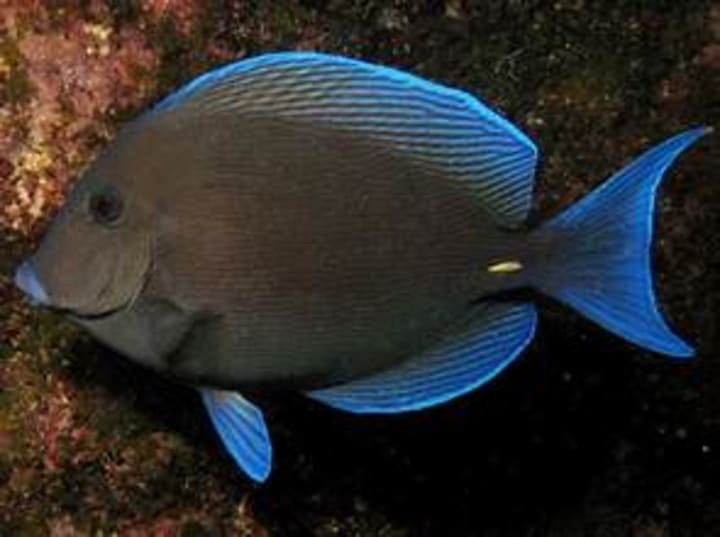
Blue tangs brighten reefs with their vivid blue bodies and yellow tails. These fish are primarily herbivores, feeding on algae and plant matter. They swim about in schools among coral heads. They are a colorful sight for snorkelers and are known for their active swimming and social behavior.
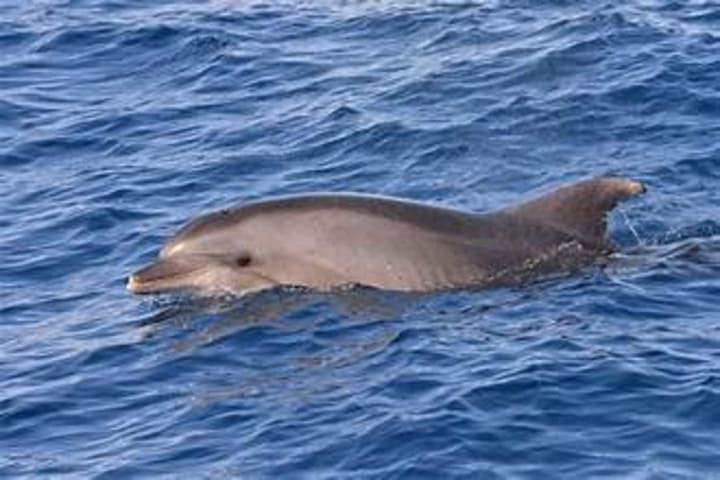
You can see bottlenose dolphins around the islands swimming in pods. These dolphins have a short and well-defined snout that looks like an old-fashioned gin bottle, which is the source of their common name. They chase fish near the surface and bow-ride the wakes of ferries. Bottlenose dolphins primarily eat fish and squid. These dolphins are very social animals.
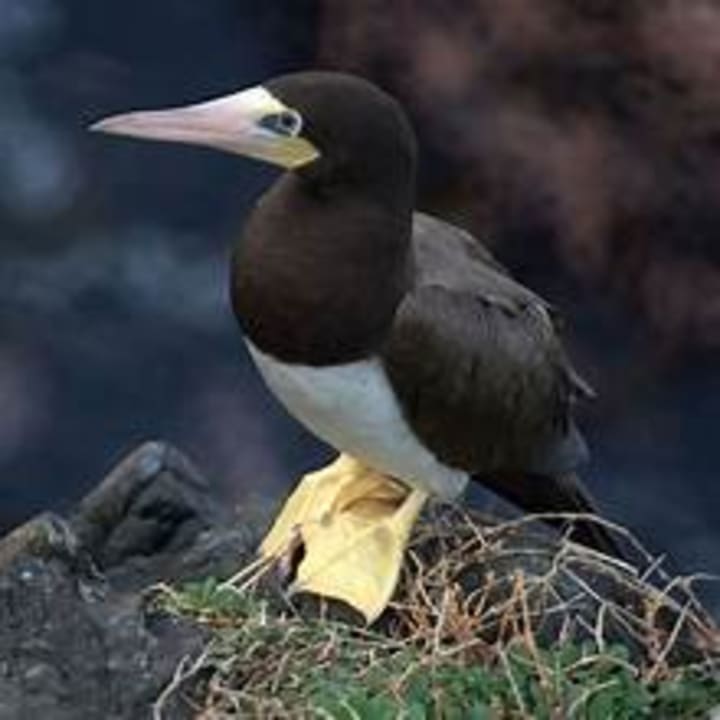
Brown boobies are seabirds known for plunging into the sea after fish. They have chocolate-brown bodies with white bellies and yellow feet. These birds can be seen circling offshore waters or resting on buoys. They are gregarious birds that only nest on the ground and roost on solid objects rather than on the water surface. Brown boobies feed during the day alone or gather in flocks, or in mixed-species flocks with other seabirds or other species of booby. Although brown boobies are powerful and agile fliers, they are particularly clumsy in takeoffs and landings and at times rely on heavy wind to get them going. They have a carnivorous diet, mainly eating small fish, squid, or shrimp that gather near the surface; they may also catch leaping fish while skimming the surface.
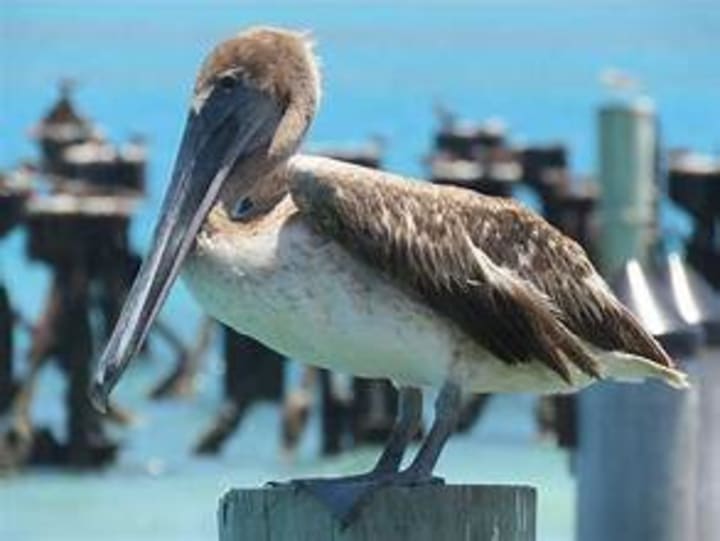
Brown pelicans can be seen plunging headfirst into shallow water or sitting on pilings drying their wings. They nest in colonies and circle beaches all day. They are the smallest of 8 pelican species with white and brown plumage and very long bills. Brown pelicans are very gregarious and live throughout the year in flocks. These birds are primarily carnivores, feeding on fish but will also eat crustaceans such as prawns and occasionally may take amphibians and the eggs and nestlings of birds (e.g., egrets, common murres, and their own species).
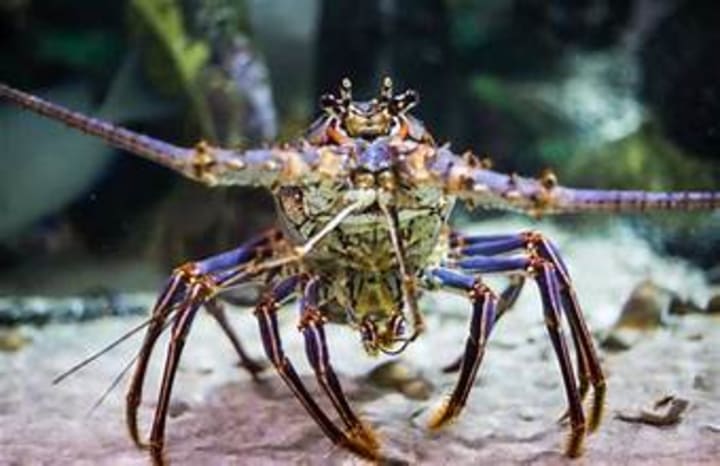
Caribbean spiny lobsters like to hide in reef crevices by day, emerging at night to graze on algae and detritus. They have a reddish-brown shell , marked with occasional dark spots on the body and two large, yellowish-cream-colored spots on the top of the second segment of the tail. Spiny lobsters in coral reefs off Florida and the Bahamas form massive conga lines with up to 50 individuals and migrate to relatively warm water when the first autumn storms stir up the water.
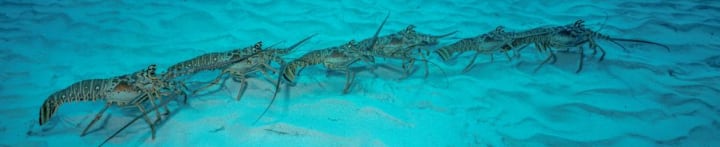
The lobsters march across the sandy sea floor in a single file, head to tail, head to tail, and so on, heading towards deep water where they are safe from the churning water of the storm. They also eat carrion and other organisms like crustaceans, worms, and sea urchins. They are considered omnivores and have been observed occasionally eating vegetation.
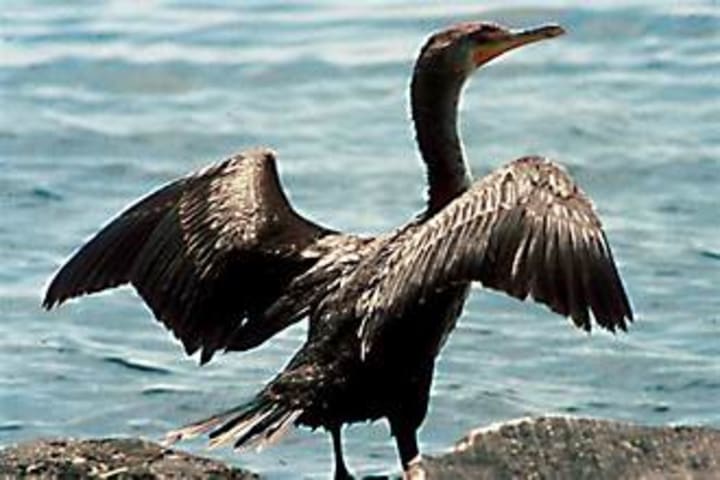
Cormorants are big birds known for diving up to 30 feet to spear fish. Like many other aquatic species, these birds have long, curved necks that they use to reach below the surface to snag fish. They swim with their webbed feet. The flightless cormorant is the largest species of cormorant living today. These birds prefer habitats with rocky cliffs and other suitable nesting habitats but must have the ocean close by to hunt. Cormorants are fish eaters but will also dine on eels, snakes, frogs, crabs, shrimp, and more.
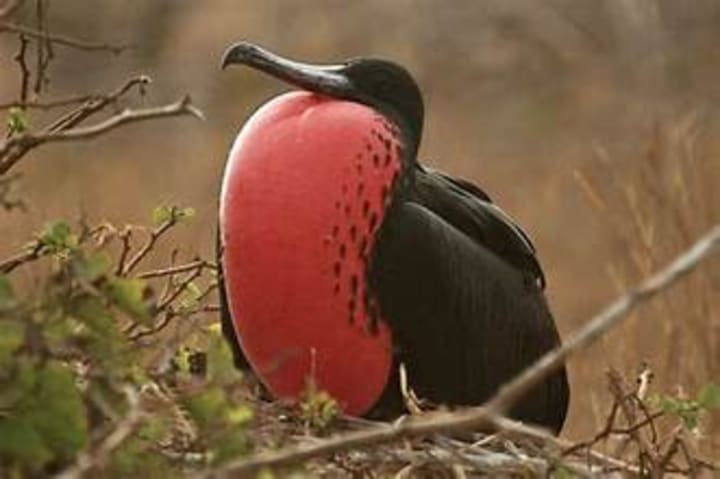
Frigatebirds are known for soaring effortlessly with their forked tails and huge wingspans. All have predominantly black plumage, long, deeply forked tails, and long, hooked bills. Frigatebirds spend most of the day in flight hunting for food and roost on trees or cliffs at night. Their main prey are fish and squid.
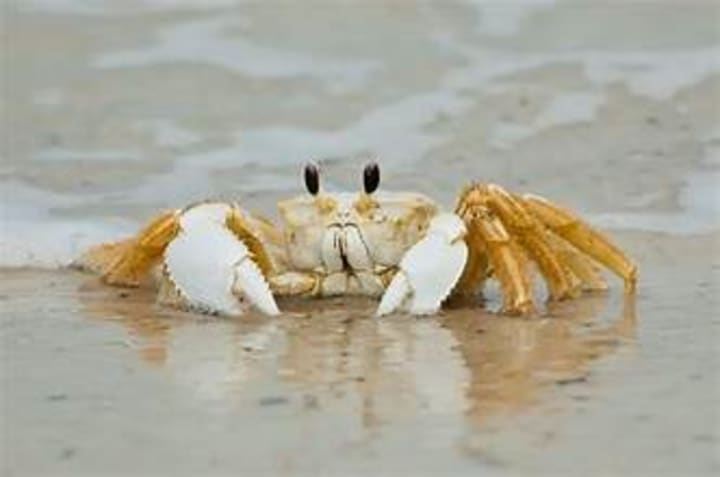
Ghost crabs know how to scuttle quickly across beaches. They have pale bodies that blend in with the sand. They are found in sandy beaches of tropical as well as subtropical coasts. Crabs usually burrow a deep hole to keep themselves cool during the daytime. They are omnivores, feeding on both animals and plants. They can also devour other crabs and detritus and feed on snails, clams, turtle hatchlings, lizards, and small crabs.
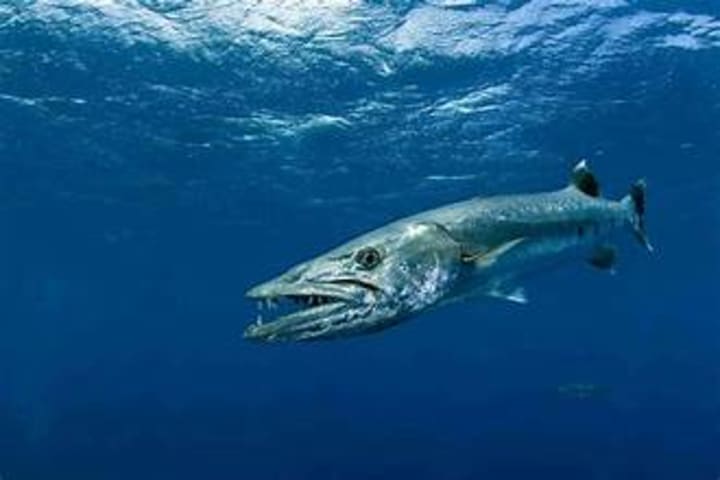
Great barracudas have long, sleek bodies and a mouthful of sharp teeth. These fish hover in open water seeking to seize smaller fish. Barracudas are present all year round, especially near Garden Key and Loggerhead Key. They find refuge in mangroves, deep reefs, and seagrass beds.
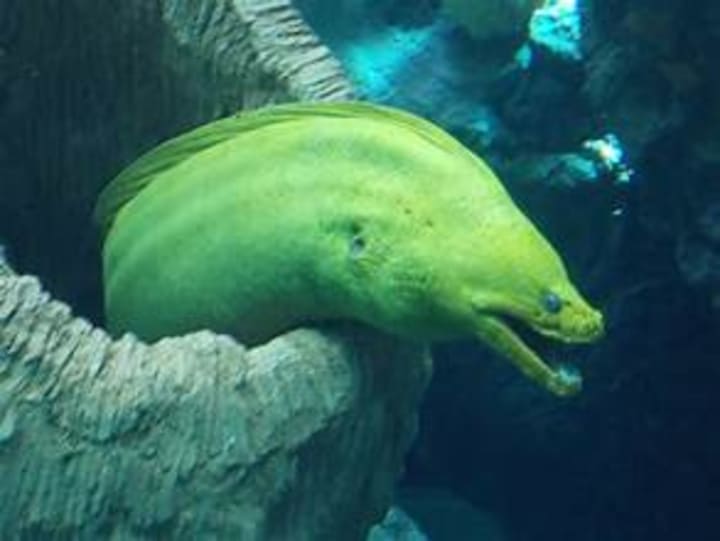
Green moray eels hide in reef crevices with their mucus-covered bodies draped like ribbons among the coral. They have very sharp teeth.
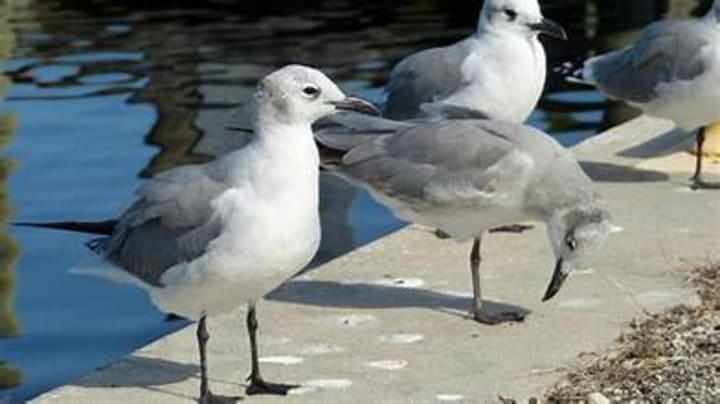
Laughing gulls, with raucous calls and sharp black hoods, swarm beaches and docks in noisy flocks. They are fascinating coastal birds known for their distinctive calls and behaviors. They feed by walking along the beach, by dabbling into the mud, by swimming, or by pecking their prey at the surface during flight. Laughing gulls are opportunistic carnivores and scavengers. They eat mainly fish, shellfish, crabs, mollusks, insects, bird eggs, and young birds. These birds also consume berries, garbage, refuse, and carrion.
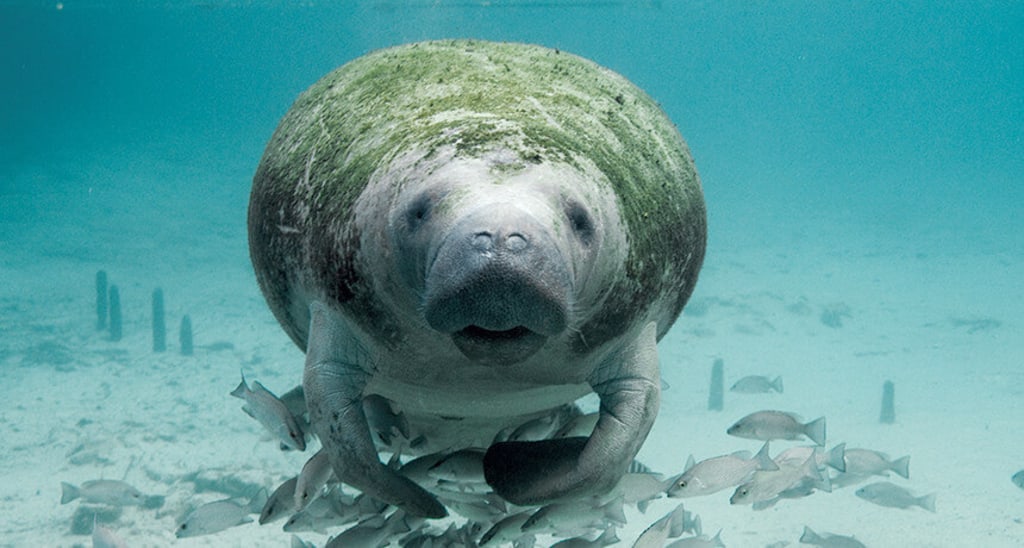
Manatees (pictured above) are gentle giant mammals found in lagoons and canals grazing on water plants. They can eat both freshwater and saltwater plants, including seagrasses, marine algae, manatee grass, sea clover, shoal grass, and turtle grass.
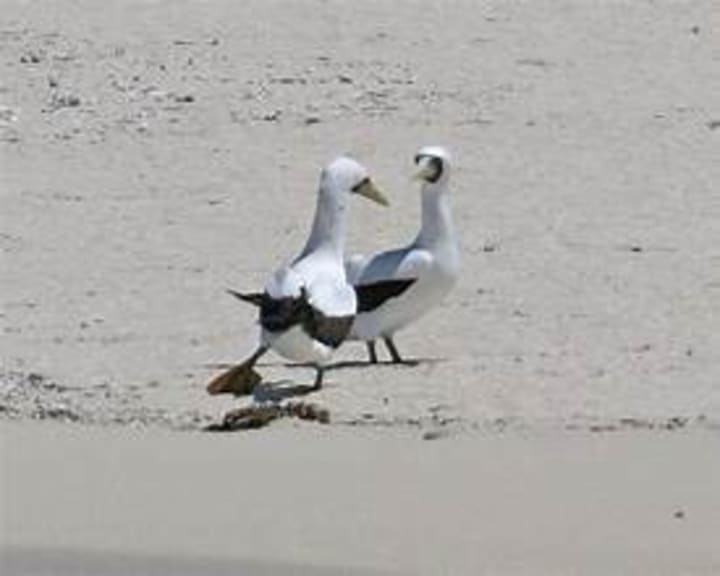
Masked boobies nest on sandy spits in the Tortugas. They have white plumage with black-tipped wings. These birds are great divers that plunge into the ocean at high speed in search of prey. Masked boobies usually spend time alone or in a small group when returning to their colony. During the breeding season, they remain near the colony. They are carnivores, eating a wide variety of fish, particularly flying fish.
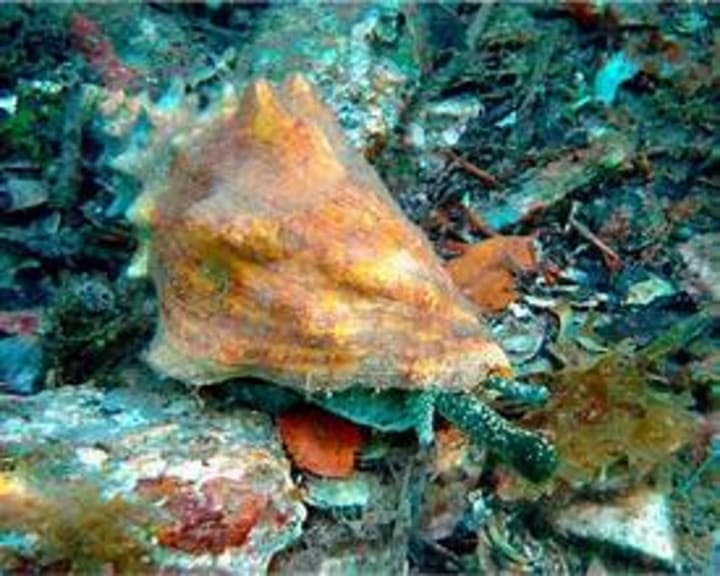
Queen conchs crawl slowly across sandy bottoms and seagrass beds. They leave trails behind in the sand. Their huge shells are pink inside. If you held the shell to your ear, you could hear the sound of the ocean. Conches are protected and have grown into healthy populations.
About the Creator
Rasma Raisters
My passions are writing and creating poetry. I write for several sites online and have four themed blogs on Wordpress. Please follow me on Twitter.
Keep reading
More stories from Rasma Raisters and writers in Earth and other communities.
Mooving the Cattle Along
Angus cattle are strongly muscled and have pleasant temperaments. They are one of the top beef cattle breeds in the world, producing high-quality, well-marbled beef. The Black Angus and Red Angus cattle are regarded as two separate breeds of cattle in the USA. In the UK, however, they are both registered under the same herd book as Aberdeen Angus or Angus in either black or red colors. They are said to have been bred from the black cattle of Northeast Scotland, which were known as “hummlies” or “doddies.”
By Rasma Raisters3 months ago in Earth
Inside Trump's $11 Billion Health Plan to Replace “Neo-Colonial” USAID
In the landscape of global health aid, few proposals have stirred as much debate as former President Donald Trump’s ambitious plan to restructure American assistance abroad. Dubbed an $11 billion health initiative aimed at replacing USAID’s current framework, the plan seeks to pivot away from what Trump and his allies have criticized as the “neo-colonial” approach of U.S. foreign aid. While the plan promises greater efficiency and impact, experts are split on whether it is a practical solution or a politically driven gamble. Trump’s Critique of USAID The United States Agency for International Development (USAID) has long been a central pillar of American foreign assistance, distributing billions in aid annually to address health crises, food insecurity, and development challenges worldwide. However, Trump’s administration and its supporters have often described USAID’s approach as bureaucratic, inefficient, and reflective of a “neo-colonial” mindset. In public statements, Trump argued that the U.S. was spending taxpayer dollars on programs that benefited foreign governments or contractors more than the intended local communities. Critics of the plan say that while USAID has flaws—as any large bureaucracy does—its extensive networks and decades of experience provide an unmatched capacity to deliver aid efficiently and safely. The Core of the $11 Billion Proposal At the heart of Trump’s proposal is an $11 billion fund designed to consolidate, modernize, and streamline U.S. health aid. Unlike the traditional USAID model, which relies heavily on long-term partnerships with governments and NGOs, the new plan emphasizes: Direct Impact Funding: Allocating resources to frontline health workers and local initiatives rather than intermediaries. Data-Driven Investments: Using real-time health data to target outbreaks and crises more efficiently. Private Sector Partnerships: Leveraging U.S. pharmaceutical companies, tech firms, and healthcare startups to deliver vaccines, treatments, and medical infrastructure. Shorter Program Cycles: Moving away from multi-year funding commitments in favor of more flexible, results-oriented programs. Proponents argue that this approach could reduce bureaucratic overhead and ensure U.S. aid reaches communities faster. By “cutting out the middlemen,” Trump supporters claim, America can avoid the pitfalls of slow-moving aid programs that sometimes fail to adapt to crises. Reactions from the Global Health Community Global health experts, however, have expressed concern about both the logistics and philosophy of the plan. Dr. Melissa Ortega, a senior researcher at the Global Health Policy Institute, explained, “The idea of bypassing established structures like USAID may sound appealing on paper, but in practice, it risks undermining decades of institutional knowledge. Health systems are complex, and short-term projects cannot replace long-term capacity building.” Some critics have also questioned the characterization of USAID as “neo-colonial.” While U.S. foreign aid has historically been tied to geopolitical interests, many programs today are designed collaboratively with recipient countries and local organizations. Reducing oversight could unintentionally increase the risk of misuse, corruption, or health inequities. On the other hand, supporters of Trump’s plan point to examples of inefficiency in USAID programs, citing cases where aid was delayed or mismanaged. By introducing more direct funding models, they argue, U.S. taxpayer dollars could achieve a higher “return on health outcomes.” Political Implications Trump’s health aid overhaul proposal is not just about international development—it is also deeply political. Framing USAID as a “neo-colonial” institution resonates with a populist narrative that America should prioritize its own citizens and assert greater control over how taxpayer money is spent abroad. Domestically, the $11 billion plan faces scrutiny from Congress. Lawmakers from both parties have questioned whether dismantling USAID’s systems could destabilize ongoing health programs in countries where the U.S. has long-term commitments. The potential impact on global health security—including the fight against pandemics like COVID-19—adds another layer of concern. Internationally, U.S. allies and partner nations are watching closely. Sudden shifts in aid delivery could disrupt health programs in low- and middle-income countries, many of which rely on predictable funding cycles to maintain vaccination campaigns, maternal health services, and disease surveillance. Possible Benefits and Risks If executed carefully, the Trump-backed model could bring several benefits: Faster Response Times: Direct funding could accelerate delivery of vaccines, treatments, and emergency support. Innovation Boost: By partnering with private sector companies, the plan could accelerate development of new health technologies. Accountability: With performance-based metrics, the plan may better measure the impact of U.S. aid. However, the risks are equally significant: Disruption of Existing Programs: Abrupt changes could destabilize ongoing health projects. Loss of Expertise: USAID’s decades of experience in navigating local governance, supply chains, and community engagement may be hard to replace. Geopolitical Fallout: Allies accustomed to collaborating with USAID might see the move as destabilizing, reducing cooperation on global health initiatives. Looking Ahead As Trump and his allies continue to advocate for this $11 billion overhaul, the debate over the future of U.S. health aid is intensifying. Proponents view it as a necessary modernization of an outdated system, while critics fear it could undercut decades of carefully built infrastructure and global partnerships. Ultimately, the success of this plan will hinge on its ability to balance efficiency with stability, innovation with oversight, and political objectives with humanitarian needs. For now, the proposal remains controversial, representing a dramatic departure from traditional approaches to U.S. foreign aid. Whether it will reshape global health for the better—or simply create more uncertainty—remains to be seen. In the end, the Trump health plan is as much about ideology as it is about dollars. It challenges the conventional wisdom of international development and asks whether a more streamlined, results-focused approach can truly replace a system built over decades. As the world watches, the stakes could not be higher: the future of U.S. global health aid—and the lives it touches—hangs in the balance.
By Muhammad Hassan3 days ago in Earth
Nitrogen is necessary for young tropical rain forests to combat climate change.
By absorbing carbon dioxide from the atmosphere and storing it in wood, tropical rainforests contribute to the slowing of climate change. Forests that develop quickly are even more important because they absorb carbon more quickly.
By Francis Dami2 days ago in Earth



Comments
There are no comments for this story
Be the first to respond and start the conversation.