Hasbanullah
Bio
I write to awaken hearts, honor untold stories, and give voice to silence. From truth to fiction, every word I share is a step toward deeper connection. Welcome to my world of meaningful storytelling.
Stories (110)
Filter by community
The Rise and Fall of Hamnaie
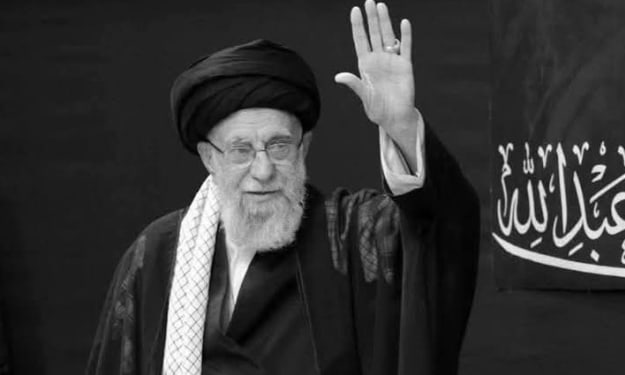
In the complex landscape of Middle Eastern politics, few figures have shaped the course of modern Iran as forcefully as Ayatollah Ali Khamenei. From his early years as a religious student to his long tenure as the Supreme Leader of the Islamic Republic, Khamenei’s story is one of ambition, influence, controversy, and ultimately, dramatic political upheaval. This article explores the arc of his life and leadership—what propelled him to power, how he governed, and the circumstances that led to his fall. Early Life and Ascent Born in 1939 in the small city of Mashhad in northeastern Iran, Ali Khamenei grew up in a devout Shiite Muslim family. From a young age, he showed a deep interest in religious scholarship and spent his formative years studying Islamic jurisprudence and philosophy. His education immersed him in the teachings of Shi’a Islam, shaping his worldview around principles of faith, authority, and the role of religion in public life. Khamenei’s early political involvement grew out of opposition to the secularizing policies of Shah Mohammad Reza Pahlavi. In the 1960s and 1970s, he became known as an articulate and committed critic of the monarchy. His activism brought him into close contact with other leaders of the Iranian revolutionary movement, including Ayatollah Ruhollah Khomeini, whose vision for an Islamic state would soon redefine Iran’s future. The Revolution and Rise to Power The 1979 Iranian Revolution was a watershed moment for both Iran and Khamenei. The overthrow of the Shah ended centuries of monarchical rule and brought religious leadership to the center of political power. Khamenei, now an influential cleric, became a key figure in the newly established Islamic Republic. In the years that followed the revolution, he served in several important roles, including as a representative in the Islamic Consultative Assembly (Iran’s parliament) and as the president of Iran. These positions allowed him to build alliances, consolidate support within religious and political networks, and enhance his reputation as a defender of the Islamic Republic’s ideals. Following the death of Ayatollah Khomeini in 1989, Iran’s Assembly of Experts selected Khamenei to succeed him as Supreme Leader—the highest authority in the country. At 50, he became one of the youngest leaders in the modern Middle East, with control over the military, judiciary, and media, alongside influence over foreign policy and religious institutions. Leadership and Controversy During his decades in power, Khamenei navigated an array of domestic and international challenges. Relations with the West, particularly the United States, remained tense. Internal tensions with reformist movements and demands for greater social freedoms also marked his tenure. Khamenei championed a vision of governance rooted in conservative religious principles, reinforced by a powerful security apparatus and ideological institutions. Supporters viewed him as a steadfast guardian of Iranian sovereignty and Islamic values. They praised his resistance to external pressure and his commitment to maintaining the revolution’s achievements. To many inside Iran and across the region, he symbolized continuity and stability in an era of upheaval. Critics, however, argued that his policies suppressed dissent, limited social freedoms, and isolated Iran economically and diplomatically. Human rights organizations raised concerns about restrictions on free expression, political opposition, and civil society. These internal tensions, combined with international sanctions related to nuclear and regional policies, created persistent pressures on the Iranian state. The Fall of a Leader In early 2026, events unfolded that dramatically altered the political landscape of the Middle East. A military conflict with Israel escalated into a full-scale confrontation involving multiple nations. Reports emerged—confirmed by some international officials—that Ayatollah Khamenei was killed during this conflict. The news sent shockwaves through Iran and beyond. Whether viewed as martyrdom by his supporters or as a dramatic turning point by his critics, Khamenei’s death marked the end of an era. For decades, he had embodied the religious and political identity of the Islamic Republic. His absence has raised urgent questions about the future direction of Iranian governance, the stability of its institutions, and the prospects for peace in a volatile region. Legacy and Future The legacy of Ayatollah Ali Khamenei will be debated for years to come. To many, he was a leader who fiercely protected national sovereignty and religious values. To others, he was a symbol of authoritarianism and missed opportunities for reform. Regardless of perspective, his life underscores the profound influence an individual can wield in shaping the history of a nation. As Iran and the wider world contemplate what comes next, the rise and fall of Khamenei offers lessons about leadership, ideology, and the complex interplay between religion and statecraft in the modern era. If you want, I can also write a shorter version, a social media summary, or an analysis piece on regional impacts of his fall.
By Hasbanullahabout 16 hours ago in Humans
Kashmir Resolution: The Long Search for Peace in South Asia
The Kashmir issue remains one of the longest-running and most complex territorial disputes in modern history. Since the partition of British India in 1947, Kashmir has been a central point of tension between India and Pakistan, influencing regional stability, diplomacy, and global security. Any serious discussion about Kashmir resolution must consider historical roots, international legal frameworks, current geopolitical realities, and potential pathways to peace. Historical Background of the Kashmir Dispute The Kashmir conflict began during the partition of British India into India and Pakistan in 1947. The princely state of Jammu and Kashmir, ruled by a Hindu monarch but with a Muslim-majority population, faced pressure from both newly formed nations. The ruler chose to accede to India, which triggered the first Indo-Pak war. Since then, the region has been divided roughly along the Line of Control (LoC), with parts administered by India and others by Pakistan. Many analysts describe Kashmir as an unfinished chapter of partition, reflecting unresolved political, religious, and national identity issues dating back to 1947. � Le Monde.fr The United Nations became involved early in the dispute. One of the most significant international efforts was UN Security Council Resolution 47 (1948). It proposed a three-step peace process: Withdrawal of external fighters. Reduction of military presence. A plebiscite allowing Kashmiris to decide their political future. � Wikipedia Later UN resolutions, such as Resolution 122 (1957), reaffirmed that unilateral political actions could not be considered a final solution to the dispute. � Wikipe Key Issues Preventing Resolution 1. Conflicting National Positions India maintains that Kashmir is an integral part of its territory. Pakistan argues that Kashmir’s final status should be decided through a referendum based on UN resolutions. This fundamental disagreement has prevented lasting negotiations. 2. Security and Militancy Concerns Both countries accuse each other of supporting instability. Violence and militant attacks often trigger military or diplomatic escalations, making peace talks difficult. Kashmir has repeatedly been described as a “flashpoint” in India-Pakistan relations. Foreign Pol 3. Strategic and Political Importance Kashmir has military, political, and emotional significance for both nations. Domestic politics often influence the narrative around Kashmir, making compromise politically sensitive. Le Monde.fr 4. Water and Resource Disputes The Indus Waters Treaty, signed in 1960, is crucial for regional water security. Recent tensions show how water resources can intensify the conflict. In 2025, actions related to the treaty increased fears of escalation and highlighted the strategic importance of shared rivers. WikipediaRecent Developments and Continuing Tensions The conflict remains active even in modern times. For example, in 2025, a major militant attack triggered military and diplomatic escalation between India and Pakistan. This included airspace closures, treaty tensions, and increased military preparedness. WikipediaLocal political and economic unrest has also affected stability. Protests in Pakistan-administered Kashmir in 2025 highlighted governance challenges and public dissatisfaction, showing that internal political factors also influence the broader dispu. Wikipedia Despite tensions, both sides occasionally express willingness for dialogue, though with different conditions and priorities, reflecting how complex the negotiation landscape remains. Foreign Policy Possible Paths Toward Kashmir Resolution 1. Bilateral Negotiations The Simla Agreement framework emphasizes direct talks between India and Pakistan. Many experts believe sustained bilateral dialogue is the most realistic option. 2. Confidence-Building Measures These may include: Trade cooperation Cultural exchanges Military de-escalation along the LoC Cross-border travel for families Such measures can gradually build trust before larger political agreements. 3. Greater Local Participation Many scholars argue that Kashmiri voices should play a larger role in shaping the future of the region. Including local leadership and civil society groups may help create a more sustainable solution. 4. International Facilitation (If Accepted) Some countries and organizations have offered mediation, but acceptance depends on both India and Pakistan, and currently there is disagreement about third-party involvement. Challenges to Achieving Peace Several major obstacles remain: Strong nationalist sentiment in both countries Security fears and cross-border tensions Nuclear deterrence dynamics increasing global concern Domestic political pressure limiting flexibility These factors mean that any resolution will likely require gradual steps rather than a single major agreement. The Future Outlook The Kashmir issue continues to shape South Asian geopolitics. Experts often emphasize that sustainable peace will require: Political courage Public support in both countries Respect for human rights Economic development in the region Long-term diplomatic engagement While complete resolution remains difficult, history shows that dialogue periods do occur, and even small agreements can reduce tensions and improve daily life for people in the region. Conclusion Kashmir is not just a territorial dispute; it is a complex mixture of history, identity, security, and international law. UN resolutions, bilateral agreements, and diplomatic efforts have all attempted to address the issue, yet lasting peace remains elusive. However, history also shows that conflict and cooperation often exist together. With sustained diplomacy, regional cooperation, and focus on the welfare of the people of Kashmir, a peaceful resolution—though challenging—remains possible in the
By Hasbanullah25 days ago in The Swamp
The Epstein Files: Power, Secrecy, and the Search for Accountability
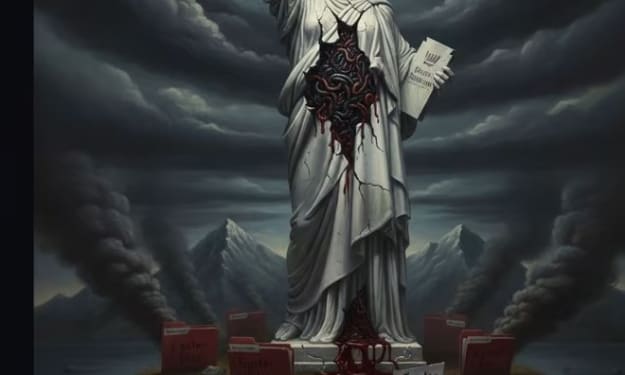
The Epstein Files: Why They Still Matter Years Later The term “Epstein files” refers to a collection of court documents, depositions, emails, flight logs, and legal records connected to Jeffrey Epstein, a wealthy financier whose criminal activities and social connections shook the world. Even years after his death in 2019, the release and discussion of these files continue to raise serious questions about power, accountability, and the justice system. Jeffrey Epstein was arrested multiple times on charges related to the exploitation of underage girls. His case gained global attention not only because of the crimes themselves, but because of the extensive network of influential figures—politicians, business leaders, academics, and celebrities—who were linked to him socially or professionally. The Epstein files became important because they offered a rare glimpse into how wealth and influence can intersect with criminal behavior, often shielding wrongdoing from scrutiny. What Are the Epstein Files? The Epstein files are not a single document, but rather a broad collection of records that emerged through lawsuits, investigative journalism, and court proceedings. Many of these files came to light through civil cases filed by Epstein’s accusers, particularly a defamation lawsuit involving Ghislaine Maxwell, Epstein’s long-time associate. These documents include sworn testimony, witness statements, travel records, and correspondence that reference meetings, trips, and relationships. Importantly, being named in the files does not automatically imply guilt. Many individuals mentioned have denied any involvement in wrongdoing, and legal responsibility must always be determined by evidence and due process. Why Their Release Sparked Public Interest The release of portions of the Epstein files renewed public debate for several reasons. First, they highlighted how Epstein maintained access to powerful circles despite his earlier conviction in 2008. That plea deal, which resulted in a light sentence, is often cited as an example of how the legal system can fail victims when defendants have significant resources. Second, the files fueled concerns about transparency. Many people questioned why certain records remained sealed for years and whether justice was delayed or denied. Survivors and advocacy groups argued that public accountability is essential, not only to address past harm but also to prevent similar abuses in the future. Finally, the Epstein files became a symbol of a larger issue: how systemic inequality can allow serious crimes to remain hidden. The case forced institutions—including courts, law enforcement agencies, and elite organizations—to face uncomfortable questions about their roles. Ghislaine Maxwell and Legal Outcomes In contrast to Epstein, who died before standing trial, Ghislaine Maxwell faced criminal prosecution. She was convicted for her role in facilitating and enabling Epstein’s abuse. Her conviction marked a significant moment for survivors, demonstrating that accountability was still possible even after Epstein’s death. However, many critics argue that justice remains incomplete. They point out that no other high-profile figures connected to Epstein have faced criminal charges related to his activities. This gap continues to drive public interest in the files and keeps the story alive in media discussions. Media Responsibility and Misinformation One of the challenges surrounding the Epstein files is misinformation. Social media has amplified speculation, conspiracy theories, and unverified claims. Responsible reporting is essential to separate documented facts from rumors. Journalists and readers alike must approach the files critically, recognizing that legal documents often contain allegations that were never tested in criminal court. Misinterpreting or exaggerating these records can harm innocent individuals and distract from the real issue: the documented abuse and the failures that allowed it to continue. Why the Epstein Files Still Matter The Epstein files matter because they represent more than one individual’s crimes. They expose weaknesses in legal systems, demonstrate how victims can be silenced, and show how power can distort justice. For survivors, the files are a record of their courage in coming forward. For the public, they are a reminder that accountability should not depend on wealth or influence. As discussions continue, the focus should remain on institutional reform, survivor support, and ethical journalism. The Epstein case may never have a fully satisfying conclusion, but its lessons are clear. Transparency, vigilance, and equal application of the law are essential to prevent similar abuses from happening again.“This article examines publicly available court records and reporting to explore why the Epstein files remain relevant today.”
By Hasbanullah28 days ago in Journal
Jack the Giant Slayer 2: The Sky Scrapers
Fantasy cinema has always thrived on the idea of scale — towering monsters, heroic odds, and worlds far larger than ourselves. Jack the Giant Slayer 2: The Sky Scrapers takes that idea to a bold new level by dragging ancient myth straight into the heart of the modern city. Imagined as a high-stakes sequel to the 2013 fantasy adventure Jack the Giant Slayer, this concept explores what happens when fairy-tale giants are no longer confined to medieval kingdoms, but instead rise among steel towers, glass skylines, and crowded streets. The result is a striking fusion of classic folklore and contemporary disaster spectacle — a story that feels part myth, part apocalypse. A New World, A Bigger Threat Unlike the original film, which unfolded in a medieval fantasy setting filled with castles and clouds, The Sky Scrapers reimagines the conflict on a global scale. Giants are no longer distant creatures from legend — they are immediate, unstoppable forces clashing with modern civilization. Skyscrapers replace castle walls, fighter jets replace archers, and city streets become battlefields. The imagery alone tells a powerful story: massive armored giants striding through urban chaos, iconic landmarks crumbling under their weight, and ordinary people caught between myth and modernity. The giants feel less like fantasy creatures and more like natural disasters — earthquakes with fists. This tonal shift gives the sequel concept a darker, more urgent atmosphere. The film isn’t just about defeating monsters; it’s about survival in a world that suddenly realizes its technology may not be enough. Familiar Faces in an Unfamiliar Reality The poster imagery suggests the return of key characters portrayed by Nicholas Hoult, Anya Taylor-Joy, and Stanley Tucci, now placed in a contemporary setting rather than a fairy-tale kingdom. This contrast strengthens the emotional core of the story. Jack is no longer just a farm boy turned hero — he is a man haunted by a past the world believed was only a legend. Isabelle evolves from a princess into a symbol of resilience, bridging the old world and the new. Meanwhile, Tucci’s character archetype fits naturally into a modern narrative of political ambition, secrecy, and moral compromise when faced with extinction-level threats. Their grounded performances would be essential in selling such an ambitious crossover, anchoring the spectacle in human fear, courage, and responsibility. Themes Beneath the Spectacle While the film leans heavily into large-scale destruction and visual awe, its underlying themes are surprisingly relevant. The Sky Scrapers explores humanity’s overconfidence in technology, the danger of ignoring ancient warnings, and the idea that progress does not erase the past — it simply builds over it. The giants symbolize consequences long buried and forgotten. They are not merely villains, but reminders that some forces cannot be controlled, only respected. In that sense, the film echoes modern anxieties about climate change, unchecked power, and humanity’s fragile dominance over the world it believes it owns. Visual Scale and Cinematic Ambition Visually, the concept promises a stunning blend of fantasy design and modern disaster filmmaking. The contrast between glass skyscrapers and stone-armored giants creates unforgettable imagery. Explosions feel smaller when compared to creatures that can topple buildings with a single step, and that imbalance is exactly what makes the spectacle so effective. The camera work imagined for such a film would favor wide shots, emphasizing scale and helplessness, while close-ups focus on human reactions — fear, disbelief, and determination. A Bold Direction for Fantasy Cinema Jack the Giant Slayer 2: The Sky Scrapers represents an exciting “what if” for the fantasy genre. By merging folklore with a contemporary setting, it challenges traditional boundaries and invites a wider audience — including fans of action, disaster films, and modern sci-fi thrillers. Though imagined as a sequel, the concept stands on its own as a commentary on legends reawakening in an age that no longer believes in them. It asks a simple but chilling question: What if the stories were never meant to stay stories? Final Thoughts Whether viewed as a conceptual sequel or a cinematic thought experiment, The Sky Scrapers captures the kind of ambition modern fantasy needs — fearless scale, emotional grounding, and thematic depth beneath its explosive surface. It reminds us that myths endure not because they are old, but because they still have something to warn us about. In a world obsessed with the future, this film concept suggests the past may yet come crashing down — quite literally.
By Hasbanullahabout a month ago in The Swamp
Girolamo Segato: The Scientist Who Turned Humans into Stone
The Mysterious Italian Genius Behind the Art of Human Petrification Girolamo Segato remains one of the most mysterious scientists of the 19th century, remembered not only for his scientific brilliance but also for a secret he took to his grave. Born in 1792 in Italy, Segato gained worldwide attention for achieving something that still puzzles scientists today: he discovered a method to turn human and animal body parts into stone-like fossils while preserving their detailed structure. Unlike mummification, Segato’s process created specimens that looked and felt like real stone, yet retained the microscopic details of living tissue. Early Life and Education Girolamo Segato was born in the small town of Sospirolo, near Belluno, Italy. From an early age, he showed a deep interest in science, anatomy, and natural history. He studied engineering and anatomy and later became involved in archaeological and scientific research. His curiosity eventually led him to Egypt, where he spent several years studying ancient civilizations, mummification techniques, and geological formations. Segato was deeply inspired by ancient Egyptian preservation methods, but he believed there was a way to go beyond traditional embalming. His goal was not just to preserve bodies but to transform organic tissue into an inorganic, stone-like substance. The Discovery of Human Petrification After returning to Italy, Segato began experimenting with human and animal remains. Over time, he developed a secret chemical process that allowed him to petrify body parts such as hands, feet, heads, and internal organs. These specimens were not dried or decayed. Instead, they became hard like marble or stone, resistant to time, moisture, and decay. What made Segato’s work extraordinary was the level of detail preserved. Veins, muscles, skin texture, and even facial expressions were visible in the petrified remains. Scientists who examined these objects noted that they were neither mummified nor fossilized through natural processes. They appeared to be something entirely new. Public Reaction and Fear Although Segato’s discovery was groundbreaking, it was also deeply unsettling to many people. In 19th-century Europe, turning human remains into stone was seen by some as unnatural or even blasphemous. Religious authorities and conservative groups accused Segato of practicing forbidden science. Because of this backlash, Segato struggled financially and socially. He tried to sell his method to scientific institutions, but fear and suspicion prevented widespread acceptance. Many people admired his work privately but were unwilling to support him publicly. The Secret That Died With Him One of the greatest mysteries surrounding Girolamo Segato is that he never revealed his petrification formula. Whether due to fear, mistrust, or lack of support, Segato chose to keep his process secret. When he died in 1836, the knowledge died with him. Today, no scientist has been able to fully replicate his results. Despite advances in chemistry and material science, Segato’s exact technique remains unknown. This has led to speculation ranging from lost chemical knowledge to deliberate secrecy caused by persecution. Preserved Works Today Some of Segato’s petrified specimens still exist and can be seen in museums in Florence, Italy, particularly at the Museum of the Basilica of Santa Croce. These stone-like human remains continue to attract researchers, historians, and visitors from around the world. Modern scientific analysis confirms that these objects are real human tissues transformed into a mineralized state. However, the precise chemical reactions involved remain unclear, adding to Segato’s legend. Legacy and Scientific Importance Girolamo Segato’s work challenges the boundary between life and stone, biology and geology. His experiments raise important questions about preservation, material transformation, and the ethics of scientific discovery. Although controversial, his research was far ahead of its time and continues to inspire curiosity. Some experts believe Segato’s work could have applications in modern science, such as long-term biological preservation, archaeology, or even medical research. Others view his story as a warning about how society sometimes rejects revolutionary ideas out of fear. Conclusion Girolamo Segato was not a madman, nor a magician. He was a scientist whose discovery frightened the world around him. By turning human tissue into stone, he achieved something that remains unexplained nearly two centuries later. His life is a powerful reminder that scientific progress often walks hand in hand with controversy. Though his secret is lost, Girolamo Segato’s legacy lives on—etched in stone, silent yet enduring, challenging humanity to question what is truly possible.
By Hasbanullah2 months ago in History
Hind Rajab: A Child the World Heard Too Late
Cinema has always been a powerful medium for telling stories that history books often reduce to numbers. When a film chooses to focus on a single child caught in the machinery of war, it forces audiences to confront reality not as statistics, but as human loss. The movie inspired by the tragic story of Hind Rajab, a young Palestinian girl, does exactly that. It is not merely a film; it is a testimony, a memorial, and a question posed to the conscience of the world. Hind Rajab’s name became known globally after reports emerged of her final hours during the Gaza conflict. She was a child trapped in circumstances no child should ever experience. The film based on her story does not sensationalize her death, nor does it turn her suffering into spectacle. Instead, it approaches her story with restraint, dignity, and an unwavering focus on innocence lost amid violence. The Story at the Heart of the Film The movie centers on a young Palestinian girl who becomes separated from safety during intense military escalation. Through her eyes, viewers witness fear, confusion, and the fragile hope that someone, somewhere, will come to help. The film follows her final journey—both physical and emotional—using minimal dialogue and powerful visual storytelling. Rather than relying on graphic imagery, the filmmakers choose silence, pauses, and close-up shots to convey terror and vulnerability. This artistic choice makes the film even more haunting. The audience is left to sit with the child’s fear, her calls for help, and the unbearable waiting that defines her final moments. By focusing on Hind as an individual rather than a symbol, the film restores her humanity. She is not portrayed as a political tool, but as a daughter, a child with dreams, and a life that mattered. A Child as the Center of a Global Tragedy What makes this movie particularly impactful is its refusal to shift focus away from the civilian cost of war. The story does not revolve around soldiers, strategies, or power struggles. It revolves around a child who should have been worried about school, friends, and play—not survival. This narrative choice challenges the audience to rethink how conflicts are discussed in media and politics. Wars are often framed in terms of borders, ideologies, and victory. This film asks a different question: What is the price paid by those who have no role in choosing the war? By centering the story on Hind, the film exposes the imbalance of power and the devastating consequences faced by the most vulnerable. Artistic Direction and Emotional Weight The film’s direction is deliberately restrained. There is no dramatic background score overpowering the scenes. Instead, ambient sounds—distant explosions, static-filled phone calls, the quiet breathing of a frightened child—carry the emotional weight. This realism makes the film deeply unsettling. The young actress portraying Hind delivers a performance that is heartbreakingly authentic. Her expressions alone communicate fear, confusion, and bravery far beyond her years. The filmmakers avoid overacting or melodrama, allowing the story’s truth to speak for itself. Cinematography plays a crucial role as well. Tight frames and limited perspectives reinforce the feeling of entrapment, while long, unbroken shots force viewers to experience time as Hind did—slow, uncertain, and terrifying. A Political Film Without Political Speeches One of the film’s greatest strengths is that it does not rely on speeches or overt political messaging. Its power lies in its simplicity. By telling one child’s story honestly, it exposes the broader reality of civilian suffering in conflict zones. The film does not tell audiences what to think. Instead, it asks them to feel—and that is far more powerful. Viewers are left to grapple with difficult questions about responsibility, accountability, and the value of human life. This approach has made the movie resonate across cultures and ideologies. Even those unfamiliar with the details of the Palestinian struggle can connect with the universal themes of childhood, fear, and loss. Reception and Global Impact Since its release, the film has sparked intense discussion on social media, in film circles, and among human rights advocates. Many viewers describe it as one of the most emotionally challenging films they have ever watched. Critics have praised its ethical storytelling and refusal to exploit tragedy. For many, the movie serves as an entry point into understanding the human cost of the Gaza conflict. It has been screened at independent film festivals and community events, often followed by discussions about civilian protection and children in war zones. Most importantly, the film ensures that Hind Rajab’s name is not forgotten. In a world where news cycles move quickly, cinema has given her story permanence. Why This Film Matters This movie matters because it stands against normalization of suffering. It reminds us that behind every headline about war are real people, real families, and real children whose lives are forever altered—or ended. By immortalizing Hind Rajab’s story, the film becomes an act of resistance against silence. It insists that her life had meaning and that her death deserves acknowledgment, reflection, and accountability. In the end, this is not just a film about one Palestinian girl. It is a film about every child trapped in conflict, every unanswered call for help, and every moment when humanity fails its youngest members. Cinema cannot undo tragedy, but it can refuse to let it be ignored. And in doing so, this film ensures that Hind Rajab’s story continues to speak—long after the screen fades to black.
By Hasbanullah2 months ago in Humans
Muammar al-Qaddafi: The Desert Revolutionary Who Ruled Libya for 42 Years
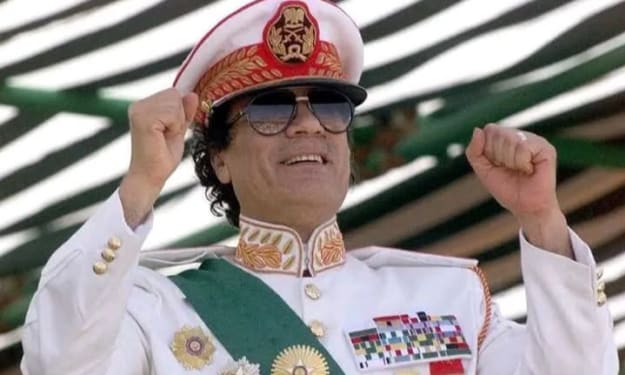
Muammar al-Qaddafi was born into a Bedouin family of the small al-Qadhadhfa tribe in the harsh environment of the Libyan desert. His early years were marked by poverty and traditional nomadic life—sleeping in tents, caring for livestock, and attending a local primary school in Sabha. From a young age, Qaddafi was deeply influenced by the sweeping changes in the Arab world, especially the rise of Arab nationalism championed by Egyptian leader Gamal Abdel Nasser. This ideology, centered on unity among Arab states and resistance to colonial influence, would shape his worldview throughout his life. � Pakistan Times +1 Qaddafi continued his education, moving between schools in Misrata and Sabha and showing early signs of political activism. During his studies he organized protests supporting Arab nationalist causes, including opposition to the dissolution of the short-lived United Arab Republic between Egypt and Syria. Expelled from school at one point for his activism, he eventually enrolled in the military academy in Benghazi, where he joined a group of young officers harboring revolutionary ambitions. � Pakistan Times +1 The 1969 Coup: From Officer to Leader On September 1, 1969, at the age of just 27, Qaddafi and a small group of junior military officers executed a swift and bloodless coup that overthrew King Idris I, who had ruled the newly independent Libya since 1951. The king was abroad for medical treatment, and the coup leaders seized the moment, abolishing the monarchy and declaring Libya a republic. Qaddafi was immediately named chairman of the Revolutionary Command Council and commander-in-chief of the armed forces—positions that gave him de facto control of the country. � Encyclopedia Britannica Once in power, Qaddafi moved quickly to assert Libya’s independence from Western influence. He ordered the removal of U.S. and British military bases from Libya and nationalized the country’s oil industry, which was dominated by foreign companies. He also expelled many Italians and Jews from Libya, echoing his brand of strict Islamic principles and fierce opposition to colonial legacy. � Encyclopedia Britannica Domestic Policies and The Green Book Qaddafi sought to reshape Libya’s society through a blend of Islamic socialism and revolutionary populism. In 1973 he published his influential manifesto, The Green Book, outlining his ideas of direct democracy, economic redistribution, and rejection of traditional political parties and institutions. According to Qaddafi, power should reside in people’s committees and popular congresses rather than centralized state structures. � Encyclopedia Britannica In practice, these reforms were a mixture of radical inclusivity and strict authoritarian control. Healthcare and education were made widely accessible, and Libya’s vast oil revenues funded ambitious development projects. But political dissent was ruthlessly suppressed, freedom of speech was virtually nonexistent, and secret police kept tight control over public life. While some Libyans benefited from state welfare, many others lived in fear of arbitrary detention and persecution. � Encyclopedia Britannica International Relations and Global Controversies Qaddafi’s ambitions were not confined to Libya. He positioned himself as a voice of anti-imperialism, supporting revolutionary movements and opposition groups across the globe, from the Irish Republican Army in Europe to radical organizations in the United States. These policies often brought Libya into direct conflict with Western powers. In 1986, U.S. aircraft bombed Qaddafi’s compound in Tripoli in retaliation for Libya’s alleged involvement in terrorist activities, killing several of his family members. � Encyclopedia Britannica Perhaps the most notorious international incident linked to Qaddafi was the bombing of Pan Am Flight 103 over Lockerbie, Scotland, in 1988, which killed 270 people. Libya’s alleged role in the tragedy led to years of United Nations and Western sanctions that isolated the regime. Although Libya later handed over suspects for trial and sanctions were gradually lifted in the early 2000s, the episode cemented Qaddafi’s reputation in the West as a sponsor of terrorism. � Encyclopedia Britannica The Arab Spring and the Fall of a Regime In 2011, inspired by uprisings in Tunisia and Egypt, Libyans took to the streets in protest against Qaddafi’s rule. What began as peaceful demonstrations quickly escalated into a full-scale civil conflict as government forces attempted to crush dissent with brutal force. The international community, alarmed by reports of mass atrocities, authorized a NATO intervention to protect civilians. After months of fighting, rebels captured Tripoli and later Qaddafi’s hometown of Sirte. On October 20, 2011, Qaddafi was killed by rebel fighters, bringing an end to his 42-year rule. � Encyclopedia Britannica +1 Legacy: A Leader of Contrasts Muammar al-Qaddafi’s life remains deeply contested. To some, he was a visionary revolutionary who challenged Western dominance and tried to uplift his people through welfare and development. To others, he was a ruthless autocrat whose regime was marked by repression, human rights abuses, and international provocation. His death did not bring immediate peace to Libya—rather, the country has struggled with instability and factional violence in the years since. Yet the debates over his legacy continue, reflecting the complex and often contradictory nature of his life and rule.
By Hasbanullah2 months ago in History
America and Venezuela: How Decades of Tension Turned Into Open Confrontation
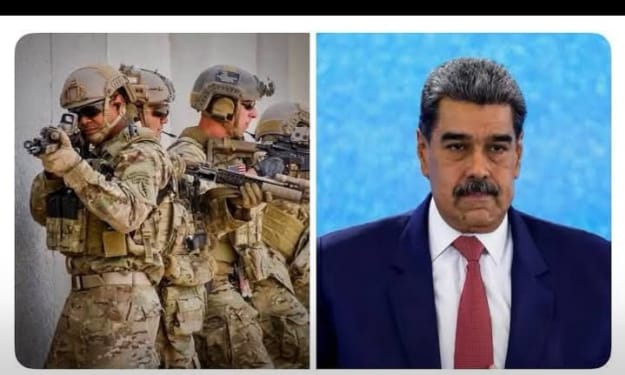
relationship between the United States and Venezuela has entered one of the most volatile periods in recent history, characterized by escalating tensions, military operations, diplomatic rupture, and international debate. What began as long-standing political and economic disagreement has now evolved into an open confrontation that carries major implications for regional stability, international law, and global geopolitics. Historical Roots of Tension The U.S.–Venezuela relationship has been fraught for decades, shaped by ideological differences, energy politics, and mutual distrust. Venezuela’s oil wealth historically made it a key partner for Washington, particularly throughout the 20th century. However, relations began cooling significantly in the late 1990s and early 2000s after Hugo Chávez rose to power with a project rooted in Bolivarian socialism and resistance to U.S. influence. Over the years, successive Venezuelan administrations under Chávez and later Nicolás Maduro adopted increasingly antagonistic foreign policies toward the United States, while the U.S. grew critical of Venezuela’s democratic backsliding and human rights record. The result was a heavily polarized bilateral relationship, with occasional cooperation overshadowed by frequent clashes, sanctions, and accusations of interference. These structural tensions widened after Venezuela’s disputed 2024 presidential election. The United States and several Western countries rejected the legitimacy of Nicolás Maduro’s victory, citing fraud and lack of transparency. Washington instead recognized opposition leader Edmundo González as interim president, deepening the diplomatic rupture at a time when both nations already had limited official channels of communication. � Encyclopedia Britannica +1 2025: From Sanctions to Military Escalation 2025 marked a dramatic escalation in the U.S.–Venezuelan conflict. Early in the year, the United States intensified pressure on Caracas through a combination of severe sanctions, economic coercion, and targeted counter-narcotics actions. The Trump administration designated Venezuela’s ruling elite and alleged criminal networks—most notably the so-called “Cartel de los Soles”—as terrorist organizations, a step that expanded U.S. legal authority to pursue punitive measures against individuals and assets linked to the Venezuelan government. � CRBC News These sanctions coincided with a significant military buildup in the Caribbean. Beginning in mid-2025, the United States deployed thousands of personnel, warships, aircraft, and surveillance assets near Venezuelan waters in an operation officially framed as a counter-narcotics and maritime security campaign. U.S. officials described these measures as necessary to disrupt smuggling networks and cartel operations alleged to be operating with Venezuelan complicity. Critics, however, interpreted the moves as coercive acts that blurred the line between counter-drug missions and preparations for conflict. � RTVE Throughout 2025, U.S. forces carried out a series of lethal maritime strikes on vessels in the Caribbean and eastern Pacific, which Washington claimed were involved in transporting drugs toward the United States. These operations reportedly resulted in dozens of deaths and drew harsh criticism from human rights organizations and foreign governments who condemned them as disproportionate and in violation of international norms. � Encyclopedia Britannica Oil Seizures and Naval Blockade Compounding the tension were dramatic economic and naval measures. In December 2025, U.S. forces seized a Venezuelan-linked oil tanker, accusing it of carrying sanctioned oil destined for unauthorized markets. Shortly afterward, President Trump announced a “total and complete blockade” of sanctioned Venezuelan tankers entering or exiting the country, a step aimed at crippling Venezuela’s oil-dependent economy and cutting off the government’s primary source of revenue. Venezuela denounced these actions as “piracy” and called on international bodies to condemn what it saw as blatant theft and aggression. � Wikipedia +1 Such measures intensified the humanitarian and economic crisis in Venezuela, where hyperinflation, shortages of basic goods, and a collapsed healthcare system already plagued the population. Critics of U.S. policy argue that the blockade’s economic impact disproportionately affects ordinary Venezuelans, exacerbating suffering without offering a clear path to political resolution. The 2026 Military Operation and Capture of Maduro The culmination of these escalating tensions occurred on January 3, 2026, when U.S. special operations forces conducted a high-profile raid in Caracas, capturing President Nicolás Maduro and his wife, Cilia Flores. The operation, described by critics as a violation of national sovereignty and international law, involved coordinated airstrikes and a covert helicopter insertion into Venezuelan territory. Maduro was transported to New York to face charges related to alleged drug trafficking and “narcoterrorism.” � AP News +1 President Trump proclaimed the raid a major victory, asserting that it would allow the United States to “run” Venezuela and stabilize the country, even opening the door for American oil companies to reenter the market. Yet, the legal basis for the operation remains fiercely disputed, and many observers liken it to the 1989 U.S. invasion of Panama. Venezuela’s vice president, Delcy Rodríguez, was appointed interim president by Caracas’s high court, but the country remains deeply divided, with ongoing protests and resistance from segments of the military. � The Guardian International Reaction and Future Prospects The global response has been sharply divided. Many Latin American countries, along with major powers like Russia and China, condemned the U.S. action as an unlawful intervention and breach of sovereignty. The United Nations has raised concerns about setting a dangerous precedent that could undermine international law and regional stability. Some European nations have called for de-escalation and respect for diplomatic solutions. � TIME As of early 2026, the future of U.S.–Venezuela relations is uncertain. Both nations stand at a crossroads: the United States insists it is acting to combat drug trafficking and restore democratic norms, while Venezuela decries foreign aggression and an attempt at regime change. The profound mistrust built up over years of political antagonism will make dialogue difficult, and the deepening humanitarian crisis adds urgency to finding pathways toward peace. In an era marked by rising geopolitical competition and domestic polarization, the U.S.–Venezuela conflict serves as a stark reminder of how historical grievances, economic interests, and ideological divides can spiral into open confrontation with ramifications far beyond their borders. If you’d like, I can tailor this further for a specific audience or format (e.g., blog style, opinion piece, or news report).
By Hasbanullah2 months ago in Criminal
Mary Christmas: A Season of Love, Hope, and Togetherness
“Mary Christmas”—often written or spoken as “Merry Christmas”—is more than just a seasonal greeting. It is a phrase filled with warmth, tradition, faith, and human connection. Across cultures and continents, Christmas is celebrated as a time of joy, generosity, reflection, and togetherness. Whether observed as a religious holiday or a cultural festival, Christmas carries a universal message: love, peace, and kindness matter.
By Hasbanullah3 months ago in Humans
The Day That Changed Pakistan Forever
On December 16, 2014, Pakistan experienced one of the darkest days in its history. The attack on the Army Public School (APS) in Peshawar was not just an assault on a school building; it was an attack on innocence, education, and the future of an entire nation. Even years later, the memory of that tragic day remains deeply etched in the collective consciousness of Pakistan. The APS attack reshaped national priorities, policies, and emotions, leaving behind grief, courage, and a renewed determination to fight extremism.
By Hasbanullah3 months ago in Humans
The Man Who Mailed Himself to Freedom: The Astonishing Journey of Henry “Box” Brown
In the long, painful history of slavery in America, many stories of courage were buried, forgotten, or overshadowed by the brutality of the era. Yet among these countless untold stories, one stands out not only for its daring but for its pure, imaginative brilliance. It is the unforgettable tale of Henry “Box” Brown, the man who shipped himself across states in a wooden crate to claim his freedom.
By Hasbanullah3 months ago in History
The Salute That Broke a Nation’s Heart
The sun was bright, almost uncomfortably so, on the morning when the officer stepped forward in full uniform. The crisp blue fabric, the gleaming badges, the medals pinned neatly to the chest—everything about the uniform spoke of discipline, duty, and decades of service. But the officer’s trembling hands and tear-filled eyes spoke of something far deeper: a heartbreak the world could barely imagine.
By Hasbanullah3 months ago in Confessions