Nature
The temperature of Earth is greatly influenced by tiny ocean shells.
Unbeknownst to us, marine life that forms microscopic calcium carbonate shells contributes to climate regulation. Researchers discovered that existing climate models under-represent the calcifying plankton, which includes coccolithophores, foraminifers, and pteropods, which are plankton-based shell builders.
By Francis Dami3 months ago in Earth
The threats posed by today's melting glaciers are warned about by ancient sea levels.
According to a recent study, the global mean sea level changed significantly during the last Ice Age, not just at its conclusion, which is a significant reexamination of Earth's past. The 4.5 million-year-old work reframes scientists' understanding of ice sheets and climate pace.
By Francis Dami3 months ago in Earth
Oil Spill Solutions: Innovations in Prevention & Response. AI-Generated.
The global energy sector cannot afford the cost, the environmental destruction, or the negative public opinion that follows a major maritime disaster. While the memory of past spills remains a painful reminder, the technology and strategies used to prevent and respond to them have changed dramatically. The fact is, simply cleaning up oil with booms and skimmers is a decades-old concept. Today’s focus is on proactive Oil Spill Solutions, using advanced materials, AI, and even microbiology to manage risk. In 2024 alone, ten significant tanker spills occurred, resulting in approximately 10,000 tonnes of oil lost to the environment, confirming the continuing, acute need for better systems.
By Devin Rosario3 months ago in Earth
India Organic Food Market Set to Reach USD 21.99 Billion by 2033: A Healthier Future Takes Root. AI-Generated.
The Organic Revolution in India India’s organic food market is undergoing a transformation that mirrors the nation’s evolving lifestyle and consciousness. According to Renub Research, the India Organic Food Market is projected to reach USD 21.99 billion by 2033, up from USD 8.63 billion in 2024, expanding at a CAGR of 10.94% from 2025 to 2033.
By jaiklin Fanandish3 months ago in Earth
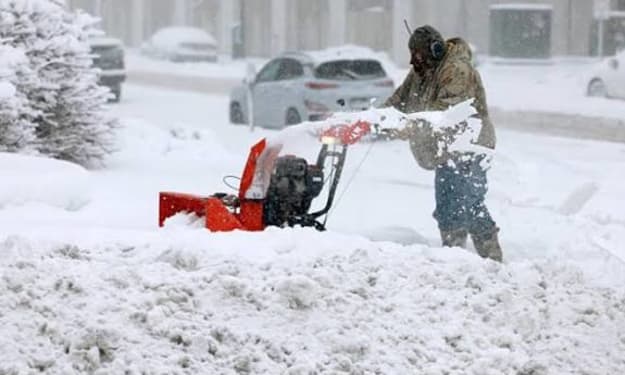
Weather Forecast Snow: Winter’s Icy Return and What to Expect This Season. AI-Generated.
As temperatures begin to dip and the nights stretch longer, people around the world are asking one simple question — is snow on the way? According to recent weather forecasts, many regions in the Northern Hemisphere are preparing for an early and possibly intense snow season. From the United Kingdom and northern Europe to parts of North America and Asia, meteorologists are already tracking colder air masses that could bring the first significant snowfalls of the season.
By Fiaz Ahmed 3 months ago in Earth
Steam, Not Smoke
by Futoshi Tachino In Kenya’s Rift Valley, the ground exhales. Around Naivasha, at a place called Olkaria, wells tap rock-hot water and steam that have already helped Kenya become Africa’s geothermal leader — and one of the few countries where clean, firm power anchors the grid. Recent analyses put geothermal’s share of Kenya’s electricity around the mid-40s, with some reports citing roughly 47 percent in 2024. That matters in a drought-prone region where hydropower is variable and diesel is expensive.
By Futoshi Tachino3 months ago in Earth
Tuvalu's Three-Layer Plan for Continuity
by Futoshi Tachino At high tide on Fogafale—the long, thin islet that holds Tuvalu’s capital—you can stand on the lagoon shore and see the ocean through the breadfruit trees behind you. There isn’t much “away” in a place only a couple of meters above sea level. So Tuvalu has done something extraordinary: it is building a future on three layers at once—physical, legal-human, and digital—so that Tuvaluans can keep being Tuvaluans, no matter what the water decides.
By Futoshi Tachino3 months ago in Earth
Burps, Bottles, and a Bay in Tasmania
by Futoshi Tachino On Tasmania’s east coast, the tides in Spring Bay don’t just bring boats to harbor; they feed a farm. Here, Sea Forest cultivates a native red seaweed, Asparagopsis, that—when fed in tiny amounts to cows—can throttle the methane produced in their stomachs. It’s a climate fix born of the shoreline and aimed squarely at one of Oceania’s knottiest problems: livestock emissions. In both Australia and New Zealand, agriculture is a top emitter, and enteric methane from ruminants is the elephant (really, the cow) in the room. What’s different in Tasmania is that the solution now has a retail label, not just a lab result.
By Futoshi Tachino3 months ago in Earth