Zain Ul Abedin Khan
Bio
Stories (69)
Filter by community
Sapiens. AI-Generated.
Sapiens: A Brief History of Humankind by Yuval Noah Harari is a sweeping narrative that traces the history of the human species from its emergence in Africa to the present day. The book explores how Homo sapiens evolved from just another species of ape into the dominant force shaping the planet, cultures, and even the future. Harari divides this vast history into major transformative revolutions that shaped the development of human societies and the world at large.
By Zain Ul Abedin Khan9 months ago in History
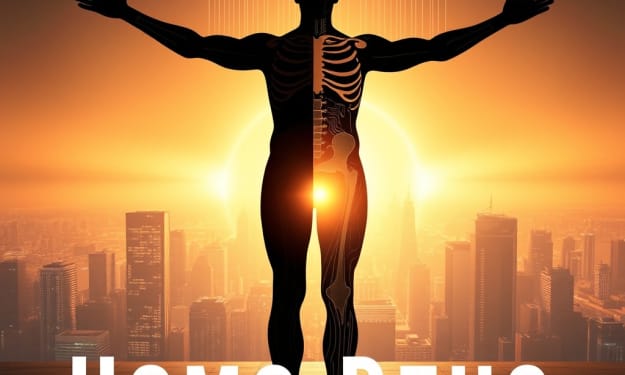
Homo Deus. AI-Generated.
An Essay on Yuval Noah Harari’s Visionary Work Yuval Noah Harari’s Homo Deus: A Brief History of Tomorrow is a bold and thought-provoking exploration of the possible future paths for humankind. As a sequel to his bestselling Sapiens: A Brief History of Humankind, which detailed the evolution of Homo sapiens from prehistoric times to the modern age, Homo Deus shifts the focus from the past to the future. Harari examines what may come after humans have largely overcome the traditional sources of suffering—famine, disease, and war—and begun striving for immortality, happiness, and god-like powers. The term Homo Deus, meaning “god-man,” symbolizes this transition from humans as vulnerable biological organisms to potentially divine creators and controllers of life.
By Zain Ul Abedin Khan9 months ago in Futurism
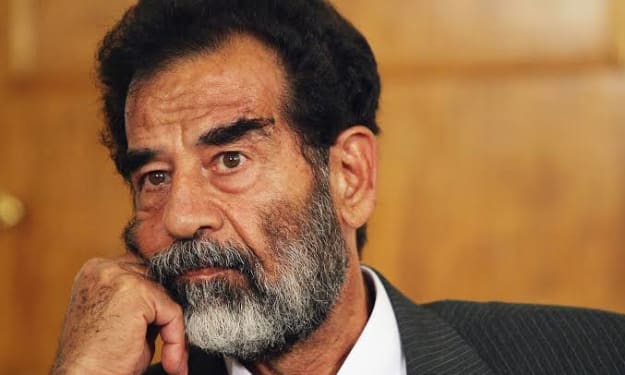
Saddam Hussein and the Geopolitics of Power: A Turbulent Legacy of War and Dictatorship. AI-Generated.
Saddam Hussein’s Leadership and Dictatorship Saddam Hussein rose to power in 1979, becoming the President of Iraq and cementing himself as the country’s absolute ruler. His rule was marked by a highly centralized and oppressive governance system. The text repeatedly emphasizes Saddam’s dictatorial style, portraying him as a ruthless and feared leader. He controlled the state apparatus with an iron grip, suppressing dissent through surveillance, purges, and military force. His personality cult was carefully constructed, with extensive use of propaganda portraying him as both a strong nationalist and a protector of Iraq's sovereignty.
By Zain Ul Abedin Khan9 months ago in History
Death Note (デスノート). AI-Generated.
Death Note is a Japanese anime and manga series created by writer Tsugumi Ohba and illustrator Takeshi Obata. It tells a gripping and suspenseful story of a young genius who gains godlike powers through a supernatural notebook. The series explores complex themes of justice, morality, power, and human nature, making it one of the most influential and thought-provoking works in the anime world.
By Zain Ul Abedin Khan9 months ago in Criminal
Afghanistan Joins CPEC: A New Chapter in Regional Connectivity. AI-Generated.
The inclusion of Afghanistan in the China-Pakistan Economic Corridor (CPEC) marks a pivotal moment in regional geopolitics and economic integration. As a landlocked nation that has experienced decades of conflict and isolation, Afghanistan's formal participation in CPEC opens new avenues for trade, energy access, and infrastructure development. This development is also significant for Pakistan, China, and the broader Central Asian and South Asian regions, as it reinforces interconnectivity and offers a potential pathway to lasting stability in one of the world’s most turbulent zones.
By Zain Ul Abedin Khan9 months ago in Chapters
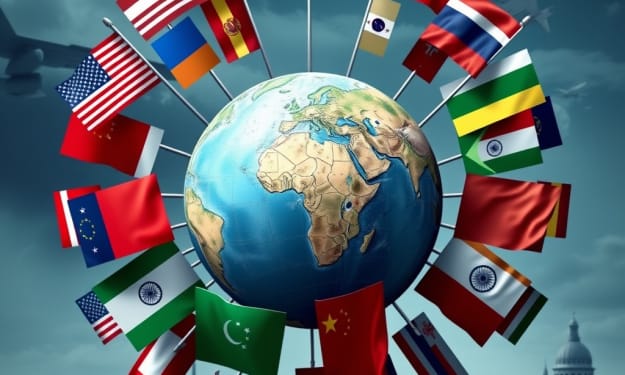
The Changing World Order. AI-Generated.
The concept of a "world order" refers to the political, economic, and military balance of power among nations. For centuries, global influence has shifted from one dominant power to another, often shaped by war, diplomacy, technological advancement, and ideological shifts. Today, we are witnessing another transformation as emerging powers challenge traditional hierarchies, alliances realign, and global institutions adapt to new realities. This transformation is not just about power politics but also about new values, new threats, and a new understanding of global interdependence.
By Zain Ul Abedin Khan9 months ago in Futurism
The Technique of Marriage in Islam. AI-Generated.
Introduction Marriage in Islam holds a position of great significance, regarded not merely as a social or legal contract but as a sacred covenant between two individuals who commit to living together in harmony, love, and mutual respect. The Qur’an describes marriage as a sign of Allah’s mercy and a means to achieve tranquility and peace in life. The Prophet Muhammad (peace be upon him) said, “Marriage is my Sunnah, and whoever turns away from my Sunnah is not of me.”
By Zain Ul Abedin Khan9 months ago in Marriage
The Wali of Swat's Financial Support to Pakistan: A Legacy of Generosity. AI-Generated.
Introduction: A Time of Challenge and Hope When Pakistan emerged as an independent state in August 1947, it faced enormous challenges. The partition of British India had created a new nation almost overnight, with limited resources, infrastructure, and financial reserves. The early days of Pakistan were marked by political instability, mass migrations, and conflicts, including the first Indo-Pak war over Kashmir.
By Zain Ul Abedin Khan9 months ago in History
Swat State's Accession to Pakistan: A Historical Overview. AI-Generated.
The Genesis of Swat State Swat's origins trace back to 1849 when Saidu Baba, also known as the Akhund of Swat, established the state. After his death in 1878, the region experienced instability until 1915, when Syed Abdul Jabbar Shah was appointed ruler. In 1918, Miangul Abdul Wadud, a descendant of Saidu Baba, became the Wali (ruler) of Swat. Under his leadership, Swat was recognized as a princely state in alliance with the British Raj in 1926.
By Zain Ul Abedin Khan9 months ago in History
"The First Night of Marriage in Islam". AI-Generated.
Marriage in Islam is considered a sacred bond, a union blessed by Allah, and a foundation for building a harmonious and loving family. The first night of marriage, often referred to as the walimah night or first night, holds special significance as the moment when the husband and wife begin their new journey together. It is a time of emotional bonding, mutual understanding, and spiritual connection.
By Zain Ul Abedin Khan9 months ago in Marriage
"Sacred Bonds: Marriage in World Religions". AI-Generated.
Marriage is not merely a legal contract or cultural tradition—it is a deeply spiritual and sacred institution in nearly every religion of the world. Across faiths, marriage is often regarded as a divine union, a path to personal growth, moral responsibility, and social stability. Though customs, rituals, and interpretations vary, the underlying values of commitment, love, and harmony unite religious perspectives on marriage. This essay explores how marriage is viewed, practiced, and celebrated in six major world religions: Islam, Christianity, Hinduism, Judaism, Buddhism, and Sikhism.
By Zain Ul Abedin Khan9 months ago in Marriage