
The Changing World Order
Emerging Powers, Shifting Alliances, and the Future of Global Influence

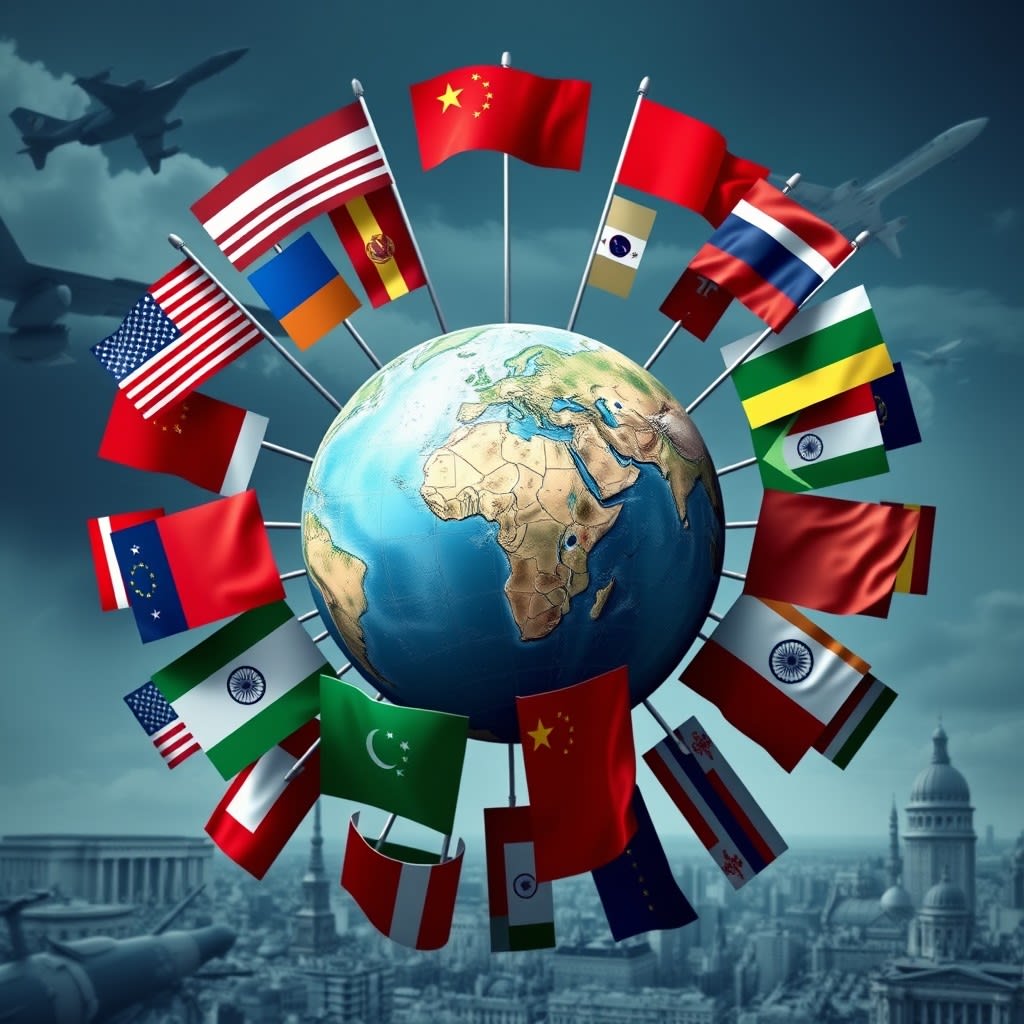
The concept of a "world order" refers to the political, economic, and military balance of power among nations. For centuries, global influence has shifted from one dominant power to another, often shaped by war, diplomacy, technological advancement, and ideological shifts. Today, we are witnessing another transformation as emerging powers challenge traditional hierarchies, alliances realign, and global institutions adapt to new realities. This transformation is not just about power politics but also about new values, new threats, and a new understanding of global interdependence.
The Decline of Unipolarity
Since the end of the Cold War in 1991, the United States has maintained a dominant position in the global system, a period often referred to as "unipolarity." America’s military and economic supremacy allowed it to shape global institutions, norms, and policies. However, this era is now waning. The rise of countries like China, India, Brazil, and Russia, coupled with growing regional powers and non-state actors, has ushered in a multipolar world where no single state can dictate the rules.
Several factors contribute to this shift. The 2008 financial crisis exposed vulnerabilities in the U.S.-led economic model. America's prolonged military engagements in the Middle East drained resources and led to growing skepticism about its role as a global leader. Internal political polarization and a more restrained foreign policy posture have also played a role in diminishing U.S. influence abroad. As a result, other countries are stepping in to fill the vacuum, reshaping the global order.
The Rise of China and Asia
Among the rising powers, China stands out as the most formidable challenger to American dominance. Over the past few decades, China has transformed from a largely agrarian society into the world’s second-largest economy. Its political influence and military capabilities have grown in parallel. The Belt and Road Initiative (BRI), a massive infrastructure and investment project spanning Asia, Africa, and Europe, is a clear indication of China’s ambitions to rewire global trade routes and extend its influence.
China’s assertive foreign policy, particularly in the South China Sea and around Taiwan, has alarmed many countries. However, its rise is not purely confrontational. It also offers an alternative model of development, governance, and international cooperation. As China builds stronger ties with countries across the developing world, it is reshaping alliances and global governance structures.
At the same time, other Asian nations like India, South Korea, and Indonesia are becoming significant players. India, with its large population, growing economy, and strategic location, is increasingly seen as a counterbalance to China in the Indo-Pacific region. These countries are asserting themselves not only economically but also diplomatically and militarily.
Shifting Alliances and Regional Blocs
Traditional alliances like NATO and the European Union are facing internal challenges. Brexit, differing national interests, and debates over burden-sharing have tested the unity of these institutions. Meanwhile, new regional blocs and partnerships are emerging. The BRICS nations (Brazil, Russia, India, China, and South Africa) are demanding greater representation in global governance institutions like the United Nations Security Council, the International Monetary Fund (IMF), and the World Bank.
The Middle East is also undergoing significant geopolitical shifts. The Abraham Accords have reshaped Arab-Israeli relations, while tensions between Iran and Saudi Arabia continue to influence regional dynamics. In Africa and Latin America, countries are seeking more equitable partnerships, often looking to China and Russia as alternatives to Western powers.
These shifts indicate a more fragmented but also more balanced world order. Power is distributed across a wider range of actors, making global cooperation more complex but also more representative of the world's diversity.
The Role of Technology and Information
Technology is playing a crucial role in reshaping the global order. Nations that lead in artificial intelligence (AI), quantum computing, biotechnology, cybersecurity, and renewable energy will likely dominate future geopolitical landscapes. The U.S. and China are currently in a race to lead in these areas, with Europe, India, and other nations striving to catch up.
Information has also become a powerful tool of influence. Disinformation campaigns, cyberattacks, and digital surveillance are now standard tactics in statecraft. The control over digital infrastructure—such as 5G networks, cloud services, and data centers—has become a new arena of competition. Moreover, social media platforms have become battlegrounds for shaping public opinion and foreign policy.
Technology is not only a tool of power but also a source of vulnerability. Cybersecurity threats, misinformation, and digital authoritarianism pose new challenges to democracy and international stability.
Global Challenges and Cooperation
In addition to geopolitical rivalries, the world faces a range of transnational challenges that no single country can solve alone. Climate change, pandemics, terrorism, economic inequality, and migration are issues that require collective action. However, the existing global governance frameworks often struggle to keep up with the scale and complexity of these problems.
The COVID-19 pandemic revealed both the strengths and weaknesses of international cooperation. While scientific collaboration and vaccine distribution efforts were remarkable, the lack of coordinated global response, vaccine nationalism, and supply chain disruptions exposed deep flaws.
Climate change is another pressing issue that demands global action. Agreements like the Paris Accord show that cooperation is possible, but implementation remains inconsistent. The recent focus on green energy, sustainability, and environmental justice suggests that the global community is slowly aligning on the need for urgent action, but more commitment is needed.
The Future of Global Institutions
Global institutions such as the United Nations, World Trade Organization, and World Health Organization were established in a different era. They need significant reforms to remain effective and legitimate in the current global context. Calls for expanding the UN Security Council, reforming the IMF’s voting structure, and enhancing global health governance are gaining momentum.
New institutions are also emerging. China’s Asian Infrastructure Investment Bank (AIIB) and other regional development banks are providing alternatives to Western-dominated financial systems. These institutions reflect a shift towards a more multipolar institutional landscape.
In the future, successful global governance will likely depend on flexible coalitions, issue-based alliances, and inclusive decision-making processes that reflect the interests of both developed and developing nations.
Conclusion
The world order is in flux. Power is diffusing across multiple centers, alliances are evolving, and global challenges are redefining international priorities. This transformation is both a challenge and an opportunity. It offers the chance to build a more inclusive, balanced, and responsive global system. However, it also poses risks of increased competition, miscalculation, and conflict.
Whether this transition leads to greater cooperation or deeper divisions will depend on the wisdom of leadership, the strength of institutions, and the willingness of nations to prioritize collective good over narrow interests. In a world where challenges are increasingly interconnected, no country can afford to stand alone. The era of single-superpower dominance is ending, and a new chapter of global history is beginning—one that demands shared responsibility, mutual respect, and a renewed commitment to global peace and prosperity.
About the Creator
Keep reading
More stories from Zain Ul Abedin Khan and writers in Futurism and other communities.
The Power of Resilience: How Bouncing Back Shapes Our Future
Life, at its core, is a series of challenges, some small, some overwhelming. Whether we’re navigating personal setbacks, professional failures, or global crises, the question remains: how do we rise again after falling? The answer lies not in innate talent or intelligence, but in one word—resilience.
By Zain Ul Abedin Khan4 months ago in Futurism
Education Cyber Security Market to Reach USD 365.10 Billion by 2034
The global education cyber security market is witnessing substantial growth as educational institutions increasingly rely on digital platforms, cloud infrastructure, and connected devices for teaching and administration. The market is projected to expand from USD 66.87 billion in 2024 to nearly USD 365.10 billion by 2034, reflecting a strong 18.5% CAGR during the forecast period. The rapid adoption of digital learning tools, remote education systems, and online student databases has increased the need for robust cyber security frameworks in the education sector.
By Roberto Crum4 days ago in Futurism
The BAFTA Awards
By now, in a stunning departure from recent years, most of the world is aware of what happened at the BAFTA film awards. Social Media Headlines will tell you the bare bones: that John Davidson, a Tourette's Syndrome advocate, shouted a racial slur at two Actors of Colour, Michael B Jordan and Delroy Lindo.
By Natasja Rose5 days ago in Psyche




Comments (1)
The shift from US unipolarity to multipolarity is a big change. China's rise is a key part of it.