
Swat State's Accession to Pakistan: A Historical Overview
The Wali of Swat's Role in Integrating Swat into Pakistan

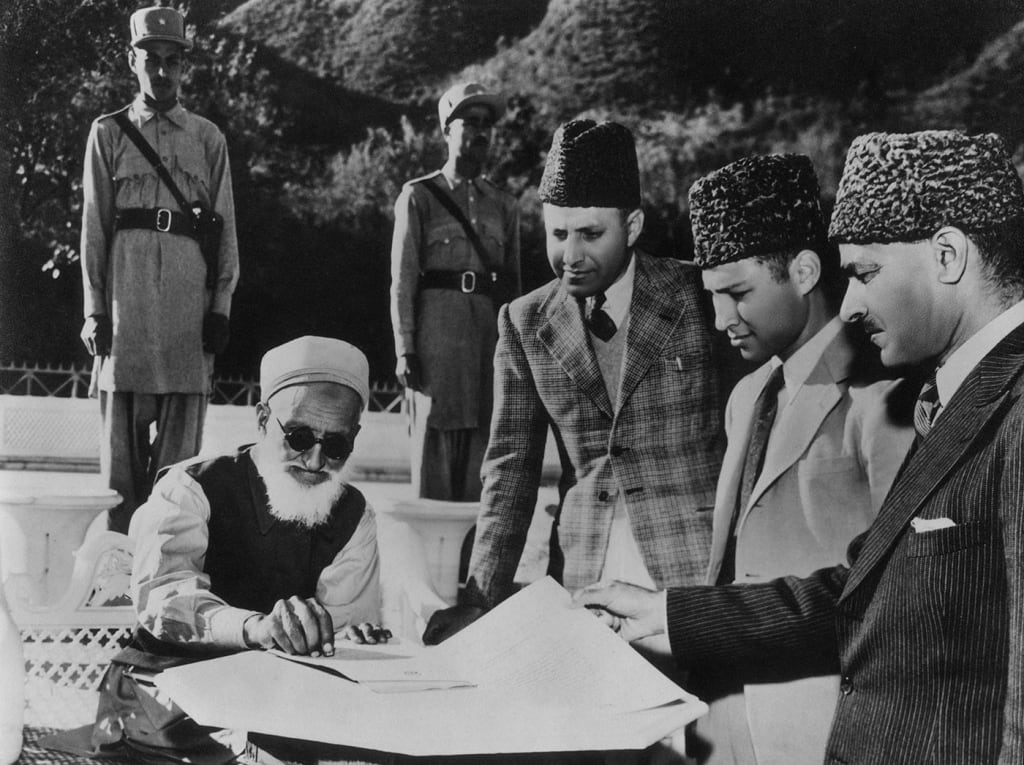
The Genesis of Swat State
Swat's origins trace back to 1849 when Saidu Baba, also known as the Akhund of Swat, established the state. After his death in 1878, the region experienced instability until 1915, when Syed Abdul Jabbar Shah was appointed ruler. In 1918, Miangul Abdul Wadud, a descendant of Saidu Baba, became the Wali (ruler) of Swat. Under his leadership, Swat was recognized as a princely state in alliance with the British Raj in 1926.
Accession to Pakistan
With the partition of British India in 1947, the princely states were given the choice to join either India or Pakistan. Miangul Abdul Wadud chose to accede to Pakistan, signing the Instrument of Accession on November 3, 1947. This decision was accepted by Pakistan's Governor-General, Muhammad Ali Jinnah, on November 24, 1947.
In a gesture of goodwill, the Wali gifted Pakistan its first Hawker Fury fighter aircraft, symbolizing his commitment to the newly formed nation.
Swat Relief Initiative
Era of Miangul Jahan Zeb
In 1949, Miangul Abdul Wadud abdicated in favor of his son, Miangul Jahan Zeb, who became the last Wali of Swat. His reign, lasting until 1969, is often referred to as the "golden age" of Swat due to significant advancements in various sectors.
Educational Reforms
Jahan Zeb prioritized education, establishing numerous schools and colleges, including the notable Jehanzeb College in 1952. Education was provided free of cost, with scholarships available, leading to a substantial rise in literacy rates.
Judicial and Administrative Reforms
He implemented a judicial system that combined traditional practices with modern governance. A network of qazis (judges) ensured swift justice, and law and order were maintained through local jirgas (councils) and state enforcement, resulting in a significant reduction in crime.
Economic and Industrial Development
Under his leadership, Swat's economy diversified, becoming recognized for its handicrafts such as woolen blankets (Sharai), shawls, rugs, and intricate embroidery. Marble and emerald mining also played a significant role in boosting the local economy.
Wikipedia
Cultural and Architectural Contributions
Jahan Zeb invested in preserving cultural heritage and developing architecture. He invited the Italian Archaeological Mission to Swat in 1955, leading to significant archaeological discoveries. In 1958, he sponsored the building of the Swat Museum, which houses exceptional examples of Gandharan art and artifacts.
Merger with Pakistan
On July 28, 1969, President Yahya Khan announced the full integration of Swat into Pakistan, along with the princely states of Dir and Chitral. Miangul Jahan Zeb formally relinquished his powers on August 15, 1969. The region was then merged into the North-West Frontier Province (now Khyber Pakhtunkhwa) and administered as a regular district.
Legacy of the Wali of Swat
The Wali of Swat's era is remembered as a time of progress and development. Miangul Jahan Zeb's contributions to education, infrastructure, and cultural preservation left a lasting impact on the region. His efforts in promoting social welfare and modernizing governance are still celebrated by the people of Swat.
For those interested in delving deeper into the history of Swat and its rulers, the following books offer comprehensive insights:
Firsthand Account
The Last Wali of Swat
$18.00
Tertulia + 1 others
Comprehensive Analysis
Swat State (1915-1969): From Genesis to Merger
$50.00
Tertulia
Regional Context
Beyond Swat: History, Society and Economy Along the Afghanistan-Pakistan Frontier
$58.95
Barnes & Noble - Barnes and Noble - Heavy + others
Ask about this
ChatGPT chooses products independently. Learn more
Top Selections Explained:
The Last Wali of Swat: Authored by Fredrik Barth, this book provides a firsthand account of Miangul Jahan Zeb's reign, offering personal insights into his leadership and the state's transformation.
Swat State (1915-1969): From Genesis to Merger: Sultan-I-Rome's work presents a detailed analysis of Swat's political, administrative, and socio-economic developments leading up to its merger with Pakistan.
Beyond Swat: History, Society and Economy Along the Afghanistan-Pakistan Frontier: This book offers a broader regional context, examining Swat's history in relation to its neighboring areas, providing a comprehensive understanding of its socio-economic dynamics.
About the Creator
Keep reading
More stories from Zain Ul Abedin Khan and writers in History and other communities.



Comments
There are no comments for this story
Be the first to respond and start the conversation.