
The Living Language of Verse
Tracing the Inspiring Evolution of Poetry Through the Ages
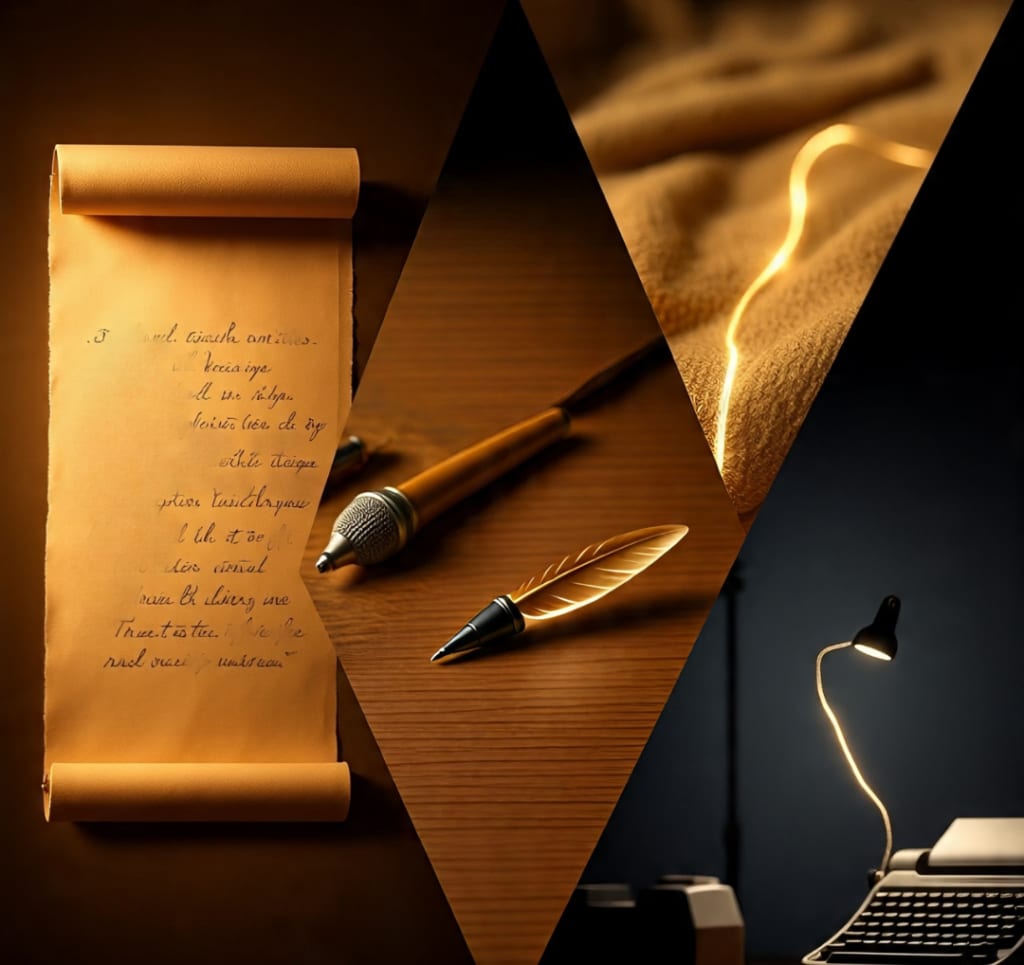
Long before the written word, before ink met paper or syllables were printed in textbooks, poetry lived in the breath and heartbeat of human expression. It echoed through chants around ancient fires, whispered in the rhythm of ritual, and danced in the memory of storytellers who passed tales from one generation to the next.
In the cradle of civilization—Sumer, Egypt, and Mesopotamia—poetry was born not as decoration, but as necessity. The Epic of Gilgamesh, carved into stone tablets over 4,000 years ago, is one of the oldest known literary works. It told of gods and kings, friendship and loss, and the relentless quest for meaning. Even then, poetry was not just words; it was a mirror to the human soul.
Centuries later, on the banks of the Nile and in the temples of ancient Greece, poetry took on form and structure. In Greece, it soared with the likes of Homer, whose Iliad and Odyssey stitched together myth, history, and heroism with a melodic, metered rhythm that was easy to remember and share aloud. These early bards were the original spoken word artists, performing epic tales with voice and gesture, captivating audiences much like modern poets do today.
As writing systems evolved, so did poetic form. Across India, the Vedas were sung with spiritual reverence, their verses crafted to preserve sacred truths. In China, Li Bai and Du Fu blended nature, philosophy, and emotion into delicate, powerful brushstrokes of imagery. In Persia, the mystic Rumi wrote of love that transcended the physical, penning verses that still resonate centuries later in every corner of the world.
During the Middle Ages, poetry became both an instrument of worship and a tool of courtship. In Europe, troubadours composed lyrical odes to unattainable loves, while monks transcribed psalms and hymns to glorify the divine. Meanwhile, on other continents, oral traditions flourished. African griots, for example, kept ancestral history alive through rhythmic storytelling and poetic song, each performance a living archive of culture and identity.
The Renaissance ignited a poetic rebirth in Europe. It was an age of sonnets and soliloquies. Shakespeare elevated the English language, weaving iambic pentameter into dramas that exposed the full spectrum of human nature. His plays and poems proved that poetry was not just for the elite or scholarly—it belonged to the people.
As literacy spread and printing presses roared to life, poetry became more accessible. The Romantic poets—Wordsworth, Keats, Shelley—embraced emotion and nature, pushing back against industrialism’s cold steel with tender stanzas about rivers, stars, and the aching heart. Their verses reminded people that to feel deeply was not a weakness, but a gift.
The 20th century shattered boundaries once thought unbreakable. Poets like Langston Hughes infused jazz and racial identity into verse during the Harlem Renaissance. Sylvia Plath dared to write her inner world in raw, confessional tones. Allen Ginsberg howled against conformity, and Maya Angelou sang of freedom and resilience. The page was no longer the only home for poetry—it spilled into protests, concerts, and coffeehouses.
Then came the digital age. At first, some feared poetry would fade, lost in a world of short attention spans and emojis. Instead, it transformed. Spoken word slams filled auditoriums. Instagram poets reached millions with just a few powerful lines. Videos, podcasts, and audio books breathed new life into old forms. A teenager in Nairobi could share verses with a teacher in Toronto. Poetry, once bound by borders and class, was now as free as thought itself.
And still, it grows.
Today, poetry appears in classrooms and subway walls, in text messages and at weddings, funerals, and protests. It comforts, challenges, and connects. It has evolved from oral tradition to digital expression, but its essence remains the same: to make sense of what it means to be human.
Each era adds a verse to poetry’s ongoing story. The poet’s tools may change—stone, ink, screen—but their mission does not. To listen. To observe. To feel. To speak truths that others may only dare to whisper.
Poetry, after all, is not just a relic of the past. It is a living, breathing language of the soul. And as long as there are hearts that ache, minds that question, and spirits that dream, poetry will continue to evolve—ever ancient, ever new.
About the Creator
Keep reading
More stories from Muhammad Saad and writers in Poets and other communities.
Thriving Beyond Recovery: The New Era of Post-Health Empowerment
Just a few years ago, Maya Daniels was struggling to walk up a single flight of stairs. A former high school teacher in her early fifties, Maya had spent most of 2021 battling long-term complications from COVID-19. The fatigue, brain fog, and anxiety left her feeling like a stranger in her own body. But today, she’s training for her first 5K, managing a wellness blog, and mentoring others navigating life after serious illness. Maya’s story isn’t unique anymore. Across the world, people who once felt sidelined by health challenges are reclaiming their lives—not just surviving, but thriving. Thanks to a combination of modern medicine, digital tools, and a cultural shift toward holistic wellness, we are witnessing a new era: post-health empowerment. A Shift in the Narrative For decades, the healthcare journey often ended at "recovery." Patients were expected to return to normal life after treatment, with little guidance or support. But today’s health landscape looks different. Recovery is no longer the finish line—it’s the beginning of a new phase of personal growth. “We’ve seen a huge mindset shift,” says Dr. Lena Morales, a rehabilitation specialist in Austin, Texas. “People are redefining what it means to be healthy. It’s not just the absence of illness—it’s about thriving mentally, emotionally, and physically.” This evolving view is being driven by advances in healthcare and wellness technologies. Wearable devices now track everything from heart rate variability to sleep cycles, giving users real-time insights into their recovery progress. Telehealth platforms connect patients with specialists across the globe, making expert care accessible to more people. AI-powered health apps offer personalized exercise, nutrition, and mindfulness plans—all from a smartphone. The Rise of Community-Based Healing Technology may be leading the way, but community is the heart of the movement. Online and local support groups have become vital spaces for people to share experiences and resources. These communities are breaking the isolation that often accompanies recovery. One such example is “Reclaim & Rise,” a peer-led support network founded by stroke survivor Daniel Okafor in Chicago. The group meets weekly, both online and in-person, to practice gentle fitness routines, discuss mental health, and celebrate personal milestones. “Doctors helped save my life,” Daniel says, “but this community helped me build it back. We encourage each other to not only heal, but to grow stronger—together.” Wellness with a Purpose More people are also turning to integrative wellness approaches—blending traditional medicine with practices like yoga, meditation, nutrition, and nature therapy. Hospitals are increasingly including holistic programs in their post-care plans. Take the example of Sunfield Medical Center in Oregon. Their “Thrive Track” initiative offers post-illness patients six months of personalized lifestyle coaching, including dietary consultations, mindfulness training, and social outings like hiking and gardening. Early data shows participants experience faster physical recovery and improved mental health. “We’re seeing that when people are empowered to take charge of their health journey, they become more resilient and optimistic,” says Dr. Priya Natarajan, one of the program’s coordinators. A Healthier Tomorrow, Today Maya Daniels credits her post-health journey not just to technology or therapy, but to her renewed sense of purpose. “Getting sick changed my life,” she says. “But recovering helped me discover a version of myself I didn’t know existed—stronger, wiser, and more compassionate.” She now volunteers with local schools to teach mindfulness to children and runs workshops on managing chronic fatigue. Her blog, Maya Moves, has readers from over 40 countries who tune in for tips on navigating life after illness. “I still have off days,” Maya admits. “But I’ve learned that health isn’t a straight line—it’s a path. And I’m walking it, step by step.” --- As we continue to navigate a world shaped by global health challenges, stories like Maya’s are beacons of hope. The post-health era isn’t about going back to how things were—it’s about moving forward with intention, support, and empowerment. Whether it's through wearable tech, a community Zoom call, or a mindful walk in the park, people everywhere are finding ways to thrive beyond recovery. And in doing so, they’re redefining what it truly means to be well.
By Muhammad Saad 7 months ago in Poets
Pornographic Venn Diagramming
It's all performative, all damned to death and back. Born we are into this system of crippled development. Portrayed as enlightenment, but the reality is anything but. . I have long rallied against such realities, despite the burial of my past innocence, forgotten sanctity. . I wrote down some thoughts: . Well hallelujah Spread thin Tongue twisting tautogrammic takes of trauma and triumph Male shame and toxicity mixed with a little alienation and Oh oh the resentment Wafer thin . Xenophobia and the hardened husk of hatred and illegitimate anger and distrust we have become . . Desperation . . The secret language of the sextape . . Pornographic Venn diagramming . The shame, oh the . Shame? . Generation after generation closed off and colder . Heart unresponsive as the irresponsible as the moral vocal cords for the majority . . Minorities kerbed, chided . . We become the grotesque we loathe . . All our yesterdays forgotten The abstract replaces the grounded In an instant . . We become the loathsome grotesque . . All our tomorrows forgotten The grounded replaces the pure In an instant . . We become the grotesque we loathe . . I have become that which I hate. As I bring down the hammer of the gods of inconsequence and their wards, the stupid and stationary, I feel the shame. . . Shame? . . Slàinte. . . Merci beaucoup Oui, oui Ventus, ventus. . . Lilith adores. Diana engorges the might of Artemis and the cynicism of Perseus. . . As I look to the mirror and dismay shoots through like a sgian-dubh of truth, claidheamh-mòr, I lift my Lochaber axe and punish the impure because I dare not face my own. Targe laid down. The dirk plunges into my neck by the phantom of reason. . . Fire. Fire. Fire. . . Water. Ice. . . Novocaine. . . Any D&D players available.Start writing...
By Paul Stewart3 days ago in Poets



Comments
There are no comments for this story
Be the first to respond and start the conversation.