Muhammad Saad
Stories (465)
Filter by community
Verses in the Morning Light
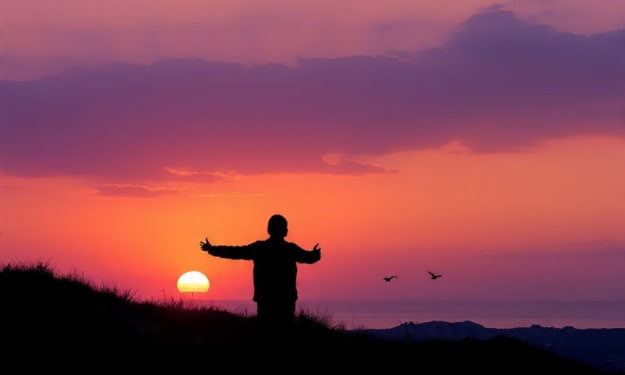
Verses in the Morning Light A Poet’s Awakening at Sunrise — Reflections on Hope, Clarity, and the Promise of a New Day The sky was still tinged with indigo when Leona climbed the steps of the old rooftop. A hush lay over the city like a wool blanket, muffling the world before it stirred. She carried only a thermos of tea and her leather-bound notebook—frayed at the edges, swollen with ink and dreams. It had become her quiet ritual. Each morning, just before sunrise, she came to this rooftop above the bakery where the air still smelled faintly of flour and warmth. She came not for the view, though it was beautiful, nor for solitude, though it soothed her—but for the light. The first, fragile light that made everything seem possible. This morning, the horizon promised brilliance. The faintest glow kissed the tops of buildings and spilled across the clouds in streaks of lavender and gold. She smiled quietly, setting her notebook on her lap and taking a sip of tea. The warmth curled through her chest. Leona hadn’t always been a morning person. For years, she wrote in the late hours, when the world was heavy with silence and streetlights buzzed like secrets. But something had changed in her—gently, gradually, the way a river changes course without sound. After a season of grief, when her mother passed, her nights had grown restless, filled with dreams that made her eyes sting. She’d started waking before dawn, not on purpose, but because something in her needed the quiet clarity of beginning. And it was there, in the rising light, that poetry returned. At first, it came in whispers: fragments, single lines, images she didn’t understand until later. A robin on a fencepost. The smell of wet pavement. Her mother’s humming, distant but warm. Now, the words came more easily. The pain was not gone, but it had softened, like light filtering through curtains. She flipped open her notebook to a blank page and wrote: > “Today arrives like a breath held overnight— soft, trembling, full of forgiveness.” She paused, watching a flock of birds rise suddenly from a distant rooftop. The city was waking slowly: a window slid open across the street, a kettle whistled, a bus grumbled to life far below. And yet, this rooftop still felt like its own world—suspended between sleep and possibility. Leona remembered something her mother used to say, on the rare mornings they sat together sipping tea before the day began: “The sunrise doesn’t ask for applause. It just shows up, brilliant and quiet.” As a child, she hadn’t understood it. Now, it lived in her bones. She wrote another line: > “The sky does not compete with yesterday. It simply begins again.” There was comfort in that. In knowing that each morning, the sun would return without asking permission. That no matter how fractured the previous day had been, sunrise brought a fresh canvas. It didn’t erase anything, but it gave you space to keep going. Leona glanced at her hands—ink-stained, ringless, real. She had been through seasons of doubt, loneliness, and aching uncertainty. But here, wrapped in sunlight and birdsong, she felt something unfamiliar and welcome: peace. A few more lines spilled onto the page—something about light painting rooftops, about shadows retreating into alleys. She didn’t force the rhythm; it would find its shape in time. For now, it was enough to catch what the morning offered. The sun crested the horizon fully, casting gold over the bricks and glass. For a moment, the city glowed—not loud or triumphant, but with a soft kind of courage. The kind that doesn’t shout but stands tall anyway. Leona closed her notebook and leaned back, letting the warmth touch her face. This was why she came. Not just to write, but to remember. That light returns. That beginnings are real. That even in silence, life speaks. She breathed in deep. The scent of rising bread drifted from the bakery below, and somewhere, a child laughed. Leona smiled. She had poems to write, yes—but more than that, she had mornings to witness. And in each of them, she’d find pieces of herself once thought lost.
By Muhammad Saad 7 months ago in Poets
Chasing the First Light
Chasing the First Light Discovering the Science and Beauty Behind Sunrise Times Around the World Long before alarm clocks and weather apps, people rose with the sun. Farmers, travelers, and entire civilizations once aligned their lives with the rhythms of nature — and at the heart of that rhythm was sunrise. I became fascinated with sunrise times during a solo trip to the Scottish Highlands. On the second morning of my hike, I woke at 4:30 a.m. in a chilly tent, drawn outside by the soft whisper of wind and the promise of dawn. As I stood on a grassy ridge, the eastern sky began to glow — a slow, delicate transformation from deep navy to lavender, then apricot. The moment the sun peeked over the horizon, it struck me: this was the same sun rising over Tokyo, Nairobi, and Buenos Aires — but at completely different times. Why? The timing of sunrise is influenced by a blend of factors — some beautifully simple, others more complex than you might expect. At the most basic level, it depends on latitude, longitude, and the time of year. The Earth’s axis is tilted at about 23.5 degrees, which causes different parts of the planet to receive varying amounts of sunlight throughout the year. This tilt explains the changing seasons — and why sunrise isn’t at the same time every day. For example, near the equator, sunrise and sunset times are fairly consistent year-round. But if you travel north to places like Sweden or Alaska, the differences become dramatic. In midsummer, you might experience the “midnight sun” — where the sun never fully sets. In winter, days can be shrouded in near-total darkness. But there’s more. The Earth’s elliptical orbit also affects the length of days. Around the solstices (in June and December), the sun’s path across the sky changes more slowly day-to-day, causing sunrise times to “stall” for a while. Around the equinoxes (in March and September), those changes accelerate. That’s why you might notice sunrise jumping earlier by several minutes each day in spring — and the reverse in autumn. Then there’s something called the Equation of Time — a quirk of celestial mechanics that means solar noon (when the sun is highest in the sky) doesn’t always match up with 12:00 p.m. on the clock. This leads to small shifts in sunrise and sunset, further influenced by your position within a time zone. All of this science is quietly at play every morning. Most of us miss it — buried under blankets, silenced by snooze buttons. But when you take the time to notice, sunrise becomes more than just the start of the day. It becomes a reminder of the planet’s elegant dance through space and time. As I traveled more, I began collecting sunrises. In Morocco, I watched the sun rise over the Sahara, lighting up the dunes in gold. In New Zealand, I saw the first light hit the Pacific, knowing I was one of the first people on Earth to see that day begin. In Norway, I stood above a fjord at 3:00 a.m., watching the sky shift but never fully darken — a surreal display of the midnight sun. Each sunrise brought with it not just warmth and light, but context — a deepened awareness of place, season, and scale. And it made me wonder: how often do we really notice the simple act of the sun rising? Today, apps can tell you the exact sunrise time anywhere in the world. Pilots use that data to plan flights, photographers to capture perfect light, and farmers to time their work. But beyond the utility, there’s value in simply watching the sun come up. It's one of the few daily events that connects us across time zones, continents, and cultures. Now, even at home, I make time to greet the sun. I check the sunrise time the night before, set my alarm, and brew a quiet cup of tea in the early dark. Then I step outside — onto my porch or into a nearby park — and wait. Sometimes it's cloudy, sometimes clear. But every time, there's a small moment of magic. Because in a world that moves too fast, chasing the first light reminds me to slow down, to pay attention, and to stay curious. Sunrise is science. Sunrise is beauty. And most of all, sunrise is a daily gift — available to anyone willing to wake up and witness it.
By Muhammad Saad 7 months ago in Earth
Whispers of the Setting Sun
Whispers of the Setting Sun Unveiling the Science, Beauty, and Symbolism Behind Nature’s Daily Masterpiece Every evening, the world pauses—if only for a moment—to witness a timeless performance: the setting of the sun. It’s a sight so familiar that many forget just how magical it really is. But behind every sunset lies a quiet blend of science and beauty, painting the sky with colors that speak to the soul and whisper stories older than time. The Golden Hour Begins As the day stretches into evening, the sun begins its slow descent. The light, once bright and direct, softens. Shadows grow longer, and the air seems to hold its breath. This is the “golden hour”—a favorite for photographers and dreamers alike—when everything is bathed in warm, amber light. But what causes this dramatic change in the sky? It all starts with the Earth's atmosphere. During sunset, sunlight has to travel through more of the Earth's atmosphere than it does at midday. Shorter blue and violet wavelengths scatter out of our line of sight, leaving the longer red, orange, and pink wavelengths to reach our eyes. It’s pure physics—and pure poetry. A Canvas That Changes Every Day No two sunsets are exactly alike. Some are bold and fiery, streaking the sky with passionate reds. Others are soft and pastel, a gentle transition from day to night. Cloud cover, humidity, pollution, and even volcanic ash can dramatically alter how a sunset looks. In cities, sunsets often glow deeper due to particles in the air that scatter light differently. In coastal areas, sunsets reflect off water, doubling their impact. In mountains, the fading light dances along jagged peaks, turning stone to gold. That’s part of the sunset’s charm: unpredictability. You never know what kind of sky you’ll get. But when the perfect conditions align, it's unforgettable. More Than Just a Pretty Sky Sunsets aren’t just beautiful—they’re deeply symbolic. Across cultures, the setting sun represents closure, peace, reflection, and renewal. In literature, a sunset often marks the end of a chapter or the calm before a dramatic change. In life, it reminds us that everything has a rhythm: beginnings, middles, and ends. For some, a sunset is spiritual—a moment to breathe, to give thanks, or to feel connected to something greater than themselves. It’s a daily reminder that even endings can be beautiful. Chasing Sunsets People travel the world to find the perfect sunset. From the Santorini cliffs in Greece to the savannahs of Kenya, from Bali’s beaches to the deserts of Arizona, sunsets become memories that last a lifetime. They inspire painters, poets, and everyday people to stop, take out their phones—or just breathe it all in. And while technology connects us, sunsets remind us of something older and more essential: our connection to the Earth and its cycles. A Moment Worth Noticing In a world that moves fast, sunsets invite us to slow down. To look up. To feel something. They're free, they happen every day, and yet they never feel ordinary. So the next time you see the sky shift to shades of fire and rose, take a moment. Watch the colors change. Let the warmth of the light touch your face. Listen to the quiet. It’s more than just the end of a day—it’s nature’s way of saying, “You made it.” And tomorrow, it will rise again.
By Muhammad Saad 7 months ago in Earth
Soaring High: The Joy of Skydiving
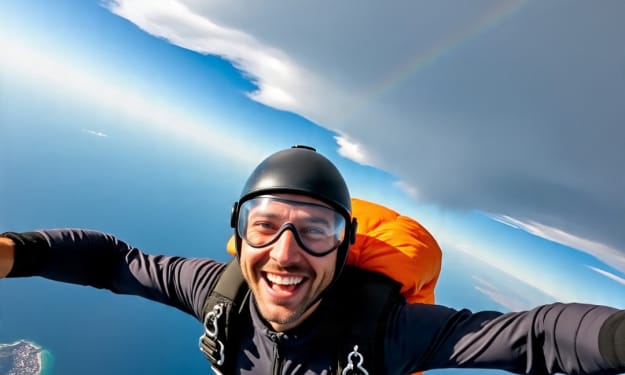
Soaring High: The Joy of Skydiving An Uplifting Dive into the Freedom, Fun, and Facts of Life Above the Clouds --- The small propeller plane buzzed like a determined insect as it climbed steadily into the sky. Beneath it, the earth stretched out like a patchwork quilt—green fields, winding rivers, and tiny rooftops disappearing into haze. For Maya, pressed against the open doorway with wind whipping past her face, the world had never felt so vast… or so inviting. This was it. Her first skydive. Only a month ago, Maya had never imagined she’d be here. She wasn’t a thrill-seeker or an adrenaline junkie. She worked as a graphic designer, spent most weekends curled up with books and coffee, and thought roller coasters were risky enough. But something about skydiving had tugged at her lately—a desire to break free, to rise above life’s noise and look at everything from a new angle. So when her friend Carlos, an experienced jumper, invited her to try it, she surprised them both by saying yes. “Ready?” Carlos shouted, his voice nearly lost in the roar. Maya looked at him, then at the clouds outside, and nodded. They leapt. For the first few seconds, there was no fear, no thought—just sensation. The wind howled like a wild symphony in her ears. Her stomach flipped and danced. And then came something she hadn’t expected: clarity. Falling through the sky at 120 miles per hour, Maya felt more weightless than she ever had in water. Her limbs floated, the air pressed against her skin like a living thing. And as the earth rushed up toward her in slow, surreal motion, she laughed. Skydiving wasn’t just a plunge—it was a release. It wasn’t until the parachute deployed with a firm tug that time returned. The rapid freefall gave way to a gentle drift. Now she could see everything clearly: the sun warming the curve of the horizon, the clouds like floating cities, the distant roads and rivers mapping out her world far below. Carlos glided nearby, giving her a thumbs-up. She wanted to stay up here forever. Skydiving, she’d later learn, is much more than an adrenaline rush. The sport has deep roots, dating back to the 18th century when André-Jacques Garnerin, a French balloonist, made the first recorded parachute jump in 1797. Since then, it’s evolved into a worldwide phenomenon. Today, more than three million jumps happen every year globally, with people of all ages leaping for fun, therapy, or to overcome fear. And the skydivers themselves? They’re a unique tribe. In the community, newcomers are affectionately called “whuffos”—as in “Whuffo you jumping out of a perfectly good airplane?” But that light teasing hides a tight-knit group defined by trust, precision, and passion. Skydivers train relentlessly, often logging hundreds of jumps a year. They study meteorology, gear mechanics, body positioning—all to make each jump not just thrilling, but safe. Maya’s instructor, for instance, had over 2,000 jumps to his name. “Skydiving teaches you two things,” he’d said with a grin. “How to let go… and how to focus like your life depends on it.” After her first jump, Maya understood what he meant. She kept coming back. One jump turned into five, then ten. Each time, she learned more—how to arch her back in freefall, how to spot landing zones from 10,000 feet up, how to fold a parachute with the care of an origami artist. And each time, that same joy returned. There’s a meditative quality to falling, she realized. In the sky, there’s no phone ringing, no deadlines, no worries about bills or broken hearts. Just the wind, your breath, and the wide-open sky. Months later, Maya stood again at the plane door, now in her own jumpsuit, with her own gear. She was about to complete her fiftieth jump—a milestone for solo skydivers. Below her, the fields waited. Above her, endless blue. She smiled. Jumping out of a plane might seem like a crazy thing to do. But for Maya, and for countless others, it’s not about danger. It’s about freedom. It’s about learning to trust yourself, to surrender to the moment, and to soar. Because sometimes, to find your place in the world, you have to step outside it—and fall into the sky. --- Fun Fact Box Average speed during freefall: 120 mph Typical jump altitude: 10,000–14,000 feet Time in freefall: 45–60 seconds Safest record: Over 99.9% of tandem jumps occur without serious incident Oldest skydiver: Rut Linnéa Ingegärd Larsson, age 103 (as of 2022) So next time you look up and see a speck floating in the sky, remember—it might just be someone discovering their joy, one dive at a time.
By Muhammad Saad 7 months ago in The Swamp
Whispers of the Pen
Whispers of the Pen The Inspiring Journey of a Poet Who Turned Words into Wonder Under the dappled light of late afternoon, Elijah Kane sat on a weathered park bench, his old leather-bound notebook resting gently in his lap. A breeze rustled the nearby trees, carrying with it the scent of late summer and the faint, far-off laughter of children. To a passerby, he looked like any quiet soul enjoying the calm of the golden hour. But in truth, Elijah was deep in conversation—with memory, with rhythm, with language itself. It had been a long road to this quiet moment. Elijah’s story as a poet didn’t begin in a classroom or a library. It began in a cramped apartment above a corner store in a neglected part of the city. Raised by his grandmother, who had little but her stories and boundless love, Elijah grew up listening to the poetry of everyday survival. She told him tales from their ancestors—of struggle, of joy, of migrations and dreams deferred. But she never called them poems. "I just talk with a little music in my voice," she used to say, smiling as she stirred her tea. Elijah began writing at thirteen. At first, they were just scraps of lines—half-thoughts, broken metaphors, feelings he didn’t know how to say aloud. He wrote in secret, hiding the pages under his mattress. He never imagined himself a poet. Poetry, he thought, was for scholars and people with book deals. Not for someone like him, who had to work two part-time jobs in high school just to afford pencils and notebooks. That changed the day his English teacher, Ms. Thompson, found a forgotten page in his locker. It was a poem titled “City Sky”, about how the stars in the city were hidden, just like the dreams of those who lived beneath them. Expecting a reprimand for skipping gym, Elijah was instead met with stunned silence. “You wrote this?” she asked. Elijah nodded, suddenly wishing he could disappear. “This is… Elijah, this is real. This is poetry.” From then on, Ms. Thompson became his first mentor. She brought him books by Langston Hughes, Mary Oliver, Pablo Neruda. She showed him how to read poetry—not just with the eyes, but with the heart. She taught him that poetry wasn’t about being perfect—it was about being honest. Years passed. Elijah went to community college on a scholarship, studying literature while working nights at a diner. His poetry evolved—growing bolder, more intricate. He started performing at open mics, trembling at first, then standing taller with each recitation. His words, once hidden in the shadows of his notebook, began to echo in rooms full of strangers. Eventually, he published his first collection, “Voices Between Buildings.” It was raw and unpolished, a mirror of his early life. Critics called it “gritty and graceful,” “a revelation of urban lyricism.” He was invited to read at universities, to speak to students who reminded him of himself. But for Elijah, success was never the point. It was always about connection. About capturing the quiet beauty in overlooked places—the way grief lingered in old apartment walls, or how a smile on a crowded bus could feel like a lifeline. Now, in his late thirties, Elijah returned often to this small park by the river. He said the trees whispered ideas to him. “Nature doesn’t judge,” he once joked during a radio interview. “You can read your worst drafts to a willow, and it’ll still applaud with its leaves.” Today, the words came slowly, like distant thunder before a storm. He scribbled, scratched out, rewrote. A single line emerged that felt just right: “I used to run from silence, now I write it into sound.” He smiled. As the sun dipped lower, a young girl walked by with her mother. She paused, watching Elijah with curiosity. “Are you writing a story?” she asked. Elijah looked up and nodded. “Sort of. I’m writing a poem.” “About what?” “About how the world speaks, even when it’s quiet.” The girl grinned. “That sounds pretty.” She skipped away, leaving Elijah with a warmth he hadn’t expected. He looked down at his notebook again. The page had more room. The story wasn’t finished. Maybe it never would be. But that was the beauty of it. Poetry, he had learned, was never about having all the answers. It was about asking the right questions—with courage, with heart, and with a pen that listened
By Muhammad Saad 7 months ago in Poets
The New Pulse of Poetry
The New Pulse of Poetry Fresh Voices, Bold Verses, and the Bright Future of a Timeless Art For centuries, poetry has been the quiet heartbeat of human expression — subtle, beautiful, and enduring. But today, something extraordinary is happening. Around the world, poetry is undergoing a vibrant revival. It’s no longer confined to dusty bookshelves or whispered lines in candlelit cafes. It’s alive in classrooms, echoing in performance halls, dancing across social media, and painted on city walls. A new generation is giving poetry a bold, fresh voice — and people are listening. In a small café in Brooklyn, a crowd gathers every Thursday night. Not for a concert or a comedy show, but for a poetry slam. Microphone in hand, 19-year-old Zaria Jones steps onto the stage, her voice steady as she begins to speak about identity, love, and justice. Her rhythm, her cadence, her truth — it’s electric. The audience snaps their fingers in unison, moved by every word. “I used to write poems in my journal and hide them,” Zaria says. “Now, I’m writing for my community. Poetry is how we connect. It’s how we heal.” Zaria is one of thousands of young poets breathing new life into the art form. Across cities and continents, voices once unheard are rising. Social media platforms like Instagram, TikTok, and YouTube have become modern stages for poetic expression, allowing writers to reach global audiences instantly. Poets like Rupi Kaur, Nayyirah Waheed, and Ocean Vuong have reshaped what it means to be a poet in the digital age — turning verses into viral movements, and personal pain into collective strength. But it’s not just the medium that’s changed — it’s the message, too. Today’s poetry tackles the real and the raw: climate anxiety, mental health, cultural identity, gender, migration, hope, and revolution. It’s reflective of the world we live in, told through the lens of lived experience. And it’s drawing in readers like never before. “Poetry used to intimidate me,” says Emilio, a high school student in Mexico City. “Now I realize it’s not about being perfect — it’s about being real. It’s emotion turned into words.” Educators are taking note. In schools around the world, poetry is no longer limited to analyzing Shakespeare’s sonnets or memorizing rhyme schemes. Teachers are encouraging students to write their own pieces, explore spoken word, and connect poetry to their own lives. Poetry workshops are popping up in youth centers, refugee camps, and prisons — empowering people to tell their stories in ways that are authentic and transformative. Meanwhile, technology is expanding the reach and creativity of poetry. AI-generated poetry is pushing the boundaries of what machines can feel (or seem to), while immersive experiences like augmented reality poems and interactive poetry games are reimagining how we experience language. Collaborations between poets and musicians, dancers, and visual artists are turning poems into full sensory journeys. Still, at its core, poetry remains what it has always been: a mirror to the soul, a rhythm of thought, a language of the heart. What’s new is the energy — the pulse. And that pulse is powerful. In Nairobi, a group of young poets performs under the banner of Wapi Poetry Movement, blending traditional Swahili storytelling with hip hop rhythms. In Tokyo, minimalist haiku are projected onto skyscrapers as part of a city-wide digital art installation. In São Paulo, subway walls are painted with verses written by schoolchildren. In every corner of the world, poetry is no longer passive — it’s public, political, and deeply personal. The revival of poetry doesn’t mean the old is forgotten. On the contrary, classic poetry is finding new fans, reinterpreted through modern eyes. Young readers are discovering the elegance of Rumi, the fire of Sylvia Plath, the wisdom of Tagore, and the defiance of Maya Angelou — and connecting those words to their own journeys. So what is the future of poetry? It’s a teenager sharing verses through a cracked phone screen. It’s an elder passing down stories in poetic form. It’s a poem scribbled in the margin of a textbook, or broadcast to millions in a viral video. It’s diverse, it’s dynamic, and it’s dazzling. Poetry is no longer just a quiet heartbeat. It’s a drum, a dance, a declaration. And it’s only just beginning.
By Muhammad Saad 7 months ago in Poets
Rising Waters, Rising Wisdom
Rising Waters, Rising Wisdom How Communities Around the World Are Adapting to and Learning from Floods In the heart of Bangladesh, during the annual monsoon season, 12-year-old Amina steps barefoot into the water that now laps at her doorstep. It’s not fear she feels, but familiarity. Her village, like many others across the globe, has long learned to live with water — not as an enemy, but as a force to understand, respect, and work with. Floods have been shaping Earth’s landscapes for millions of years. They are natural events, essential in some ecosystems for replenishing nutrients and maintaining biodiversity. But in recent decades, as urbanization intensifies and climate change accelerates, floods have grown more frequent and severe — often with devastating consequences for human life. In 2024 alone, major floods displaced millions in Pakistan, parts of Europe, and the southeastern United States. Cities and rural areas alike faced rising waters that overwhelmed drainage systems, ruined crops, and cut off communities. But amid the loss, a new kind of response is emerging — one rooted in adaptation, resilience, and innovation. One such example comes from Rotterdam, in the Netherlands. As a low-lying city surrounded by water, Rotterdam has been at risk of flooding for centuries. Instead of resisting the water entirely, city planners chose a different path: to design with it. Today, the city boasts “water plazas” — public spaces that function as recreational parks during dry periods and as catchment basins when it rains. Green rooftops, floating homes, and sponge-like urban designs all play a role in managing excess water naturally. “Water is no longer just a threat here,” says urban planner Marieke de Jong. “It’s a design element — something we plan for, not against.” This philosophy of “living with water” is gaining momentum worldwide. In Jakarta, Indonesia — a city sinking under its own weight and battling frequent floods — government officials and architects are working to integrate green infrastructure, relocate vulnerable communities, and restore lost wetlands that once absorbed heavy rains. Back in Bangladesh, communities like Amina’s use floating schools and gardens. These structures, built on bamboo rafts, rise with the floodwaters, ensuring that education and food production can continue even during the worst of the monsoon season. But adaptation isn’t only about high-tech solutions or massive government interventions. In small Appalachian towns in the United States, neighbors band together to monitor river levels and send early warnings through group messaging apps. They build rain gardens in their backyards and install simple rain barrels to divert water from overburdened sewer systems. Scientists are also playing a key role. Improved satellite imaging and data analysis allow meteorologists to better predict flood risks, giving communities more time to prepare. Meanwhile, climate researchers emphasize the urgent need to reduce greenhouse gas emissions to limit further warming — and with it, more extreme rainfall patterns. “Floods will never go away entirely,” says Dr. Sarah Mitchell, a hydrologist at the University of Colorado. “But how we prepare for them, how we live with them, will make all the difference.” That preparation often begins with awareness. Schools are incorporating flood safety into their science and geography lessons. Documentaries and local media increasingly spotlight not just flood disasters, but stories of resilience — like the Vietnamese farmers who turned their rice paddies into aquaculture ponds during the wet season, or the South African engineers designing bridges that allow floodwaters to pass beneath without damaging the roads. Still, challenges remain. Many of the world’s poorest communities are also the most vulnerable to flooding, with limited resources to rebuild after each disaster. Climate justice advocates argue for increased global funding and support to help these areas adapt — not just to survive, but to thrive. As the climate continues to change, so too must our relationship with water. From floating homes to flood-resilient farming, the human story of floods is no longer just about tragedy — it’s about transformation. And as the waters rise, so does our collective wisdom.
By Muhammad Saad 7 months ago in Earth
The Magic Behind the Words
The Magic Behind the Words Discovering the Power and Beauty of Poetic Devices in Every Line It was a rainy Thursday afternoon when Maya found herself trapped in the school library during lunch. Most students saw the old room as just a quiet place full of dusty books and squeaky chairs, but Maya always felt it held secrets—like forgotten voices whispering through the pages. She wandered to the poetry section, not expecting much. But a worn leather-bound book titled "Echoes of Expression" caught her eye. The moment she opened it, a breeze—though there were no windows open—rustled the pages and sent a shiver down her spine. Then came a strange sensation, like she was being pulled in. Suddenly, Maya wasn't in the library anymore. She stood in a vast, dreamlike meadow of ink and paper. Words floated in the air. Trees whispered verses. Rivers babbled in rhyme. And before her stood an odd figure in a cloak stitched from poems. “Welcome, traveler,” the figure said with a warm smile. “I am the Guide of Poetic Devices. You're here to see the magic behind the words.” Before Maya could ask a question, the Guide pointed to a nearby tree. Its branches curled with repetition. “This is Alliteration,” he said. “It’s when words begin with the same sound. Hear it?” The wind blew softly: Silver stars silently shimmer. Maya nodded. “It’s beautiful.” “Alliteration makes language musical,” the Guide explained. “It helps lines dance off the tongue.” They moved on. A cloud above rumbled with meaning. “This,” the Guide said, “is Metaphor. It compares two unlike things by saying one is the other. Listen.” The cloud spoke: Time is a thief that steals our moments. Maya’s eyes widened. “It doesn’t just say time passes—it makes me feel the loss.” “Exactly,” the Guide said. “That’s the power of metaphor. It goes beyond the literal.” Soon, a sparkling stream gurgled beside them. “Meet Simile,” the Guide said. “She’s cousin to Metaphor but likes her comparisons with ‘like’ or ‘as’.” The stream sang: Her smile was as bright as the morning sun. “That paints a clear picture,” Maya said. They crossed a bridge built of rhymes. “Rhyme and Rhythm,” said the Guide, tapping his foot. “Rhyme makes poems catchy, while rhythm gives them flow.” As they walked, Maya noticed a line etched into the stones: I wandered lonely as a cloud… “That’s Wordsworth,” she said, recognizing the line from class. “It’s poetic, but it’s also relatable.” The Guide smiled. “Poetry doesn’t hide meaning—it reveals it through feeling.” They arrived at a garden where every flower spoke differently. One whispered, “The wind whispered secrets through the trees.” “Ah,” the Guide said, “Personification. Giving human qualities to non-human things.” “The wind can’t whisper,” Maya said, “but it feels like it can. It makes the image more alive.” They strolled past hills shaped like questions. “Enjambment lives here,” the Guide said, pointing to a poem split across two lines: The sky was a bruise spreading across the horizon. “She stretches thoughts beyond a line break, letting ideas flow freely.” Just then, a tree dropped a leaf, and it fell in slow motion, repeating the same phrase: "Nevermore... nevermore..." “Repetition,” said the Guide. “It emphasizes emotion. Think of Poe’s raven—it haunts because it repeats.” Maya sat down under a fig tree of figures of speech. “This is amazing,” she whispered. “I thought poetic devices were just... grammar stuff. But they’re more than that.” “They are the secret ingredients,” said the Guide. “Without them, words are just words. With them, words become magic.” As the dream-world began to fade, the Guide handed her a small book—it looked just like "Echoes of Expression". “When you wake,” he said, “write with wonder. Let your words sing.” And with a blink, Maya was back in the library, the real book still open in her lap. The rain had stopped, but the magic lingered. From that day on, Maya didn’t just read poems—she felt them. She saw metaphors in the clouds, alliteration in the wind, and rhythm in her own heartbeat. And every time she wrote, she remembered: poetic devices weren’t just tools—they were the soul of the poem, the music behind the meaning, the magic behind the words.
By Muhammad Saad 7 months ago in Poets
Echoes Through the Ages
Echoes Through the Ages – A Journey Through the Transformative Eras of Poetry and Their Cultural Impact The poet’s voice is a peculiar thing — it stretches far beyond the lips that speak it. It becomes a drumbeat of generations, a whisper in the minds of revolutions. Our story begins not with a single poet, but with an invisible thread woven through the centuries — a tapestry of human expression shaped by the pulse of time. In the dusty courtyards of ancient Sumer, where the first city-states bloomed, clay tablets bore the earliest lines of poetry. The Epic of Gilgamesh echoed tales of friendship, mortality, and the gods. These were not mere stories; they were scaffolding for civilization’s moral codes. Here, poetry wasn’t simply art — it was mythic memory, preserving identity in cuneiform. Centuries later, in the marble halls of Classical Greece, poetry danced on the tongues of bards and philosophers. Sappho’s verses trembled with intimate longing, while Homer’s Iliad thundered with heroism and war. The Greeks elevated poetry to a divine act. To speak in verse was to commune with the Muses, to elevate daily strife into something sacred. In this era, poetry became performance, public spectacle, and political voice. Rome borrowed Greece’s meter but gave poetry a new, personal dimension. Virgil and Ovid infused myth with melancholy and wit. The Aeneid was not just a founding legend — it was a call to empire, cloaked in verse. Roman poets understood that poetry could serve statecraft or subvert it. Words, carefully chosen, could outlast empires. As Rome faded, the medieval world wove poetry into its faith and fear. In monasteries and royal courts, Latin hymns met vernacular ballads. Troubadours wandered castle grounds, singing of chivalry and star-crossed love. Meanwhile, in the Islamic Golden Age, poets like Rumi and Hafez spoke of divine unity and inner longing. Here, poetry transcended language barriers, carried on the backs of caravans and across parchment lines. It was not just artistic — it was sacred, metaphysical. Then came the Renaissance — the reawakening. Poetry bloomed like a spring flower after a long winter. Shakespeare wielded the sonnet like a scalpel, dissecting the human condition. Petrarch redefined love as internal pilgrimage. Poets were not just chroniclers; they were visionaries, reshaping language itself. The printing press spread their verses across borders, birthing a literate public that found its voice in rhyme and meter. In the Age of Enlightenment, reason began to challenge tradition. Poetry, once exalted for its mystery, faced scrutiny. But even then, it evolved. Alexander Pope’s precision mirrored the rational spirit, yet Romanticism soon burst forth as rebellion — against reason, against the mechanized world. Blake saw angels in chimney smoke. Wordsworth found God in a daffodil. Poetry reclaimed the soul. As the 19th century waned, empires stretched and fractured. The Modernists answered with fragmentation, breaking traditional forms to mirror a shattered world. T.S. Eliot’s The Waste Land wove ancient myth with contemporary disillusionment. Ezra Pound demanded, “Make it new.” Poetry became a mirror cracked deliberately, reflecting war, alienation, and technological upheaval. Yet out of fracture came new voices. The Harlem Renaissance infused verse with jazz and resistance. Langston Hughes wrote of rivers and dreams deferred — poems as protest, as identity. In India, Tagore wrote with spiritual fire, bridging East and West. Global poetry awakened, diverse in tongue, but united in purpose: to witness, to resist, to remember. The 20th century barreled on, and poetry entered classrooms, protest marches, cafes, and street corners. From Beat poets howling against conformity to slam poets spitting truth into microphones, the form kept evolving. It shed its elite image. It returned to the people. Now, in the digital age, poetry lives in pixels and hashtags. It is shared in Instagram captions, scrawled on subway walls, performed in viral videos. The tools have changed, but the need has not. Poets still shape how we process grief, joy, injustice, and hope. They speak when others cannot. Each era left its mark, a footprint in the sand of language. The transformation of poetry across ages wasn’t just about changing form — it was about shifting the way humans saw themselves. In times of peace, poetry celebrated. In times of war, it mourned or rallied. In silence, it whispered. In noise, it sang louder. The echo still resounds. It is there in the trembling lines of a youth posting their first poem online. In a refugee’s spoken word, reclaiming dignity. In an elder’s recited verse, remembering love. Poetry, in all its forms, remains humanity’s oldest and most honest mirror — reflecting the eras, transforming with them, and always returning to that essential truth: To be human is to feel. To feel is to speak. To speak… is to echo.
By Muhammad Saad 7 months ago in Poets
Verses of Light: The Power of Positive Poetry
Verses of Light: The Power of Positive Poetry How Uplifting Words Can Heal, Inspire, and Transform Lives In a quiet town nestled between rolling hills and fields of golden sunflowers, a small library stood as a beacon of warmth and knowledge. Though many came for novels, history, or quiet study, something special began to unfold on Thursday afternoons in the back corner room. A group of people, diverse in age and background, gathered each week for an hour of “Positive Poetry.” It started with Sarah, a soft-spoken teacher who had once used poetry in her classroom to help students express emotions they couldn’t yet name. After losing a close friend to illness, Sarah found herself writing poems again—not dark or brooding ones, but lines filled with light, hope, and gratitude. One day she read her poem aloud at the town’s open mic night, unsure how it would be received. The room had gone quiet. Then came the applause, then a woman’s tears. “That made me feel like I could breathe again,” the woman said. It was in that moment Sarah realized positive poetry had a power far beyond what she expected—it could heal. Soon, Sarah started a weekly gathering at the library. She called it Verses of Light. It was open to everyone—whether they wanted to write, listen, or simply sit in the peace of uplifting words. Each week, she brought in a theme: hope, courage, kindness, growth. The rules were simple: no negativity, no criticism, only words that could uplift, encourage, or soothe. People came shyly at first. James, a retired engineer battling loneliness after his wife’s passing, read a haiku about finding warmth in a morning cup of tea. Maria, a teenager who had struggled with anxiety, wrote about stars as friends that never left the night sky. Even children wandered in, scribbling bright rhymes about butterflies and laughter. It wasn’t about being a great writer. It was about finding light—and sharing it. Science has long known that words affect our brain. Positive language stimulates areas of the brain linked to emotional regulation, empathy, and optimism. In fact, studies show that writing or reading uplifting poetry can reduce stress, boost mood, and foster a sense of connection. Sarah hadn’t known the neuroscience behind it—she just saw the results. One rainy afternoon, a man named Robert walked into the poetry group. He sat quietly, listening for weeks. Then one day he brought out a folded paper and said, “I haven’t written since I was twenty. But I’d like to share this.” His voice was rough with emotion as he read a simple poem about rediscovering hope in unexpected places. The group didn’t just applaud—they surrounded him with words of encouragement and thanks. That’s what positive poetry did. It opened doors. It gave people permission to speak joy aloud, even when the world felt heavy. It helped them hold onto hope when it was slipping. It created community—not through shared trauma, but shared healing. Over time, the group published a small anthology called Light Between the Lines. The proceeds went to support local mental health programs. But the greatest success wasn’t in the book—it was in the people. Like Anya, a single mother who said writing poems in the few quiet minutes before sunrise helped her face the day with courage. Or Malik, a high school student who wrote affirmations in poetic form and taped them to his locker to inspire classmates. Even the town’s mayor, known more for numbers than nuance, wrote a verse about the kindness of strangers that moved many to tears. The ripple effects were quiet but deep. Sarah often said, “You don’t have to write a masterpiece. You just have to write something that lifts—even if it’s just your own heart.” And that’s the essence of positive poetry: it doesn’t ignore pain—it transforms it. It doesn’t deny struggle—it shines a light through it. Back in the little library, on a warm summer evening, the room is once again filled. The group has grown, but the spirit remains. A child reads a poem about how the sun and moon are best friends. A grandmother shares a verse about her garden and the resilience of seeds. And Sarah, smiling quietly in the back, knows one truth for sure: when we choose to speak light, we help others find their way through the dark.
By Muhammad Saad 7 months ago in Poets
Echoes of Awakening: The Timeless Poetry of Allama Iqbal
In the quiet corners of history, there are voices that never fade. Their words cross centuries, carrying light for those who seek meaning, purpose, and identity. One such voice is that of Allama Muhammad Iqbal — the poet, philosopher, and dreamer whose verses lit the path for millions and redefined the soul of a nation. Iqbal was not just a poet; he was a visionary with a pen that wrote in fire and spirit. His poetry wasn’t merely a collection of rhymes—it was a call to action, a spiritual awakening wrapped in beauty, rhythm, and intellect. Through Persian elegance and Urdu power, he spoke of selfhood, divine love, freedom, and the greatness of the human soul. The Power of a Dream Born in 1877 in Sialkot, Iqbal witnessed a time when the Muslim world was fragmented, colonized, and in deep spiritual slumber. But where others saw decline, Iqbal saw potential. He believed that Muslims had forgotten the essence of their identity—what he called Khudi, the self. Through poems like “Tarana-e-Milli” and “Lab Pe Aati Hai Dua”, he inspired both young and old. His famous lines, “Khudi ko kar buland itna ke har taqdeer se pehle, Khuda bande se khud pooche, bata teri raza kya hai,” urged individuals to elevate their character so profoundly that even destiny would pause to ask their permission. These weren’t just lofty thoughts—they were seeds of transformation. Iqbal's poetry helped shape the consciousness of an entire generation and later became the ideological foundation for the creation of Pakistan. A Bridge Between East and West Iqbal’s greatness lies in his unique ability to blend cultures. Educated in Lahore, Cambridge, and Munich, he had deep knowledge of both Islamic philosophy and Western thought. He admired Rumi, but he also studied Nietzsche and Goethe. This gave him a rare voice — one that connected spiritual tradition with modern intellectual challenges. Rather than rejecting modernity, Iqbal redefined it. He didn’t ask people to return to the past; instead, he urged them to reawaken the spirit of the past and shape a bold future. His poetry was never about despair. It was about courage, dignity, and belief in oneself. Words That Still Breathe Today, in classrooms and homes, Iqbal’s verses are still recited. His ideas remain alive in debates about freedom, identity, and justice. His poem “Shikwa” (The Complaint) and its answer, “Jawab-e-Shikwa,” show a powerful conversation between man and God, questioning fate and reminding readers of their own responsibilities. Iqbal never allowed his readers to feel helpless. Instead, he gave them wings through words. He reminded them that real change comes from within, and that true belief isn’t passive—it acts, it builds, it soars. A Legacy of Light The greatest strength of Iqbal’s poetry is that it never ages. His call for Khudi isn’t limited to any nation or era. Whether you're a student in Karachi, a thinker in Istanbul, or a dreamer in New York, Iqbal’s words find their way to your soul. His poetry doesn’t just speak — it resonates. It’s no surprise that he is known as Mufakkir-e-Pakistan (The Thinker of Pakistan) and Shair-e-Mashriq (The Poet of the East). But more than titles, it is the hearts he touched that keep his memory alive. Iqbal for the New Generation In today’s fast-moving world, where screens dominate minds and noise often drowns out thought, Iqbal’s poetry is more relevant than ever. It offers calm in chaos, clarity in confusion, and strength in struggle. It teaches that we are not just consumers of life but creators of our destiny. Young readers discovering Iqbal today are often surprised at how modern he feels. His vision of selfhood, empowerment, and unity speaks directly to the challenges of today’s youth. He doesn’t offer escape—he offers purpose. --- Final Thought Allama Iqbal once wrote, “Sitaron se aage jahan aur bhi hain.” (“There are other worlds beyond the stars.”) He believed in aiming higher than what seems possible. Through his poetry, he gave us a ladder to those stars—a ladder built with words, wisdom, and unwavering faith in human potential. His legacy is not just in books or monuments. It lives in every soul that dares to dream, question, and rise. Iqbal's poetry is not just to be read — it is to be lived.
By Muhammad Saad 7 months ago in Poets
The Forest Advantage: Nature’s Gift to Our Planet
Forests are among Earth’s most extraordinary gifts—vast, living systems that support life in ways both visible and invisible. Towering trees, whispering leaves, and rich green canopies are not just beautiful to behold—they are vital to the health of our climate, our ecosystems, and even our minds. Often called “the lungs of the planet,” forests quietly perform miracles every day, giving more than they take. At first glance, a forest may seem like a collection of trees. But look a little closer, and you’ll see a complex, interconnected world alive with activity. Beneath the surface, roots form vast networks, exchanging nutrients and water. Above, birds sing, insects hum, and mammals roam. Forests are home to over 80% of terrestrial animal and plant species, making them one of the richest sources of biodiversity on Earth. But the benefits of forests go far beyond sheltering wildlife. One of their most crucial roles is in regulating the planet’s climate. Through photosynthesis, trees absorb carbon dioxide—a major greenhouse gas—and release oxygen. In fact, forests store more carbon than the atmosphere itself. The Amazon Rainforest, for example, stores billions of tons of carbon, helping to cool the Earth and slow the pace of global warming. Forests also act as natural air and water purifiers. Their leaves trap dust and pollutants, while their roots prevent soil erosion and filter rainwater. In mountainous regions, forests help regulate water cycles, reducing the risk of floods and droughts. Cities that preserve nearby forests often enjoy cleaner air and more stable water supplies, with less need for costly infrastructure. Another remarkable benefit of forests is their impact on human well-being. Numerous studies show that spending time in forests reduces stress, lowers blood pressure, and boosts immune function. In Japan, the practice of “forest bathing” or shinrin-yoku—simply walking through the woods—has become a widely recommended form of therapy. People who spend time in nature often report feeling calmer, more focused, and more connected to the world around them. And the economic value of forests is undeniable. Forests provide timber, medicine, fruits, nuts, and fuel to billions of people around the world. Yet the most sustainable value may lie in eco-tourism and conservation. Countries like Costa Rica and Bhutan have built strong economies around preserving forested areas, inviting visitors to experience the wonder of nature while protecting it for future generations. Importantly, forests support the lives and cultures of millions of Indigenous communities who have lived in harmony with the land for centuries. These communities often possess deep knowledge about forest ecosystems, and their stewardship has helped preserve some of the most biodiverse areas on Earth. Respecting and empowering these guardians of the forest is key to global conservation efforts. Despite their many benefits, forests face serious threats. Deforestation—mostly for agriculture, logging, and urban development—destroys millions of hectares every year. When forests are lost, the consequences ripple outward: carbon is released into the atmosphere, species lose their homes, and local communities suffer. However, there is reason for hope. Around the world, people are taking action to protect and restore forests. Massive tree-planting campaigns, like the Great Green Wall in Africa, are turning barren land into thriving ecosystems. Technological tools like drones and satellite imagery are helping track forest health and prevent illegal logging. Governments, businesses, and everyday citizens are beginning to recognize that the health of forests is tied directly to the health of the planet. Even small actions can make a big difference. Choosing sustainably sourced wood and paper, reducing meat consumption (which lowers pressure on land), and supporting forest-friendly brands are steps anyone can take. Planting a tree in your community, visiting a local woodland, or supporting forest conservation organizations are simple ways to reconnect with nature and give back to the forests that give us so much. Forests don’t ask for much. They grow in silence, offering shade, shelter, and sustenance without demand. They shield us from storms, clean our air, stabilize our soil, and fill our world with life. Their quiet generosity is something to be celebrated—and protected. As we face the challenges of climate change and environmental degradation, the answer may lie not in new inventions, but in age-old wisdom: that nature already holds the key to balance and resilience. And among all of nature’s gifts, forests are among the greatest. The forest advantage is real—and it’s one we can’t afford to lose. Let’s protect our forests, not just for the trees, but for the promise they hold: of a greener, healthier, and more hopeful world for all.
By Muhammad Saad 7 months ago in Earth