
The Poet's Voice: Shaping Souls and Societies
Exploring the Enduring Role of Poets as Truth-Tellers, Dream-Weavers, and Cultural Guardians
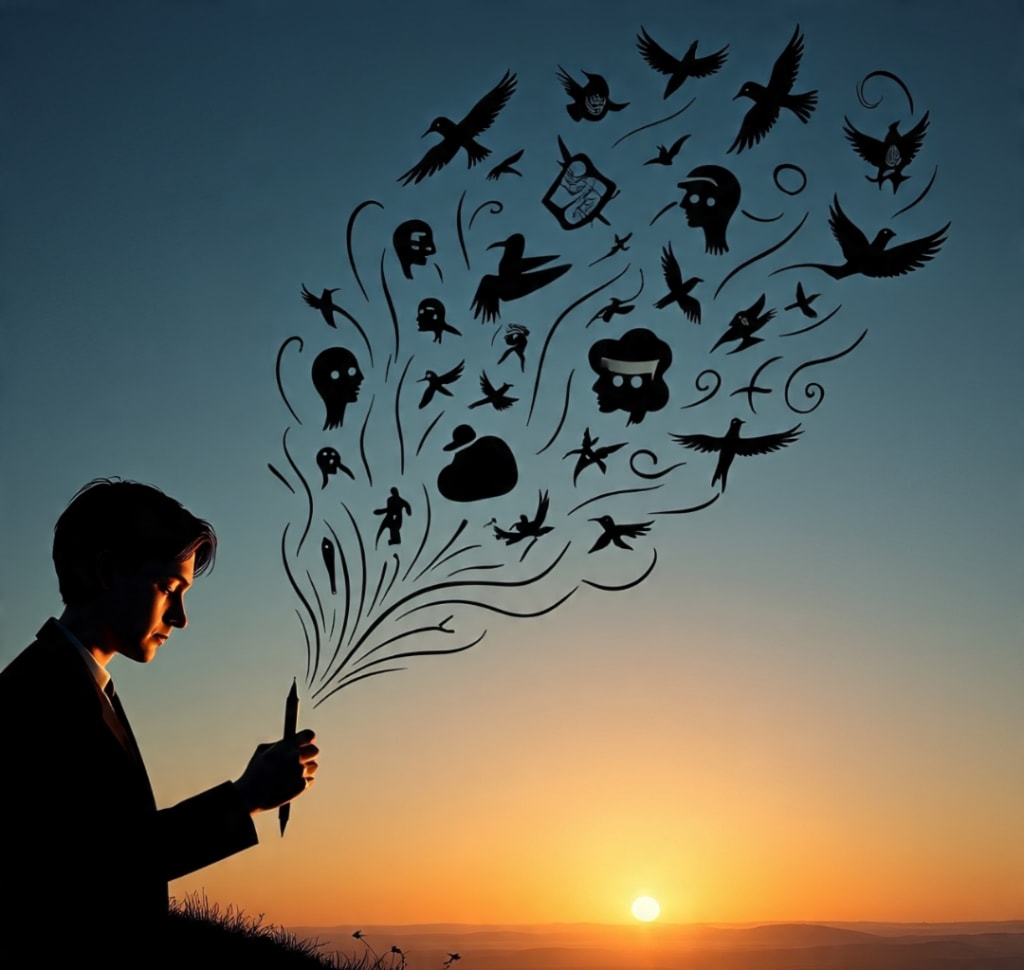
In a small village nestled between hills and rivers, there lived an old man named Elias, known not for wealth or power, but for his words. Every week, he stood in the town square and read aloud his poetry to those who would listen. Children sat cross-legged in front of him, elders leaned on their walking sticks, and farmers paused their carts just to catch a few lines.
Elias was a poet—not by profession, but by calling. He had never left his village, yet his words traveled further than he ever could. His poems touched on sorrow and love, war and peace, injustice and beauty. Some villagers saw him as merely a dreamer. Others, especially in times of hardship, looked to his verses for comfort and guidance. Few realized that through his simple act of reciting poetry, Elias played a role as ancient and vital as the village itself.
The role of a poet in society is often quiet but powerful. Poets do not wield authority like politicians or dictate policy like rulers, yet they hold a unique kind of influence: they shape how people see the world. Through rhythm and imagery, they offer reflections of our inner selves and the world around us. Elias knew this. He once said, “A poet doesn’t tell you what to think. He reminds you that you can.”
Throughout history, poets have served as mirrors, voices of conscience, and keepers of collective memory. From Homer chronicling battles and gods, to Maya Angelou standing tall with dignity and defiance, poets have spoken when others could not. In times of oppression, they became protestors. In times of celebration, they sang praises. In silence, they became echoes of truth.
Elias’s poetry, though humble, was no different. When a flood destroyed part of the village, he wrote a poem not about loss, but about rebuilding. When a child was born, he captured the miracle of life in three perfect lines. And when a nearby town faced injustice from corrupt leaders, Elias recited a poem so poignant that it spread beyond the village—copied by hand, passed from person to person, until even city officials took notice.
Poets often live in the margins, but they write at the center of human experience. They help us make sense of chaos, reveal hidden truths, and inspire change—not through force, but through feeling. Elias once explained to a curious boy, “A poem is like a seed. You don’t know when it will grow in someone’s heart, but if planted with care, it always will.”
In the modern world, the poet's role has evolved but not diminished. They may now share verses through screens instead of scrolls, speak on podcasts instead of street corners, yet their essence remains the same. Poets still awaken the sleeping parts of our consciousness. They still dare to ask questions that society avoids.
In classrooms, their lines teach empathy. In courtrooms, their words are cited in defense of justice. In music and protest, their rhythm marches alongside the people. Even in grief, when no words seem enough, it is often a poem that finds a way to express the inexpressible.
Elias continued his readings until the end of his days. His final poem, written with a trembling hand, was not about death but about legacy. “I am not the flame,” it read, “but I have carried the spark.” When he passed, villagers gathered in the same square, not to mourn, but to recite his poems aloud—passing on the spark.
The poet’s voice, whether heard in quiet rooms or loud squares, remains a vital part of every society. It is the voice that remembers when others forget, that feels when others numb, that questions when others conform. Poets like Elias remind us that words, when spoken with honesty and heart, can move more than minds—they can move history.
So next time you hear a poem—on a page, a wall, a stage, or a screen—listen closely. It may be more than just words. It may be a seed waiting to grow.
About the Creator
Keep reading
More stories from Muhammad Saad and writers in Poets and other communities.
The Living Language of Verse
Long before the written word, before ink met paper or syllables were printed in textbooks, poetry lived in the breath and heartbeat of human expression. It echoed through chants around ancient fires, whispered in the rhythm of ritual, and danced in the memory of storytellers who passed tales from one generation to the next. In the cradle of civilization—Sumer, Egypt, and Mesopotamia—poetry was born not as decoration, but as necessity. The Epic of Gilgamesh, carved into stone tablets over 4,000 years ago, is one of the oldest known literary works. It told of gods and kings, friendship and loss, and the relentless quest for meaning. Even then, poetry was not just words; it was a mirror to the human soul. Centuries later, on the banks of the Nile and in the temples of ancient Greece, poetry took on form and structure. In Greece, it soared with the likes of Homer, whose Iliad and Odyssey stitched together myth, history, and heroism with a melodic, metered rhythm that was easy to remember and share aloud. These early bards were the original spoken word artists, performing epic tales with voice and gesture, captivating audiences much like modern poets do today. As writing systems evolved, so did poetic form. Across India, the Vedas were sung with spiritual reverence, their verses crafted to preserve sacred truths. In China, Li Bai and Du Fu blended nature, philosophy, and emotion into delicate, powerful brushstrokes of imagery. In Persia, the mystic Rumi wrote of love that transcended the physical, penning verses that still resonate centuries later in every corner of the world. During the Middle Ages, poetry became both an instrument of worship and a tool of courtship. In Europe, troubadours composed lyrical odes to unattainable loves, while monks transcribed psalms and hymns to glorify the divine. Meanwhile, on other continents, oral traditions flourished. African griots, for example, kept ancestral history alive through rhythmic storytelling and poetic song, each performance a living archive of culture and identity. The Renaissance ignited a poetic rebirth in Europe. It was an age of sonnets and soliloquies. Shakespeare elevated the English language, weaving iambic pentameter into dramas that exposed the full spectrum of human nature. His plays and poems proved that poetry was not just for the elite or scholarly—it belonged to the people. As literacy spread and printing presses roared to life, poetry became more accessible. The Romantic poets—Wordsworth, Keats, Shelley—embraced emotion and nature, pushing back against industrialism’s cold steel with tender stanzas about rivers, stars, and the aching heart. Their verses reminded people that to feel deeply was not a weakness, but a gift. The 20th century shattered boundaries once thought unbreakable. Poets like Langston Hughes infused jazz and racial identity into verse during the Harlem Renaissance. Sylvia Plath dared to write her inner world in raw, confessional tones. Allen Ginsberg howled against conformity, and Maya Angelou sang of freedom and resilience. The page was no longer the only home for poetry—it spilled into protests, concerts, and coffeehouses. Then came the digital age. At first, some feared poetry would fade, lost in a world of short attention spans and emojis. Instead, it transformed. Spoken word slams filled auditoriums. Instagram poets reached millions with just a few powerful lines. Videos, podcasts, and audio books breathed new life into old forms. A teenager in Nairobi could share verses with a teacher in Toronto. Poetry, once bound by borders and class, was now as free as thought itself. And still, it grows. Today, poetry appears in classrooms and subway walls, in text messages and at weddings, funerals, and protests. It comforts, challenges, and connects. It has evolved from oral tradition to digital expression, but its essence remains the same: to make sense of what it means to be human. Each era adds a verse to poetry’s ongoing story. The poet’s tools may change—stone, ink, screen—but their mission does not. To listen. To observe. To feel. To speak truths that others may only dare to whisper. Poetry, after all, is not just a relic of the past. It is a living, breathing language of the soul. And as long as there are hearts that ache, minds that question, and spirits that dream, poetry will continue to evolve—ever ancient, ever new.
By Muhammad Saad 8 months ago in Poets




Comments
There are no comments for this story
Be the first to respond and start the conversation.