Jai Kishan
Bio
Retired from a career as a corporate executive, I am now dedicated to exploring the impact of Hinduism on everyday life, delving into topics of religion, history, and spirituality through comprehensive coverage on my website.
Stories (44)
Filter by community
Sheetla Puja and Sheetla Mata Temple – A Journey of Faith and Healing
Introduction The Indian subcontinent is known for its deeply rooted spiritual traditions, where faith merges with folklore and history. One such tradition is Sheetla Puja, a festival that reveres Goddess Sheetla, a divine figure associated with protection from infectious diseases. Alongside this festival stands the Sheetla Mata Temple, a sacred place where thousands seek solace and divine intervention. Let’s explore the significance of Sheetla Puja and the historical relevance of the Sheetla Mata Temple.
By Jai Kishan10 months ago in Education
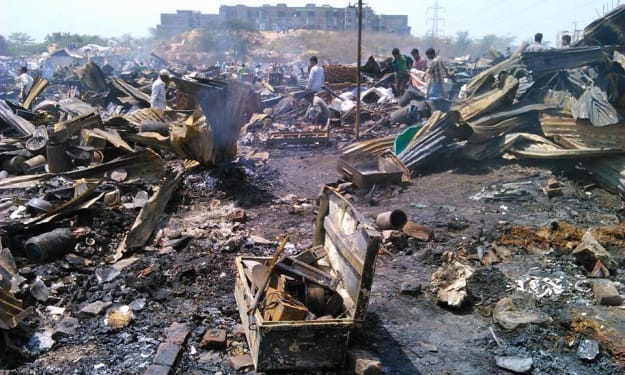
The Delhi Riots of 2020: A Coordinated Attack
The Violence That Wasn’t Spontaneous February 2020 saw Delhi engulfed in violence, with 53 people dead and hundreds injured. While many attribute the riots to the Citizenship Amendment Act (CAA), deeper analysis reveals that the CAA was merely an excuse—an event hijacked to fuel political and religious unrest. With foreign interference, radical elements, and political opportunists involved, the riots had far more sinister undertones. Even in 2025, with legal cases dragging on, the larger conspiracy remains evident.
By Jai Kishan10 months ago in History
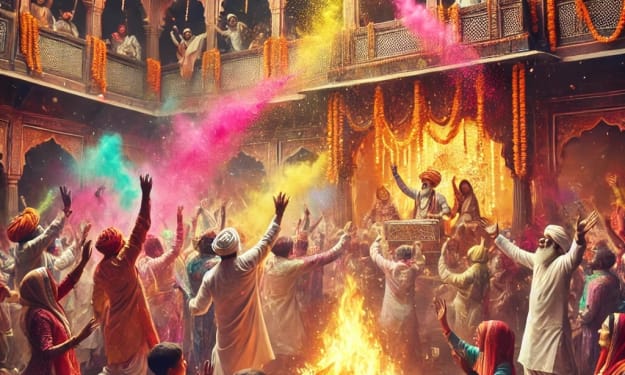
Holi 2025: A Festival of Color Amidst Social Divisions
Introduction With Holi just around the corner on March 14, 2025, the excitement is palpable across India. Holi, a festival that signifies the triumph of good over evil and the arrival of spring, is celebrated with colors, sweets, and laughter. Yet, in recent years, growing communal tensions have begun to cast a shadow over the festival. In some areas, incidents of disruptions have raised concerns about whether Holi can continue to be a unifying force in Indian society.
By Jai Kishan10 months ago in Art
Holi – The Festival of Colors, Faith, and Renewal
More Than Just Colors Holi, one of the most iconic Hindu festivals, is celebrated with great enthusiasm and color across India and other parts of the world. However, Holi is not just about splashing colors—it is deeply rooted in Hindu philosophy, historical events, and cosmic traditions. It is a time of cleansing, renewal, and uniting people in joy.
By Jai Kishan10 months ago in Art
Aamlki Ekadashi: A Sacred Union of Nature, Fasting, and Devotion
A Day of Fasting, Healing, and Spiritual Awakening Hindu festivals are much more than religious observances—they are scientific, cultural, and deeply philosophical traditions designed to enhance human well-being. One such festival, Aamlki Ekadashi, falls on March 10, 2025, and is dedicated to Lord Vishnu and the sacred amla tree (Indian gooseberry, Phyllanthus emblica).
By Jai Kishan10 months ago in Education
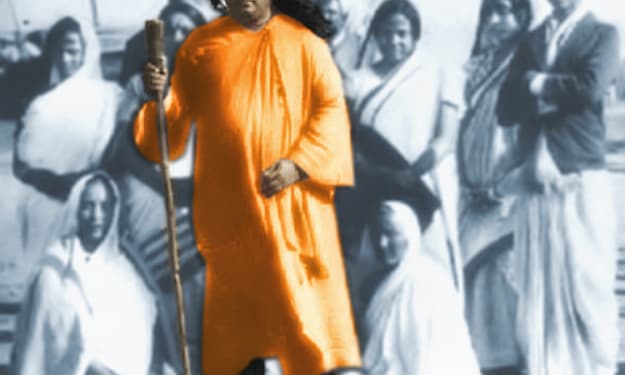
The Life and Spiritual Mission of Paramahansa Yogananda
The Global Spiritual Influence of Paramahansa Yogananda Paramahansa Yogananda, originally named Mukunda Lal Ghosh, was born on January 5, 1893, in Gorakhpur, India. Celebrated for his groundbreaking role in introducing Eastern spirituality to the West, Yogananda's life bridged two distinct worlds, uniting ancient wisdom with modern practicality. Raised in a deeply spiritual environment, he was naturally inclined toward profound spiritual explorations, which ultimately set him on a path of global influence and recognition.
By Jai Kishan10 months ago in Psyche
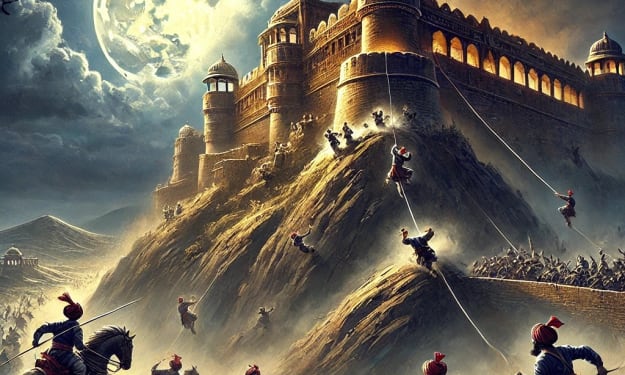
The Silent Victory: How Sinhagad Defined Maratha Resilience
The Battle of Sinhagad, fought on the night of February 4, 1670, was not merely a military engagement but a significant chapter in the broader narrative of India's resistance against Mughal expansion. This pivotal clash took place amidst the turbulent times of the 17th century when the Mughal Empire, driven by ambitions to consolidate power, often clashed with the emerging Maratha forces. Sinhagad Fort's strategic location atop the rugged hills of the Deccan Plateau made it a critical point of contention, overseeing vital trade routes and serving as a gateway to the rich plains of the Deccan.
By Jai Kishan10 months ago in History
The Great Massacre of Sikhs by Ahmad Shah Abdali: Unpacking the Vadda Ghalughara
Punjab at the Edge of Empires In the mid-18th century, Punjab was a land of flux, its Mughal rulers faltering under the weight of internal decay and external threats. Into this power vacuum stepped invaders like Ahmad Shah Abdali, whose Afghan armies sought to plunder India’s riches, and the Sikhs, a community forged in the crucible of Guru Gobind Singh’s Khalsa vision—unyielding in their pursuit of justice and resistance to tyranny. On February 5, 1762, this defiance met a catastrophic trial in the Vadda Ghalughara, when Abdali’s forces slaughtered around 30,000 Sikhs near Kup. Rather than a breaking point, this massacre became a cornerstone of their enduring legacy. Let’s journey into its causes, events, and profound significance.
By Jai Kishan10 months ago in History
Beyond Persia: The Iranian Revolution's Global Echoes
The Spark That Changed Everything On February 11, 1979, the Iranian Revolution reached its dramatic peak, toppling Shah Mohammad Reza Pahlavi’s monarchy and ushering in Ayatollah Ruhollah Khomeini’s rule, shattering Persia’s 2,500-year tradition of kingship. Far beyond a regional shake-up, this seismic event disrupted global oil markets, transformed international relationships, and left an indelible mark on nations like India. Beneath its surface lies a saga of U.S. and British exploitation, driven by an unquenchable thirst for Iran’s oil wealth, laced with betrayal and geopolitical missteps. Let’s unravel how the Iranian Revolution unfolded, its worldwide repercussions, and why its echoes still resonate today.
By Jai Kishan10 months ago in History
A Violent Flashpoint: The Khoirabari Tragedy
A Village in Flames: The Khoirabari Catastrophe The Assam Agitation, spanning 1979 to 1985, was a fierce push against illegal immigration that erupted into tragedy on February 7, 1983, in Khoirabari, Assam. On that bleak day, a peaceful village became a slaughterhouse as Assamese mobs descended, killing 100 to 500 Bengali Hindu immigrants in a frenzy of ethnic hatred. This massacre marked a dark pinnacle of the six-year struggle. The Assam Accord of 1985 promised reconciliation, but decades of broken commitments left the pain festering. What drove this bloodbath, and how far did the central government’s negligence stoke the fire? Let’s trace the harrowing tale.
By Jai Kishan10 months ago in History
Guru Har Rai: An Emblem of Strength and Compassion
Introduction On January 16, 1630, in the quiet town of Kiratpur, Punjab, a child was born who would become a beacon of compassion and resilience in Sikh history—Guru Har Rai, the seventh Sikh Guru. His life, woven with threads of kindness, spiritual depth, and subtle leadership, left an imprint that still inspires nearly four centuries later. In an era of turmoil under Mughal rule, Guru Har Rai’s story is one of healing, unity, and quiet defiance.
By Jai Kishan11 months ago in History
Maratha vs Durrani: Unveiling the Battle of Narela
Introduction On January 16, 1757, the plains of Narela, a dusty expanse near Delhi, became the stage for a clash that would echo through Indian history. The Maratha Empire, a rising power known for its agility and cunning, squared off against the Durrani Empire, led by the formidable Ahmad Shah Durrani. This wasn’t just a skirmish—it was a pivotal moment that showcased the Marathas’ military brilliance and altered the balance of power in northern India.
By Jai Kishan11 months ago in History