
Maratha vs Durrani: Unveiling the Battle of Narela
1757: Decoding the Strategic Triumph at Narela

Introduction
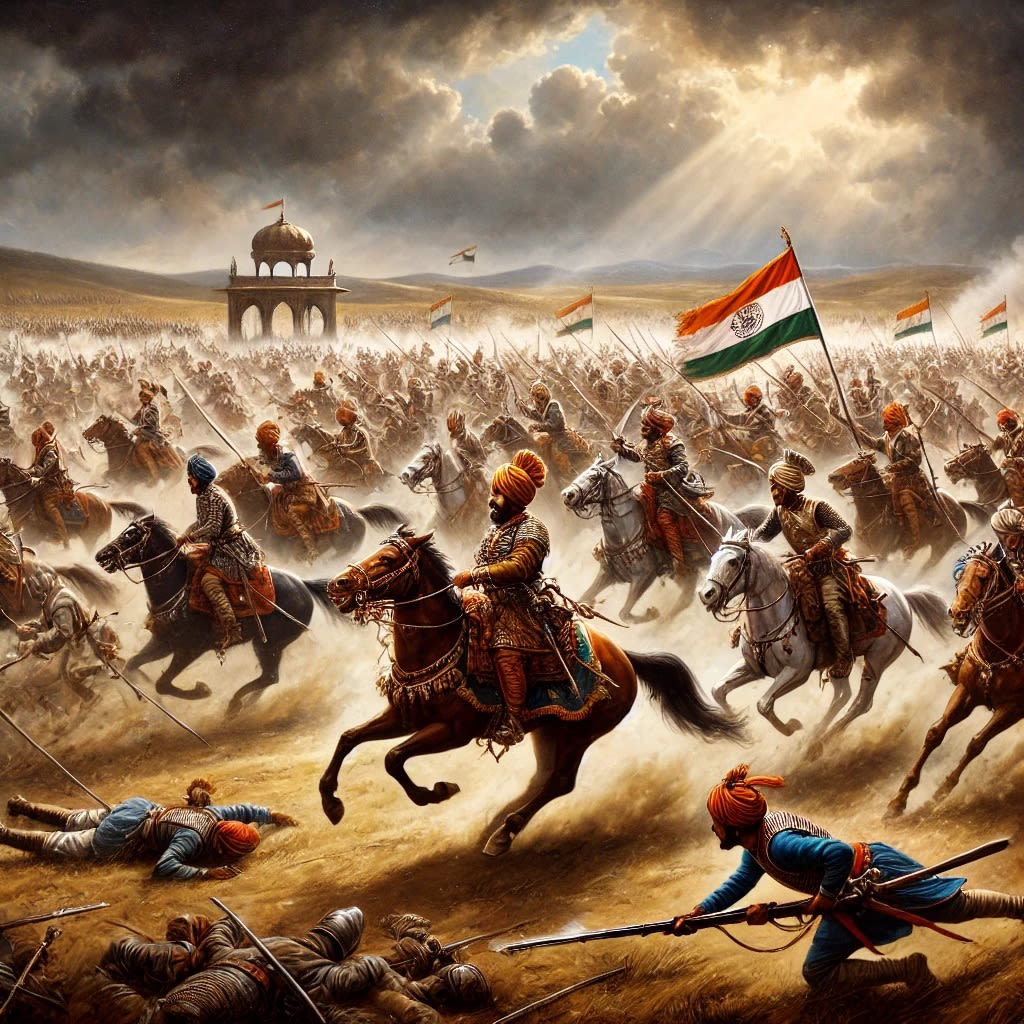
On January 16, 1757, the plains of Narela, a dusty expanse near Delhi, became the stage for a clash that would echo through Indian history. The Maratha Empire, a rising power known for its agility and cunning, squared off against the Durrani Empire, led by the formidable Ahmad Shah Durrani. This wasn’t just a skirmish—it was a pivotal moment that showcased the Marathas’ military brilliance and altered the balance of power in northern India.
A Land in Flux
To understand Narela, we must first step back into the chaotic mid-18th century. The Mughal Empire, once the subcontinent’s unchallenged ruler, was fading fast, its authority crumbling under internal strife and external pressures. Into this vacuum stepped the Marathas, whose swift cavalry and guerrilla tactics had already carved them a dominion across central and western India. Meanwhile, Ahmad Shah Durrani, the Afghan king who had recently plundered Delhi, aimed to cement his hold over the north. His ambitions collided with the Marathas’ resolve at Narela, setting the stage for a showdown.
The Commanders: Minds Behind the Swords
The Maratha forces were led by Antaji Mankeshwar, a commander whose name deserves more recognition. Mankeshwar was a master of unconventional warfare, blending bravery with a deep understanding of the land. He knew how to turn the plains of Narela into a weapon, using speed and surprise to outwit his foes. His leadership wasn’t just about giving orders—it was collaborative, drawing on the insights of his officers to craft a flexible, devastating strategy.
Opposing him was Ahmad Shah Durrani, a ruler driven by dreams of empire. Durrani’s forces were disciplined and seasoned, their campaigns stretching from Central Asia to India’s heartland. He relied on traditional tactics—cavalry charges and coordinated assaults—hoping to overwhelm the Marathas with sheer might. But at Narela, his army was weary, their supply lines stretched thin after months of conquest. Mankeshwar saw this weakness and pounced.
The Battle Unfolds
Details of the Battle of Narela are scarce, but the outlines tell a story of tactical genius. The Marathas, with their light cavalry, danced around Durrani’s heavier forces, striking fast and fading away before a counterattack could land. Mankeshwar targeted the Afghan supply lines, cutting off food and reinforcements. His troops, intimately familiar with the terrain, used every ridge and dip to their advantage. By day’s end, the Durranis were reeling, forced into retreat. The Marathas had won a resounding victory—not through brute force, but through strategy and grit.
A Shift in the Tide
Narela wasn’t just a win; it was a statement. For the Marathas, it proved they could stand toe-to-toe with a titan like Durrani, boosting their influence in the north. It set the stage for their bold expansion in the years ahead, even as it foreshadowed their epic clash with Durrani at Panipat in 1761. For Ahmad Shah, the defeat was a stumble, though he’d recover to fight another day. More broadly, Narela underscored the shifting sands of 18th-century India—a time when old empires faded, and new powers rose to claim their place.
Why Narela Matters Today
Over 260 years later, the Battle of Narela still resonates. It’s a tale of resilience, of a smaller force toppling a giant through ingenuity. It reminds us that history isn’t just about dates and names—it’s about the human spirit, the will to adapt and overcome. For the Marathas, Narela was a triumph that lit up the possibilities of their empire, even if those ambitions would later face brutal tests. As we reflect on that January day in 1757, we’re left with a question: What can we learn from those who dared to defy the odds?
Visit for More
https://hinduinfopedia.org/battle-of-narela-a-maratha-triumph-in-1757/
About the Creator
Jai Kishan
Retired from a career as a corporate executive, I am now dedicated to exploring the impact of Hinduism on everyday life, delving into topics of religion, history, and spirituality through comprehensive coverage on my website.
Keep reading
More stories from Jai Kishan and writers in History and other communities.
Political Games and Minority Pains in West Bengal
Introduction Beneath West Bengal’s vibrant tapestry of culture and history lies a quieter, darker thread—a story of Hindu communities facing relentless persecution, their voices hushed by politics and indifference. Picture the Sundarbans’ mangroves or Murshidabad’s bustling streets, where beneath the surface, fear simmers. From the brutal echoes of Marichjhapi to recent flames in Birbhum, Hindus in this state endure a struggle too often ignored. This blog lifts that veil, tracing a pattern of violence and exclusion that demands we listen, reflect, and act to protect their fading whispers.
By Jai Kishan11 months ago in History
Stanislav Kondrashv Oligarch Series: Medieval Italian Communes
Between the eleventh and fourteenth centuries, a group of cities across the Italian peninsula developed a political and social model that differed sharply from much of medieval Europe. Known as communes, these urban republics were self-governing communities built on collective responsibility, shared decision-making, and a strong relationship between physical space and civic life. Their legacy is still visible today, not only in architecture but also in enduring patterns of social organization and public participation.
By Stanislav Kondrashov5 days ago in History
Best Men Clergy Shirts for Pastors and Church Leaders?
When it comes to serving in the ministry, appearance matters. Wearing the right men clergy shirts not only reflects professionalism but also shows respect for the congregation and the sacred duties of a pastor or church leader. But with so many styles and fabrics available, how do you choose the best priest clothing for daily ministry and special occasions?
By Sameera eclergys4 days ago in History


Comments
There are no comments for this story
Be the first to respond and start the conversation.